Vijay's TVK Government Faces Six By-Polls as AIADMK MLAs Defect in Tamil Nadu
Six Tamil Nadu assembly seats have fallen vacant after AIADMK legislators jumped to the ruling TVK, setting up early by-elections that will test Chief Minister Vijay's grip after a historic Dravidian-era upset.
Commentary & Analysis ·
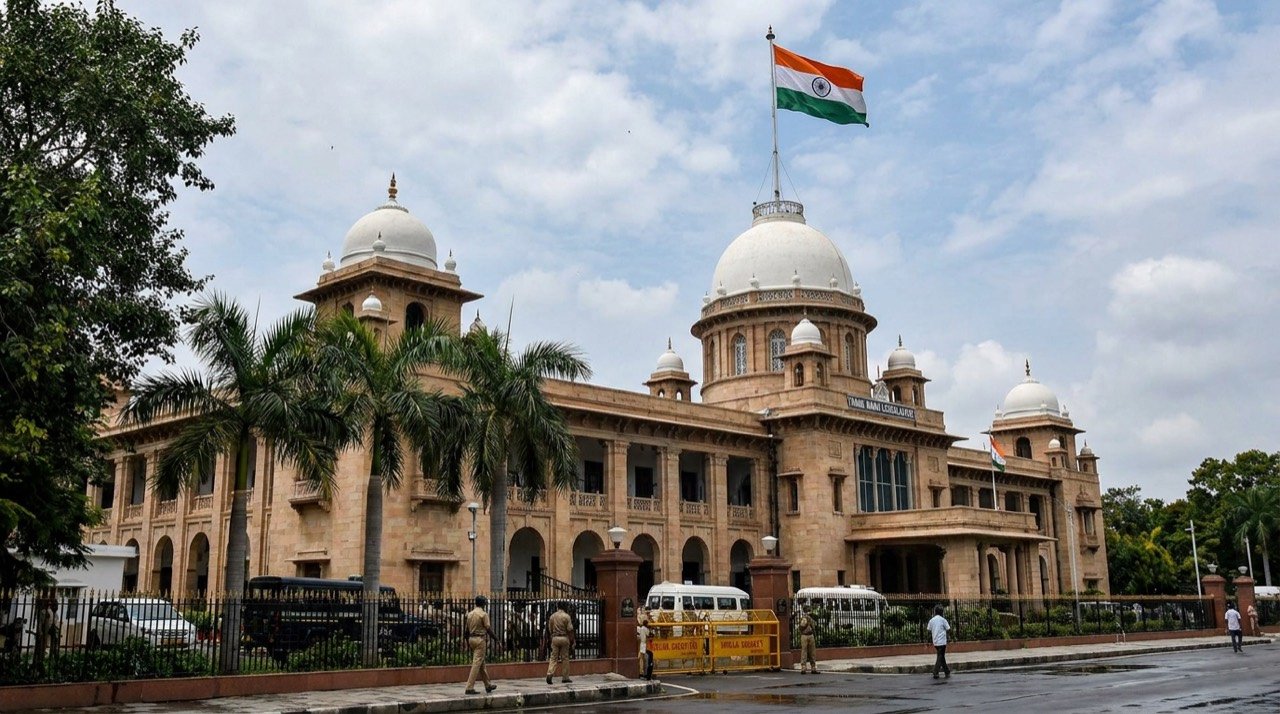
Tamil Nadu's new government under Chief Minister C. Joseph Vijay is heading into a round of by-elections after six assembly seats fell vacant, a development that has crystallised the political churn following one of the state's most consequential election results in decades. The vacancies stem from both the chief minister's own choice and a wave of defections from the AIADMK, and together they offer the first real test of whether the mandate that swept the Tamilaga Vettri Kazhagam to power in 2026 can hold under the ordinary pressures of governance.
How the vacancies arose
The Tamilaga Vettri Kazhagam, the party founded by actor-turned-politician Vijay barely two years ago, won 108 of the 234 assembly seats, ending a 59-year run of Dravidian party dominance in Tamil Nadu. That single fact is worth sitting with: for nearly six decades, power in the state had rotated exclusively between the DMK and the AIADMK, two parties built on the same Dravidian ideological lineage. A political outsider assembling a majority-adjacent bloc in one election cycle is a rupture, not an incremental shift, and it explains why every subsequent move by the new government is being read as a signal of whether that rupture is durable.
Vijay himself had contested and won two seats, a common tactic for a party leader hedging against the risk of losing any single constituency, and he subsequently resigned one of them, as is customary once a winner opts to retain only one seat. That resignation alone would have triggered one by-election. But the more consequential development is that five AIADMK MLAs then resigned their seats to join the ruling TVK, bringing the total number of vacancies to six. Defections of sitting legislators so soon after an election, before the defeated party has had any real chance to regroup, are unusual even by the standards of Tamil Nadu's famously fluid politics.
What the AIADMK defections signal
For the AIADMK, the defections mark a significant erosion, and the timing compounds the damage. These are not disgruntled legislators drifting away after years in the wilderness; they are MLAs who had just won their seats weeks earlier on an AIADMK ticket, then judged that their political future lay elsewhere. That calculation says less about personal loyalty than about how AIADMK insiders are reading the durability of the TVK wave. When elected members conclude so quickly that switching sides is the safer bet, it suggests the party's own cadre may doubt its capacity to rebuild in opposition, at least in the near term.
The AIADMK now confronts the prospect of by-elections in seats it had won only weeks earlier, a uniquely uncomfortable position. It must defend ground it technically still holds on paper while the incumbents who won that ground have already switched allegiance and will presumably contest again, this time for the TVK. That is a difficult narrative for any party to manage with a demoralised base and limited time to regroup.
Consolidation versus overreach for the TVK
For the TVK, the defections represent an opportunity to convert a plurality into something closer to entrenched dominance. Absorbing five AIADMK MLAs, on top of the seat vacated by Vijay himself, gives the ruling party a chance to contest six by-elections from a position of momentum rather than defence. If the TVK wins most or all of these seats, it will have converted an election victory into a more comprehensive one, reducing its reliance on post-poll manoeuvring and demonstrating that its appeal extends beyond the initial wave.
But there is a risk on the other side of that ledger. Wholesale defections invite accusations of horse-trading and raise questions, fair or not, about whether the new government is more interested in numbers than in policy delivery in its first weeks. A government that spends its early political capital managing defections and by-elections, rather than governing, risks squandering the very freshness that won it the mandate in the first place.
A reordered opposition and the DMK's predicament
The DMK, which governed the state for the previous term, finds itself in an unfamiliar opposition role, and the manner of its defeat sharpens the discomfort. Party leader M. K. Stalin lost his own contest from the Kolathur constituency, a seat he had won three times in succession, and stepped down as chief minister, with Vijay sworn in to lead the new government. A sitting chief minister losing a seat he had held for three consecutive terms is not a marginal defeat; it is the kind of result that forces a party to reassess its entire organisational strategy rather than treat the loss as a one-off.
The DMK's task now is twofold: it must reconstruct itself as a credible opposition after decades spent either in government or contesting as the principal challenger, and it must do so while the AIADMK, its traditional rival, is simultaneously in disarray. That leaves an unusual vacuum in Tamil Nadu's opposition space, one that neither of the old Dravidian parties may be well placed to fill quickly, and one the TVK will be keen to exploit before either can recover.
Why the by-polls matter beyond six seats
The by-elections will offer an early read on whether the TVK wave that swept the general election has staying power, and whether the DMK and AIADMK can regroup before the next major test. Six seats is a modest number in a 234-member assembly, but the symbolic weight is disproportionate to the arithmetic. These contests will be scrutinised as a referendum on the TVK's first weeks in office, on whether governance missteps or unmet expectations have begun to erode enthusiasm, and on whether the established Dravidian parties retain enough organisational muscle to contest effectively even in a weakened state.
For a government still defining its agenda, the early polls represent both an opportunity to enlarge its mandate and a risk should public mood shift even modestly. A strong showing would let the TVK claim validation beyond the initial election and dampen speculation about the durability of its support. A weak showing, even a marginal one, would embolden critics who argue that the TVK's victory owed more to anti-incumbency and celebrity novelty than to a settled realignment of the state's politics.
The NE Times View
Wholesale AIADMK defections to the ruling TVK look like strength, but six forced by-elections so soon are a stress test, not a victory lap. Voters who delivered a historic Dravidian-era upset will quickly judge whether Vijay's movement is substance or stardom. Defections also invite anti-defection scrutiny and cynicism, particularly when the legislators switching sides do so within weeks of winning on a rival ticket. Governing Tamil Nadu is a different craft from winning it, and the honeymoon is short. How the TVK performs in these six contests, and how credibly the DMK and AIADMK can mount campaigns while still absorbing the shock of the general election, will say more about the shape of Tamil Nadu politics over the next five years than the original result itself.
Key takeaways
- Six Tamil Nadu assembly seats have fallen vacant: one from Vijay's own resignation and five from AIADMK MLAs defecting to the ruling TVK.
- The TVK's 108-seat win in 2026 ended 59 years of alternating DMK-AIADMK rule, making these by-polls an early test of that realignment's durability.
- The AIADMK must now defend seats it won only weeks earlier, seats whose incumbents have already crossed over to the ruling party.
- DMK leader M. K. Stalin's loss in Kolathur, a seat he held for three consecutive terms, underscores the scale of the party's setback and its unfamiliar opposition role.
- The by-election results will be read as an early referendum on whether the TVK's mandate reflects a lasting shift or a fragile, celebrity-driven wave.
You may also like to read
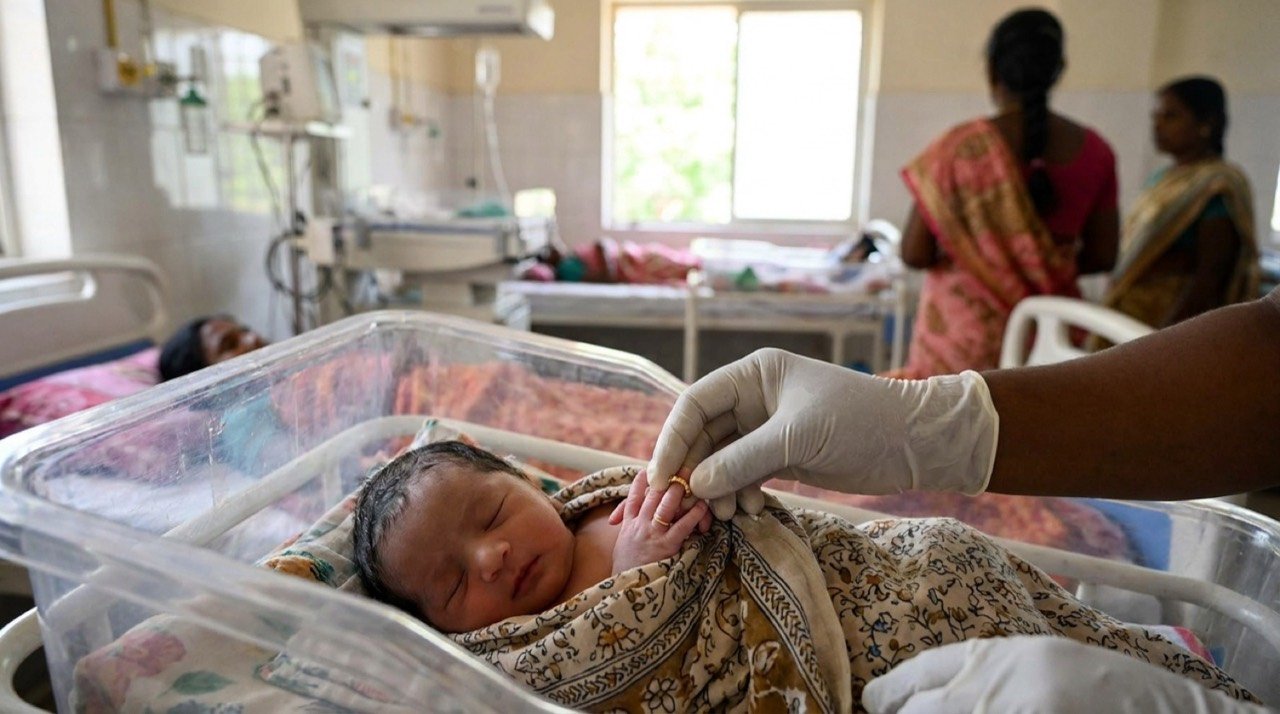
Tamil Nadu's Thai Maman Gold Ring Scheme: One-Gram Gold For Newborns in Government Hospitals
Chief Minister Vijay's Thai Maman Gold Ring Scheme will give every baby born in a Tamil Nadu government hospital a one-gram gold ring, reviving the welfare-versus-cost debate.
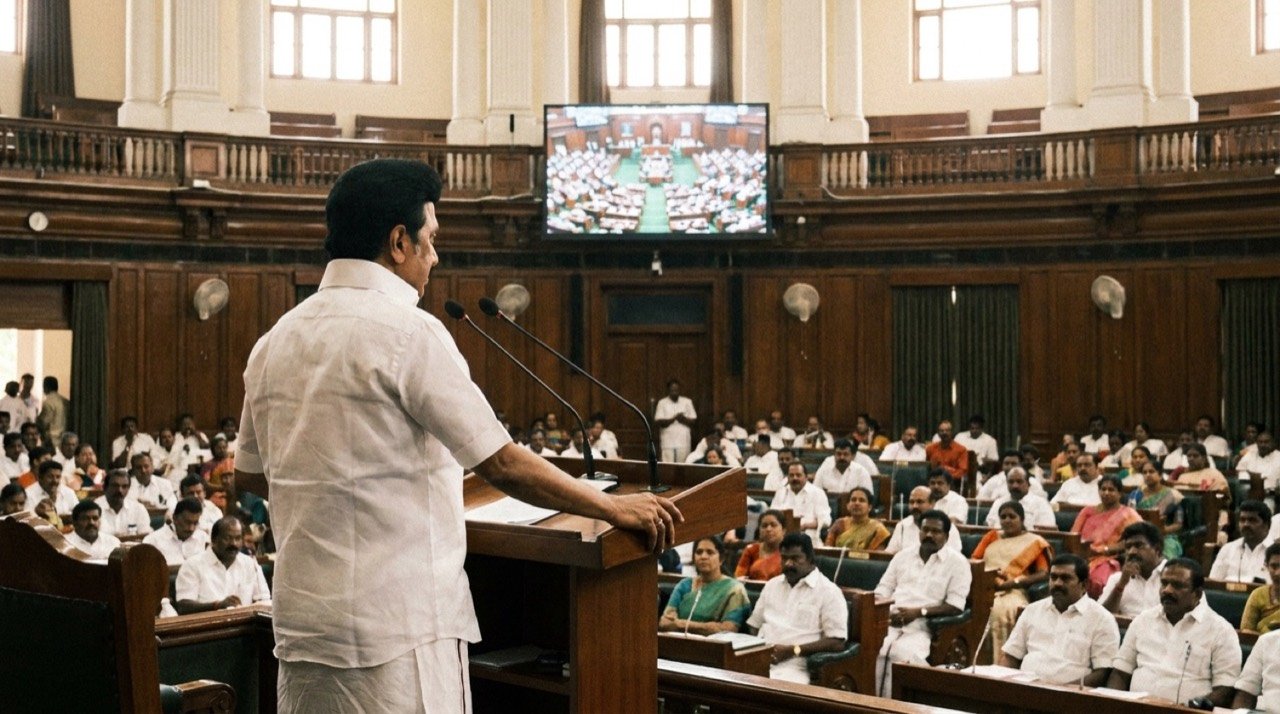
Vijay Uses Tamil Nadu Assembly Debut to Sharpen His Political Pitch
Tamil Nadu Chief Minister Vijay's first major Assembly appearance framed welfare, state rights and administrative delivery as his government's priorities, marking his shift from cinema to formal governance.
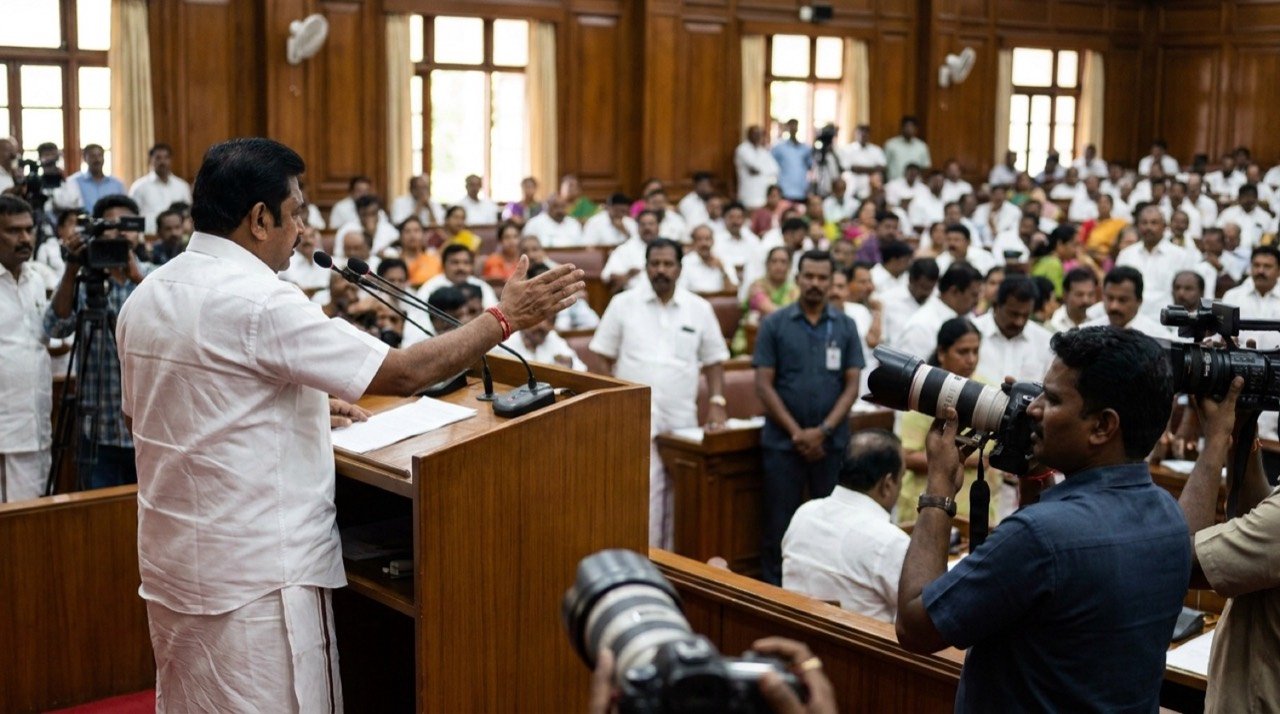
Vijay's First Detailed Assembly Speech Sets the Tamil Nadu Agenda
In his first detailed Assembly speech, Tamil Nadu CM Vijay framed welfare, governance, state rights and Centre-state relations as the benchmarks his new government wants to be judged on.
Vijay's TVK Government Pushes Welfare Agenda as DMK Settles Into Opposition
Actor-turned-politician Vijay's Tamilaga Vettri Kazhagam, now in power in Tamil Nadu, has rolled out free-power and women's-safety measures as Udhayanidhi Stalin leads a chastened DMK from the opposition benches.
More from this section
More
K Kavitha Party Denied TRS Name by Election Commission
The Election Commission has refused to register K Kavitha's Telangana Rakshana Sena under the TRS acronym after objections, forcing a branding reset for the new party at a politically sensitive moment in Telangana.
Lalu Prasad Yadav Security Downgrade, Bungalow Order Stir Bihar
A government order downgrading Lalu Prasad Yadav's security cover and asking him to vacate an official bungalow has opened a fresh political flashpoint in Bihar, with the RJD chief's reaction fuelling the row.
Manipur CM's Churachandpur Visit: First Since 2023 Unrest
The Manipur Chief Minister travelled to Churachandpur for a BJP MLA's funeral, his first visit to the district since the 2023 violence, lending the sombre occasion an unmistakable political significance.