Vaibhav Sooryavanshi's Record Fifty Powers India A to Tri-Series Title
Fifteen-year-old Vaibhav Sooryavanshi smashed a stunning 94 off 29 balls, with a reported List A record 11-ball fifty, as India A crushed Sri Lanka A by 66 runs in the Dambulla tri-nation final.
Commentary & Analysis ·

A 15-year-old announced himself on the international age-group stage in spectacular fashion in Dambulla, as Vaibhav Sooryavanshi blasted 94 off just 29 balls to drive India A to a 66-run thrashing of Sri Lanka A in the tri-nation final. His reported 11-ball fifty was logged as a List A record, turning a title decider into a showcase of Indian cricket's astonishing batting depth at the youth level. That such a number could be produced by a boy barely into his teens, on a stage as pressurised as a final, tells its own story about the pace at which Indian cricket now manufactures precocious talent.
An innings of pure violence
Sooryavanshi's knock was less an innings than a statement. Reaching fifty in only 11 deliveries, he attacked from the outset with a fearlessness that belied his age, clearing the boundary at will and dictating terms to a Sri Lanka A attack that had no answers. Though he fell six runs short of a hundred, the 94 came at a strike rate north of 320, the kind of tempo that flattens run chases before they begin and the sort of cameo that scouts and selectors do not forget. What stands out is not merely the rate of scoring but the context in which it arrived. Finals tend to tighten batsmen up, to induce caution; Sooryavanshi did the opposite, treating the pressure of a title decider as an invitation rather than a constraint. For bowlers on the receiving end, there is little consolation in conceding runs to a settled, senior batsman working within a plan. There is even less in watching a 15-year-old dismantle lengths and fields with what looked like unforced ease.
A total built on depth
Sooryavanshi did not act alone. Tilak Varma and Anukul Roy chipped in with valuable contributions as India A piled up an imposing 377 for 9, a total that left the final all but decided at the innings break. Defending such a mountain, India A's bowlers tightened the screws to bowl Sri Lanka A out well short, completing a dominant victory by 66 runs and sealing the tri-series crown. It is worth pausing on this supporting cast, because a score of 377 is rarely the product of one player alone, however dazzling his cameo. Varma and Roy's contributions ensured the innings had substance beyond the headline act, and the bowling unit's ability to close out a game with such a buffer speaks to a squad that is well-drilled across departments, not simply reliant on one prodigious talent to paper over gaps elsewhere.
A pipeline on display
The performance reinforced a broader theme: India's relentless production line of young batting talent. For a teenager to break a List A record in a tournament final is the clearest signal yet that Sooryavanshi belongs in conversations about the next generation of Indian cricket. This is not an isolated flash. India's age-group and domestic structures have, for some years now, been producing batsmen who arrive at the senior stage already familiar with big occasions, having been tested in high-stakes finals, franchise tournaments and A-team fixtures long before a national call-up. Sooryavanshi's innings in Dambulla fits neatly into that pattern: a young player thrust into a tri-series final, a genuinely competitive fixture rather than a dead rubber, and responding not with nerves but with authority.
Weighing the promise against the pressure
Innings like this carry a weight of expectation, and the challenge now is to convert raw, dazzling potential into the consistency demanded at senior level. History offers no shortage of examples of young players who lit up a single match or series before the game caught up with them, exposing technical gaps or mental fragility that only sustained exposure reveals. Sooryavanshi's task from here is different from merely repeating boundary-hitting: it is about building the layered game, judgment on when to accelerate and when to consolidate, that separates a prodigy from a genuine long-term prospect. On the evidence of Dambulla, India A possess a player capable of bending a match to his will in the space of a single over, and Indian cricket has every reason to watch where his career goes next. Selectors, franchise scouts and age-group coaches alike will now be watching not just his numbers but how he is managed, how much cricket he is asked to play, and whether the surrounding ecosystem gives him room to develop rather than simply demanding repeat performances.
The NE Times View
A 94 off 29 balls at fifteen is the kind of number that rewrites expectations before a career has begun. The thrill is real, but so is the duty of care: India's pathway system has a habit of burning bright talent through over-exposure and hype. A player capable of an 11-ball fifty in a final is, almost by definition, a player who will attract intense scrutiny, media attention and commercial interest well before he is ready to handle any of it in a mature way. The smarter celebration is patience. Protect his workload, let the technique mature, and the records will keep coming. There is a difference between celebrating a special innings and mortgaging a career to premature exposure, and India's cricketing administrators, franchise teams and age-group selectors would do well to keep that distinction firmly in view as Sooryavanshi's profile grows.
Key takeaways
- Vaibhav Sooryavanshi, 15, scored 94 off 29 balls in the tri-series final in Dambulla, with his 11-ball fifty reported as a List A record.
- India A posted 377 for 9, with Tilak Varma and Anukul Roy also contributing, before bowling Sri Lanka A out to win by 66 runs and clinch the tri-nation title.
- The innings underscores the depth of India's youth batting pipeline, but also raises the perennial question of how such talent is managed and protected.
- The real test for Sooryavanshi now lies in translating a single explosive innings into sustained, consistent performance over time.
You may also like to read

Gaikwad Century Powers India A to a Tense Eight-Run Win Over Sri Lanka A
Ruturaj Gaikwad's composed 101 and a death-overs spell from Arshad Khan gave India A a winning start to the Dambulla tri-series before their fortunes turned.
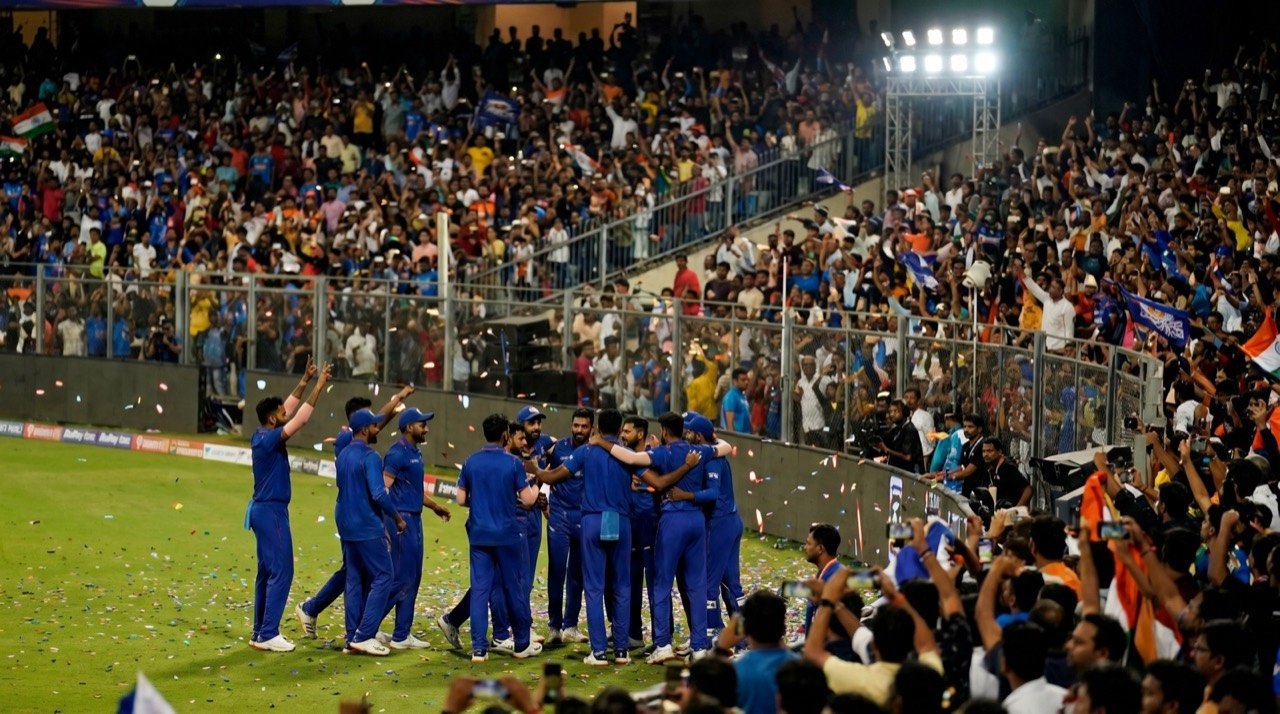
India A Suffer Super Over Heartbreak Against Sri Lanka A in Tri-Series
A late collapse and a Super Over loss left Tilak Varma's India A reeling to back-to-back defeats in Dambulla, despite a steadying third-wicket stand.
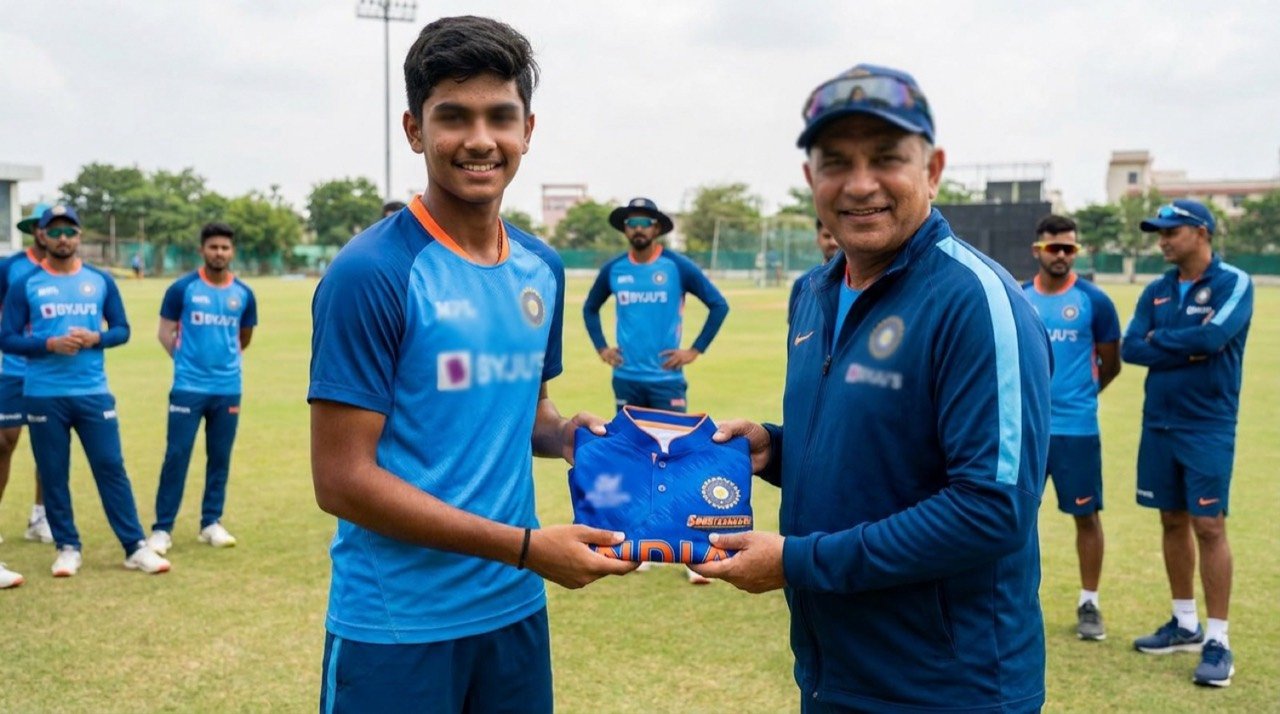
Vaibhav Sooryavanshi's India Jersey Moment Marks a Teenage Milestone
Fifteen-year-old Vaibhav Sooryavanshi turned emotional on receiving his senior India jersey ahead of a possible T20I debut, capping a rapid rise and raising questions of careful handling.
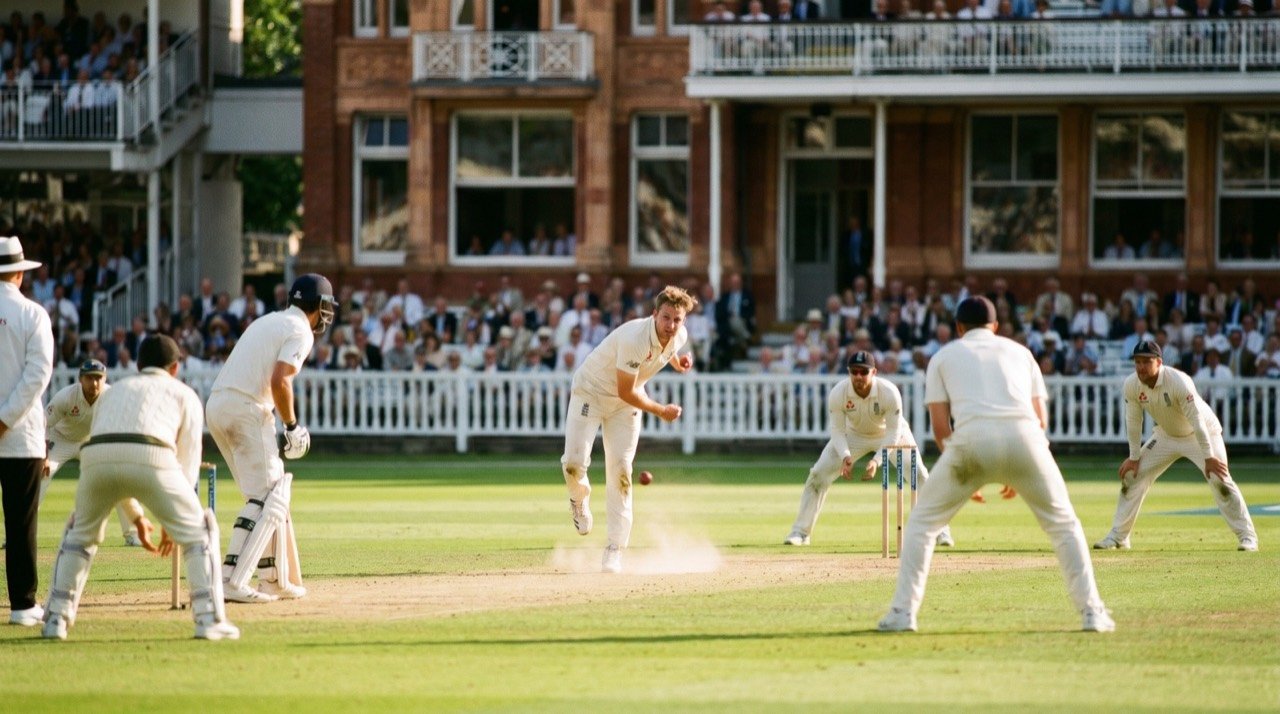
Three Fifties Not Enough as Afghanistan A Edge India A on DLS in Dambulla
India A posted 349 but were undone by a rain-interrupted chase, Afghanistan A sneaking home by four runs on the DLS method in the Sri Lanka tri-series.
More from this section
More
Arnav Paparkar Advances at Wimbledon Boys' Singles in Boost for India
Indian junior Arnav Paparkar has moved into the second round of the Wimbledon boys' singles with a commanding serving display, handing Indian tennis a rare and encouraging grass-court result at the sport's biggest stage.

Axar Patel Becomes First Indian Spinner With 100 T20I Wickets
Axar Patel reached 100 T20 international wickets in the second T20I against England, becoming the first Indian spinner to hit the mark and cementing his standing as one of India's most durable white-ball performers.
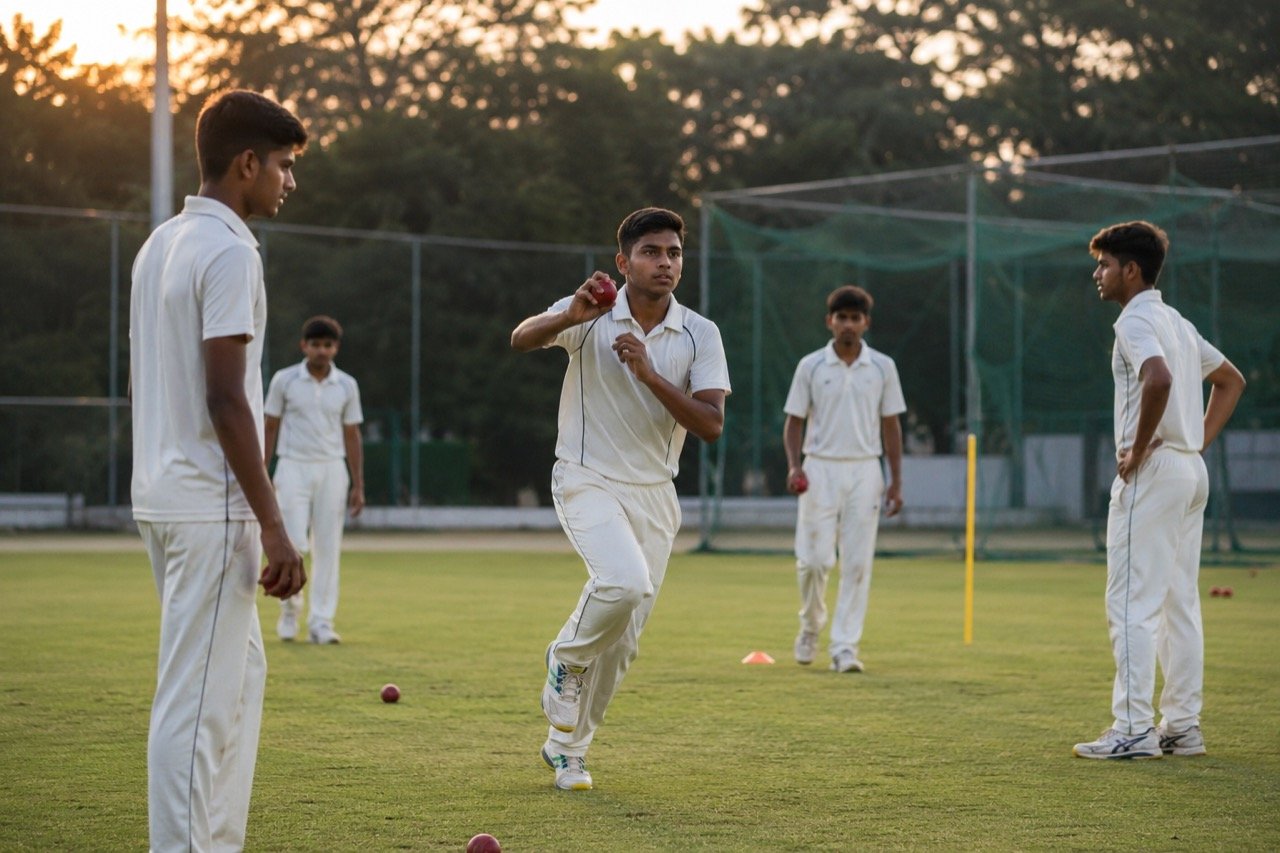
BCCI Emerging Men's Tournament to Hunt Test Prospects in Bengaluru
The BCCI's red-ball Emerging Men's Tournament, running at the Centre of Excellence in Bengaluru through July, is designed to give selectors a longer, harder look at India's next generation of Test cricketers.