Uttar Pradesh Pushes for a Bigger Slice of India's Data-Centre Boom
Uttar Pradesh is targeting nearly nine percent of India's data-centre capacity, courting green AI campuses and large investment to challenge the dominance of Mumbai, Chennai and Bengaluru.
Commentary & Analysis ·
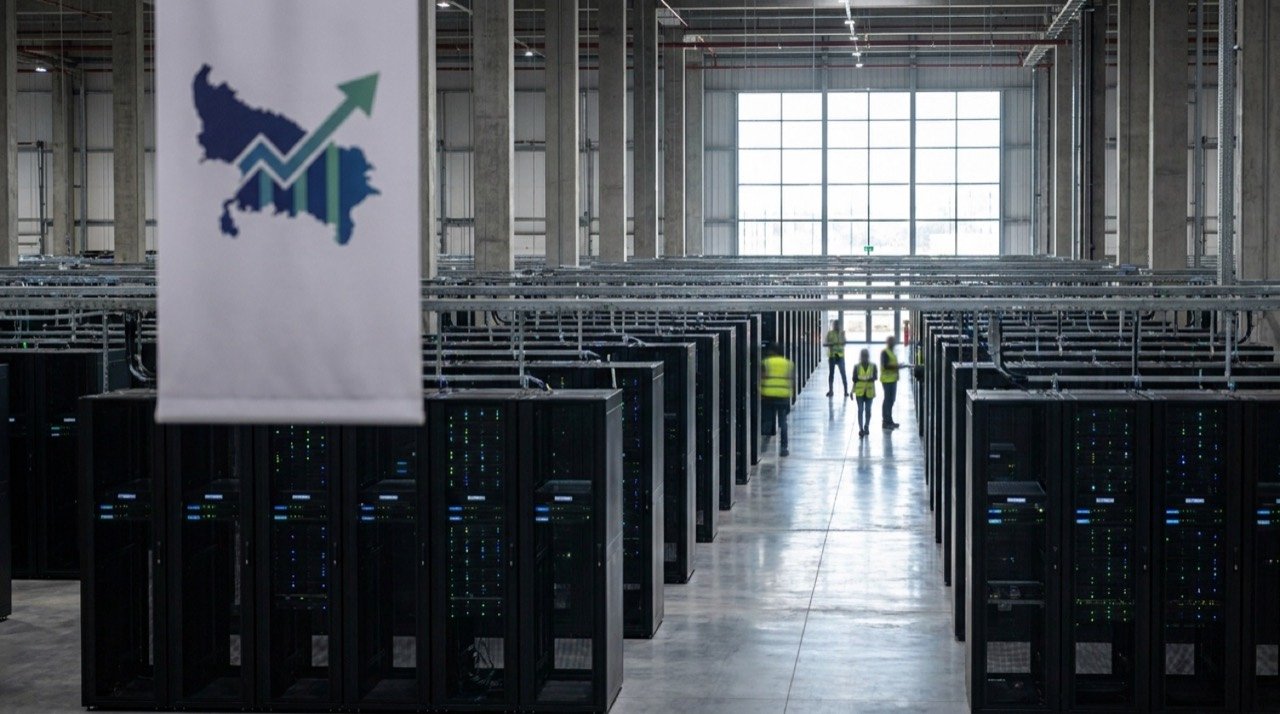
Uttar Pradesh is making an aggressive bid to reshape India's data-centre map, with officials and industry reports signalling an ambition to capture close to nine percent of the country's total computing capacity. For a state long associated with agriculture and heavy industry, the move marks a deliberate pivot toward the infrastructure that now underpins the digital economy.
A calculated bet on digital infrastructure
Business Standard has reported that the push centres on marquee projects, including a green AI data-centre campus backed by substantial investment running into thousands of crores. The state's pitch rests on a combination of available land, expanding power infrastructure, targeted policy incentives and its proximity to North India's fast-growing pool of digital demand.
Data centres have quietly become critical national infrastructure. They are the physical backbone for cloud computing, artificial intelligence workloads, the surge in digital payments, e-governance platforms and the streaming services that millions of Indians now treat as everyday utilities. Hosting that capacity closer to users in the populous Hindi belt could cut latency and anchor a new layer of the economy in the state.
Why location is shifting
India's data-centre industry has historically clustered around Mumbai, Chennai, Hyderabad and Bengaluru, drawn by undersea cable landings, mature power grids and established technology ecosystems. Uttar Pradesh is betting that rising demand, coupled with land and energy constraints in those saturated hubs, will spread the next wave of capacity inland.
The emphasis on a green, AI-focused campus is notable. As model training and inference drive electricity consumption sharply higher, investors and regulators are increasingly judging projects on their energy sourcing and cooling efficiency, not just raw floor space.
The execution challenge
Ambition alone will not build a data-centre hub. The harder task is delivering the conditions these facilities depend on, consistently and at scale, while keeping local communities and the environment in mind.
- Reliable, uninterrupted electricity, ideally with a growing share of renewable power
- Water-efficient cooling systems to limit strain on local resources
- Grid resilience capable of absorbing concentrated, high-density loads
- A skilled local workforce and durable jobs beyond the construction phase
- Clear environmental safeguards and transparent permitting
Each of these is a test of state capacity. Power reliability in particular has long been an Achilles heel for industrial investment in the region, and operators will weigh promised uptime against on-the-ground performance before committing further capital.
“If executed well, the plan could meaningfully diversify India's data-centre map beyond its established southern and western hubs.”
— Industry assessment
For now, the headline target is a statement of intent as much as a forecast. Whether Uttar Pradesh converts investment announcements into operational, sustainably powered campuses will determine if it becomes a genuine pillar of India's digital build-out or simply another aspirant in a crowded race.
The NE Times View
Uttar Pradesh's data-centre ambition is sensible: it has land, power-policy headroom and proximity to Delhi-NCR demand that the saturated metros lack. But capacity targets are won on the unglamorous fundamentals: reliable grid power, water for cooling and genuinely fast clearances. The green-AI framing is smart positioning, yet investors will judge UP on execution, not brochures. Watch whether the promised campuses break ground or stall like past industrial pledges.
This article is original commentary and analysis by The NE Times. Background facts were referenced from Business Standard.
You may also like to read

Gold Prices Ease Across Indian Cities: What the July 4 Dip Means
Gold rates for 24-karat and 22-karat metal edged lower across Delhi, Mumbai, Bengaluru, Chennai and Hyderabad on July 4, offering a window for buyers weighing jewellery and investment purchases.

India Extends Deepwater Oil and Gas Bid Deadline for the Sixth Time
India has pushed its deepwater and ultra-deepwater oil and gas block bid deadline to September 17, a sixth extension that highlights the challenge of luring capital into frontier offshore exploration.

Moody's Flags India's Fragmented Water Management as a Growing Fiscal and Credit Risk
Moody's warns that India's dispersed water governance, subsidised pricing and unclear investment pathways could turn rising water stress into a fiscal and credit liability as demand surges.

Homegrown Startup Closes Mega Funding Round, Eyes Global Expansion
A fast-growing Indian technology firm has raised a large new round, signalling renewed investor appetite for the country's startup story.
More from this section
More
Adani Case: US DOJ Pushes for Permanent Dismissal of Charges
The US Department of Justice has urged a judge to permanently dismiss charges against Gautam Adani, calling the case legally flawed — a reversal with consequences for markets, diplomacy and cross-border enforcement.

Akasa Air Inducts 40th Aircraft in Indian Aviation Scale-Up
Akasa Air's 40th aircraft, ferried to Bengaluru via Seattle, Reykjavik and Cairo, marks a fleet milestone for the young carrier and a fresh signal that India's aviation market remains firmly in expansion mode.

BARC Ratings Suspension Leaves Indian TV Industry Flying Blind
BARC's pause on television ratings has put India's broadcast measurement system under fresh scrutiny, leaving broadcasters, advertisers and media planners without the weekly audience data that anchors the TV economy.