South Indian Cinema's Half-Year Reckoning: Why Big Films Stumbled
A mid-year assessment of South Indian cinema has triggered an industry-wide debate over why several big-budget, star-driven films struggled despite scale, spectacle and heavy event-film packaging.
Commentary & Analysis ·
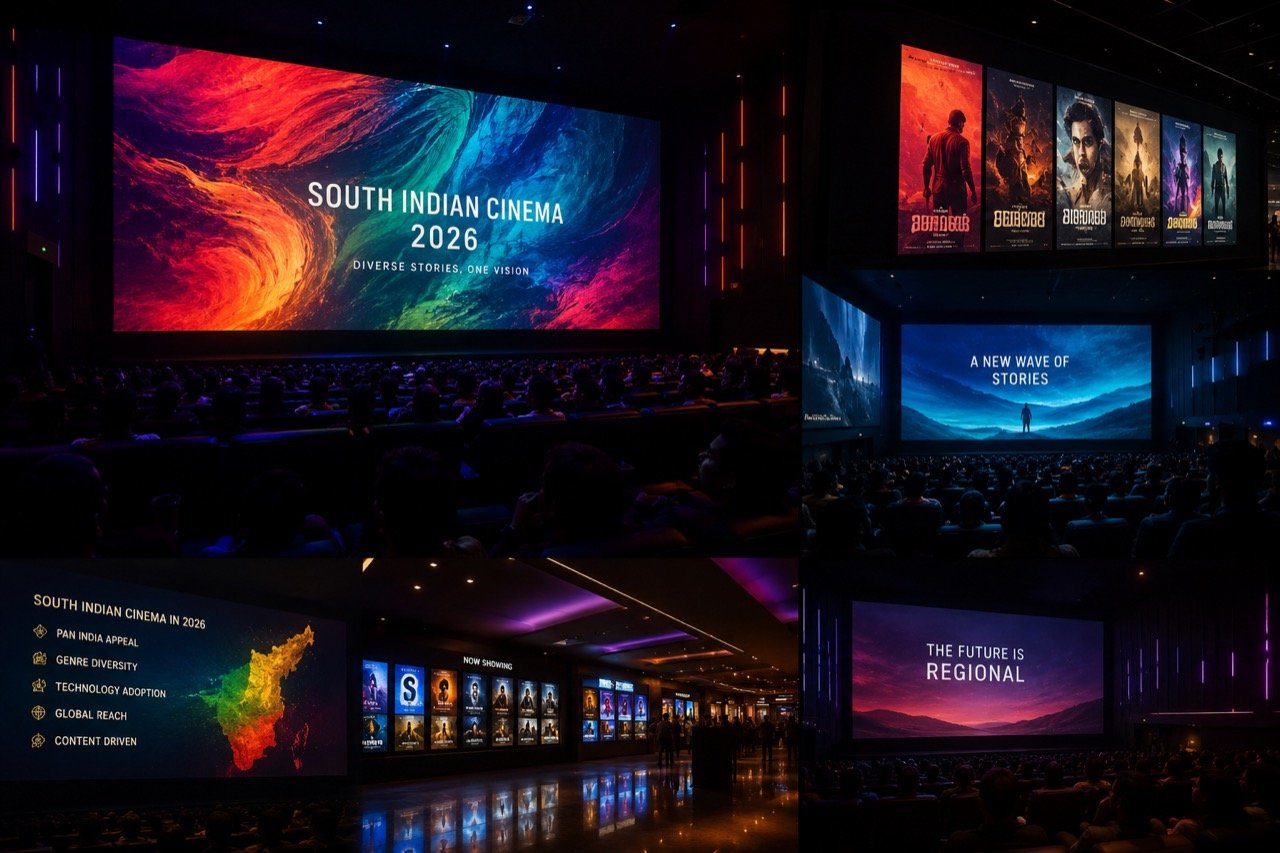
A half-yearly stocktake of South Indian cinema has set off a lively industry debate. An Indian Express analysis of the first six months argued that several major films ran into strikingly similar problems, challenging the comfortable assumption that scale, star power and event-film packaging are enough to guarantee success. The finding is not a minor trade footnote. It touches an industry that has, over the past several years, come to define what a big Indian film can look like, and it raises an uncomfortable question about whether the formula that built that reputation is beginning to wear thin.
Why the conversation travels beyond one market
The scrutiny lands harder because the South has set many of Indian cinema's recent commercial benchmarks. Telugu, Tamil, Kannada and Malayalam films have reshaped national viewing habits through pan-India theatrical hits, dubbed releases and streaming discovery. A decade ago, a film's commercial ceiling was largely defined by its home state; today, a strong opening in one language can ripple across dubbed versions, subtitled streaming releases and cross-border fan communities within days. That expanded reach is precisely why the current stumbles matter so much. When the biggest bets from an industry that has been setting the pace underperform — creatively or commercially — the conversation quickly spreads well beyond a single language industry, and inevitably invites comparisons with Hindi cinema's own well-documented struggles with over-reliance on scale and spectacle in recent years. In other words, the South was seen as the counterexample, the industry that had cracked the code. A half-year in which several of its marquee titles stumble threatens that narrative, and that is why trade commentators, rival industries and audiences alike are paying close attention.
The real question: sharper audiences
The core issue is not that star-driven cinema is fading. Big budgets and fan service can still deliver thundering opening weekends; that much has not changed. The harder question is what happens after the opening weekend passes. Audiences appear increasingly demanding about writing, pacing and emotional payoff, and sustained box-office success now depends on whether a film holds up once the initial fan wave subsides. This is a meaningful distinction, because it separates two very different failure modes. A film that fails to open is a marketing or positioning problem. A film that opens strongly and then collapses in its second and third weekends is a storytelling problem — and storytelling problems are harder to paper over with a bigger promotional budget or a starrier cast next time. If the half-year pattern genuinely reflects the latter, it suggests the issue sits closer to the writers' room and the editing suite than to the marketing department, which is a far more structural concern for producers to reckon with.
A structural shift in how India watches films
That shift reflects a structural change in how India watches films. With streaming platforms offering an enormous back catalogue and word-of-mouth travelling instantly on social media, a weak second act is punished faster than ever. In an earlier era, a film had days, sometimes weeks, before negative word-of-mouth caught up with it in smaller towns and family audiences who relied on newspaper reviews or delayed social chatter. That buffer has effectively vanished. A single evening of unflattering reviews and short-form social media reactions can now shape a film's trajectory before its second weekend even begins. Event packaging — the trailers, the countdown promotions, the massive first-day releases across thousands of screens — can still buy attention. What it can no longer buy is forgiveness for a film that does not deliver once the audience is in the seat. This is arguably the single most important change in the exhibition landscape, and it explains why films that would once have coasted on scale alone are now visibly faltering in their second and third weeks.
What this means for the industry's economics
There are real economic stakes bound up in this pattern beyond any single film's fortunes. Big-budget, star-driven productions carry correspondingly large financial exposure — for producers, distributors, satellite and streaming partners, and the exhibitors who block out prime screens on the expectation of a hit. When several such films underperform within the same half-year window, it is not merely a run of bad luck; it starts to look like a signal that the industry's cost structures and greenlighting habits need re-examination. Studios and production houses that have grown used to justifying enormous budgets on the strength of a star's pull may need to recalibrate how much of that spend goes toward scale and spectacle versus development time for scripts. For an industry that has been the envy of the rest of Indian cinema for its commercial discipline, that recalibration, if it happens, would itself be a significant story.
The NE Times View
The half-year scrutiny should be read as a warning sign, not an obituary. South Indian cinema remains the country's most commercially inventive film economy, and a course correction is well within its capabilities. The industries that respond by investing in scripts — balancing spectacle with character and trimming bloated runtimes — will likely produce a sharper, more durable next wave of big films. Audiences with more options than ever are effectively voting for better writing; the smart producers will treat that as a brief, not an insult. It is worth remembering, too, that this is an industry that has reinvented itself before, absorbing new technology, new distribution channels and new audience expectations without losing its commercial edge. The current moment calls for the same adaptability: less reliance on the assumption that scale alone converts into loyalty, and more discipline in the writers' room, where the real difference between a forgettable opening weekend and a genuinely durable hit is made.
Key takeaways
- An Indian Express half-year analysis found several major South Indian films sharing similar problems, prompting industry-wide debate.
- Star power and event packaging can still secure strong openings, but audiences are increasingly punishing weak writing and pacing once the initial fan wave passes.
- Streaming's vast back catalogue and instant social media word-of-mouth mean poor second acts are exposed and penalised faster than in previous eras.
- The pattern carries economic implications for producers, distributors and exhibitors who bank on scale alone to guarantee returns.
- The NE Times views this as a correctable warning rather than a decline, provided the industry reinvests in scripts, character and tighter runtimes.
You may also like to read
Bollywood's Box Office Bounce: First Half of 2026 Points to Recovery
A first-half review of Hindi cinema's 2026 box office shows record-breaking hits lifting industry confidence, though analysts caution that lasting recovery will depend on consistency beyond a handful of blockbusters.
South Indian OTT Releases This Week: Regional Streaming in Focus
This week's South Indian streaming slate, led by titles like Isakapatnam and Mollywood Times, shows how weekly OTT lists now shape viewing choices across Telugu, Tamil, Malayalam and Kannada markets.
Maa Inti Bangaaram's Success Spotlights Women-Led Telugu Cinema
Samantha's Maa Inti Bangaaram has crossed Rs 46 crore globally in its opening run, turning a strong box-office start into a wider conversation about women-led commercial Telugu cinema.
Sivakarthikeyan's Parasakthi Anchors Tamil Cinema's Big-Budget June
With a reported budget near 375 crore and a wide June release, Sivakarthikeyan's Parasakthi has become the centrepiece of an unusually crowded month for Tamil cinema.
More from this section
More
72nd National Film Awards: Fans Back Mammootty, Allu Arjun, Sai Pallavi
Speculation around the 72nd National Film Awards is intensifying as fan communities across India's language film industries champion favourites including Mammootty, Allu Arjun and Sai Pallavi ahead of any official announcement.

Aamir Khan Marries Gauri Spratt in Private Pali Hill Ceremony
Aamir Khan and Gauri Spratt tied the knot at the actor's Pali Hill home in Mumbai on July 5, turning a deliberately small family ceremony into Bollywood's biggest story of the day.

Akanksha Chamola's Lock Upp 2 Confession Sets Reality TV Abuzz
A personal revelation by Akanksha Chamola ahead of Lock Upp 2 has handed the reality show a viral talking point, underlining how confession-driven formats continue to dominate Indian television conversation.