How SRK and Farah Khan Helped Shreyas Talpade Buy His First Home
Shreyas Talpade's recollection of the support Shah Rukh Khan and Farah Khan offered when he bought his first home has struck a chord, revealing the quieter friendships that operate behind Bollywood's cameras.
Commentary & Analysis ·

Shreyas Talpade's recent comments about the help he received from Shah Rukh Khan and Farah Khan around the time he bought his first home have drawn wide attention, not for any headline-grabbing drama, but for what they reveal about the quieter side of film-industry relationships. The recollection surfaced in the same conversational space that revived memories of Happy New Year, the ensemble film that brought Talpade, Khan and director Farah Khan together, and the bonds formed during that production. In an industry that generates near-constant coverage of box-office battles, rivalries and manufactured controversy, this small, specific memory stood out precisely because it asked for nothing in return and revealed nothing scandalous. It was simply a colleague remembering a kindness.
A familiar face in a more grounded frame
Talpade has long been associated with sharp comic timing, ensemble casts and steady work across film and other formats. He is not typically the subject of tabloid speculation or box-office obsession; his career has been built on reliability rather than reinvention. That reputation makes this anecdote land differently than it might if it had come from a star whose life is already under a microscope. Hearing him speak about a personal milestone like his first house shifts the lens away from red carpets and premieres and onto something far more universal. Behind the glamour of film sets sit the same pressures ordinary people face: housing costs, financial planning, and the simple relief of having colleagues who show up when it counts. For an actor whose public identity is built on ensemble work rather than solo stardom, a story like this one reinforces the idea that his career has been shaped as much by relationships as by individual roles.
Why these stories travel
The anecdote also fits a broader pattern in Bollywood nostalgia coverage. Audiences relish stories that revisit older collaborations and surface gestures that were unknown at the time they happened. There is a particular satisfaction in learning, years later, that a widely loved film like Happy New Year was also the backdrop for a private act of generosity among its cast and director. When those gestures involve a star of Shah Rukh Khan's stature and a filmmaker like Farah Khan, they spread quickly because they reinforce fan narratives of warmth and loyalty within the industry. Khan, in particular, has cultivated a public image over decades that blends superstardom with approachability, and stories such as this one slot neatly into that image without appearing engineered or self-serving, since the account comes from Talpade rather than from Khan himself.
The value of a personal recollection over an industry verdict
That said, the story is a personal recollection rather than an industry-wide verdict, and it is worth being precise about what it does and does not tell us. It does not suggest that Bollywood as a whole operates on some deeper code of mutual support, nor does it erase the very real competitiveness, gatekeeping and financial pressures that shape careers in Hindi cinema. What it does offer is a specific, human-scale memory of one actor being helped by two colleagues at a formative moment in his life. Its value lies precisely in that specificity, and in the window it opens into professional friendships that endure long after a film's release, well past the promotional cycle, the box-office tallies and the eventual fading of a project from public conversation.
What this says about relationships formed on film sets
Film productions, particularly large ensemble projects like Happy New Year, throw together actors, directors and crew for months at a stretch, often under intense pressure and tight schedules. It is easy to assume that such relationships are transactional, lasting only as long as the promotional obligations require. Talpade's account complicates that assumption. It suggests that the bonds formed during a demanding shoot can extend well beyond the film itself, surfacing years later in tangible, practical ways, such as support during a major personal financial decision like buying a first home. This has implications for how audiences and commentators think about the informal networks that operate within the industry. Mentorship, financial advice and simple moral support between senior and junior colleagues rarely make it into official narratives, yet they may matter as much to a career's trajectory as any single role or release.
The NE Times View
Bollywood coverage is dominated by box-office numbers and manufactured feuds, so a story about a senior star quietly helping a colleague through a house purchase is a welcome corrective. It reminds readers that the industry runs on relationships that rarely make the publicity cycle, and that the more visible narratives of rivalry and competition are only part of a much fuller picture. For Indian audiences, the appeal is also aspirational in a relatable way: a first home is a universal milestone, tied up with years of saving, family expectation and personal achievement, and seeing it anchor a film star's memory closes the distance between celebrity and viewer in a way that no box-office record ever could. The healthiest takeaway is not hero worship, but an appreciation that generosity off-screen often says more about a person's character than anything captured on it. As Bollywood nostalgia cycles continue to resurface old films and old collaborations, stories like this one are worth noting for what they add to the public record: a fuller, more humane picture of an industry too often reduced to its most dramatic headlines.
Key takeaways
- Shreyas Talpade credited Shah Rukh Khan and Farah Khan with helping him around the time he bought his first home, a memory tied to their work together on Happy New Year.
- The story resonates because it reveals off-screen generosity rather than on-screen drama, standing apart from typical box-office and feud-driven Bollywood coverage.
- It should be read as a personal recollection of one relationship, not as a broader statement about how the film industry operates as a whole.
- The anecdote reinforces existing public narratives around Shah Rukh Khan's approachability and Farah Khan's role as a connector within the industry.
- For audiences, the appeal lies in the relatable universality of a first home purchase, which bridges the gap between celebrity life and everyday experience.
You may also like to read

Shah Rukh Khan 'Main Character Energy' Clip Sparks Bollywood Buzz
A reality TV exchange in which Kangana Ranaut invoked Shah Rukh Khan's screen presence has travelled far beyond the show, becoming a shareable talking point across Bollywood social media.
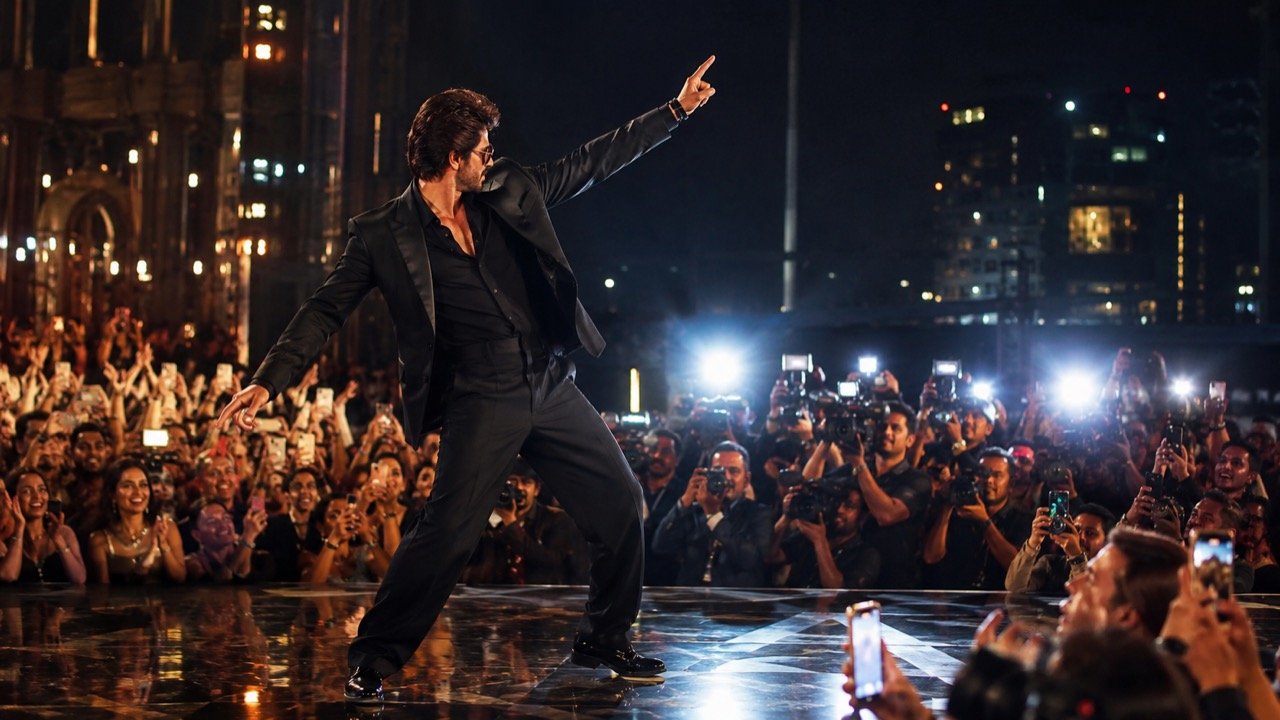
Shah Rukh Khan's Mumbai Appearance Fuels King Film Curiosity
Shah Rukh Khan's late-night Mumbai event performance has become an instant talking point, feeding the growing anticipation around his upcoming film King and reminding fans why his off-screen moments always land.
'Darr Nahi, Dehshat Hoon': Shah Rukh Khan's Silver-Haired 'King' Poster Sends the Internet Into a Frenzy
A blood-streaked, silver-haired Shah Rukh Khan has unveiled a fierce new poster for his Christmas tentpole 'King', confirming the action thriller as one of 2026's most anticipated releases and the launchpad for daughter Suhana Khan's big-screen debut.

Amitabh Bachchan's Deewangi Deewangi Absence: Farah Khan Story
Farah Khan's recollection of why Amitabh Bachchan never appeared in Om Shanti Om's star-packed Deewangi Deewangi number has revived one of Bollywood's favourite behind-the-scenes talking points.
More from this section
More
72nd National Film Awards: Fans Back Mammootty, Allu Arjun, Sai Pallavi
Speculation around the 72nd National Film Awards is intensifying as fan communities across India's language film industries champion favourites including Mammootty, Allu Arjun and Sai Pallavi ahead of any official announcement.

Aamir Khan Marries Gauri Spratt in Private Pali Hill Ceremony
Aamir Khan and Gauri Spratt tied the knot at the actor's Pali Hill home in Mumbai on July 5, turning a deliberately small family ceremony into Bollywood's biggest story of the day.

Akanksha Chamola's Lock Upp 2 Confession Sets Reality TV Abuzz
A personal revelation by Akanksha Chamola ahead of Lock Upp 2 has handed the reality show a viral talking point, underlining how confession-driven formats continue to dominate Indian television conversation.