Shah Rukh Khan 'Main Character Energy' Clip Sparks Bollywood Buzz
A reality TV exchange in which Kangana Ranaut invoked Shah Rukh Khan's screen presence has travelled far beyond the show, becoming a shareable talking point across Bollywood social media.
Commentary & Analysis ·
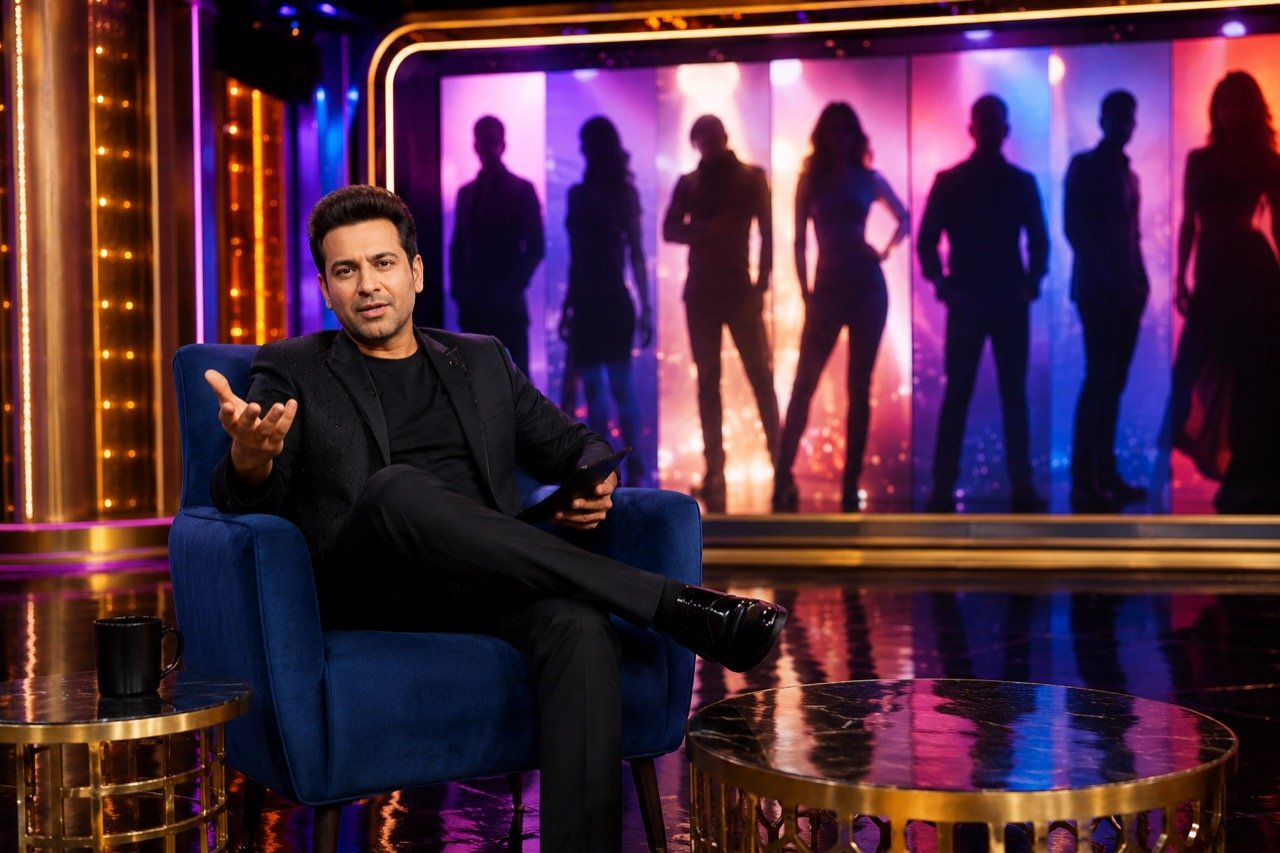
A brief moment on reality television has become the latest Bollywood conversation starter, and the reasons it caught fire say as much about the machinery of Indian entertainment media as they do about the moment itself. During a judging exchange reported by Hindustan Times, Kangana Ranaut compared a contestant's screen presence unfavourably with that of Shah Rukh Khan, reaching for the now-ubiquitous phrase "main character energy" to make her point. The clip spread quickly across social media, drawing in television viewers, Bollywood fans and the wider audience that tracks celebrity references online. Search interest clustered around the phrase itself, alongside the names of Ranaut and contestant Dheeraj Dhoopar, whose comparison set the exchange in motion.
Why one phrase travelled so far
The moment works as shareable content precisely because Shah Rukh Khan has long served as popular shorthand for charisma in Indian entertainment. He was not part of the show, yet the mere invocation of his name was enough to turn a routine judging remark into a headline. This is not a new phenomenon, but it is a useful illustration of how deeply certain names have become embedded in the everyday vocabulary of Indian popular culture. To say someone lacks "Shah Rukh Khan energy" requires no further explanation for an Indian audience; the reference does the work instantly, collapsing a complex judgement about screen presence, charisma and star quality into a single, recognisable comparison.
It is also a reminder of how reality television increasingly borrows Bollywood's vocabulary to make its verdicts instantly legible to audiences who may not watch every episode but will certainly scroll past a clip. Judges on talent and reality shows have, for years, used film stars as reference points when assessing contestants, but the speed and reach with which such remarks now travel is a function of the clip economy: a fifteen-second exchange, once excerpted and captioned, can outperform the show itself in terms of impressions and shares.
The mechanics of a viral moment
In context, this sits firmly at the lighter end of entertainment news. There is no industry development here, no feud and no controversy — just a compact phrase attached to a famous name, which proved more than enough to travel across timelines within hours. That is worth dwelling on, because it is precisely the absence of substance that makes the moment instructive. Nothing was announced, no project was teased, no rivalry was aired. What circulated was a comparison, made in passing, that happened to contain two ingredients guaranteed to perform well online: a globally recognised superstar's name and a trending piece of internet slang.
The phrase "main character energy" itself has become a kind of universal currency across social platforms, used to describe anyone or anything perceived as commanding attention or radiating self-assurance. Its pairing with Shah Rukh Khan, an actor whose career has been built substantially on exactly that quality of magnetic screen presence, was almost a natural fit. The clip did not need controversy to travel; it needed only recognisability, and it had that in abundance.
What this reveals about reality television's strategy
Indian reality television increasingly manufactures its viral moments by anchoring them to Bollywood's biggest names, and audiences reward the tactic every time a clip trends. Judges are, in effect, incentivised to reach for star comparisons because those comparisons are what get extracted, captioned and pushed across Instagram, YouTube Shorts and X. A judge's assessment of a contestant becomes secondary to the reference point used to deliver it. This is a structural feature of how reality shows now compete for attention in a fragmented media landscape, where a show's broadcast ratings matter less than its ability to generate clippable, shareable fragments.
For contestants such as Dheeraj Dhoopar, this dynamic cuts both ways. Being compared to a superstar, even unfavourably, keeps a contestant's name in circulation and attached to a trending topic, which is its own form of visibility. Whether such comparisons help or hinder a contestant's standing with the judging panel or the viewing public is a separate question from whether they generate engagement — and it is engagement, not narrative fairness, that the format is optimised to produce.
The blurred line between coverage and engagement farming
That dynamic is harmless enough on its own terms, but it does blur the line between entertainment coverage and engagement farming. When a single phrase, detached from any actual news, can generate headlines across multiple outlets, it raises a fair question about what qualifies as a story in contemporary entertainment journalism. The temptation for outlets is obvious: a clip that is already circulating widely requires little additional reporting to turn into an article, and the built-in searchability of names like Ranaut, Khan and Dhoopar all but guarantees traffic.
Readers are best served when such moments are enjoyed for what they are — fleeting, fun and search-friendly — rather than inflated into celebrity conflict. There is no indication here of any tension between Ranaut and Khan, nor any suggestion that Dhoopar took offence. The exchange was a judging remark, not a feud, and treating it as anything more would misrepresent what actually happened. The responsible approach is to note the moment, explain why it resonated, and resist the pull to manufacture drama where none exists.
Shah Rukh Khan's enduring cultural gravity
Shah Rukh Khan's cultural gravity, meanwhile, remains the one constant: even a passing mention still moves the internet. That a comparison invoking his name, made on a show he had no involvement in, could generate this scale of online conversation speaks to a level of name recognition that few entertainers anywhere achieve. It is a status built over decades of screen presence, and it means his name now functions less as a reference to any particular film or role than as a stand-alone unit of cultural meaning — shorthand for charisma itself, deployable in contexts that have nothing to do with his actual work.
Going forward, expect more of the same pattern from Indian reality television: judges reaching for star comparisons, clips extracted and captioned within minutes, and search interest spiking around whichever famous name gets invoked. The format rewards it, audiences respond to it, and outlets will keep reporting it as long as it performs. The more interesting story, as ever, is not the fleeting remark but the system built to amplify it.
The NE Times View
The real story here is not the remark but the machinery around it. Indian reality television increasingly manufactures its viral moments by anchoring them to Bollywood's biggest names, and audiences reward the tactic every time a clip trends. That is harmless enough, but it does blur the line between entertainment coverage and engagement farming. Readers are best served when such moments are enjoyed for what they are — fleeting, fun and search-friendly — rather than inflated into celebrity conflict. Shah Rukh Khan's cultural gravity, meanwhile, remains the one constant: even a passing mention still moves the internet.
This article is original commentary and analysis by The NE Times. Background facts were referenced from Hindustan Times.
Key takeaways
- Kangana Ranaut's "main character energy" comparison of a contestant to Shah Rukh Khan, reported by Hindustan Times, went viral despite involving no controversy or feud.
- The moment illustrates how reality television borrows Bollywood's vocabulary and star names to make judging verdicts instantly recognisable to wide audiences.
- Search interest centred on the phrase itself alongside the names of Ranaut and contestant Dheeraj Dhoopar, underscoring how celebrity references drive traffic independent of any real news.
- The episode highlights a structural incentive in Indian reality television to manufacture clippable, shareable moments anchored to Bollywood's biggest names.
- Shah Rukh Khan's continued ability to move online conversation, even via a passing reference in a show he had no part in, reflects his singular and enduring cultural standing.
You may also like to read
Shah Rukh Khan's Mumbai Appearance Fuels King Film Curiosity
Shah Rukh Khan's late-night Mumbai event performance has become an instant talking point, feeding the growing anticipation around his upcoming film King and reminding fans why his off-screen moments always land.
'Darr Nahi, Dehshat Hoon': Shah Rukh Khan's Silver-Haired 'King' Poster Sends the Internet Into a Frenzy
A blood-streaked, silver-haired Shah Rukh Khan has unveiled a fierce new poster for his Christmas tentpole 'King', confirming the action thriller as one of 2026's most anticipated releases and the launchpad for daughter Suhana Khan's big-screen debut.
Lock Upp New Season Buzz Puts Kangana Ranaut Back in the Spotlight
Renewed chatter around a fresh season of Lock Upp has revived interest in Kangana Ranaut's confrontational reality format and its distinctive place in India's streaming-era television ecosystem.
How SRK and Farah Khan Helped Shreyas Talpade Buy His First Home
Shreyas Talpade's recollection of the support Shah Rukh Khan and Farah Khan offered when he bought his first home has struck a chord, revealing the quieter friendships that operate behind Bollywood's cameras.
More from this section
More
72nd National Film Awards: Fans Back Mammootty, Allu Arjun, Sai Pallavi
Speculation around the 72nd National Film Awards is intensifying as fan communities across India's language film industries champion favourites including Mammootty, Allu Arjun and Sai Pallavi ahead of any official announcement.

Aamir Khan Marries Gauri Spratt in Private Pali Hill Ceremony
Aamir Khan and Gauri Spratt tied the knot at the actor's Pali Hill home in Mumbai on July 5, turning a deliberately small family ceremony into Bollywood's biggest story of the day.
Akanksha Chamola's Lock Upp 2 Confession Sets Reality TV Abuzz
A personal revelation by Akanksha Chamola ahead of Lock Upp 2 has handed the reality show a viral talking point, underlining how confession-driven formats continue to dominate Indian television conversation.