Sensex Drops 372 Points, Nifty Slips Below 24,000 On IT, Auto Drag
Indian benchmarks closed lower on June 29 as the Sensex fell 372 points to 76,728 and the Nifty ended at 23,946, with IT, auto and oil and gas stocks dragging while pharma outperformed.
Commentary & Analysis ·
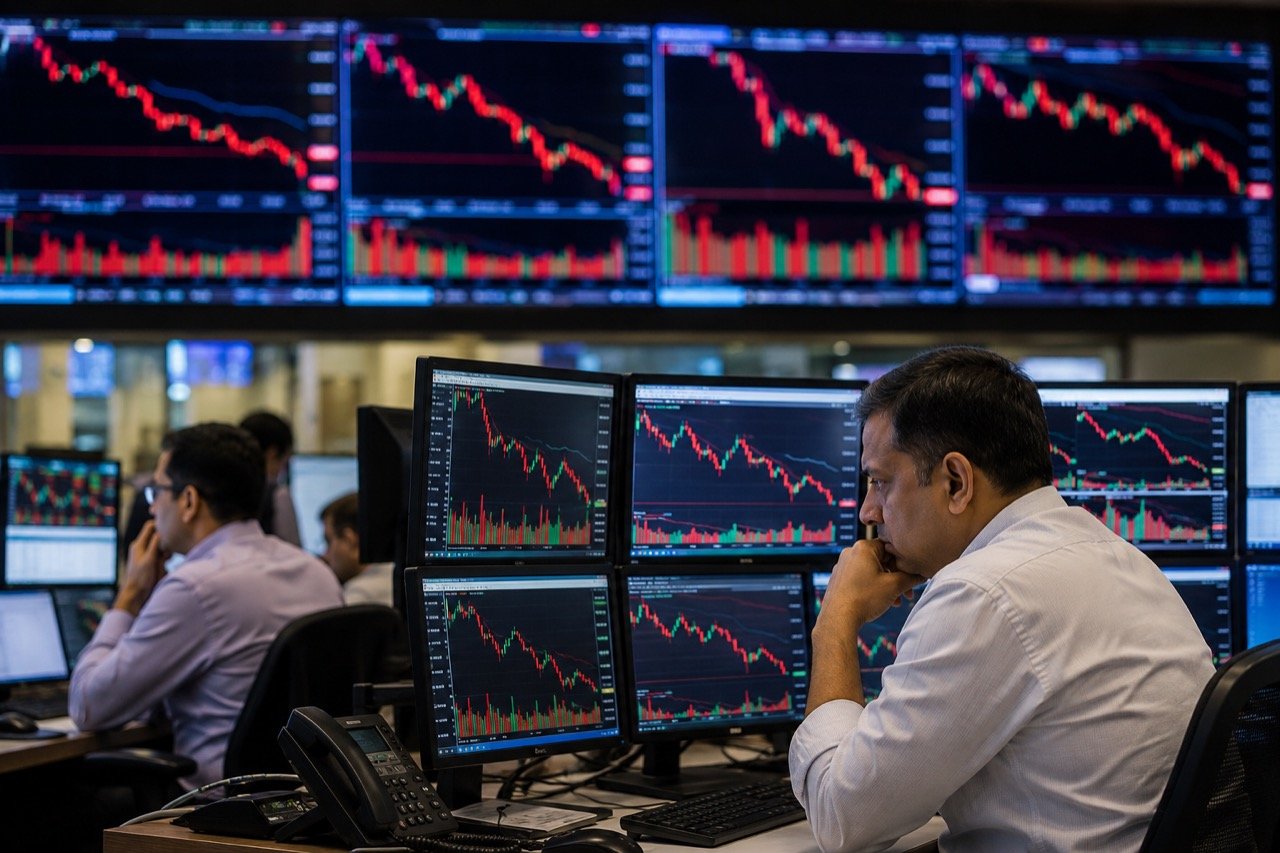
Indian equity benchmarks surrendered their early gains and closed in the red on June 29. The Sensex fell 372.10 points to end at 76,728.37, while the Nifty shed 109.75 points to settle at 23,946.25, according to market reports. Auto, IT and oil and gas stocks did most of the damage as indices slipped from the day's highs. The Nifty's close below the 24,000 mark carries psychological weight for traders, even if longer-term investors would file the move under routine volatility.
Sessions like this show how quickly short-term momentum can fade when global uncertainty, sector rotation and profit booking arrive together. A single day's close is rarely instructive on its own, but this one is worth dwelling on precisely because of how the losses were distributed. The headline number, a 372-point fall in the Sensex, sounds alarming in isolation. Read against the sector detail, however, it tells a more nuanced story about where conviction is building and where it is draining away.
A rotation, not a rout
The sector detail gave the day its shape. Pharma reportedly outperformed even as auto and oil and gas stayed under pressure, a divergence that signals money rotating between sectors rather than a uniform sell-off. Investors were repositioning around earnings expectations, valuations and macro concerns instead of heading for the exits en masse. This distinction matters enormously for how the session should be read. A broad-based sell-off, where every sector falls in tandem, usually reflects a shift in risk appetite at the market level, often triggered by a macro shock, a global cue or a liquidity event. What happened on June 29 looks different. Capital appears to have moved out of IT and auto and into pharma, which is the signature of active portfolio management rather than panic.
For auto stocks specifically, the drag is worth unpacking further, even within the limits of what is known from this session. Auto counters are sensitive to a mix of input costs, demand signals and export exposure, and any one of these can weigh on sentiment on a given day without pointing to a structural problem. IT stocks, for their part, tend to move on currency expectations, global technology spending cycles and client budget commentary from overseas markets. When both groups soften together while pharma holds up, it suggests traders were selectively trimming exposure to sectors seen as more exposed to near-term uncertainty, while rotating into a sector viewed as comparatively defensive.
Volatility gauge flashes caution
The rise in the India VIX added to the cautious mood. Volatility indicators do not predict market direction on their own, but a climbing VIX shows traders pricing more near-term uncertainty into their positions. It is best understood as a barometer of nervousness rather than a forecast of where prices go next. A rising VIX alongside a falling index typically means that hedging activity has picked up, options premiums have widened, and market participants are paying more to protect existing positions. None of this guarantees further declines. It simply confirms that the session's mood was more guarded than the prior days, consistent with the rotation story rather than a sign of capitulation.
For retail investors, that is a cue to look past index headlines and examine what is actually moving beneath the surface. It is easy to fixate on the two headline numbers, the Sensex level and the Nifty level, because they are reported everywhere and are simple to track. But an index is only ever the sum of its parts, and on days like this the parts are telling a more interesting story than the sum. Investors who only watch the top-line figures risk drawing the wrong conclusion, either overreacting to a modest decline or missing a genuine change in sector leadership that a broad index number can mask entirely.
Why the 24,000 level matters, and why it might not
The Nifty's slip below 24,000 will draw outsized attention simply because round numbers function as reference points for traders, chartists and headline writers alike. There is no fundamental reason why 24,000 should matter more than 23,987 or 24,013; the number carries weight because enough market participants have decided it does, and that collective attention itself can influence short-term positioning. Breaches of such levels sometimes trigger stop-losses or algorithmic selling that has little to do with underlying company fundamentals, which is precisely why a single day's breach should not be read as a verdict on the market's direction. What matters more is whether the index can reclaim the level quickly, or whether repeated attempts to do so fail, since that pattern would say more about underlying sentiment than the initial breach itself.
What different stakeholders will take from this session
Institutional investors managing diversified portfolios are likely to treat this as a routine rebalancing day, adjusting sector weights in response to earnings expectations and valuation signals rather than treating the index move as a standalone event. Traders working shorter time frames will watch the VIX and the 24,000 level closely, since both feed directly into near-term positioning and options strategy. Retail investors, who often lack the tools or time to parse sector-level detail, are the group most likely to misread a day like this, reacting to the index headline rather than the more informative story of rotation happening beneath it. Companies within the auto, IT and oil and gas sectors will be watched for whether the pressure persists into subsequent sessions or proves to be a single-day repositioning, which would materially change how their outlook is read by analysts.
The NE Times View
A 372-point Sensex fall makes for dramatic headlines, but the composition of this decline matters more than its size. When pharma rallies while IT and autos slide, the market is discriminating, not panicking, and that is usually a sign of health rather than distress. A market that treats every sector identically, whether on the way up or the way down, is arguably more worrying than one that is actively distinguishing between sectors based on earnings and valuation. The level to watch is Nifty 24,000: repeated failures to reclaim it could sap trader confidence, while a quick recovery would confirm this was rotation noise rather than the start of a deeper correction.
Our concern is for retail investors who treat every red close as a signal to act; churning a portfolio on daily index moves is how small investors reliably underperform. The temptation on a day like this is to interpret a falling headline number as a call to action, whether that means exiting positions, chasing the outperforming sector, or otherwise deviating from a considered plan. That temptation is rarely rewarded. The discipline that pays in weeks like this is boring: stick to quality, respect valuations and let volatility be the other trader's problem. Watching sector rotation for information is useful; trading on every tick of the index rarely is.
Key takeaways
- The Sensex fell 372.10 points to 76,728.37 and the Nifty fell 109.75 points to 23,946.25 on June 29, with auto, IT and oil and gas stocks leading the decline.
- Pharma outperformed even as auto and oil and gas lagged, indicating sector rotation rather than a broad-based sell-off.
- A rising India VIX signalled greater near-term caution among traders, though it does not by itself predict future direction.
- The Nifty's close below the psychologically significant 24,000 level will be watched for whether it is quickly reclaimed or repeatedly fails, which would say more about sentiment than the initial breach.
- Retail investors are best served by focusing on sector-level detail and valuation discipline rather than reacting to daily index headlines.
You may also like to read

Sensex Climbs Around 291 Points, Nifty Closes Above 24,100 as IT and Pharma Shares Lift Market
Indian equities rebounded on June 22, 2026, with the Sensex gaining about 291 points and the Nifty closing above 24,100, led by IT and pharmaceutical stocks despite lingering Middle East tensions.
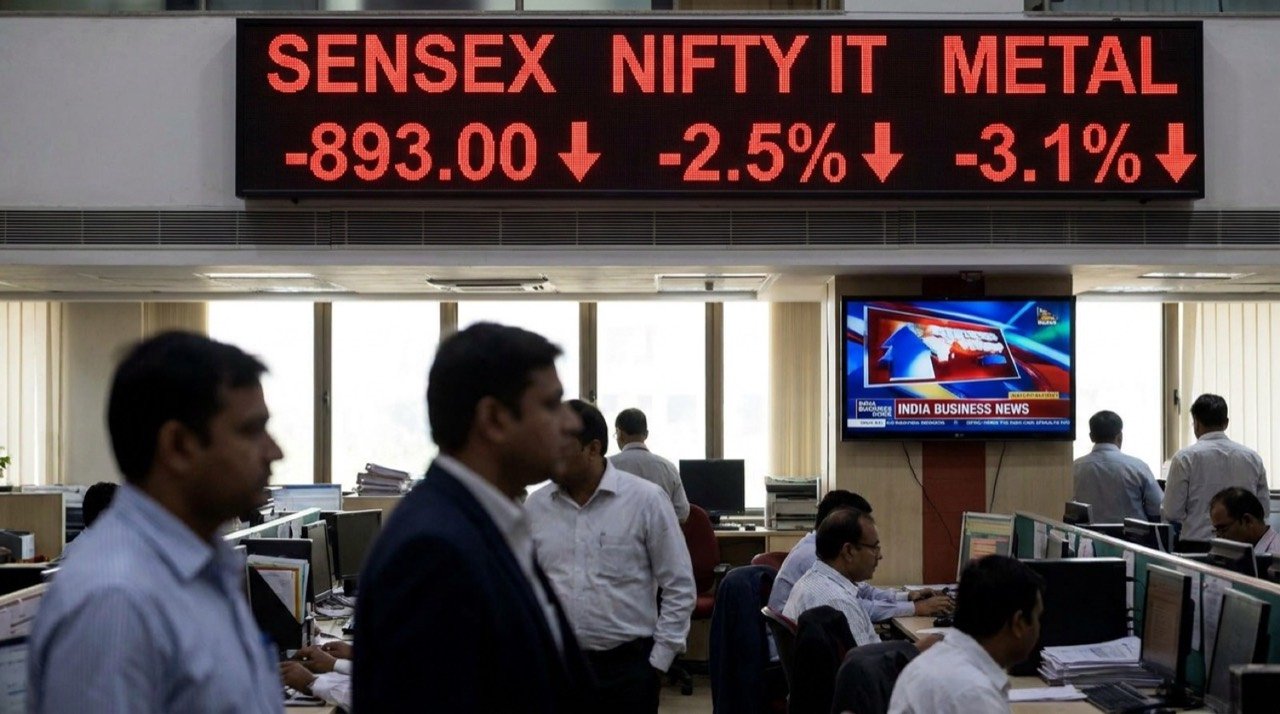
Sensex Tumbles 893 Points as IT and Metal Stocks Lead Broad Market Selloff
Indian equities slid sharply on 23 June, with the Sensex down 893 points and the Nifty closing at 23,824, as IT, metals and PSU banks led a broad-based selloff driven by weak global cues.
Sensex Crashes Nearly 900 Points as Global Risk-Off Mood Hits Indian Markets
Indian equities tumbled on Tuesday as the Sensex shed about 893 points and the Nifty slipped below 23,900, dragged by weak global cues, IT and metal selling and foreign outflow fears.
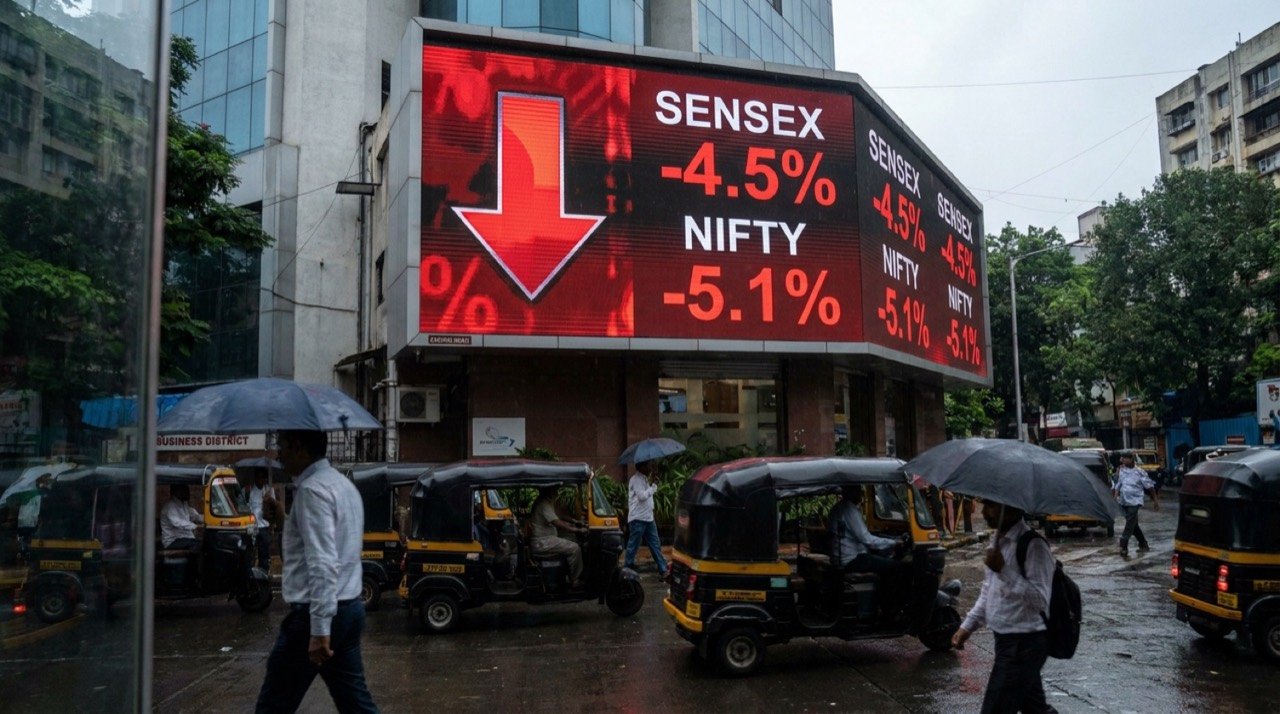
Sensex Sheds 893 Points as Global Risk and West Asia Tensions Weigh on Indian Equities
Indian benchmark indices closed sharply lower on June 23 as weak global cues and West Asian uncertainty dragged the Sensex below 76,300 and the Nifty under 23,850.
More from this section
More
Adani Case: US DOJ Pushes for Permanent Dismissal of Charges
The US Department of Justice has urged a judge to permanently dismiss charges against Gautam Adani, calling the case legally flawed — a reversal with consequences for markets, diplomacy and cross-border enforcement.

Akasa Air Inducts 40th Aircraft in Indian Aviation Scale-Up
Akasa Air's 40th aircraft, ferried to Bengaluru via Seattle, Reykjavik and Cairo, marks a fleet milestone for the young carrier and a fresh signal that India's aviation market remains firmly in expansion mode.
BARC Ratings Suspension Leaves Indian TV Industry Flying Blind
BARC's pause on television ratings has put India's broadcast measurement system under fresh scrutiny, leaving broadcasters, advertisers and media planners without the weekly audience data that anchors the TV economy.