SEBI's Technology-Rule Review Could Reshape Access to India's Markets
SEBI has proposed a sweeping review of technology and compliance rules for exchanges, depositories and market participants, with a key question being whether Direct Market Access should be opened more widely to retail investors.
Commentary & Analysis ·

The Securities and Exchange Board of India has proposed a broad review of the technology and compliance rules that govern stock exchanges, clearing corporations, depositories and market participants. Among the questions on the table, according to reporting by Moneycontrol and the Economic Times, is whether Direct Market Access should be opened more widely, potentially extending to retail investors. On the surface this reads as a technical, back-office exercise. In substance, it touches the architecture that determines how orders reach India's exchanges, who bears responsibility when things go wrong, and how much protective distance ordinary investors retain between themselves and the fastest corners of the market.
What the consultation covers
The proposed overhaul goes well beyond a single issue. SEBI is examining outdated provisions, strengthening cyber resilience, tightening disaster-recovery expectations and simplifying rulebooks that have accumulated over years of incremental change. Taken together, the review reads as an attempt to modernise the digital plumbing of India's markets while making the regulatory framework easier to navigate for the institutions that operate within it. This is the kind of housekeeping that rarely makes headlines on its own, yet it matters enormously to how resilient the system is under stress. Rulebooks that have grown organically over successive market cycles tend to accrete redundancy, ambiguity and provisions written for technology that no longer exists. A regulator willing to revisit that accumulated weight, rather than simply layering new clauses atop old ones, is signalling an intent to keep the framework legible to the very participants it is meant to govern.
That legibility matters practically. Exchanges, clearing corporations and depositories all have to build compliance systems around SEBI's rules, and simpler, clearer provisions reduce the room for costly misinterpretation or inconsistent enforcement. A cleaner rulebook is also easier for SEBI itself to supervise, since ambiguity in regulation tends to breed ambiguity in compliance.
Why Direct Market Access is the headline
Direct Market Access lets orders reach the exchange with minimal manual intermediation, prized for the speed and efficiency it offers. It has traditionally been the preserve of institutional and professional traders, precisely because it strips away layers of human review that might otherwise catch an erroneous or reckless order before it reaches the market. Widening that access could lower latency and improve execution for more participants, extending to a broader set of investors the kind of speed advantage that has so far been concentrated among large trading desks. But it also sharpens long-standing questions about risk controls, the responsibilities brokers carry for orders routed through their systems, and the surveillance needed to keep markets orderly. Every step that removes friction from order placement also removes a checkpoint where mistakes, or worse, manipulative activity, might otherwise be caught before execution.
The stakes are different depending on who is on the other end of that access. Institutional desks generally have their own risk-management infrastructure, dedicated compliance staff and capital buffers that can absorb the consequences of a technical error. Retail investors, by contrast, often rely on their broker's own safeguards as the primary line of defence. If Direct Market Access is extended to retail participants, the question becomes whether brokers, exchanges and SEBI collectively replace the human intermediation being removed with something equally protective, such as automated pre-trade checks, position limits and real-time surveillance.
Efficiency against safeguards
India's markets depend on fast, trusted digital infrastructure, and any change that boosts efficiency is welcome in principle. Faster, more direct market access can narrow bid-ask spreads, improve price discovery and make Indian exchanges more competitive against global venues that already offer sophisticated low-latency access to a wide range of participants. The harder task is ensuring that broader access does not dilute investor protection or weaken the safeguards that contain systemic risk. Cyber resilience and disaster-recovery provisions, both explicitly part of this review, are the other half of that equation: a system that is faster but less resilient to outages or attacks would simply be trading one kind of risk for another.
SEBI has invited feedback before finalising the changes, signalling that the balance is still being negotiated. That consultative posture is itself worth noting. Rather than mandating a fixed model and adjusting later, the regulator appears to be testing the reaction of exchanges, brokers, clearing corporations and other stakeholders before committing to a final design. This gives market participants, and by extension the investors they serve, a genuine opportunity to flag risks that regulators sitting at a remove from daily trading operations might not immediately see.
What stakeholders are likely to weigh in on
Brokers will have a direct commercial interest in how any expanded Direct Market Access regime is structured, since they are typically the entities held responsible for orders that pass through their systems even when a client initiates them with minimal intermediation. Exchanges and clearing corporations will be focused on whether their surveillance and risk-management infrastructure can absorb a larger, more diverse pool of direct-access users without compromising market stability. Investor advocates, meanwhile, are likely to press SEBI on disclosure requirements and safeguards specifically tailored to retail participants, who may not fully appreciate the risks of trading with the same technological immediacy as professional desks.
The review's other stated goals, updating outdated provisions and streamlining rulebooks, are less contentious but still consequential. A modernised, simplified rulebook lowers the cost of compliance for smaller market participants who may lack the legal and technical resources of larger institutions, potentially making India's markets more accessible to a wider range of intermediaries even before any change to Direct Market Access itself.
The NE Times View
Widening Direct Market Access to retail investors would be a significant philosophical shift, trading the protective friction of intermediaries for speed and lower costs. The promise is efficiency; the peril is retail traders exposed to professional-grade risk. Retail investors, unlike institutional desks, may not have the risk-management discipline, capital cushions or technical sophistication to manage the consequences of near-instantaneous order execution, particularly during periods of market volatility when the temptation to trade impulsively is highest.
The NE Times View: SEBI should sequence this carefully, pairing any opening with strict risk controls, clear disclosures and circuit-breakers, because India's retail boom is young and a poorly designed access regime could amplify losses faster than gains. The outcome will depend on how SEBI weighs the gains in efficiency against the demands of oversight. If the final rules pair broader access with robust controls, India could strengthen both the competitiveness and the integrity of its markets. The consultation period will be the moment for brokers, exchanges and investors to shape that balance, and how vocally each of those constituencies engages with SEBI now may well determine the shape of Indian retail trading for years to come.
Key takeaways
- SEBI has proposed a broad review of technology and compliance rules covering exchanges, clearing corporations, depositories and market participants.
- A central question is whether Direct Market Access should be widened, potentially to include retail investors, alongside stronger cyber resilience and disaster-recovery standards.
- Wider access could improve efficiency and execution speed but raises questions about broker responsibility, risk controls and market surveillance.
- SEBI is inviting public feedback before finalising the rules, leaving the balance between efficiency and safeguards still to be negotiated.
- The NE Times View is that any expansion of retail access should be sequenced carefully, paired with strict risk controls, disclosures and circuit-breakers.
You may also like to read
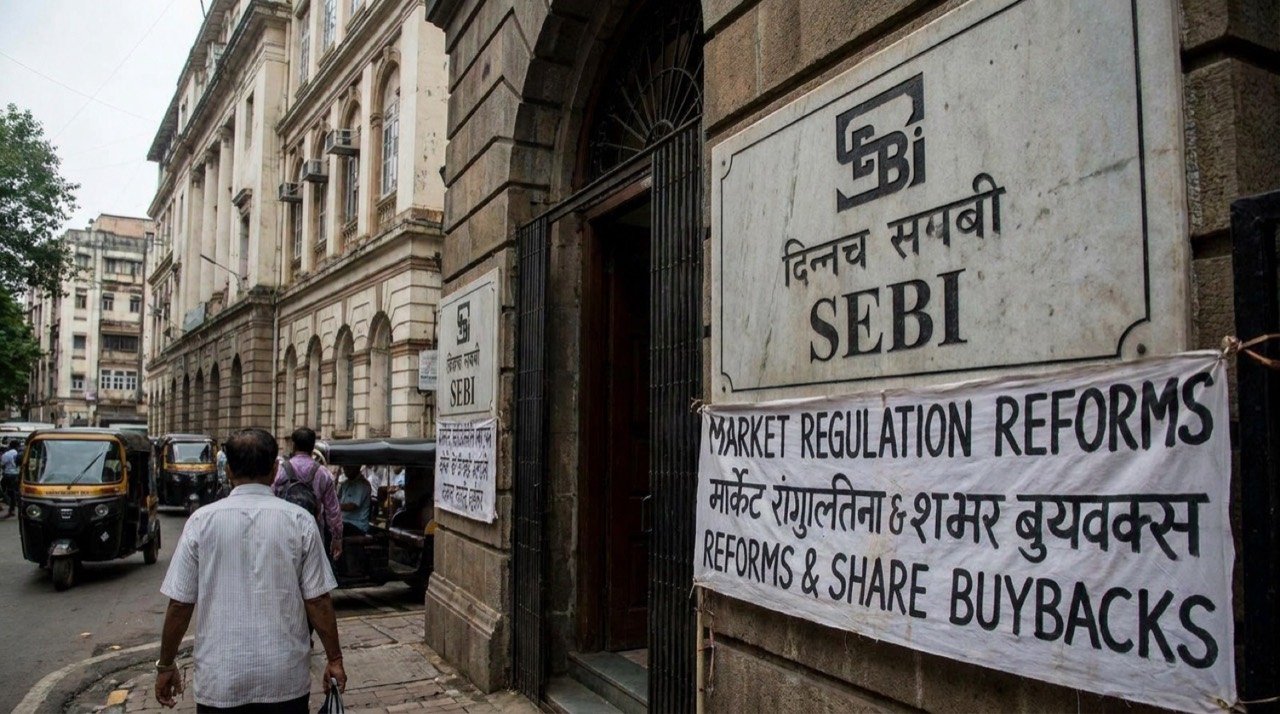
SEBI Reform Push Aims to Simplify Market Plumbing and Revive Open-Market Buybacks
SEBI has proposed a simpler rulebook for stock exchanges and clearing corporations and cleared the return of open-market share buybacks from August 1, signalling a lighter-touch yet sturdier market framework.
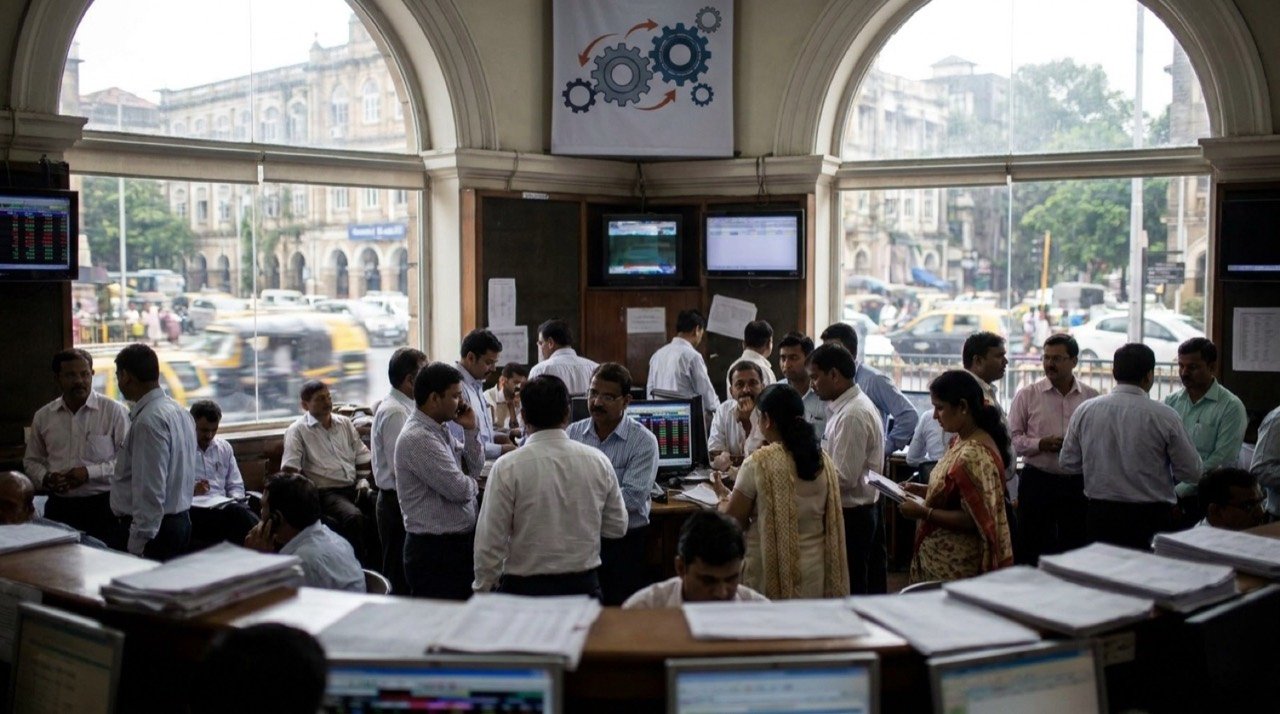
SEBI Proposes Simpler Rulebook for Stock Exchanges, Clearing Firms and Brokers
India's market regulator SEBI has proposed a sweeping ease-of-business overhaul of technology, compliance and reporting rules for exchanges and intermediaries, promising clearer obligations without diluting investor protection.

NSE IPO Filing With SEBI Moves India's Top Exchange Closer to Listing
The National Stock Exchange has filed draft IPO papers with SEBI for an offer estimated near Rs 30,000 crore, a long-delayed move that could rank among India's biggest-ever public issues if cleared.
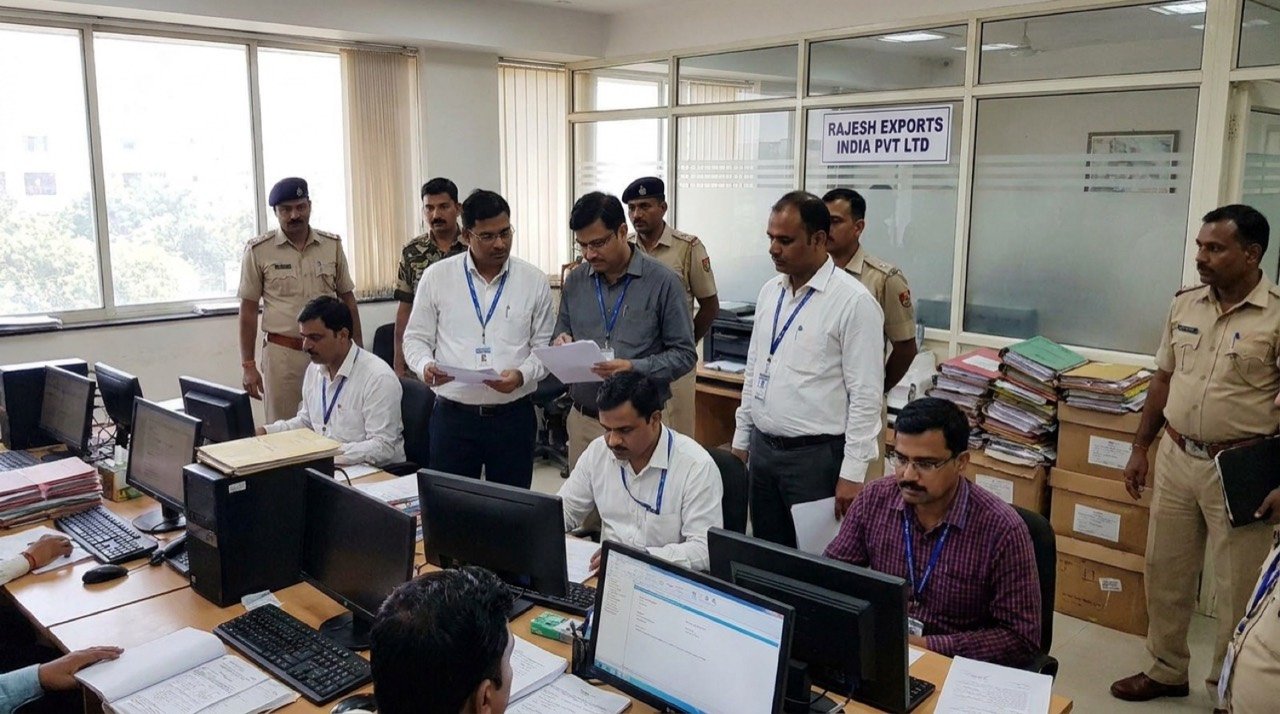
ED Searches Rajesh Exports In Bengaluru And Mumbai Over Alleged FEMA Violations
Enforcement Directorate searches at locations linked to gold refiner Rajesh Exports follow SEBI scrutiny of disclosures, putting corporate governance and FEMA compliance back in the investor spotlight.
More from this section
More
Adani Case: US DOJ Pushes for Permanent Dismissal of Charges
The US Department of Justice has urged a judge to permanently dismiss charges against Gautam Adani, calling the case legally flawed — a reversal with consequences for markets, diplomacy and cross-border enforcement.

Akasa Air Inducts 40th Aircraft in Indian Aviation Scale-Up
Akasa Air's 40th aircraft, ferried to Bengaluru via Seattle, Reykjavik and Cairo, marks a fleet milestone for the young carrier and a fresh signal that India's aviation market remains firmly in expansion mode.
BARC Ratings Suspension Leaves Indian TV Industry Flying Blind
BARC's pause on television ratings has put India's broadcast measurement system under fresh scrutiny, leaving broadcasters, advertisers and media planners without the weekly audience data that anchors the TV economy.