SBI Funds Management Seeks Rs 2,000 Crore Pre-IPO Round Before Listing
India's largest mutual fund manager is reportedly courting institutional investors for up to Rs 2,000 crore ahead of a public listing that could rank among the biggest IPO stories of 2026.
Commentary & Analysis ·

SBI Funds Management, the country's largest mutual fund manager, is reportedly seeking to raise up to Rs 2,000 crore in a pre-IPO round, setting the stage for what could become one of India's most closely watched market listings of 2026. According to reports, the asset manager is courting institutional money ahead of its initial public offering. A pre-IPO placement of this scale serves several purposes at once: it helps establish a valuation benchmark, brings credible institutional backers onto the register, and tests real market demand before the public issue opens.
On the surface, this is a routine pre-listing manoeuvre of the kind large Indian companies have used for years. But the identity of the issuer changes the stakes considerably. SBI Funds is not a peripheral business seeking capital to expand into a new market; it is the dominant player in an industry that has become the primary conduit through which ordinary Indian households now participate in equity markets. A capital raise of this nature, ahead of a public listing, is effectively an invitation for sophisticated institutional investors to place an early, informed bet on how that industry's growth story should be valued.
Why a pre-IPO round matters more than it appears to
Pre-IPO placements exist precisely because they solve a problem that the public offer process cannot solve on its own: price discovery under conditions of genuine uncertainty. When a company as large and as closely scrutinised as SBI Funds goes to institutional investors before the public issue, it is effectively asking the market's most demanding buyers to underwrite a valuation. If those investors subscribe readily and at a price close to what the company is seeking, it sends a strong signal to retail investors and to the wider market that the eventual IPO price is grounded in credible institutional judgement rather than optimistic marketing.
There is also a structural benefit that goes beyond signalling. Bringing in anchor institutional investors ahead of listing tends to stabilise the shareholder register from day one, reducing the kind of speculative volatility that can accompany IPOs with a purely retail-driven bookbuild. For a company managing crores of rupees in household savings, that stability is not a cosmetic detail — it goes to the heart of how much confidence the market can place in the stock's post-listing behaviour.
A proxy for India's savings shift
The listing matters well beyond IPO desks because asset management has become a major proxy for India's financialisation. Record SIP participation, the steady migration of household savings from physical assets such as gold and real estate into market-linked products, and swelling investment flows have transformed mutual fund platforms into some of the most-watched businesses in Indian finance. As the industry leader, SBI Funds sits at the centre of that story.
This is worth dwelling on, because it explains why a fund manager's IPO can command attention usually reserved for consumer technology or manufacturing giants. Indian households have historically preferred physical assets — gold, land, fixed deposits — over market-linked instruments. The systematic investment plan boom of the past decade represents a genuine behavioural shift, one that has proved unusually resilient even through periods of market stress. SBI Funds, by virtue of its scale and its parentage under the State Bank of India umbrella, has been among the largest beneficiaries of that shift. Its public debut would therefore give investors something rarer than exposure to a single company's earnings: direct exposure to the growth trajectory of Indian household investing itself, as a structural and ongoing phenomenon rather than a cyclical one.
What the pre-IPO round will reveal
The immediate signal to watch is investor appetite. The pricing and uptake of the Rs 2,000 crore round will effectively set expectations for the IPO's valuation and reveal how institutions rate the mutual fund business model against listed peers, including other asset managers and diversified financial services firms already trading on Indian exchanges. Strong demand would confirm that India's asset management growth story still commands a premium in the eyes of sophisticated capital; a lukewarm response would force a rethink on pricing, and possibly on the timing of the public issue itself.
It is also worth considering what "strong demand" would actually validate. Asset management businesses earn revenue primarily through fees charged on assets under management, meaning their profitability rises and falls with market levels, fund flows and the fee rates they can sustain. A confident pre-IPO subscription would imply that institutional investors expect assets under management to keep growing at a healthy clip, that fee rates will hold up reasonably well despite competitive pressure, and that SBI Funds' scale and distribution reach — bolstered by its association with the State Bank of India network — give it a durable edge over rivals. Each of these is a distinct bet, and the pre-IPO round is, in effect, a single number that bundles all three together.
Stakeholders with different vantage points
For the promoters and existing shareholders of SBI Funds, a well-subscribed pre-IPO round de-risks the eventual public listing considerably, locking in a valuation floor before the company is exposed to the more unpredictable sentiment of the broader retail market. For institutional investors weighing participation, the calculus is different: they are being asked to commit capital before the liquidity and price transparency of a public listing exist, in exchange for early access and, potentially, a more favourable entry price than the IPO might eventually offer.
For retail investors and for the millions of SIP holders whose monthly contributions actually constitute the assets SBI Funds manages, the stakes are more indirect but no less real. A successful listing, followed by the scrutiny and disclosure obligations that come with being a publicly traded, regulated entity, would in principle improve governance and transparency at a firm that already holds a significant share of Indian household savings. That is a meaningful, if slow-moving, benefit that accrues well after the headlines about the IPO itself have faded.
The NE Times View
An SBI Funds listing would be more than another large IPO — it would be a referendum on the durability of India's savings revolution. The SIP boom has been the quiet engine of Indian markets, and listing the country's biggest beneficiary of that flow puts a price on the trend itself. Retail investors should resist the reflex to equate size with certainty: asset management earnings are leveraged to market levels, and fee compression is a live global threat that has already reshaped the economics of fund management in more mature markets. There is no guarantee that India's asset managers will remain insulated from that pressure indefinitely, even if the growth in absolute assets under management continues.
But for the industry as a whole, a marquee listing brings scrutiny, disclosure and discipline that ultimately benefit the crores of households whose money these firms manage. Public markets impose a kind of accountability that private ownership structures do not always demand as rigorously, and a company of SBI Funds' size and systemic importance arguably should be operating under that level of visibility. Watch the pre-IPO pricing closely — it will tell us what smart money really thinks about the next phase of India's financialisation, long before the public issue itself opens for subscription.
Key takeaways
- SBI Funds Management, India's largest mutual fund manager, is reportedly seeking up to Rs 2,000 crore in a pre-IPO round ahead of a planned 2026 listing.
- The pre-IPO placement is designed to establish a valuation benchmark, attract credible institutional backers, and test real market demand before the public issue.
- The listing is widely seen as a proxy for India's broader financialisation trend, including record SIP participation and the shift of household savings into market-linked products.
- Pricing and uptake in the pre-IPO round will signal how institutions value the mutual fund business model relative to listed peers.
- Retail investors should weigh the appeal of scale against risks such as market-linked earnings volatility and global pressure on fee structures.
You may also like to read

SBI Mutual Fund IPO Approval Clears Listing Path for Rs 13,000 Crore Issue
SBI Mutual Fund has reportedly received regulatory approval for an IPO that could raise about Rs 13,000 crore, putting India's fast-growing asset-management industry back in the market spotlight.
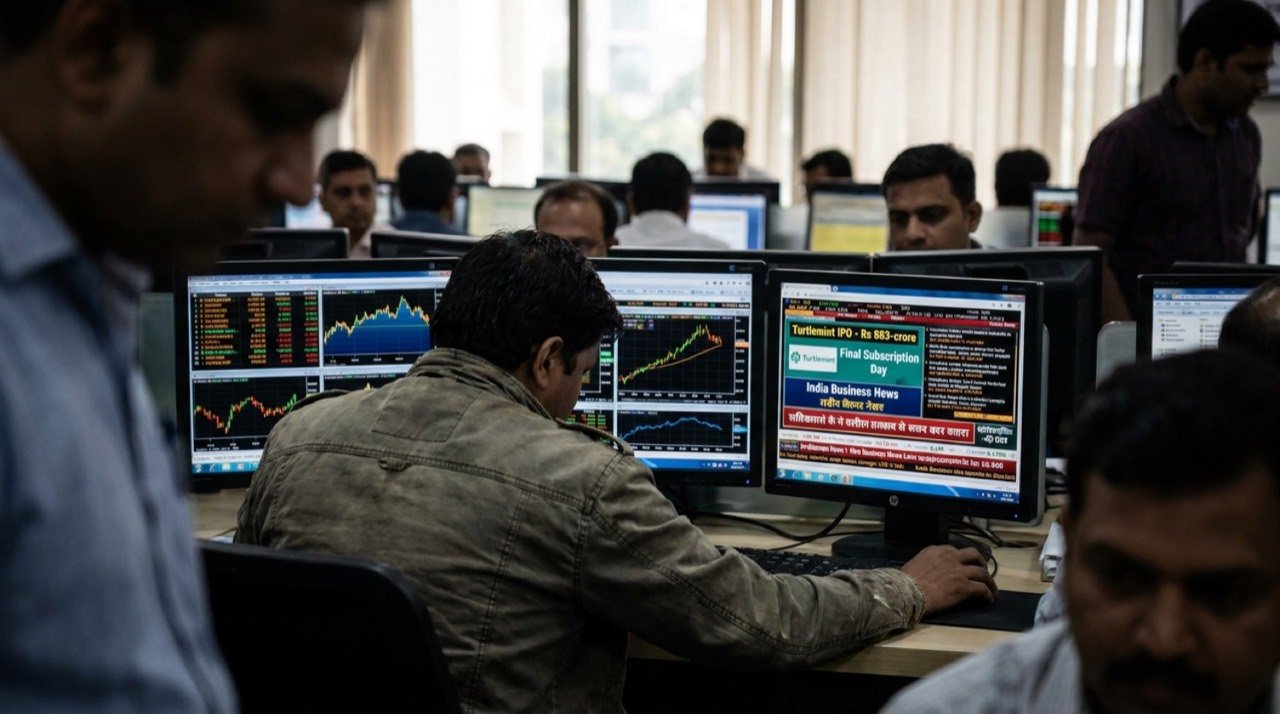
Turtlemint IPO Enters Final Day: Rs 883-Crore Issue Tests India's Insurtech Appetite
Turtlemint's Rs 883-crore IPO reached its final bidding day on 23 June, with investors weighing subscription levels, profitability and regulatory risk in India's growing insurance-technology market.

Waterways Leisure Tourism IPO Opens As Cruise Operator Seeks Growth Capital
The cruise tourism operator's IPO gives investors rare exposure to India's experience-led travel economy, as capital markets open up to consumer businesses beyond banks, manufacturers and tech firms.

Jio, NSE And Zepto Anchor A Crowded IPO Pipeline As 2026 Listing Wave Builds
With Reliance Jio, NSE, Zepto and dozens of startups in the queue, India's IPO pipeline looked unusually deep in June 2026 even as smaller SME issues kept the primary market humming.
More from this section
More
Adani Case: US DOJ Pushes for Permanent Dismissal of Charges
The US Department of Justice has urged a judge to permanently dismiss charges against Gautam Adani, calling the case legally flawed — a reversal with consequences for markets, diplomacy and cross-border enforcement.

Akasa Air Inducts 40th Aircraft in Indian Aviation Scale-Up
Akasa Air's 40th aircraft, ferried to Bengaluru via Seattle, Reykjavik and Cairo, marks a fleet milestone for the young carrier and a fresh signal that India's aviation market remains firmly in expansion mode.

BARC Ratings Suspension Leaves Indian TV Industry Flying Blind
BARC's pause on television ratings has put India's broadcast measurement system under fresh scrutiny, leaving broadcasters, advertisers and media planners without the weekly audience data that anchors the TV economy.