Preity Zinta Deepfake Plea Puts Celebrity Image Rights on Trial
Preity Zinta's reported Bombay High Court plea against AI deepfakes has reignited Bollywood's digital-safety debate, raising urgent questions about platform takedowns, personality rights and how quickly Indian law can respond to generative media.
Commentary & Analysis ·
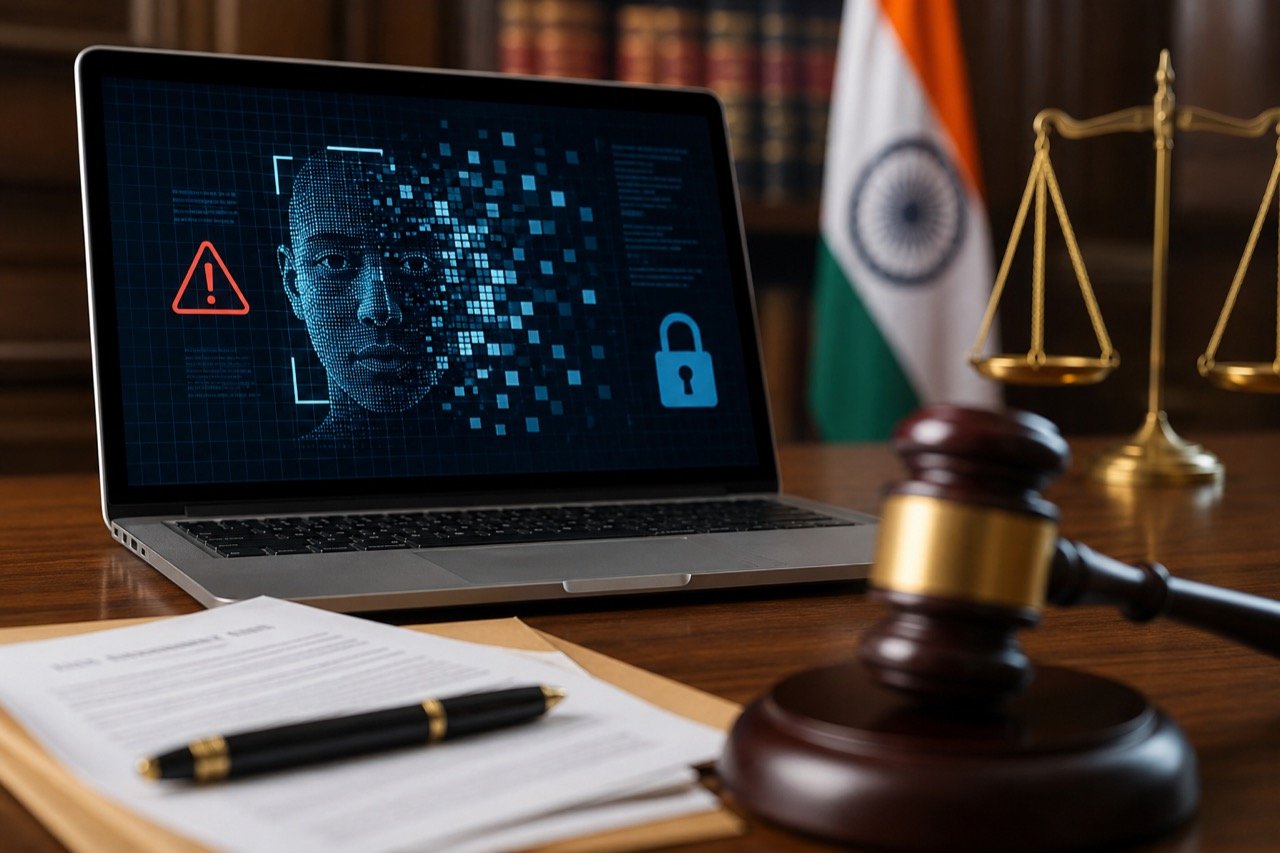
Preity Zinta has reportedly turned to the Bombay High Court to seek takedown relief against AI-generated deepfakes, according to Hindustan Times. The move places the actor on a growing list of Indian public figures who have gone to court over manipulated digital content, and it has quickly become one of the most closely watched stories at the intersection of entertainment and technology policy in India. What might, on the surface, look like a single celebrity's grievance is in fact a test case for how Indian law will respond to a problem that is only going to grow larger as generative AI tools become cheaper, faster and more convincing.
Why one actor's plea resonates so widely
For a film star, a face, a voice and a public persona are not just personal attributes — they are professional assets that underpin endorsements, casting decisions and audience trust. When generative AI tools are used to fabricate images or videos without consent, the harm cuts two ways: it is a privacy violation and, at the same time, a commercial and intellectual-property problem. A deepfake does not merely embarrass or misrepresent an individual; it can be used to imply an endorsement that was never given, to damage a reputation built over decades of work, or simply to generate engagement and revenue for whoever created and circulated the fabricated content. For someone like Zinta, whose identity has real market value, the stakes are not abstract.
This is precisely why the case has captured attention well beyond entertainment pages. It sits at the meeting point of two conversations that Indian society is currently having in parallel — one about the unchecked pace of AI development, and another about who owns and controls a person's digital likeness. A plea from a well-known actor gives both conversations a concrete, high-profile anchor.
The blurred legal lines AI creates
AI-altered media also blurs lines that the law once found easier to draw. Content can sit ambiguously between satire, impersonation and outright harmful misrepresentation, and it can circulate across platforms far faster than traditional defamation or privacy remedies were designed to handle. A doctored image that took a skilled graphic artist hours to produce a decade ago can now be generated by an amateur in seconds, and distributed to millions before any court, platform or individual has a chance to respond. Traditional legal remedies — defamation suits, privacy torts, injunctions — were built for an era of comparatively slow-moving, traceable publication. They struggle when the offending content can be recreated, re-uploaded and reshared faster than any single takedown order can travel.
This mismatch in speed is arguably the central policy problem the courts are being asked to solve. It is not enough to establish, in principle, that a person has a right against unauthorised digital manipulation of their image; the remedy has to be fast enough to matter in practice, or it risks becoming a hollow victory secured long after the damage is done.
Courts and platforms under pressure
Indian audiences are no strangers to deepfake controversies involving public figures, but the legal toolkit is still evolving. Courts are increasingly being asked to grant swift takedown directions, while platforms face scrutiny over verification tools and compliance speed. This dynamic puts two different institutions under simultaneous pressure: the judiciary, which must fashion effective interim relief using legal doctrines that were not written with AI in mind, and technology platforms, which are expected to detect, flag and remove synthetic content at a scale and speed that current moderation systems often cannot match.
The next meaningful markers in this case will be the court's directions, how quickly platforms act on them, and whether the outcome creates a clearer, faster route for other individuals seeking similar relief. If the Bombay High Court's directions are specific — naming categories of content, setting timelines for compliance, or establishing standards for what counts as adequate verification — they could serve as a reference point for future petitions. If the directions are narrow or case-specific, the next public figure to face a similar violation may have to start the legal argument from scratch.
The gap ordinary citizens face
It is worth pausing on an asymmetry that this case exposes rather starkly. A well-resourced celebrity can approach the Bombay High Court, retain senior counsel and generate significant media attention around a plea. An ordinary citizen victimised by the same technology — a private individual whose photograph is manipulated for harassment, extortion or humiliation — typically has none of these advantages. They face the same technological threat with a fraction of the resources, and often without the public visibility that helps compel a swift institutional response. This is not a criticism of Zinta's decision to seek legal recourse; it is a reasonable and necessary step. But it does underline why the outcome of high-profile cases like this one matters disproportionately — the standards, if any emerge, are likely to be the only practical protection available to those without the means to litigate on their own behalf.
The NE Times View
This case matters far beyond one Bollywood star. India still lacks a dedicated statutory framework for personality rights in the AI era, leaving celebrities to fight expensive, case-by-case court battles that ordinary citizens facing the same abuse could never afford. Judicial improvisation, however well-intentioned, is not a substitute for a considered legislative response — it produces protections that vary by court, by petitioner and by the specific facts of each case, rather than a predictable standard that applies uniformly.
If the Bombay High Court uses this plea to articulate clear, fast takedown standards, it could become a template that protects everyone, not just the famous. A well-reasoned order, particularly one that addresses timelines for platform compliance and the threshold for granting relief, would give lower courts, platforms and future litigants something concrete to work from. That would be a meaningful public good arising out of what is, for Zinta personally, a private grievance.
Until Parliament legislates, however, India's response to deepfakes will remain a patchwork of judicial improvisation — and the technology is moving much faster than the courts. Each new generation of AI tools makes fabrication easier and detection harder, while the legislative process, by its nature, moves deliberately. The gap between technological capability and legal clarity is likely to widen before it narrows, which makes cases like this one — however they are ultimately decided — an important barometer of how prepared India's institutions are for what is coming.
Key takeaways
- Preity Zinta has reportedly approached the Bombay High Court for takedown relief against AI-generated deepfakes, per Hindustan Times.
- The case highlights how deepfakes create dual harms — privacy violations and commercial or reputational damage — that existing legal remedies were not designed to address quickly.
- Courts are increasingly being asked for swift takedown directions, while platforms face scrutiny over verification tools and compliance speed.
- India lacks a dedicated statutory framework for personality rights in the AI era, leaving celebrities and ordinary citizens alike reliant on ad hoc judicial relief.
- The court's eventual directions, and how quickly platforms comply, will indicate whether this case can serve as a template for faster, clearer protection for all individuals, not only public figures.
You may also like to read
Preity Zinta Deepfake Case: Bombay HC Weighs Celebrity AI Rights
Preity Zinta's petition against AI-generated deepfakes and morphed images has drawn Google and Meta into a Bombay High Court discussion on how fast platforms must remove content that misuses a person's identity.
Celina Jaitly Credits Preity Zinta for Support in Legal Battle
Celina Jaitly has spoken about how Preity Zinta stood by her during an ongoing legal battle, turning a difficult personal chapter into a story of friendship and resilience under public scrutiny.

Celina Jaitly Divorce Notice Account Raises Celebrity Privacy Questions
Celina Jaitly's reported account of her twins encountering a divorce notice has put a sensitive spotlight on how celebrity legal disputes become public stories and what that exposure means for the families involved.
Karan Johar's Alpha Defence Puts Bollywood Trolling Back in Focus
Karan Johar's reported defence of Alia Bhatt's Alpha has widened the film's release conversation from box-office numbers to a bigger question: how Bollywood should handle relentless online negativity.
More from this section
More
72nd National Film Awards: Fans Back Mammootty, Allu Arjun, Sai Pallavi
Speculation around the 72nd National Film Awards is intensifying as fan communities across India's language film industries champion favourites including Mammootty, Allu Arjun and Sai Pallavi ahead of any official announcement.

Aamir Khan Marries Gauri Spratt in Private Pali Hill Ceremony
Aamir Khan and Gauri Spratt tied the knot at the actor's Pali Hill home in Mumbai on July 5, turning a deliberately small family ceremony into Bollywood's biggest story of the day.
Akanksha Chamola's Lock Upp 2 Confession Sets Reality TV Abuzz
A personal revelation by Akanksha Chamola ahead of Lock Upp 2 has handed the reality show a viral talking point, underlining how confession-driven formats continue to dominate Indian television conversation.