Bengaluru Court Issues Non-Bailable Warrant Against Prakash Raj in Voter ID Case
A Bengaluru court has ordered a non-bailable warrant against actor Prakash Raj in a case alleging multiple voter identity cards, after he reportedly missed court appearances following summons.
Commentary & Analysis ·
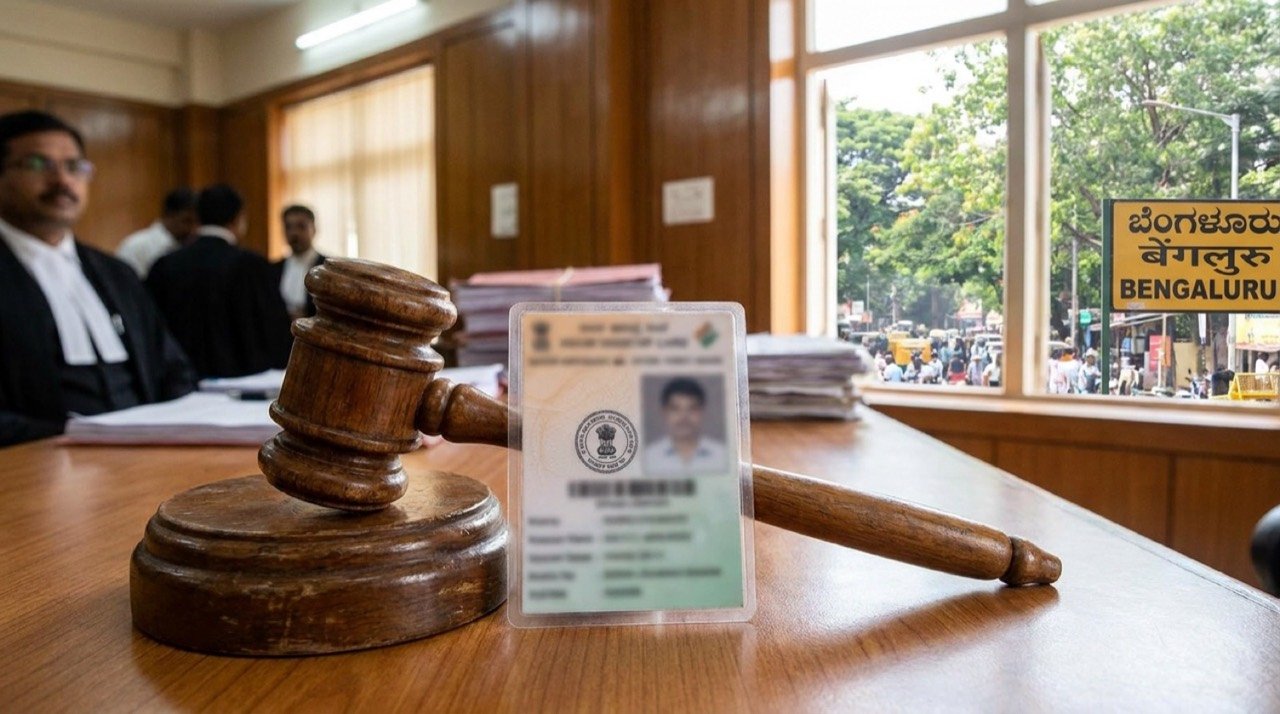
A Bengaluru court has issued a non-bailable warrant against actor and political voice Prakash Raj in a case alleging that he held multiple voter identity cards. According to reports, the order followed a series of missed appearances after the court issued summons, escalating what began as a procedural matter into a sharper legal moment for the well-known performer. The case, on its face, is unremarkable in the machinery of the courts, warrants of this kind are issued routinely when a summoned individual fails to appear. What makes it newsworthy is the person involved and the subject matter of the underlying allegation, which touches on the sanctity of the electoral roll.
What the warrant actually means
A non-bailable warrant is a procedural instrument tied directly to securing a person's appearance before a court. It is issued when a court concludes that milder measures, summons, notices, requests for voluntary appearance, have not produced the desired result. Crucially, it is not a finding of guilt, nor is it a verdict on the allegations that gave rise to the case in the first place. Prakash Raj has not been convicted in this matter, and the order reflects the court's response to repeated absences rather than any conclusion on the merits of the voter ID allegation itself.
This distinction is easy to lose in public conversation, particularly when a recognisable public figure is involved. The issuance of a warrant can be, and often is, mistaken for a judgment on the underlying dispute. In reality, the warrant is a procedural escalation designed to compel presence, nothing more and nothing less. At this stage, the case remains an allegation working its way through due process, with the facts yet to be tested before the court.
The substance of the allegation
The case centres on claims that the actor was associated with more than one voter identity card. On its own, this is a narrow factual question, either the records show duplicate entries linked to the same individual, or they do not, and the court will in due course have to examine the documentary trail. But the allegation sits within a much larger and more sensitive domain, that of electoral roll integrity. India's voter databases are vast, decentralised in their original compilation, and periodically subject to concerns about duplicate, erroneous, or outdated entries. Election authorities across states have, from time to time, undertaken roll-revision exercises specifically to catch such anomalies.
Seen in that light, an individual case involving a public figure becomes a proxy for a much wider institutional question, how robust are the systems meant to prevent a single person from being enrolled more than once, whether by administrative error, oversight during address changes, or deliberate design. Whichever explanation ultimately applies here, the case is a reminder that the electoral roll is not merely paperwork, it is the foundational record on which the legitimacy of representative government rests.
Why the case resonates beyond one courtroom
Prakash Raj is not an anonymous litigant. He is a prominent actor with an unusually outspoken political profile, someone who has for years used his public standing to comment on governance, civic issues, and electoral matters. That combination, a public figure known for holding institutions to account now facing scrutiny from an institution himself, inevitably sharpens public interest. It raises, fairly or not, questions about celebrity accountability and whether the standards applied to public figures differ in practice from those applied to ordinary citizens.
There is also a symbolic dimension. Commentators and citizens alike tend to watch such cases as a test of whether legal process bends under the weight of fame or public sympathy. A court's willingness to issue a non-bailable warrant against a well-known personality, rather than continuing to extend leniency through repeated summons, sends a signal, deliberate or not, that procedural compliance is expected regardless of public stature.
The mechanics of what happens next
Procedurally, the path forward is fairly well defined. A non-bailable warrant authorises the police to take the concerned individual into custody and produce them before the court, though in practice, such matters are frequently resolved when the individual concerned appears voluntarily, often accompanied by an application to have the warrant recalled or converted into a bailable one. Courts retain discretion at this stage, and appearance combined with a reasonable explanation for the earlier absences can materially alter the trajectory of the case.
What happens next, then, will likely hinge on two things, whether Prakash Raj appears before the court in response to the warrant, and how the underlying allegation regarding the voter identity cards is subsequently examined on its facts. Until either of those unfolds, the case remains in a holding pattern, procedurally active but substantively undetermined.
Stakeholder perspectives
For the actor himself, the immediate priority is likely to be procedural, addressing the warrant and the question of appearance, before the substantive allegation can even be meaningfully contested. For election authorities and administrators, cases like this, regardless of their eventual outcome, serve as reminders of the continuing need for verification mechanisms that catch duplicate enrolments before they become matters for the courts. For the public, and particularly for commentators who track questions of institutional fairness, the case offers a data point on whether the legal system treats celebrity litigants with the same procedural rigour it applies to anyone else who misses a court summons.
A legal commentator's observation on the nature of such warrants is worth repeating here for context: a warrant compels appearance; it is the court's way of ensuring the process moves forward, not a judgment on the merits. That framing is useful precisely because it resists the temptation, present in so much coverage of celebrity legal troubles, to conflate procedural firmness with a foregone conclusion about guilt.
The NE Times View
Celebrity or not, a non-bailable warrant for skipping summons is the law applying without favour, and that is the point worth affirming. Courts do not issue such orders lightly, and their use here signals only that patience with repeated non-appearance had run its course, not that the underlying allegation has been proven. The voter-ID allegation, concerning multiple cards, touches the integrity of the electoral roll itself, no small matter in a democracy that depends on the accuracy of its voter lists to confer legitimacy on every election held under them.
Public figures testing, deliberately or through simple inattention, whether courtrooms bend to fame invite exactly this kind of judicial firmness. Whatever the eventual outcome on the substantive allegation, the case will be watched less for what it reveals about the actor personally and more for what it signals about accountability cutting across status. That is the appropriate lens through which to read it, a routine procedural mechanism, applied to a not-so-routine public figure, in service of a due process that is meant to apply equally to all.
Key takeaways
- A Bengaluru court issued a non-bailable warrant against Prakash Raj after repeated missed appearances, following summons in a case alleging multiple voter identity cards.
- The warrant is a procedural step to compel court appearance, not a conviction or a finding on the underlying allegation.
- The case touches on broader concerns about the accuracy of electoral rolls and the risk of duplicate voter entries.
- What happens next depends on whether Prakash Raj appears before the court and how the allegation is subsequently examined.
- The episode is best read as a test of equal treatment under the law rather than a verdict on the actor's conduct.
You may also like to read
Allu Arjun Seeks Virtual Hearing in Pushpa 2 Stampede Case at Hyderabad Court
The actor's lawyers have asked the Nampally court for a virtual appearance in the 2024 Sandhya Theatre stampede case, reviving scrutiny of crowd safety at star-led film events.

Kamal Haasan's Avvai Shanmugi Salary Gamble: A Tamil Cinema Case Study
A revived report that Kamal Haasan skipped a Rs 1.5 crore fee for Avvai Shanmugi and earned three times as much from its success has reopened debate on star pay and profit-sharing in Indian cinema.
Preity Zinta Deepfake Case: Bombay HC Weighs Celebrity AI Rights
Preity Zinta's petition against AI-generated deepfakes and morphed images has drawn Google and Meta into a Bombay High Court discussion on how fast platforms must remove content that misuses a person's identity.

GV Prakash's Immortal Locks July 23 Release for Tamil Horror
G V Prakash's horror thriller Immortal, directed by Mariyappan Chinna and co-starring Kayadu Lohar, has locked a July 23 theatrical release, giving Tamil genre audiences a concrete date to track this month.
More from this section
More
72nd National Film Awards: Fans Back Mammootty, Allu Arjun, Sai Pallavi
Speculation around the 72nd National Film Awards is intensifying as fan communities across India's language film industries champion favourites including Mammootty, Allu Arjun and Sai Pallavi ahead of any official announcement.

Aamir Khan Marries Gauri Spratt in Private Pali Hill Ceremony
Aamir Khan and Gauri Spratt tied the knot at the actor's Pali Hill home in Mumbai on July 5, turning a deliberately small family ceremony into Bollywood's biggest story of the day.

Akanksha Chamola's Lock Upp 2 Confession Sets Reality TV Abuzz
A personal revelation by Akanksha Chamola ahead of Lock Upp 2 has handed the reality show a viral talking point, underlining how confession-driven formats continue to dominate Indian television conversation.