Kamal Haasan's Avvai Shanmugi Salary Gamble: A Tamil Cinema Case Study
A revived report that Kamal Haasan skipped a Rs 1.5 crore fee for Avvai Shanmugi and earned three times as much from its success has reopened debate on star pay and profit-sharing in Indian cinema.
Commentary & Analysis ·

A production story from 1990s Tamil cinema is doing the rounds again: Kamal Haasan reportedly gave up a Rs 1.5 crore salary for Avvai Shanmugi — and ended up earning roughly three times that amount when the comedy became a hit. The anecdote, revived in entertainment coverage on July 5, has travelled fast because it fuses star lore, film economics and 1990s nostalgia in a single detail. On the surface, it is a piece of trivia fit for a slow news cycle. Underneath, it is a small but instructive case study in how risk is allocated between the people who make a film and the people who finance it.
The point is not simply that a major actor deferred a fee. A fixed star salary protects the actor but loads risk onto the producer before release; a profit-linked deal reverses that logic, asking the talent to bet on the film's commercial future and wait for the audience verdict. In the Avvai Shanmugi telling, that gamble is remembered as a shrewd creative-business call rather than an act of charity or humility. It is worth dwelling on that distinction, because the way this story is retold today — often as a feel-good tale of a star's sacrifice — tends to obscure the harder, more useful lesson about incentives and risk-sharing that sits underneath it.
Why the anecdote fits Kamal Haasan's career
Avvai Shanmugi endures in Tamil popular culture as a broad comedy built around a high-concept performance vehicle. Kamal Haasan's career has always swung between mainstream entertainment and formal experiment, and this story extends that pattern off screen — an actor investing not just labour but financial confidence in a project he believed would outlast opening-week curiosity. That belief, according to the anecdote, was rewarded handsomely: a payout roughly three times the Rs 1.5 crore he initially forwent. It is precisely this kind of alignment between an artist's conviction about a project and his willingness to price his own compensation against its eventual performance that gives the story its enduring appeal among industry watchers.
It also helps explain why the anecdote keeps resurfacing rather than fading into footnote status. Kamal Haasan has long cultivated an image as an actor-producer who thinks about cinema as both craft and enterprise, and a story in which he effectively underwrote his own film's commercial risk fits neatly into that persona. Whether or not every detail of the arrangement is remembered with perfect accuracy decades later, the shape of the story — talent betting on itself — has proven durable precisely because it maps onto a broader truth about how conviction and financial structure can reinforce each other in filmmaking.
A 1990s deal that reads like a modern one
The story resurfaces at a moment when Indian cinema is again arguing over star fees, ballooning marketing costs, theatrical uncertainty and streaming negotiations. Younger readers may recognise the arrangement as an early version of the back-end participation model now standard in global film industries, where actors, directors and even crew members can accept lower upfront fees in exchange for a share of box-office or streaming revenue once a project clears certain thresholds. That such a structure was already in informal use in Tamil cinema in the 1990s complicates any narrative that treats profit-participation as a recent Hollywood import grafted onto Indian filmmaking.
But the takeaway should not be flattened into a formula. Profit-sharing rewards success and equally exposes talent to the downside, and it works only when star, producer and distributor share realistic expectations about a film's prospects. A back-end deal struck on a project with genuine commercial promise can be a rational bet for everyone involved; the same structure imposed on a shaky or poorly conceived film simply shifts financial pain from the studio's balance sheet onto the artist without changing the film's underlying chances. The Avvai Shanmugi story works as an illustration precisely because the film in question turned out to be a hit — it is easy to admire the gamble in hindsight, less easy to know, at the time the deal was struck, that it would pay off.
What this means for producers and stars today
Contemporary Indian cinema, across languages, is wrestling with cost structures that look increasingly fragile. Marketing spends have risen sharply, theatrical windows have shortened and grown more unpredictable, and streaming platforms have changed how revenue accrues to a film long after its theatrical run ends. Against that backdrop, the basic economic logic embedded in the Avvai Shanmugi anecdote — that fixed star costs recovered before a single ticket is sold represent a structural risk for producers — is more relevant now than it might have seemed even a decade ago.
For producers, the appeal of profit-linked compensation is obvious: it lowers the upfront capital a film needs to be greenlit and ties the biggest single cost item, star salary, to the outcome the audience actually delivers. For stars and their representatives, the calculation is necessarily more cautious. Not every actor has the box-office track record, the risk appetite, or simply the financial cushion to defer a substantial fee on the promise of a multiple further down the line. A profit-sharing arrangement that makes sense for an actor at the peak of commercial confidence, as Kamal Haasan seems to have been around the time of Avvai Shanmugi, may be entirely unworkable for a rising performer without comparable leverage or savings.
The NE Times View
The lesson worth keeping from this story is about aligned risk, not heroic sacrifice. Indian film budgets today are strained less by craft than by fixed star costs that must be recovered before a single ticket is sold, and Kamal Haasan's Avvai Shanmugi arrangement shows an alternative that predates Hollywood-style back-end deals becoming fashionable here. Retelling this anecdote purely as an act of star generosity misses its more useful implication: that a deal structured around shared risk and shared upside can, under the right conditions, serve everyone better than one that simply transfers all downside to the producer before a film even reaches audiences.
Not every actor can afford to wait for a film's verdict, and producers should not expect them to. Any push toward more profit-linked compensation in Indian cinema needs to reckon honestly with that asymmetry — it is a model available chiefly to stars secure enough, financially and professionally, to absorb a shortfall if the bet does not pay off. But if more of India's biggest stars tied part of their pay to outcomes, budgets would breathe easier and greenlights might follow conviction rather than clout. Landmark films, this anecdote reminds us, are often shaped by choices made long before audiences buy tickets — in the terms of a contract as much as in the choices made on set.
Key takeaways
- Kamal Haasan reportedly forwent a Rs 1.5 crore salary for Avvai Shanmugi and earned roughly three times that once the film succeeded, an anecdote revived in entertainment coverage on July 5.
- The arrangement anticipated the back-end profit-participation model now common in global cinema, showing such structures existed informally in Tamil cinema well before they became fashionable elsewhere.
- Profit-linked pay reallocates risk from producer to star, working best when all parties share realistic expectations about a film's commercial prospects.
- Such deals are not available to every performer; only actors with sufficient financial security and box-office confidence can reasonably defer guaranteed income.
- Wider adoption of outcome-linked star compensation could ease strained production budgets and let greenlighting decisions rest more on a project's merits than on a star's fixed price tag.
You may also like to read
Thalaivar 173: Rajinikanth and Kamal Haasan Set to Reunite After Decades for a Pongal Spectacle
The two pillars of Tamil cinema are coming together on screen for the first time in over four decades, with Kamal Haasan producing under Raaj Kamal Films International and Rajinikanth confirming his shoot will begin once Jailer 2 is done.

K Bhagyaraj: Screenplay Master Who Shaped Tamil Cinema Storytelling
The passing of veteran actor, writer and director K Bhagyaraj has prompted a wider reassessment of his screenplay craft and the lasting imprint he left on mainstream Tamil film language.
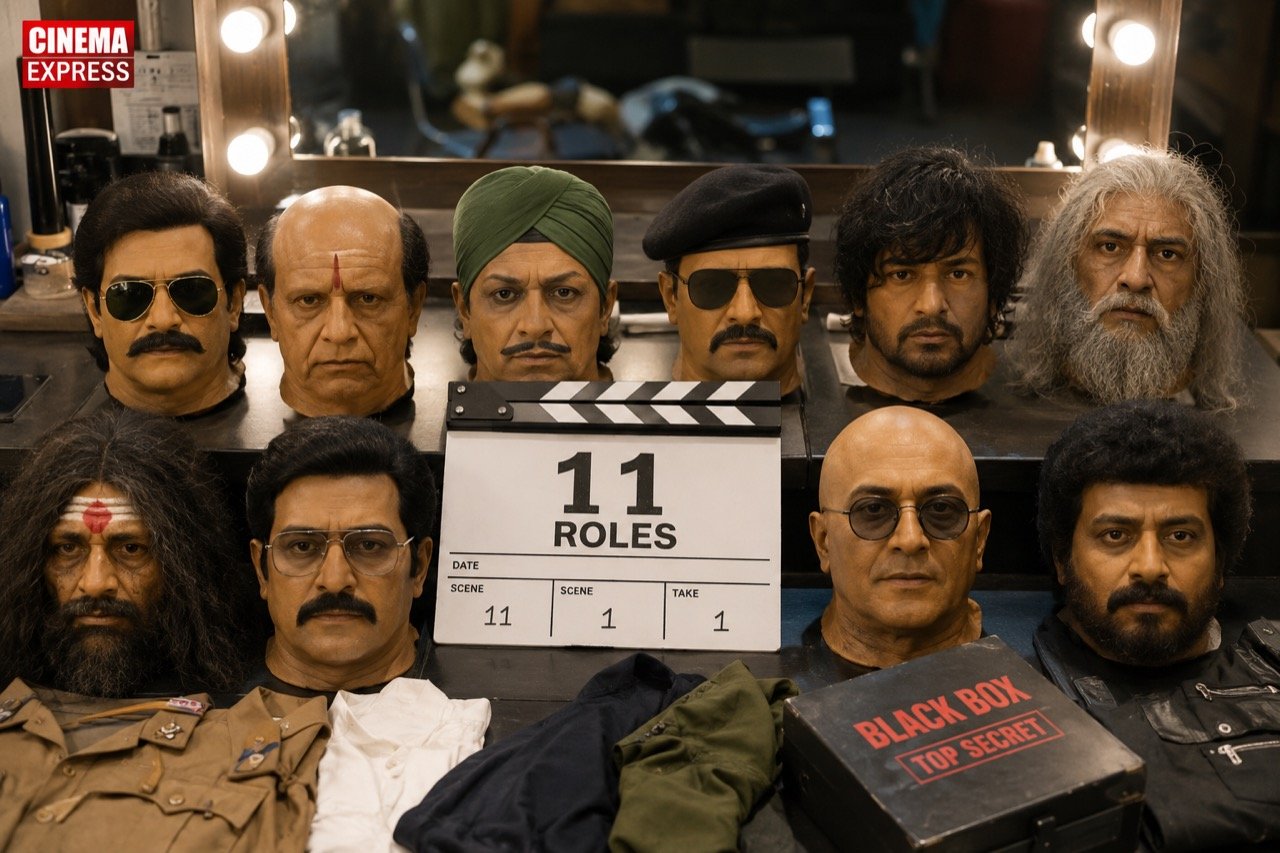
Yogi Babu to Play 11 Roles in Action Thriller, Tamil Cinema Abuzz
Reports that comedian-turned-leading-man Yogi Babu will take on eleven roles in a new action thriller have made the project one of Tamil cinema's most talked-about experiments this week.

K Bhagyaraj: Why Tamil Cinema Still Calls Him Screenplay King
A renewed Indian Express spotlight on K Bhagyaraj examines how his narrative precision, domestic storytelling and comedic timing earned him the enduring title Thirai Kathai Mannan in Tamil cinema.
More from this section
More
72nd National Film Awards: Fans Back Mammootty, Allu Arjun, Sai Pallavi
Speculation around the 72nd National Film Awards is intensifying as fan communities across India's language film industries champion favourites including Mammootty, Allu Arjun and Sai Pallavi ahead of any official announcement.

Aamir Khan Marries Gauri Spratt in Private Pali Hill Ceremony
Aamir Khan and Gauri Spratt tied the knot at the actor's Pali Hill home in Mumbai on July 5, turning a deliberately small family ceremony into Bollywood's biggest story of the day.

Akanksha Chamola's Lock Upp 2 Confession Sets Reality TV Abuzz
A personal revelation by Akanksha Chamola ahead of Lock Upp 2 has handed the reality show a viral talking point, underlining how confession-driven formats continue to dominate Indian television conversation.