Prakash Jaju Takes Legal Action Over Alleged Bollywood Loans
Prakash Jaju, best known as Priyanka Chopra's former manager, has reportedly initiated legal steps against actor Rajpal Yadav and two producers over loans he alleges were never repaid.
Commentary & Analysis ·
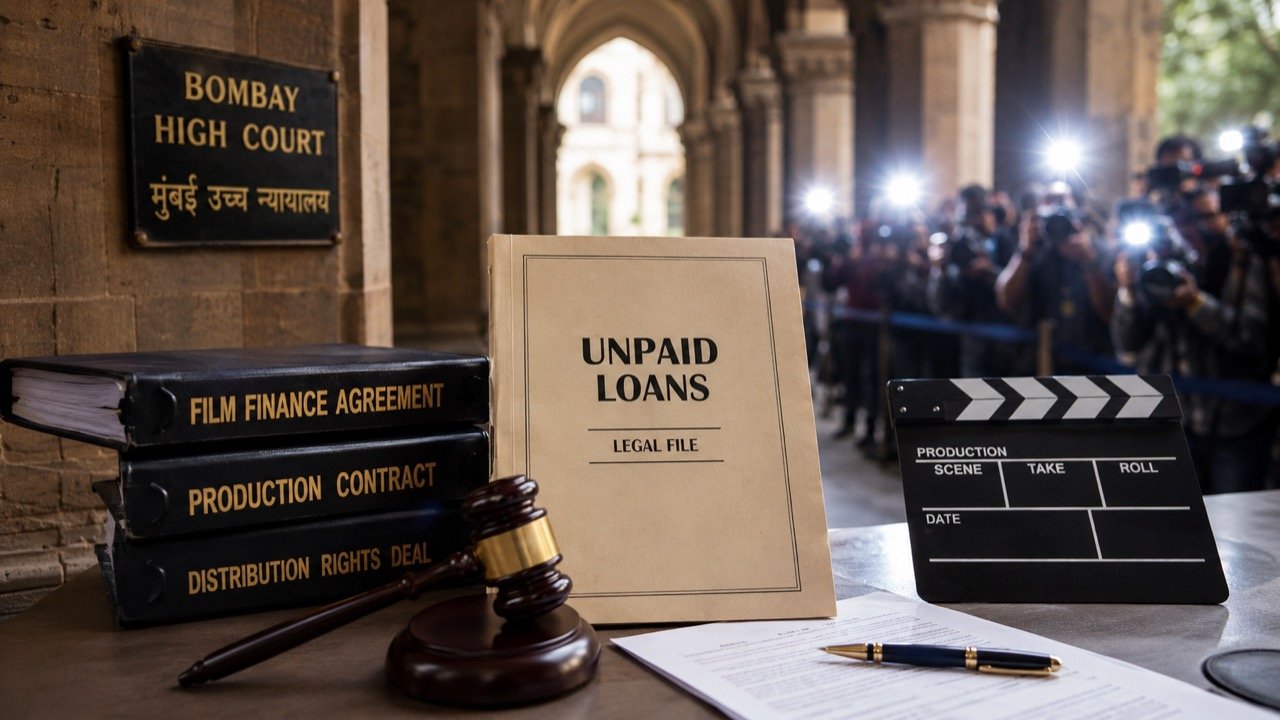
Prakash Jaju, remembered in entertainment circles as Priyanka Chopra's former manager, has reportedly taken legal action against actor Rajpal Yadav and producers Mahendra Dhariwal and Sohel Maklai over loans he alleges were advanced and never repaid. The development, reported as a Bollywood Hungama exclusive, pushes a film-industry finance dispute into the entertainment news cycle, and in doing so offers a rare, if partial, glimpse into a side of Hindi cinema that rarely surfaces in public reporting: the private financial arrangements that quietly underpin the business of making films.
What the report alleges
According to the report, the dispute centres on money Jaju says he lent to three men connected to Hindi cinema. Yadav is an established character actor with a long career in Bollywood comedy and drama. Dhariwal produced Bhaiaji Superhit, while Maklai produced Dhaakad. Jaju has reportedly initiated legal steps to recover the amounts he claims are outstanding. The report does not detail the sums involved, the timeline of the alleged loans, or the specific legal forum in which Jaju is pursuing his claim, and The NE Times has no independent information beyond what has been reported by Bollywood Hungama.
What is notable is less the specifics than the shape of the allegation itself. Jaju is not a studio, a bank or a formal lender; he is a former talent manager, a figure whose professional life has been built on relationships and access within the industry. That such a person is now said to be pursuing recovery of personal loans from an actor and two producers speaks to a financing culture in Bollywood where money frequently moves between individuals who already trust one another professionally, rather than through arm's-length institutional channels.
An allegation, not a verdict
It is important to read this as an allegation-led legal development rather than a settled matter. The merits of the dispute will turn on documents, the responses of those named, and whatever court or police process follows. None of the individuals has been found liable, and the claims remain contested until adjudicated. Readers should be cautious about drawing conclusions about the character or conduct of Yadav, Dhariwal or Maklai based solely on a report of legal action having been initiated against them; an allegation is, by definition, an unproven assertion that the legal system exists to test.
This caution matters doubly in the entertainment press, where stories involving well-known names can travel faster than the facts that anchor them. A headline naming a recognisable actor alongside the words "legal action" and "loans" invites assumptions the underlying report may not support. Until Yadav, Dhariwal or Maklai respond publicly, or until any court process produces findings, the only established fact is that Jaju has reportedly taken steps to recover money he says he is owed.
The invisible financial plumbing of Bollywood
The episode nonetheless illuminates a less-visible layer of the film business: relationships in the industry often extend beyond screen work into personal loans, informal financing and production-linked networks. A manager, a family friend, a long-time associate or even a fellow professional may step in to bridge a cash-flow gap on a production, or to help an actor or producer through a lean period, on the strength of personal rapport rather than a term sheet. Such arrangements are common precisely because the formal financing available to mid-sized and independent Hindi film productions has historically been patchy, and because relationships of trust built over years of working together can move faster than a bank's underwriting process ever could.
Those private arrangements tend to stay invisible until a falling-out turns them into public news. For every dispute that reaches a legal notice or a court filing, there are presumably many more informal loans that are repaid quietly, renegotiated privately, or simply written off as the cost of doing business in a close-knit industry. The Jaju matter is unusual only in that it has become visible; the practice it describes is understood within the industry to be widespread.
Why this matters beyond the individuals named
Stories like this matter less for the celebrity names attached and more for what they reveal about how Bollywood is still financed. A surprising amount of the industry runs on handshake loans and personal trust rather than documented, institutional credit, and when projects underperform commercially or run over budget, those informal debts curdle into disputes and, eventually, lawsuits. The producers named here, Dhariwal and Maklai, are linked in the report to specific films, Bhaiaji Superhit and Dhaakad respectively, both mid-scale productions of the kind that often rely on a patchwork of financing sources rather than a single studio backer.
For an industry that is increasingly seeking global-scale investment, co-production deals and institutional capital, repeated disputes of this kind function as a reputational tax. International financiers and streaming platforms evaluating Indian content partnerships tend to price in governance risk, and a steady drumbeat of loan disputes, however small individually, reinforces a perception that Bollywood's back-office practices lag behind its creative and commercial ambitions. This is not a claim that any of the individuals named in this specific case acted improperly; it is an observation about the structural conditions that make such disputes recur across the industry regardless of who is involved in any single instance.
What to watch next
The next material developments will likely come from the parties themselves: whether Yadav, Dhariwal or Maklai issue any public response or denial, whether the matter proceeds through a civil recovery suit, a criminal complaint, or some other legal mechanism, and whether further reporting from Bollywood Hungama or other outlets adds detail on amounts, dates or documentation. Readers should also watch for whether this becomes an isolated story or part of a pattern involving the same producers or financing circles, since recurring names in such disputes would be more informative than any single allegation.
The NE Times View
The healthier long-term fix is boring but essential: formal contracts, escrow-backed financing and transparent production accounting. An industry that generates the cultural reach and commercial revenue that Hindi cinema does can reasonably be expected to also build the financial infrastructure to match, rather than continuing to rely on personal trust as a substitute for enforceable agreements. Formalising these arrangements would not eliminate disputes entirely, but it would make them easier to resolve on the basis of documented terms rather than competing recollections of an informal understanding.
Until such reforms take hold more broadly, readers should treat each such headline as a claim awaiting its day in court, not a conviction. This article is original commentary and analysis by The NE Times. Background facts were referenced from Bollywood Hungama.
Key takeaways
- Prakash Jaju has reportedly taken legal action against actor Rajpal Yadav and producers Mahendra Dhariwal and Sohel Maklai over loans he alleges went unrepaid.
- The claims are allegations only; no liability has been established, and the outcome depends on documents, responses and any court process that follows.
- The dispute highlights how much of Bollywood's production financing still runs on informal, trust-based personal loans rather than institutional credit.
- Such disputes carry a reputational cost for an industry courting larger-scale, more formal global investment.
- Formal contracts, escrow-backed financing and transparent accounting are the structural fix, though adoption across the industry remains uneven.
You may also like to read

DJ Chetas Takes 90s Bollywood Nightlife on a 14-City India Tour
Chandni Bar Tour 2.0 will run from July 10 to September 6 across 14 Indian cities, turning 1990s Hindi film music nostalgia into a national touring nightlife format with contemporary production.

Rajamouli Unveils 'Varanasi': Mahesh Babu Epic Gets Its Title and First Teaser
The director's long-secret project, once known only as SSMB29 and 'GlobeTrotter', was finally named at a grand Hyderabad event, with a 2027 release locked in.

Aamir Khan's quiet July 5 wedding becomes Bollywood's big story
Reports that Aamir Khan has confirmed an intimate July 5 ceremony with Gauri Spratt have captivated Bollywood watchers precisely because the star is choosing privacy over spectacle.
Imran Khan on Andrew Tate: Bollywood Joins Role Model Debate
Imran Khan's blunt remarks about Andrew Tate's appeal to young men, and his credit to Aamir Khan as a positive influence, have pushed a Bollywood interview into a wider conversation about masculinity online.
More from this section
More
72nd National Film Awards: Fans Back Mammootty, Allu Arjun, Sai Pallavi
Speculation around the 72nd National Film Awards is intensifying as fan communities across India's language film industries champion favourites including Mammootty, Allu Arjun and Sai Pallavi ahead of any official announcement.

Aamir Khan Marries Gauri Spratt in Private Pali Hill Ceremony
Aamir Khan and Gauri Spratt tied the knot at the actor's Pali Hill home in Mumbai on July 5, turning a deliberately small family ceremony into Bollywood's biggest story of the day.

Akanksha Chamola's Lock Upp 2 Confession Sets Reality TV Abuzz
A personal revelation by Akanksha Chamola ahead of Lock Upp 2 has handed the reality show a viral talking point, underlining how confession-driven formats continue to dominate Indian television conversation.