NASA Names Artemis III Crew for Crucial Step Back to the Moon
Four astronauts, including an Italian from the European Space Agency, were assigned to a 2027 Earth-orbit test flight that will help pave the way for a crewed lunar landing.
Commentary & Analysis ·

NASA announced the crew for its Artemis III mission at a live event at the Johnson Space Center in Houston on 9 June, naming the astronauts who will carry out a high-stakes test flight in Earth orbit in 2027. The announcement marked a tangible step forward in the United States' long-running effort to return humans to the vicinity of the Moon and, eventually, to its surface.
Veteran NASA astronaut Randy Bresnik was named commander, with European Space Agency astronaut Luca Parmitano of Italy as pilot, and Andre Douglas and Frank Rubio serving as mission specialists. The inclusion of a European crew member reflects the international character of the Artemis programme, which draws on partnerships with space agencies and commercial firms across multiple countries.
Testing the path to the lunar surface
The mission is designed to conduct a series of demanding tests in Earth orbit, including evaluating commercially developed lunar landers. Rather than attempting a landing itself, Artemis III is structured as a proving ground for the systems and procedures that a crewed descent to the Moon will demand, allowing engineers to validate hardware in a comparatively forgiving environment before committing to the far riskier lunar leg.
Those lander systems are intended to carry astronauts to the Moon's south pole on the later Artemis IV mission, planned for 2028. The south pole is a focus of intense scientific interest because of the water ice believed to lie in its permanently shadowed craters, a resource that could one day support longer-term human presence and even the production of fuel.
A programme of global interest
The announcement marks a concrete milestone in the US-led return to the Moon, a programme of close interest to space-faring nations including India, which is advancing its own lunar and human spaceflight ambitions. As more countries develop the capability to reach the Moon, the Artemis effort sits at the centre of a new and increasingly crowded era of lunar exploration.
- Artemis III crew named at Johnson Space Center on 9 June
- Randy Bresnik as commander, Luca Parmitano of ESA as pilot
- Andre Douglas and Frank Rubio as mission specialists
- 2027 Earth-orbit test flight, including evaluation of commercial lunar landers
- Lander systems intended for a south-pole landing on Artemis IV in 2028
Why it matters
Naming a crew transforms an abstract programme into a human endeavour with identifiable faces and clear milestones, building public engagement and institutional momentum. The methodical, step-by-step approach, testing in Earth orbit before attempting a landing, reflects lessons hard-won across decades of spaceflight, where incremental validation reduces the risk of catastrophic failure.
With the 2027 test flight setting the stage for a south-pole landing the following year, the coming period will see intense work on the landers and supporting systems that must perform flawlessly. For India and other emerging space powers watching closely, the unfolding Artemis campaign offers both a benchmark and a reminder of how international collaboration and commercial partnership are reshaping the path back to the Moon.
The NE Times View
Naming the crew, including an ESA astronaut, frames the return to the Moon as a coalition rather than a flag-planting solo act. For India, fresh off its own lunar ambitions, this is both inspiration and a competitive marker in a crowded space race. The NE Times View: ISRO should read the collaborative model closely, because the next era of exploration will reward partnerships and shared payloads over isolated national prestige projects.
This article is original commentary and analysis by The NE Times. Background facts were referenced from NASA, BBC Sky at Night.
You may also like to read

NASA names its Artemis III crew, with a record-holding astronaut among the four
Commander Randy Bresnik will lead a four-person crew on a two-week orbital flight to test the technology that will eventually put astronauts back on the Moon.

China's LineShine Dethrones US as World's Fastest Supercomputer, Sharpening India's AI Resolve
China has reclaimed the top spot on the global supercomputing rankings with an all-domestic machine running at over two exaflops, a milestone in the US-China tech contest that underscores why India is racing to build its own sovereign computing power.
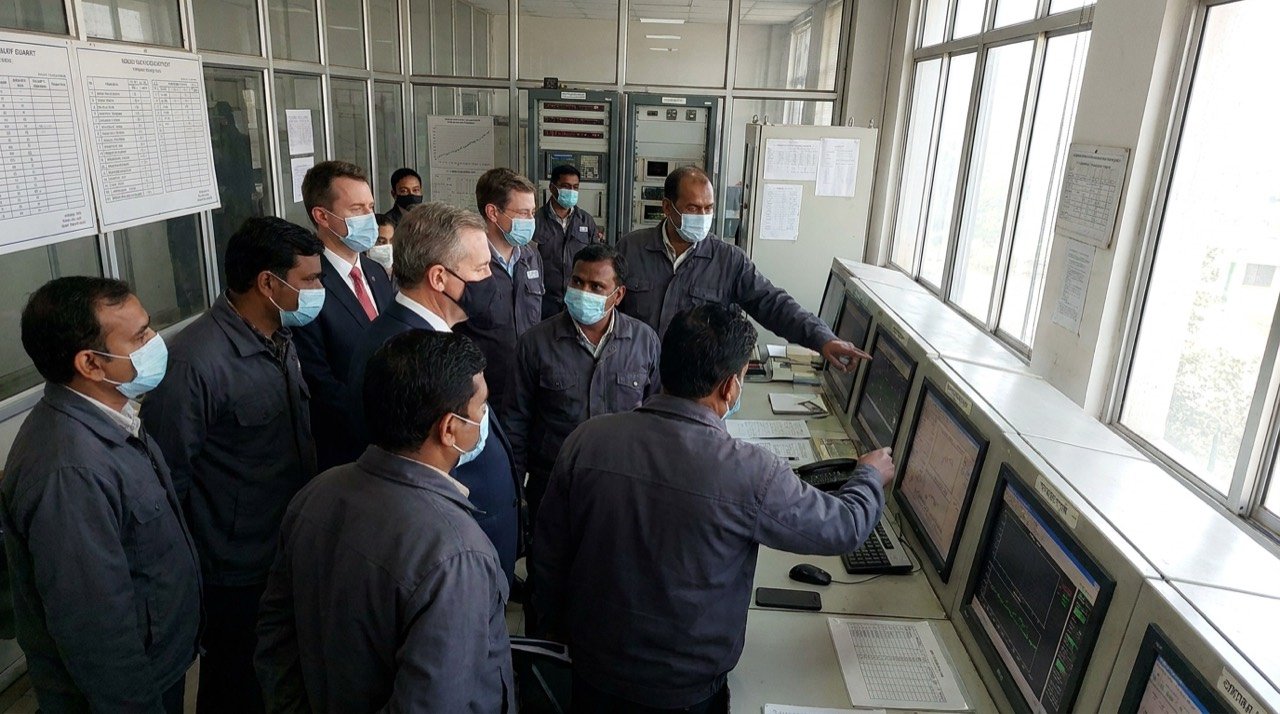
Iran-IAEA Inspection Standoff Tests Fragile Truce, With India Watching Its Energy Stakes
The UN nuclear watchdog insists inspectors will return to Iran's enrichment sites under an interim US-Iran deal, but Tehran says access waits for a final agreement, leaving Indian importers eyeing both oil flows and the Strait of Hormuz.

BRICS Security Talks Open in India With Non-Traditional Threats in Focus
India hosts the BRICS National Security Advisers' meeting on 22-23 June 2026, with NSA Ajit Doval chairing talks on terrorism, cyber risks, emerging technology and regional instability amid Middle East tensions.
More from this section
More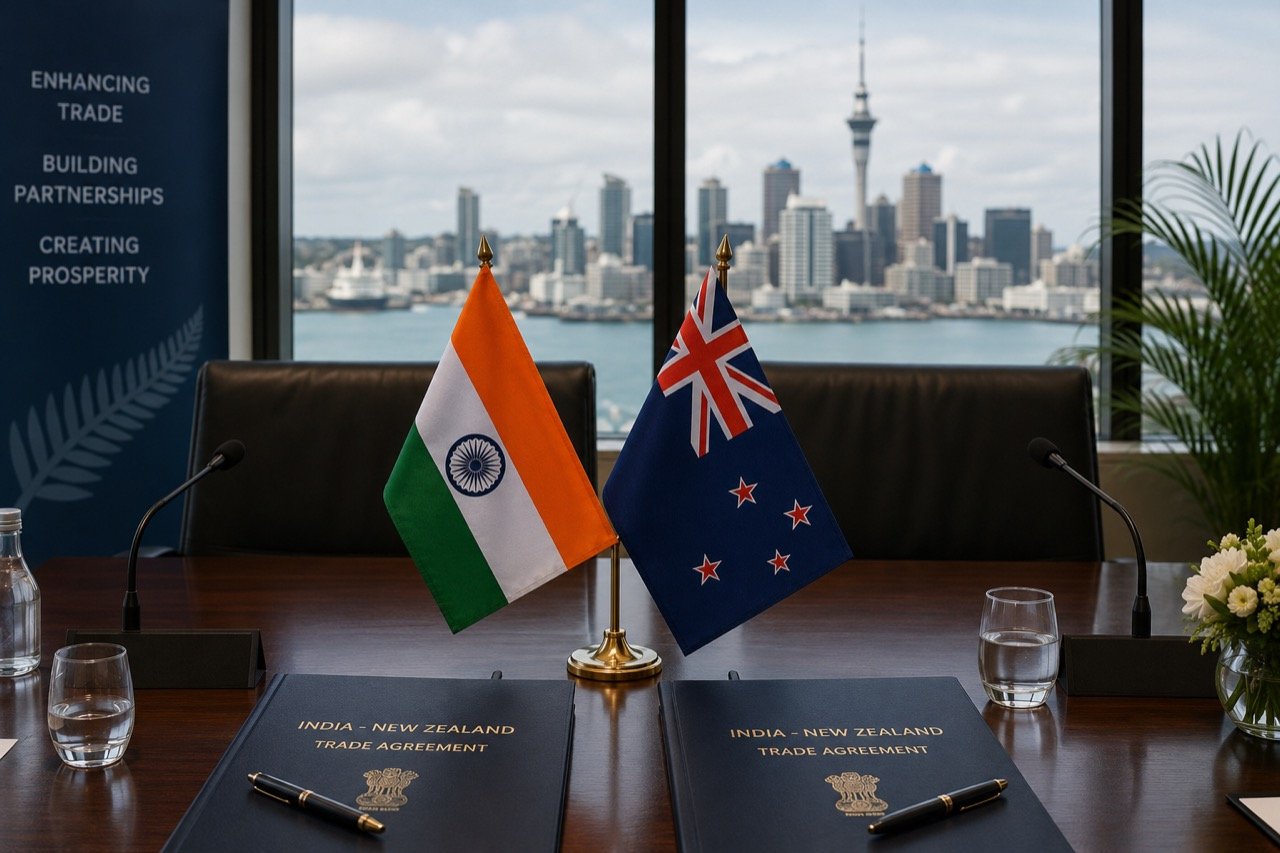
India-New Zealand Ties: Visit Plans Put FTA and Diplomacy in Focus
Reports of a planned high-level India-New Zealand engagement have revived attention on free trade talks, professional mobility and Indo-Pacific cooperation between two partners with clear room to grow.

Modi Greets Trump on US 250th Independence Day, Hails Partnership
Prime Minister Narendra Modi marked America's 250th Independence Day with a message to President Trump, saying the next 250 years should lift the India-US partnership to new heights.

India Watches Dhaka's China-Backed Teesta Plan as Stakes Rise
New Delhi is closely tracking Bangladesh's proposal to develop the Teesta river with Chinese assistance, a move that revives one of South Asia's most sensitive water-sharing disputes and tests regional strategic trust.