Mumbai Suburbs Drenched: 100 mm Overnight Rain Snarls Commute
Heavy overnight monsoon showers dumped more than 100 mm of rain on several Mumbai suburbs in a short window, triggering waterlogging and traffic disruption and renewing scrutiny of the city's monsoon preparedness.
Commentary & Analysis ·
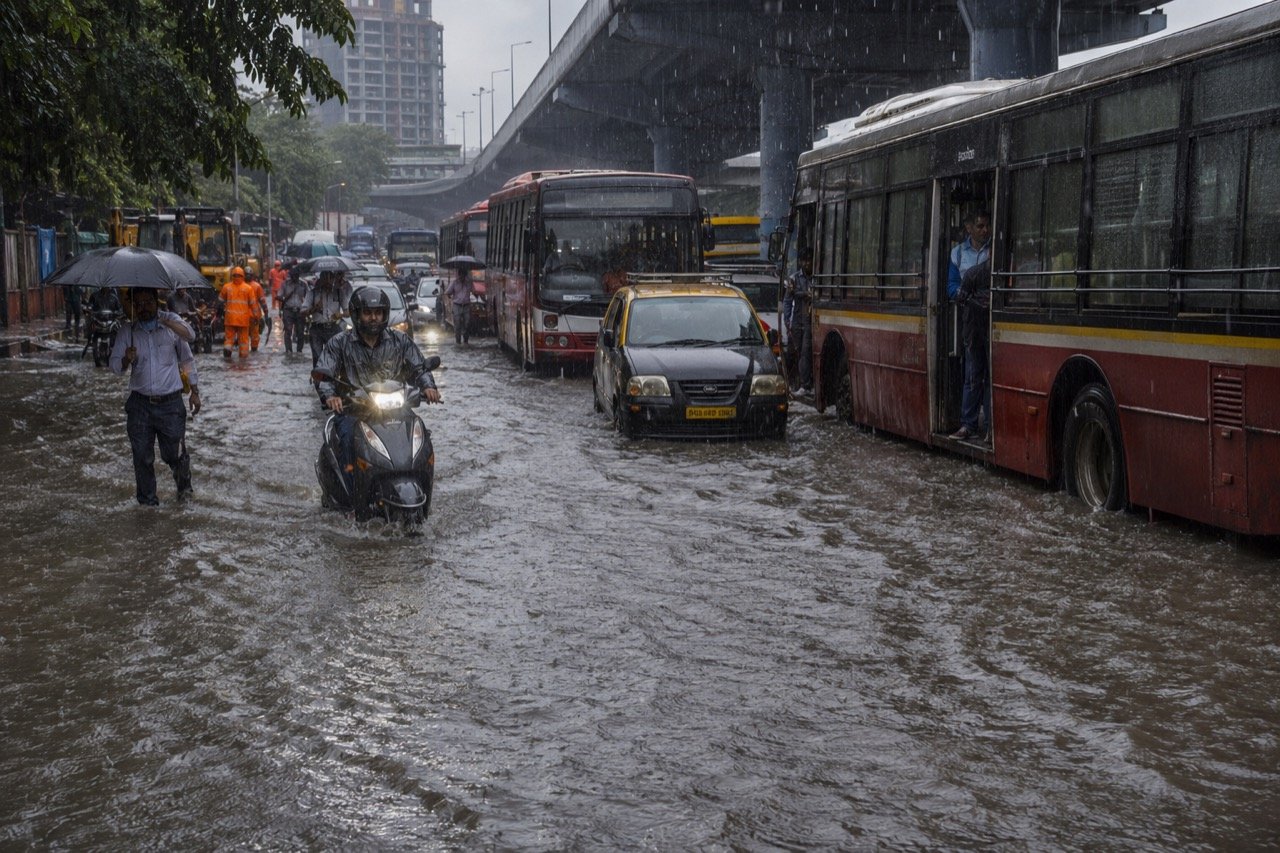
Heavy overnight rain lashed Mumbai's suburbs, with several areas recording more than 100 mm within a short window, according to civic-linked reports. The intense spell left junctions waterlogged and traffic crawling, once again putting the city's annual monsoon preparedness under public scrutiny. For commuters the fallout was familiar: delayed buses, slow-moving road traffic, flooded intersections and uncertainty over suburban train services. For civic authorities, the immediate checklist ran through pumping stations, drain clearance, traffic diversions and the timeliness of public warnings.
A familiar script, replayed once again
There is a wearying predictability to these episodes. Mumbai's monsoon coverage tends to follow the same arc each year: a burst of intense rain, a scramble of waterlogged junctions, a round of civic reassurances, and then, once the water recedes, a quiet return to business as usual until the next spell. This latest overnight downpour, with suburban totals crossing the 100 mm mark, fits neatly into that pattern. What makes it worth pausing on is not the novelty of the event but the fact that it is not novel at all. A city of Mumbai's scale and economic importance experiencing the same commuter chaos, year after year, from broadly similar rainfall intensities, says less about the weather and more about the systems built to absorb it.
The immediate consequences were the usual ones. Buses ran late. Road traffic crawled through junctions turned into shallow ponds. Commuters watched anxiously for updates on suburban train services, the backbone of daily movement for millions of Mumbaikars, uncertain whether their evening journey home would run to schedule or be disrupted altogether. None of this is new, and that is precisely the point worth dwelling on.
Why rainfall totals alone tell an incomplete story
Mumbai's rain story is rarely about seasonal totals alone. What matters is how quickly roads, drains, rail corridors and low-lying neighbourhoods can absorb sudden, intense bursts. A four-hour spell above 100 mm can overwhelm local drainage even when pre-monsoon preparation has been completed on schedule. This is a crucial distinction for residents and policymakers alike to internalise. A city can nominally be "prepared" for the monsoon season as a whole, with desilted drains and cleared culverts, and still be caught out by the sheer intensity of a short, sharp burst that concentrates a month's worth of typical rain into a handful of hours.
This is the underlying tension in nearly every monsoon disruption story: preparedness measured against average or cumulative rainfall expectations is simply a different exercise from preparedness measured against peak-intensity, short-duration events. Drainage systems have a finite carrying capacity per hour. When rainfall intensity exceeds that capacity, waterlogging follows almost mechanically, regardless of how well the drains were cleared in April and May. The civic checklist that follows such events — pumping stations, drain clearance, traffic diversions, public warnings — is necessary but reactive. It manages the consequences of a burst rather than expanding the system's capacity to absorb the next one.
The case for hyperlocal data and communication
The latest downpour also underlines why hyperlocal rainfall data matters. One suburb can face serious waterlogging while a neighbouring area sees entirely manageable rain, which means public communication has to be neighbourhood-specific rather than citywide. A blanket advisory telling all of Mumbai to expect heavy rain and possible disruption is of limited practical use to a commuter deciding which route to take or whether to leave home early. What that commuter actually needs is granular, junction-level or ward-level information: which roads are already waterlogged, which rail corridors are running normally, and which localities are likely to see the next surge as rainwater moves through the drainage network.
This is not a technological gap so much as an implementation one. Ward-level rainfall monitoring and flood-prone junction mapping already exist in various forms across Mumbai's civic apparatus. The question is whether that intelligence reaches residents and commuters in real time, in a form they can act on, before they are already stuck in traffic or standing on a flooded platform. The gap between data collection and actionable, hyperlocal public communication remains one of the more fixable weaknesses in the city's monsoon response.
Climate variability and the changing nature of urban risk
Climate variability has made short-duration cloudbursts a central concern of urban planning. Mumbai's infrastructure must now be judged not only on how it handles total monsoon rainfall, but on how it copes with rapid bursts that strike during commuting hours. This reframing matters because it shifts the benchmark for what "monsoon-ready" infrastructure actually means. It is no longer sufficient to ask whether a city's drains can handle the season's expected rainfall on aggregate. The more relevant question is whether that same infrastructure can cope with an increasingly common pattern: intense, compressed bursts of rain arriving within hours rather than spread evenly across days or weeks.
For a metropolitan economy the size of Mumbai's, the timing of these bursts compounds the damage. A downpour concentrated overnight or during the morning and evening commute windows disrupts far more economic activity than the same volume of rain spread through a quiet afternoon. Offices open late or empty early, logistics and delivery networks slow, and the suburban rail network — which underpins the daily rhythm of the city more than any other single system — bears an outsized share of the disruption. Residents are advised to follow civic and weather advisories for route-specific conditions, a reasonable individual precaution, but one that only partially compensates for infrastructure limitations that no single commuter can plan around.
The NE Times View
Every monsoon, Mumbai relearns the same lesson: the city's resilience is decided drain by drain, not in citywide averages. The encouraging news is that data now exists at the ward level to predict which junctions will flood first; the frustration is how slowly that intelligence translates into targeted drainage investment and neighbourhood-level alerts. As short, violent bursts of rain become the norm rather than the exception, India's financial capital needs to treat stormwater capacity as core economic infrastructure. A city that loses a working day to four hours of rain is paying a tax it can engineer away.
The deeper argument here is one of prioritisation. Stormwater drainage rarely commands the same political or budgetary attention as marquee infrastructure projects, precisely because its value is invisible when it works and only visible when it fails. Yet the cumulative cost of repeated commuter disruption, lost working hours, and strained emergency services during every intense spell is a real and recurring drag on a city that positions itself as India's financial capital. Treating drainage and hyperlocal warning systems as core economic infrastructure, rather than a seasonal housekeeping task, would mark a genuine shift in how the city manages a risk that is not going away.
Key takeaways
- Several Mumbai suburbs recorded more than 100 mm of rain overnight, causing waterlogging, slow traffic and uncertainty over suburban train services.
- Even completed pre-monsoon preparation can be overwhelmed by short, intense bursts exceeding local drainage capacity within a few hours.
- Rainfall impact varies sharply by neighbourhood, underscoring the need for hyperlocal, ward-level public advisories rather than citywide warnings.
- Climate variability is making short-duration cloudbursts a defining test of urban infrastructure, distinct from cumulative seasonal rainfall totals.
- The NE Times View holds that stormwater capacity should be treated as core economic infrastructure, given the recurring cost of disruption to a financial capital like Mumbai.
You may also like to read
Mumbai Rain Brings Relief as Official Monsoon Onset Is Still Awaited
Heavy showers swept Mumbai on 22 June 2026, easing weeks of humid heat and lifting hopes of monsoon advance, even as forecasters held off on a formal onset declaration.
Monsoon Advances Toward Mumbai and Eastern India as Rain Alerts Issued
The southwest monsoon has resumed its march after a brief pause, with weather agencies forecasting widespread and locally heavy rain across Mumbai, Maharashtra, eastern and central India.
IMD Confirms Southwest Monsoon Onset Over Mumbai After Delayed Spell
The India Meteorological Department has confirmed the Southwest Monsoon's arrival over Mumbai on June 23, bringing relief after a dry, unusually warm early June and pushing the city into full monsoon readiness.
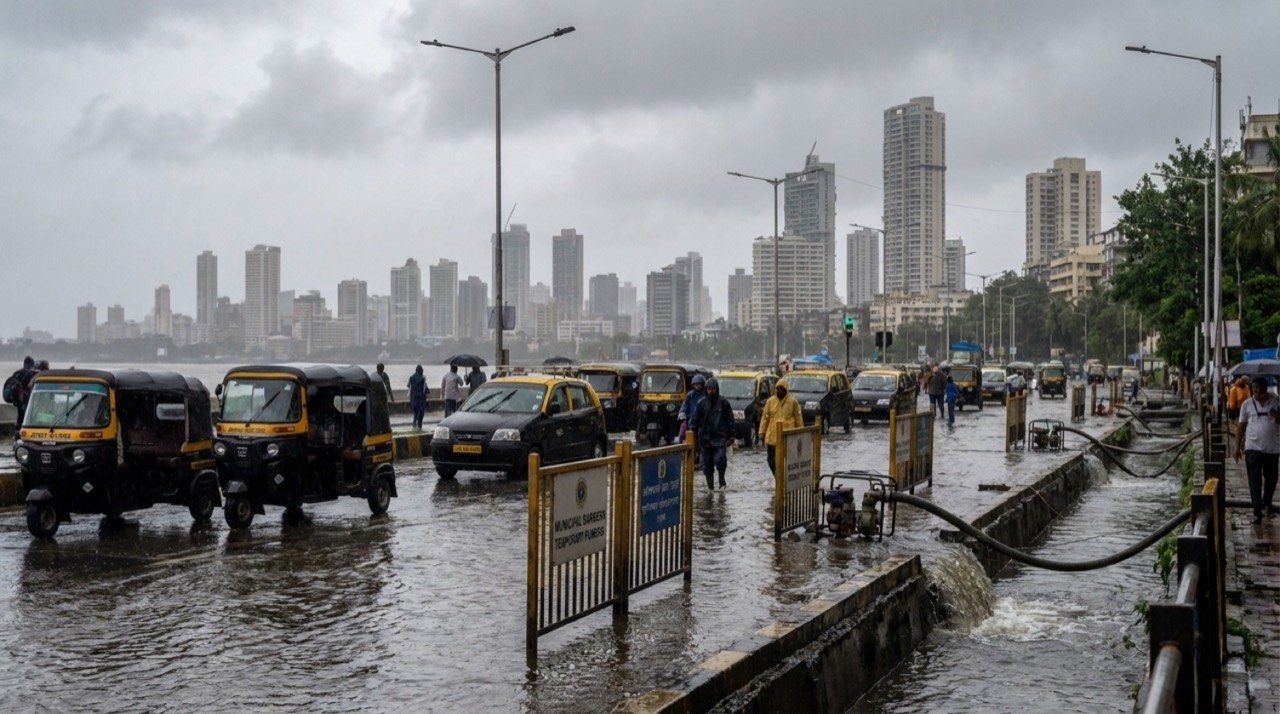
Mumbai Monsoon Arrives After Delay, Testing the City's Civic Readiness
The southwest monsoon has reached Mumbai after a near two-week delay, bringing relief from humidity even as it reopens familiar questions about drainage, local trains and flood preparedness.
More from this section
More
AICTE Industry Fellowship 2026: Rs 1.5 Lakh Scheme Closes July 5
The AICTE Industry Fellowship Programme 2026, which places technical-education faculty inside leading companies on a Rs 1.5 lakh monthly stipend, reached its application deadline on July 5.
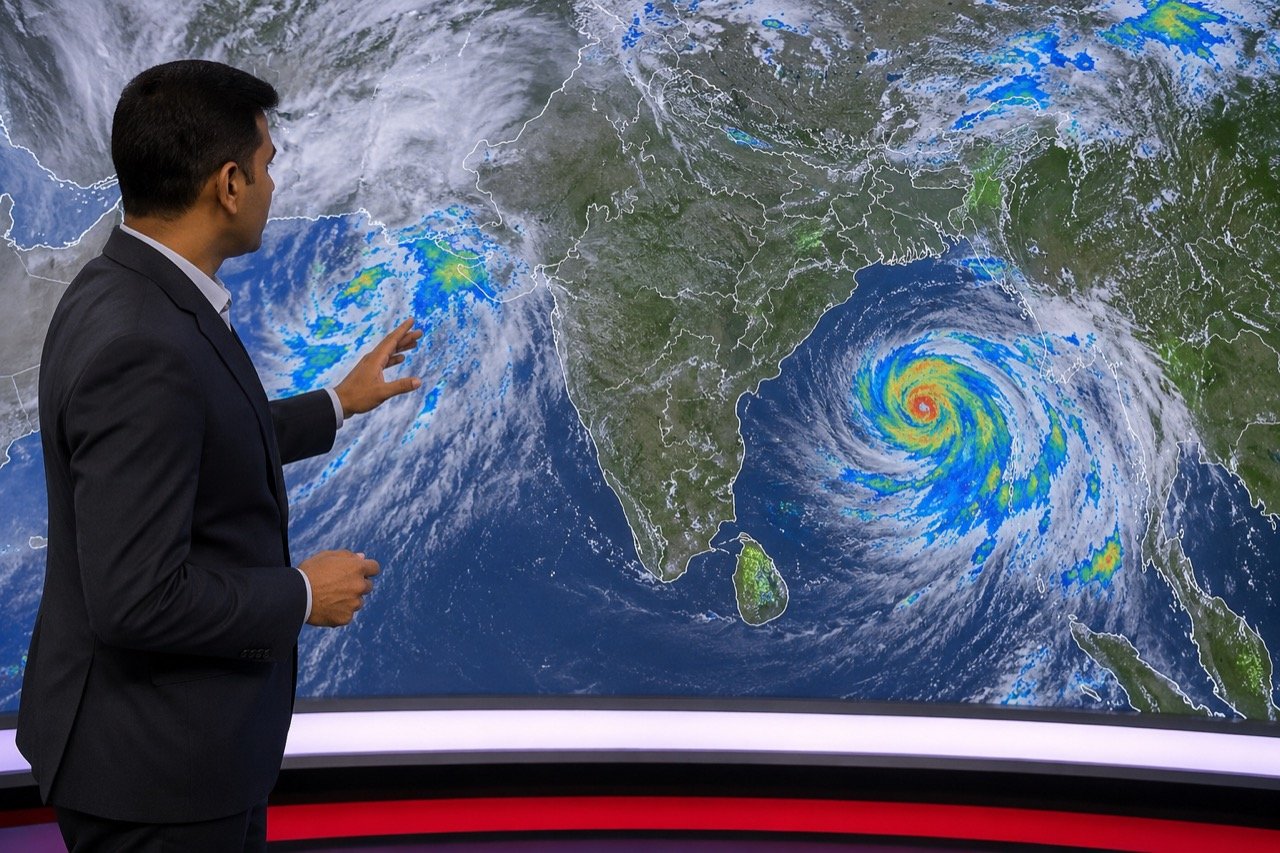
Bay of Bengal Low Pressure System Revives Monsoon Over Western India
A low-pressure system over the Bay of Bengal has pushed the monsoon back into an active phase, bringing steady heavy rain to Kerala, coastal Karnataka and Maharashtra, and putting Mumbai and Pune on preparedness watch.
Bishnoi Gang Suspects Injured in Haryana Encounter as Police Tighten Net
A joint Haryana-Delhi Police operation in Bahadurgarh left two suspected Lawrence Bishnoi gang members injured, spotlighting the multi-state coordination now central to India's fight against organised crime networks.