IMD Confirms Southwest Monsoon Onset Over Mumbai After Delayed Spell
The India Meteorological Department has confirmed the Southwest Monsoon's arrival over Mumbai on June 23, bringing relief after a dry, unusually warm early June and pushing the city into full monsoon readiness.
Commentary & Analysis ·
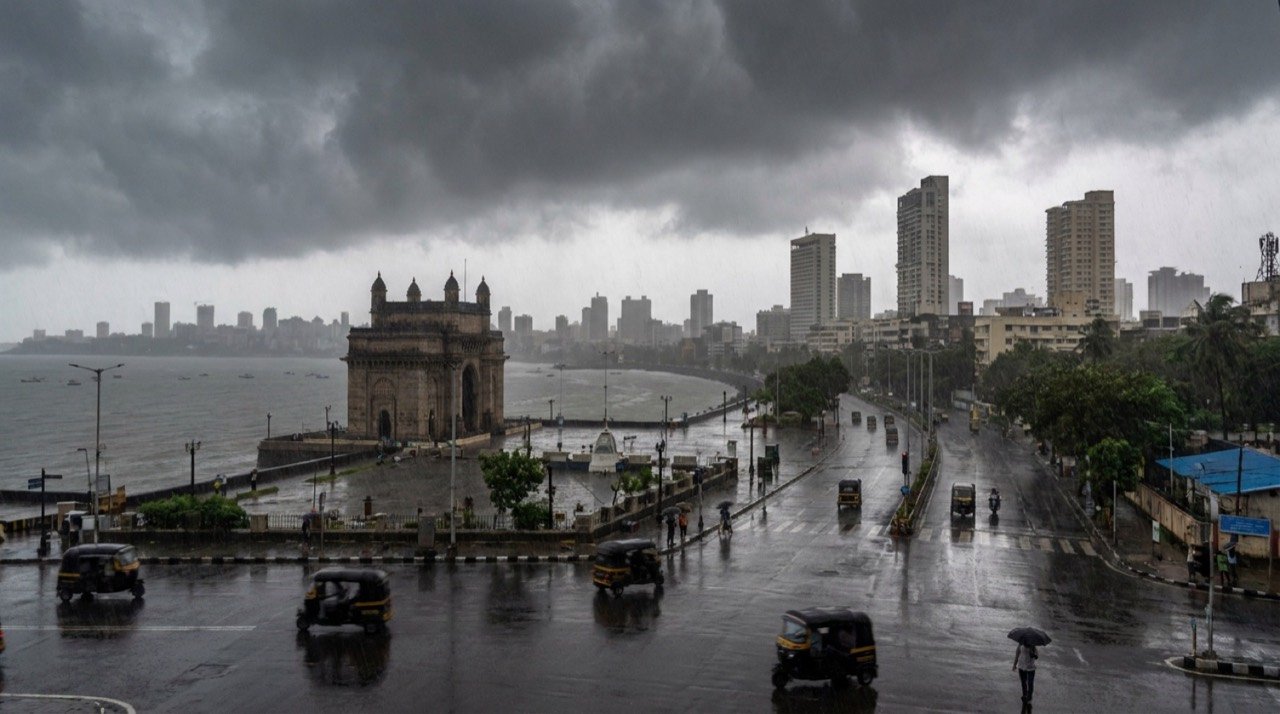
The India Meteorological Department has confirmed that the Southwest Monsoon advanced into Mumbai on June 23, ending an anxious wait after a dry and unusually warm start to the month. For a city whose rhythm is defined by the rains, the onset is more than a change in the weather; it is the signal for an entire civic apparatus to shift gears. The confirmation from the IMD carries the weight of an official trigger point, the moment at which forecasting gives way to operational readiness, and at which a metropolis of well over a crore people begins recalibrating its daily functioning around the presence of rain rather than its absence.
A wider sweep across the country
The monsoon did not arrive in Mumbai alone. The IMD said it also moved into the remaining parts of the central Arabian Sea and pushed into more areas of Maharashtra, broadening its footprint along the western seaboard. Further inland and to the east, the system advanced into parts of Telangana, Odisha, Chhattisgarh, Jharkhand and Bihar, marking steady progress after the sluggish early spell that had kept large stretches of the country waiting. This simultaneous progression matters because the monsoon is not a localised event but a continental-scale weather system whose advance across multiple states in a short span suggests the broader circulation pattern has strengthened after its earlier hesitancy. For agriculture-dependent regions in central and eastern India, the near-parallel arrival in Telangana, Odisha, Chhattisgarh, Jharkhand and Bihar is significant in its own right, since sowing calendars in these states are calibrated closely to the reliability of the onset date. A monsoon that stalls in one pocket while advancing steadily elsewhere often signals uneven distribution later in the season, so the fact that the system pushed forward on multiple fronts at once will be read by meteorologists as a reassuring, if still early, indicator.
Relief after a hot, dry start
Early June had been uncomfortably warm and rain-starved in Mumbai, straining residents and stoking concern about a delayed season. The onset brings welcome relief, cooling the air and replenishing expectations of the rainfall the city depends on. For a coastal metropolis where humidity and heat compound each other in the weeks before the rains, the psychological effect of the monsoon's arrival is almost as significant as its meteorological one. Mumbai's water supply, drawn substantially from reservoirs that depend on a healthy monsoon to refill, is also watched closely by civic authorities once the season begins, since a delayed or weak start can cascade into supply concerns later in the year even if the season eventually catches up on aggregate rainfall. Yet relief comes paired with responsibility. The same rains that ease the heat can quickly overwhelm low-lying neighbourhoods, making the transition a moment of both comfort and caution. This duality, rain as both balm and hazard, is the defining tension of the Mumbai monsoon, and it is one the city negotiates every year without ever fully resolving it.
The city shifts into monsoon mode
For Mumbai, the onset triggers a coordinated response across essential services. With forecasts pointing to increased rain through the week, preparedness and timely local alerts become central to keeping the city moving. Suburban local trains, the city's lifeline, go on heightened monsoon alert, since even moderate waterlogging on tracks can cascade into delays affecting hundreds of thousands of daily commuters. Road traffic management is stepped up for waterlogging-prone stretches, an acknowledgment that certain junctions and underpasses flood almost predictably each year regardless of the overall rainfall total. Drainage and pumping teams are deployed to clear stormwater, civic hospitals ready themselves for the seasonal uptick in monsoon-related illnesses such as waterborne infections and vector-borne disease, and emergency services are placed on standby for flooding and disruption. As one assessment of the monsoon's impact on Mumbai put it, "for Mumbai, the onset matters beyond comfort: local trains, road traffic, drainage teams, civic hospitals and emergency services all shift into monsoon mode." That single observation captures how deeply the rains are woven into the operational calendar of the city, touching transport, health and emergency management in the same stroke.
Why the onset date carries so much weight
It is worth pausing on why a single date, June 23, matters so much to a city of Mumbai's size. The onset is not simply the first rain of the season; it is the point at which the IMD's models judge that the monsoon circulation has established itself firmly enough to be treated as the start of the wet season proper, rather than a passing pre-monsoon shower. That distinction has real consequences. Civic bodies, railway operators and hospital administrators do not want to commit resources to monsoon-mode operations too early, at the cost of efficiency, nor too late, at the cost of safety. The IMD's confirmation therefore functions as an official cue that ripples outward into dozens of administrative decisions, from when pothole-filling crews are redeployed to storm-drain clearance, to when hospitals begin stocking additional supplies for waterborne illness. A delayed onset, as Mumbai experienced this year with its hot, dry start to June, compresses the window in which these preparations can be finalised, adding pressure to systems that already operate close to capacity during the wettest weeks of the year.
What residents and authorities should watch next
With more rain expected through the coming days, attention now turns to how well the city's defences hold. Residents are likely to watch official alerts closely as the season settles in, and the early days of this monsoon will offer an early test of whether Mumbai's preparations match the demands of another wet season. The real test will not be the onset itself but the first spell of sustained heavy rainfall, when drainage capacity, pumping station readiness and the resilience of low-lying neighbourhoods are all examined simultaneously. Historically, it is not the aggregate rainfall figure that determines whether a monsoon is remembered as manageable or chaotic, but the performance of the city during a handful of intense rain events. Whether suburban rail services hold their schedules, whether waterlogging at known chokepoints is cleared within hours rather than days, and whether hospitals see a manageable rather than overwhelming caseload of monsoon-related illness, will together shape the public verdict on this year's preparedness.
The NE Times View
The monsoon's arrival ends an uncomfortably hot, dry early June, but onset is a starting gun, not a guarantee. Mumbai's recurring monsoon ordeal, waterlogging, train halts, collapsing slopes, owes more to civic preparedness than to the rain itself. The forecast buys the city time it too often squanders. The question is whether drains, pumps and emergency systems are ready, or whether we replay last year. Every June brings the same official reassurances about deployed teams and standby services, and every year the true measure comes only when the first serious downpour arrives. The IMD can confirm the meteorology; it cannot confirm the readiness of a stormwater drain that has not been desilted, or a low-lying settlement that floods each time the tide and the rain coincide. That responsibility sits squarely with the civic administration, and this year, as in every year, it will be judged not by the date the monsoon arrived but by how the city coped with it.
Key takeaways
- The IMD confirmed the Southwest Monsoon reached Mumbai on June 23, ending a hot, dry start to the month and simultaneously advancing into the central Arabian Sea, more of Maharashtra, and parts of Telangana, Odisha, Chhattisgarh, Jharkhand and Bihar.
- The onset triggers a coordinated civic response in Mumbai, covering suburban rail alerts, traffic management for flood-prone stretches, drainage and pumping deployment, hospital readiness and emergency services on standby.
- Relief from the heat is paired with renewed flood risk in low-lying neighbourhoods, making the early days of the season a genuine test of preparedness rather than a moment of pure celebration.
- With more rain forecast through the coming days, the real measure of Mumbai's readiness will come during the first sustained heavy spell, not at the moment of onset itself.
- The NE Times View holds that the onset is only a starting gun: whether the city avoids repeating past monsoon disruptions depends on civic preparedness, not on the rainfall alone.
You may also like to read
Monsoon Advances Toward Mumbai and Eastern India as Rain Alerts Issued
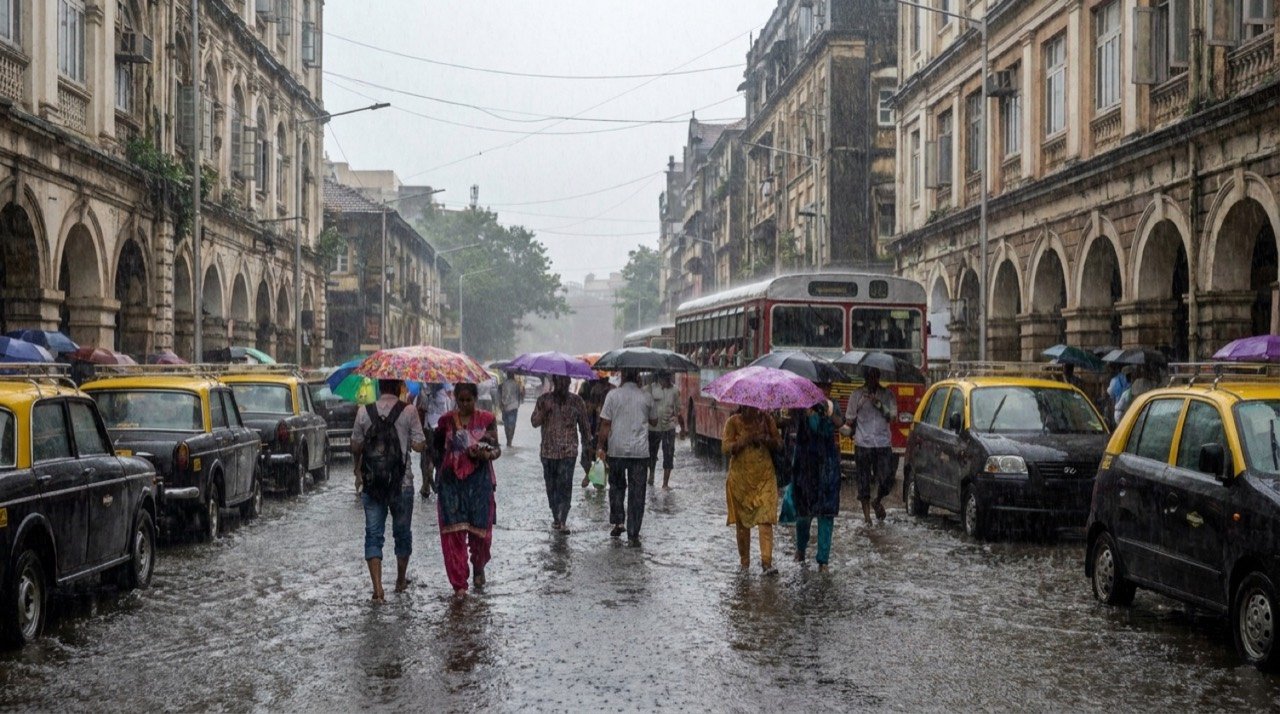
The southwest monsoon has resumed its march after a brief pause, with weather agencies forecasting widespread and locally heavy rain across Mumbai, Maharashtra, eastern and central India.
Mumbai Monsoon Arrives After Delay, Testing the City's Civic Readiness
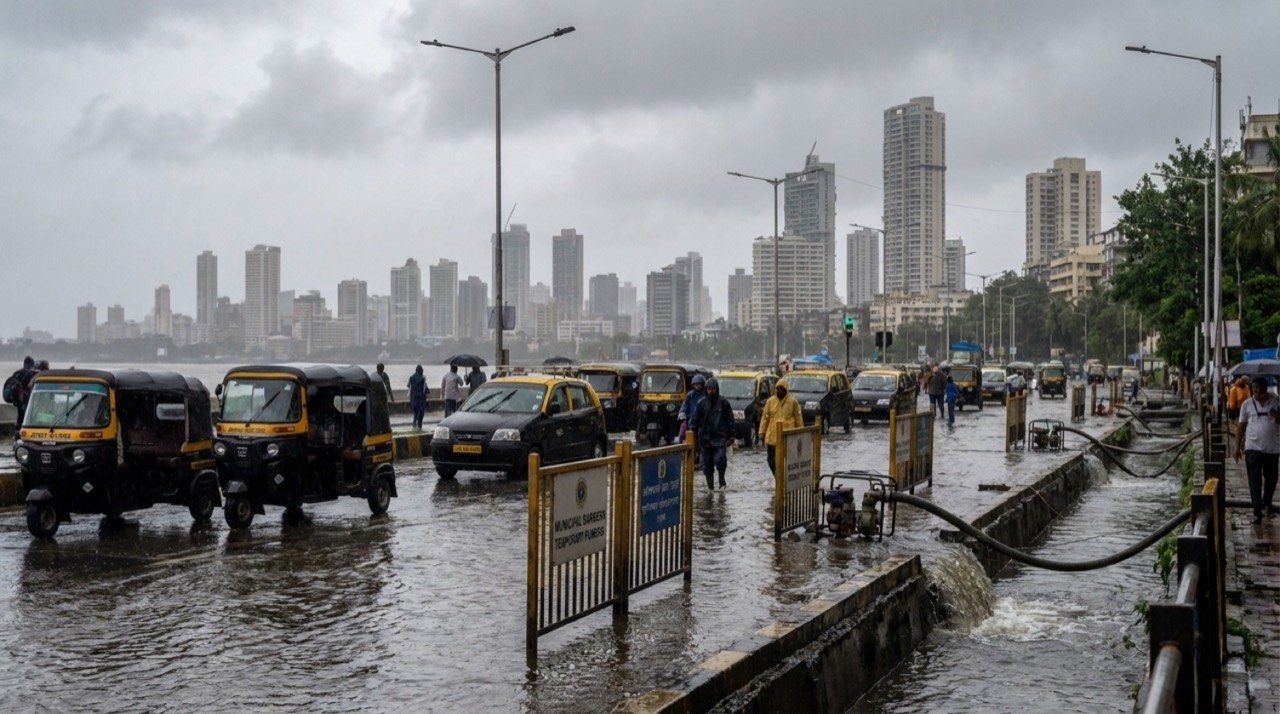
The southwest monsoon has reached Mumbai after a near two-week delay, bringing relief from humidity even as it reopens familiar questions about drainage, local trains and flood preparedness.
Early, Intense Monsoon Swamps Cities As Mumbai And Gujarat Bear The Brunt
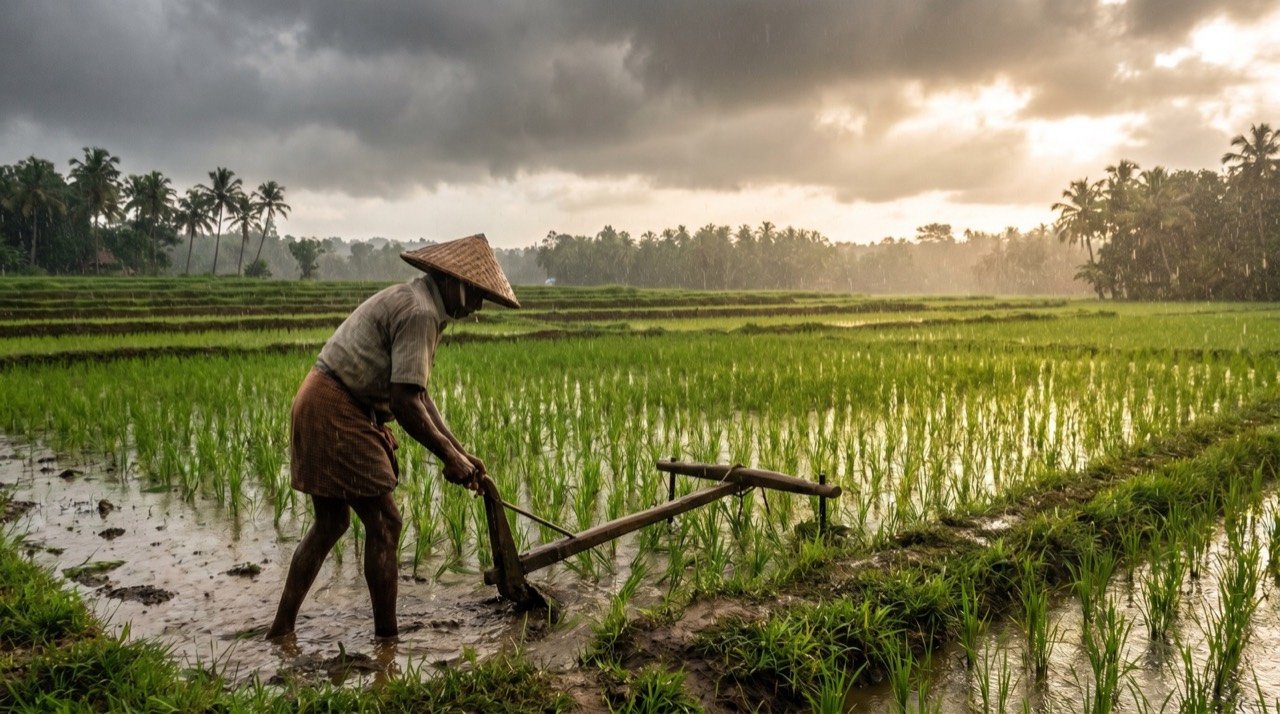
An early and unusually intense monsoon has triggered urban flooding across western India, with Mumbai, Gujarat and Goa recording exceptional rainfall as drainage systems strain under the deluge.
Monsoon Surges Into Central India as Heatwave Grips the East: A Split Weather Map
The India Meteorological Department reported the monsoon advancing into Gujarat and central India on 24 June even as severe heat scorched the east, leaving the country under a sharply divided weather pattern.
More from this section
More
AICTE Industry Fellowship 2026: Rs 1.5 Lakh Scheme Closes July 5
The AICTE Industry Fellowship Programme 2026, which places technical-education faculty inside leading companies on a Rs 1.5 lakh monthly stipend, reached its application deadline on July 5.
Bay of Bengal Low Pressure System Revives Monsoon Over Western India
A low-pressure system over the Bay of Bengal has pushed the monsoon back into an active phase, bringing steady heavy rain to Kerala, coastal Karnataka and Maharashtra, and putting Mumbai and Pune on preparedness watch.
Bishnoi Gang Suspects Injured in Haryana Encounter as Police Tighten Net
A joint Haryana-Delhi Police operation in Bahadurgarh left two suspected Lawrence Bishnoi gang members injured, spotlighting the multi-state coordination now central to India's fight against organised crime networks.