Monsoon 2026 Begins Under An El Nino Shadow As IMD Warns Of A Deficit
With the southwest monsoon now advancing across the country, the IMD has cautioned that rainfall could fall below normal this season, raising concern for farms, reservoirs and the wider economy.
Commentary & Analysis ·
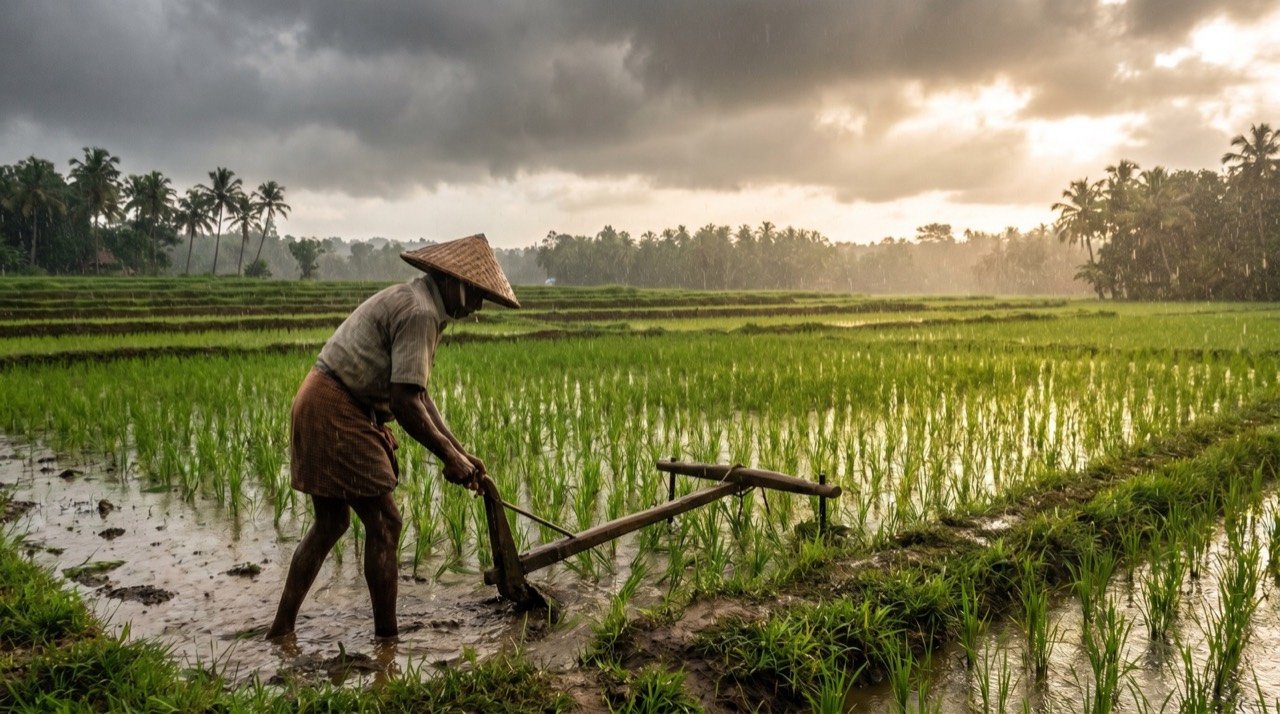
The southwest monsoon, the lifeblood of India's farms and reservoirs, is advancing across the country this year under an unusually cautious forecast. The India Meteorological Department has warned that the 2026 season could deliver below-normal rainfall, citing the likely development of El Nino conditions that historically suppress rain over the subcontinent. The outlook has set nerves on edge across agriculture, water management and the broader economy, and it is worth examining closely why a single seasonal forecast can carry such outsized weight for a country of India's size and diversity.
What the forecast actually says
The IMD has pegged seasonal rainfall at around 90 per cent of the long-period average, with a significant probability of a deficient or below-normal season. This is not a forecast of drought in the dramatic sense, but a statistical tilt towards a season that falls short of the historical norm. The monsoon reached Kerala on June 4, slightly later than the usual onset date, and has since pushed into the northeastern states, Sikkim and parts of sub-Himalayan West Bengal. On the surface, this progression looks unremarkable, even routine, and that is precisely the point the IMD is trying to make: the danger this year lies less in a dramatic failure of the rains and more in a quiet, cumulative shortfall that could easily go unnoticed until reservoir levels and crop yields tell the story later in the year.
The El Nino phenomenon, a warming of the central and eastern Pacific Ocean, is associated with weaker monsoon flows over India. It works by altering large-scale atmospheric circulation patterns that draw moisture away from the subcontinent and towards the Pacific basin instead. While its impact is never uniform across the season or the country, its presence tilts the odds towards drier conditions in many regions. Forecasters have long treated El Nino years with particular caution precisely because the correlation with weak monsoons, while not absolute, is strong enough to warrant early planning rather than a wait-and-watch approach.
Why the stakes are high for the Indian economy
A large share of India's farmland still depends on the monsoon rather than irrigation, which means a weak season can hit kharif sowing, rural incomes and food prices in short order. Unlike industrial economies where weather is a marginal variable, in India the monsoon remains a near-central determinant of annual economic performance. Kharif crops, sown at the start of the rains and harvested in autumn, include staples such as rice, pulses and oilseeds that form the backbone of both rural livelihoods and urban food supply chains. A shortfall in rainfall during the sowing window can depress yields even if later rains partially compensate, because germination and early crop establishment are acutely sensitive to timely moisture.
Reservoir levels, hydropower generation and drinking-water supplies all hinge on how the rains distribute themselves over the coming months. It is worth remembering that reservoirs are not simply refilled by any rain that falls; they depend on rainfall occurring within their specific catchment areas, and a below-normal season that is also poorly distributed can leave some regions high and dry even as national averages look tolerable. Hydropower stations in hill states rely on sustained river flows through the monsoon and beyond, and any deficit ripples into the energy mix for months after the rains have ended. Drinking-water utilities in cities dependent on reservoir sources face similar exposure, particularly in the dry months leading up to the following monsoon.
Distribution matters more than the headline number
Economists caution that the headline seasonal number can mask wide regional and temporal variation, and that the timing and spread of rain often matter more than the total. A delayed or patchy monsoon can damage crops even when the season-end figure looks close to normal. This is a crucial nuance that often gets lost in public discussion of monsoon forecasts. A season that finishes at, say, 95 per cent of the long-period average could still be an agricultural disaster if the rain arrived in a few intense bursts rather than steadily through the sowing and growing period, or if it bypassed key agricultural belts while drenching others.
As one monsoon forecaster put it, "It is not just how much rain falls, but when and where; distribution can make or break a kharif season." This observation cuts to the heart of why the IMD's 90 per cent figure should be read as a starting point for analysis rather than a definitive verdict on the year ahead. Policymakers, farmers and market analysts alike would do well to look past the topline percentage and pay close attention to state-wise and even district-wise rainfall data as the season unfolds.
What policymakers and markets will be watching
Policymakers will be watching reservoir storage, sowing data and food inflation through July and August, the heart of the season. These three indicators, taken together, offer an early read on whether the cautious forecast is materialising into real stress or whether the monsoon is compensating in ways the initial outlook did not fully capture. Reservoir storage bulletins, published periodically by the relevant water authorities, allow for a running comparison against previous years. Sowing data, tracked crop by crop and state by state, will show whether farmers are able to plant on schedule or are delaying decisions in the hope of better rain. Food inflation figures, meanwhile, offer the clearest signal of how consumers are likely to feel the effects of any shortfall, since staple crop prices tend to react quickly to both actual and anticipated supply constraints.
For millions of farmers, the next few weeks of cloud and rain will shape the year ahead far more than any forecast on paper. This is the essential human dimension behind the statistics: for a farming household deciding what to plant, when to plant it, and how much to invest in seed and fertiliser, the abstract probability of a below-normal season translates into concrete, high-stakes choices made under considerable uncertainty.
The NE Times View
An El Nino-shadowed monsoon threatening below-normal rains is precisely the scenario that ripples from farm incomes to food inflation to GDP. The IMD's early warning is valuable only if it triggers pre-emptive action. Early warnings of this kind exist to compress the response time available to policymakers, and that value is squandered if the response is deferred until the deficit is already visible in withering fields and depleted reservoirs. The NE Times View: government should ready buffer stocks, water rationing plans and rural support measures now, because a deficit foreseen but unprepared for is a policy failure, not a natural disaster. The distinction matters. A poor monsoon is a natural event beyond anyone's control; the human and economic cost that follows from inadequate preparation is not.
This also means that the coming weeks offer a genuine test of institutional readiness rather than simply a test of the weather. Contingency plans for drought-prone districts, timely release of buffer food stocks if required, and clear communication with farmers about likely water availability would all mitigate the worst outcomes of a below-normal season, whereas silence and delay would compound them.
Key takeaways
- The IMD forecasts 2026 monsoon rainfall at around 90 per cent of the long-period average, with a significant chance of a below-normal season linked to developing El Nino conditions.
- The monsoon reached Kerala on June 4, slightly later than usual, and has since advanced into the northeast, Sikkim and sub-Himalayan West Bengal.
- A weak or poorly distributed monsoon threatens kharif sowing, rural incomes, reservoir levels, hydropower generation and drinking-water supplies.
- Distribution and timing of rainfall through July and August will matter as much as the seasonal total, making reservoir storage, sowing data and food inflation the key indicators to track.
- The NE Times View holds that early IMD warnings must translate into pre-emptive measures, such as buffer stocks and water rationing plans, or the resulting hardship becomes a policy failure rather than an unavoidable natural outcome.
You may also like to read
Monsoon advances across the country in June, but IMD warns of a below-normal season
After reaching Kerala on 4 June, the southwest monsoon has spread into eastern and central India, even as the weather office trims its seasonal rainfall forecast to 90% of the long-period average.
Monsoon Surges Into Central India as Heatwave Grips the East: A Split Weather Map
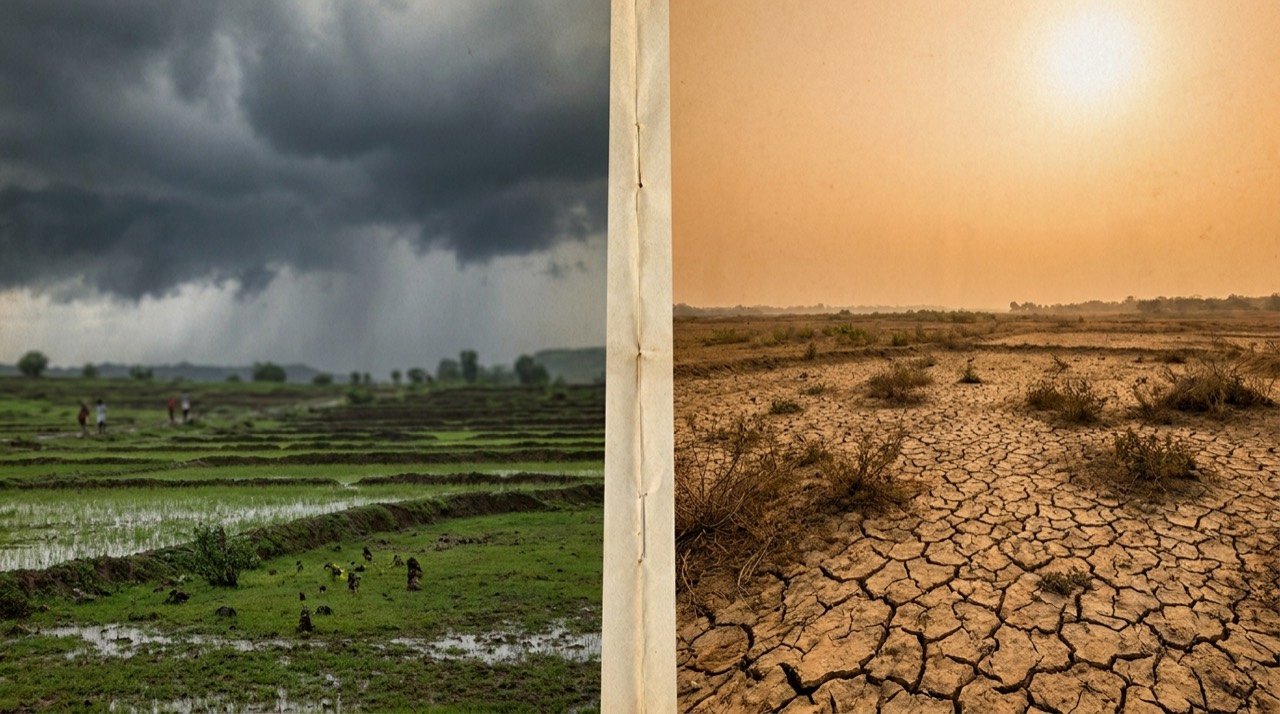
The India Meteorological Department reported the monsoon advancing into Gujarat and central India on 24 June even as severe heat scorched the east, leaving the country under a sharply divided weather pattern.
IMD Confirms Southwest Monsoon Onset Over Mumbai After Delayed Spell
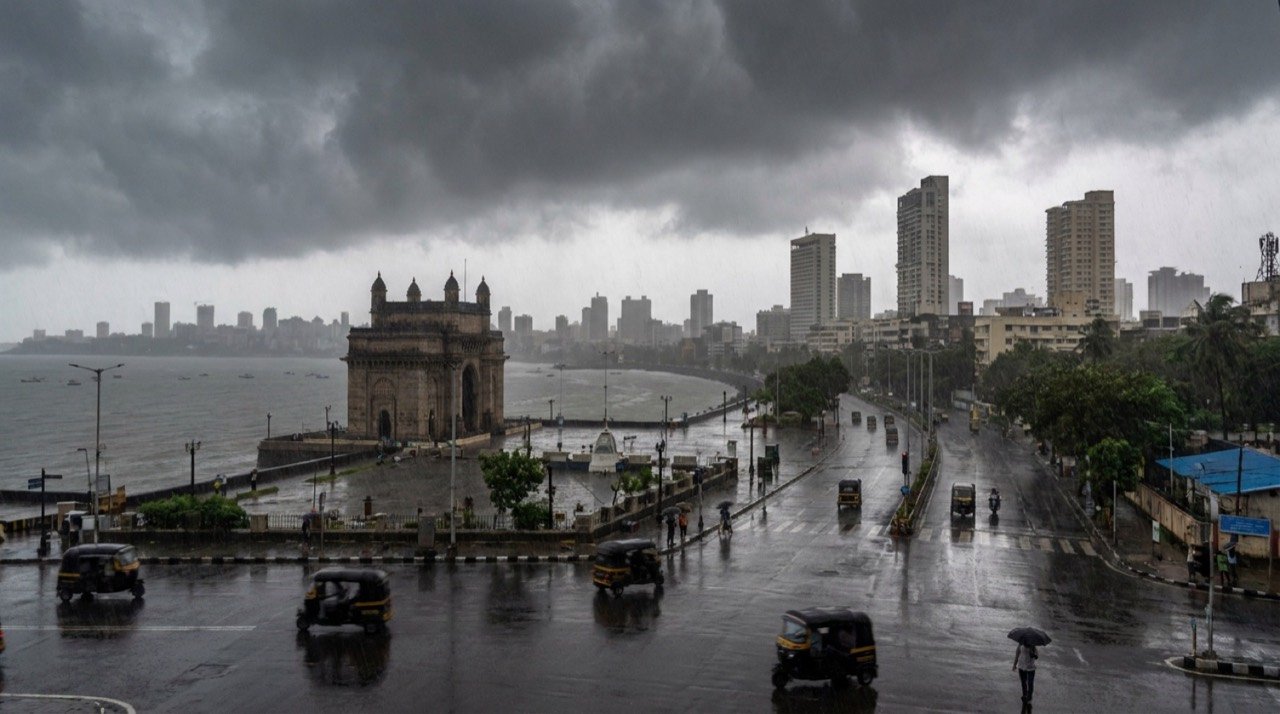
The India Meteorological Department has confirmed the Southwest Monsoon's arrival over Mumbai on June 23, bringing relief after a dry, unusually warm early June and pushing the city into full monsoon readiness.
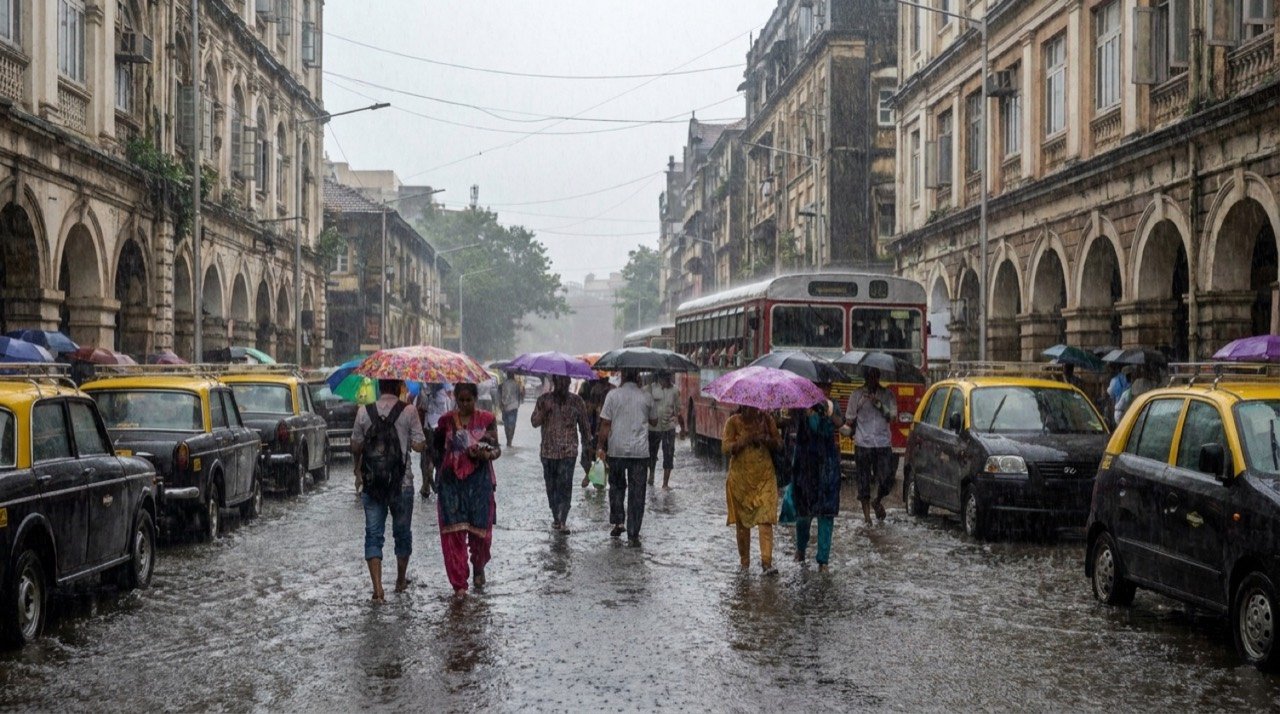
Monsoon Advances Toward Mumbai and Eastern India as Rain Alerts Issued
The southwest monsoon has resumed its march after a brief pause, with weather agencies forecasting widespread and locally heavy rain across Mumbai, Maharashtra, eastern and central India.
More from this section
More
AICTE Industry Fellowship 2026: Rs 1.5 Lakh Scheme Closes July 5
The AICTE Industry Fellowship Programme 2026, which places technical-education faculty inside leading companies on a Rs 1.5 lakh monthly stipend, reached its application deadline on July 5.
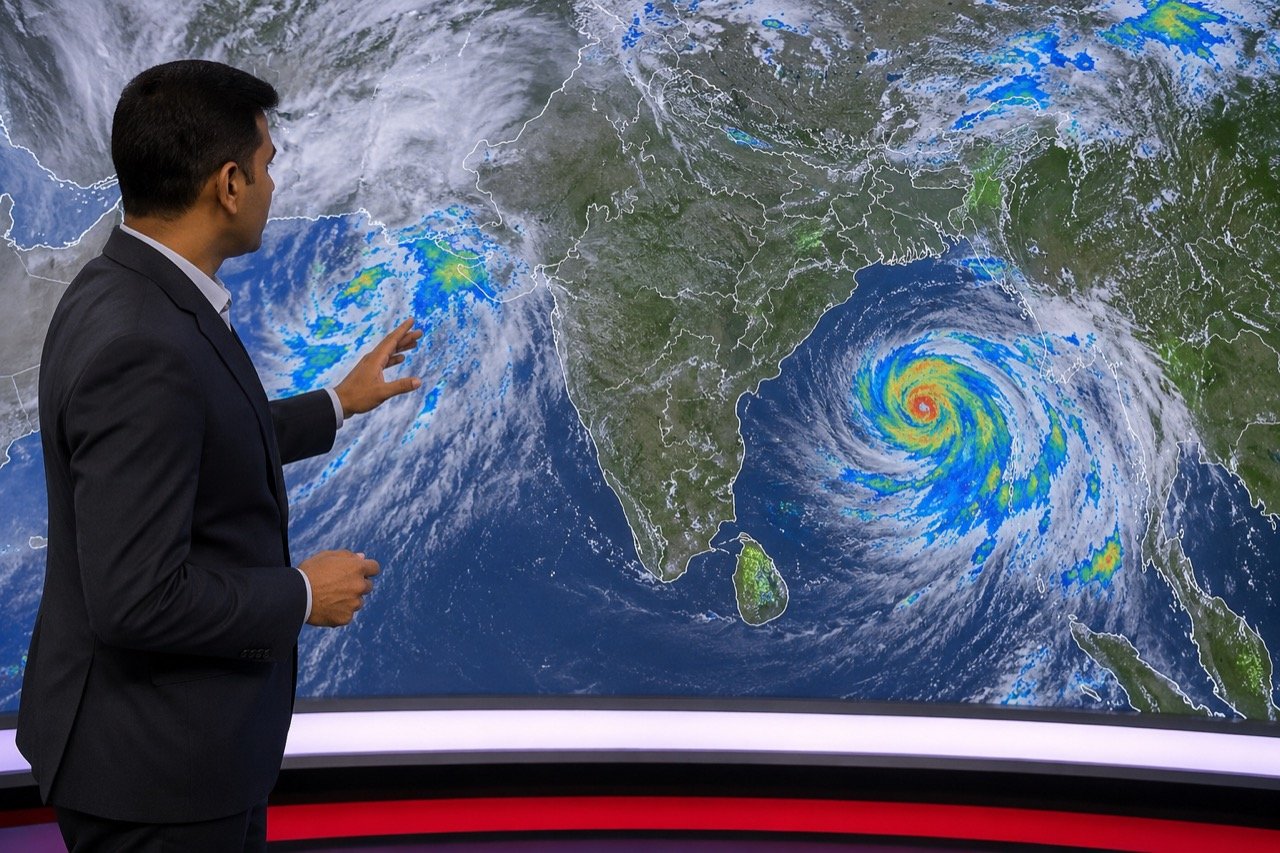
Bay of Bengal Low Pressure System Revives Monsoon Over Western India
A low-pressure system over the Bay of Bengal has pushed the monsoon back into an active phase, bringing steady heavy rain to Kerala, coastal Karnataka and Maharashtra, and putting Mumbai and Pune on preparedness watch.
Bishnoi Gang Suspects Injured in Haryana Encounter as Police Tighten Net
A joint Haryana-Delhi Police operation in Bahadurgarh left two suspected Lawrence Bishnoi gang members injured, spotlighting the multi-state coordination now central to India's fight against organised crime networks.