Mohanlal Applies Under Kerala Ivory Amnesty Scheme: What It Means
Reports that Mohanlal has applied under Kerala's one-time ivory amnesty scheme to declare wildlife-related articles have turned a legal compliance process into one of Malayalam cinema's biggest off-screen headlines.
Commentary & Analysis ·
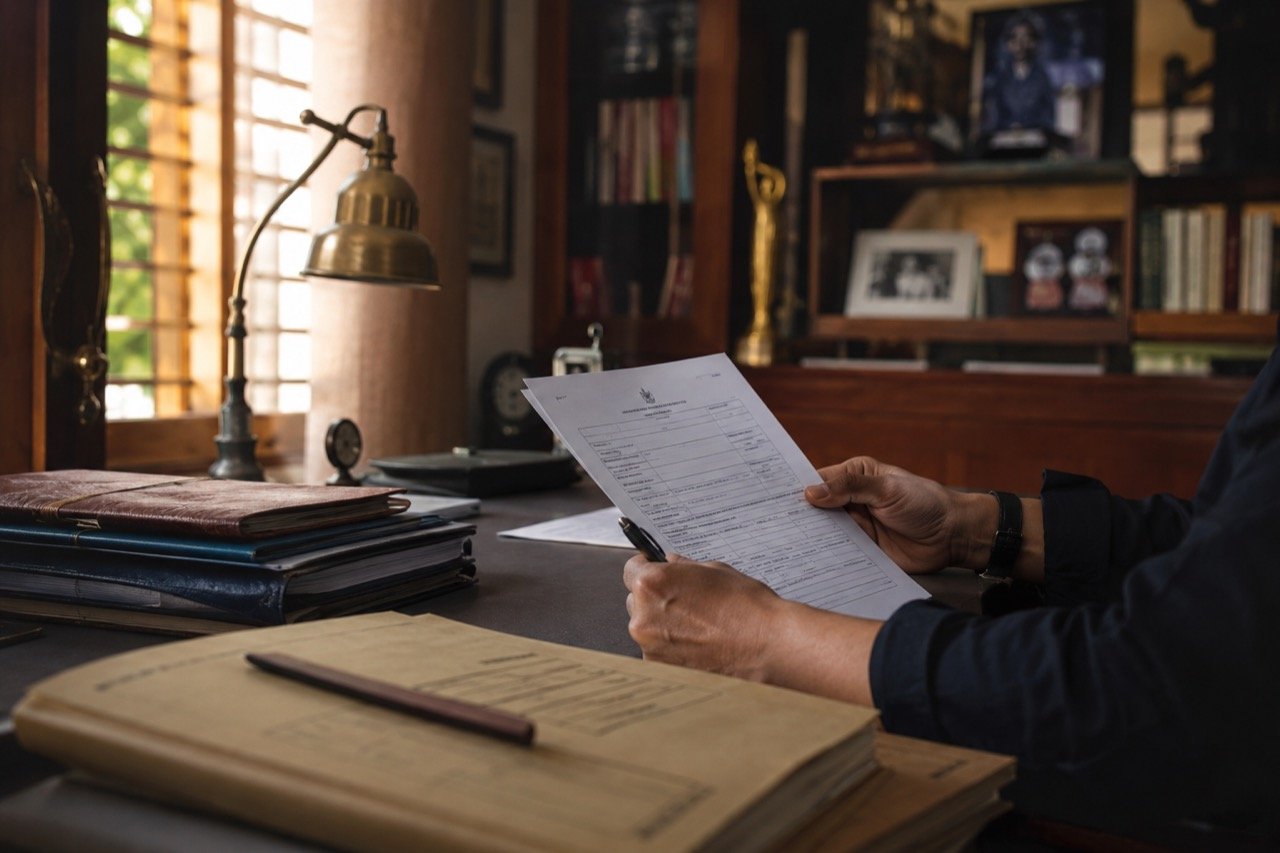
Malayalam superstar Mohanlal returned to the news cycle on Sunday after Times of India reported that he had applied under Kerala's one-time ivory amnesty scheme to declare wildlife-related articles in his possession. The report said the Kerala Forest Department had recorded his statement, while noting that legal proceedings connected to earlier ownership certificates remain unresolved. On the surface, this is a modest procedural item: a form filed, a statement taken down by officials, an older case still working its way through the courts. But because the person involved is one of Indian cinema's most enduring names, the filing has travelled well beyond the usual audience for wildlife-compliance news.
A compliance story, not a scandal
It is worth being precise about what has actually happened, because precision is exactly what tends to get lost when a celebrity's name enters a legal or regulatory story. Mohanlal has applied under an amnesty framework that Kerala has put in place for holders of wildlife-related articles, ivory among them, to come forward and declare their possession through an official channel. Amnesty schemes of this kind exist because enforcement agencies recognise that a great many such articles were acquired decades ago, often legally by the standards of the time, and that compliance is better served by giving holders a route to regularise their position than by treating every declaration as an admission of criminal intent. Nothing in the reporting so far suggests that Mohanlal's application is anything other than an exercise of that route. The Kerala Forest Department has recorded his statement, which is itself a routine administrative step in processing any amnesty application, not a finding of wrongdoing.
The complicating factor is the mention of earlier ownership certificates and legal proceedings that remain unresolved. This detail matters because it explains why the amnesty application is newsworthy at all rather than a private administrative matter. When a public figure has a pending or historical legal thread connected to wildlife articles, any fresh procedural step involving those same articles is read against that backdrop. It is entirely possible, and consistent with the reporting, that the amnesty application is a good-faith attempt to bring clarity and closure to a long-standing paperwork question rather than an escalation of any dispute. The public record, as it stands, describes an application filed, a statement recorded, and litigation still unresolved elsewhere in the system. Anything beyond that is speculation, and speculation is precisely what responsible coverage of a case like this should avoid.
Why fame changes the reading of a routine filing
There is a structural reason celebrity legal and regulatory news behaves differently from ordinary compliance reporting. For a private citizen, an amnesty filing of this nature would likely never surface in the press at all. For Mohanlal, decades of visibility across Malayalam cinema and Indian public life mean that even a procedural document takes on the character of a headline. Private possession of an article, an administrative filing with a state department, and a still-pending court matter are three quite different things, but they tend to be flattened into a single narrative once a famous name is attached. This is not necessarily unfair scrutiny; public figures reasonably attract more attention to their conduct, including their compliance with wildlife protection law, which itself reflects a serious conservation concern in India. But it does mean that the burden of accurate, careful reporting is higher, precisely because the audience is larger and the appetite for a dramatic reading is greater than the facts currently support.
This dynamic is not unique to Mohanlal, and it recurs whenever an actor, cricketer or other public figure intersects with a regulatory process rather than a straightforward criminal charge. The public tends to have a well-developed vocabulary for criminal allegations and a much thinner one for administrative processes such as amnesty schemes, declarations and licensing regularisation. That gap in familiarity is often where sensationalism creeps in, turning a paperwork exercise into an implied scandal simply because the underlying mechanism is unfamiliar to most readers.
Star coverage cuts both ways
The same report that carried news of the amnesty filing also mentioned Mohanlal's new project, Nedumkandam Miracle, a detail that illustrates how entertainment journalism routinely holds two very different kinds of story in the same frame. One is a matter of public accountability and legal process; the other is a routine career update about an actor's forthcoming work. That juxtaposition is not unusual for a star of Mohanlal's standing, whose news coverage spans everything from box-office performance to public appearances to, now, a wildlife-law filing. For audiences and industry watchers alike, both threads carry weight, though for very different reasons. The amnesty story speaks to how public figures interact with regulatory systems; the film update speaks to the ongoing vitality of Malayalam cinema's biggest star at a stage in his career where output continues at a steady pace.
It is also a reminder that regional stardom in India has become a genuinely national and, increasingly, international phenomenon. Malayalam cinema's growing reach through streaming platforms, dubbed releases in other languages and pan-Indian critical discussion means that news involving Mohanlal is no longer confined to Kerala's media ecosystem. A story that would once have stayed within regional press now circulates nationally within a single news cycle, carried by the same platforms that carry Bollywood and Tollywood coverage. That reach amplifies both the career news and the compliance news simultaneously, for better and for worse.
What responsible coverage requires going forward
Given that the underlying legal proceedings are still unresolved, the most useful posture for readers and other outlets alike is patience paired with attentiveness to official channels. The Kerala Forest Department's process, and whatever the courts eventually determine regarding the earlier ownership certificates, will produce facts in due course. Until then, treating the amnesty application as confirmation of any particular outcome would be premature and potentially unfair, whether the inference drawn is favourable or unfavourable to Mohanlal. The appropriate journalistic posture is to report what has been filed and recorded, flag clearly what remains unresolved, and resist the temptation to fill gaps with inference dressed up as reporting.
There is also a broader institutional angle worth noting. Amnesty schemes for wildlife articles function well only when the public treats participation in them as a rational, encouraged step rather than as a marker of guilt. If high-profile participants are met with disproportionate suspicion for using the very mechanism designed to encourage compliance, it risks discouraging others, private citizens included, from coming forward with their own declarations. In that sense, how this particular case is discussed in public matters beyond Mohanlal's individual circumstances.
The NE Times View
This episode is best read as a test of how India covers celebrity and the law. The responsible takeaway is to follow the amnesty process through credible official updates rather than social media speculation, because compliance mechanisms only work when they are treated as routine rather than as scandal fodder. For stars of Mohanlal's stature, off-screen transparency now shapes public image as much as any film role, and the way this filing is handled, by the actor, by the Forest Department, and by the press, will say something about whether India's institutions and its media can process a celebrity's engagement with regulation calmly. If the filing proceeds smoothly, it could quietly set a useful precedent: high-profile figures engaging openly with wildlife-law processes rather than around them, which is precisely the behaviour such amnesty schemes are designed to reward.
Key takeaways
- Mohanlal has applied under Kerala's one-time ivory amnesty scheme, and the Kerala Forest Department has recorded his statement, while related legal proceedings over earlier ownership certificates remain unresolved.
- The public reporting describes a procedural filing, not an allegation of wrongdoing, though the actor's fame ensures the story receives outsized attention compared with a similar filing by a private citizen.
- The same news cycle carrying this story also referenced Mohanlal's upcoming project, Nedumkandam Miracle, reflecting how career updates and compliance news often coexist in celebrity coverage.
- Malayalam cinema's national and pan-Indian reach through streaming and dubbing means stories about Mohanlal now travel well beyond Kerala's regional press.
- Responsible coverage should track official updates on the amnesty process and the pending litigation rather than speculate, since amnesty mechanisms depend on being treated as routine compliance tools rather than scandal triggers.
You may also like to read

Kireedam Restored Re-Release: Mohanlal Classic Returns in July
Mohanlal's landmark film Kireedam is set to return to theatres in restored form this July, reinforcing India's growing appetite for classic cinema presented with upgraded picture and sound.

Mohanlal's Malaikottai Vaaliban Sets a Date as Mollywood Eyes Scale
With a firm release date locked for Mohanlal's long-awaited epic, Malayalam cinema is signalling renewed ambition for large-canvas event films built around its biggest star.

Mammootty and Mohanlal Reunite After 18 Years as 'Patriot' Lands on ZEE5
Mahesh Narayanan's political spy thriller brought the two Malayalam megastars back together on screen, with the much-anticipated digital premiere arriving on ZEE5 on 5 June.

Mollywood Times OTT Release Streams in Four Dubbed Languages
The Malayalam film Mollywood Times premieres on streaming with Telugu, Tamil, Kannada and Hindi dubs from day one, signalling how OTT platforms are widening the national reach of Kerala's cinema.
More from this section
More
72nd National Film Awards: Fans Back Mammootty, Allu Arjun, Sai Pallavi
Speculation around the 72nd National Film Awards is intensifying as fan communities across India's language film industries champion favourites including Mammootty, Allu Arjun and Sai Pallavi ahead of any official announcement.

Aamir Khan Marries Gauri Spratt in Private Pali Hill Ceremony
Aamir Khan and Gauri Spratt tied the knot at the actor's Pali Hill home in Mumbai on July 5, turning a deliberately small family ceremony into Bollywood's biggest story of the day.

Akanksha Chamola's Lock Upp 2 Confession Sets Reality TV Abuzz
A personal revelation by Akanksha Chamola ahead of Lock Upp 2 has handed the reality show a viral talking point, underlining how confession-driven formats continue to dominate Indian television conversation.