PM Modi Launches Over Rs 22,600 Crore Of Projects In Gujarat And Daman
On a single-day visit, the Prime Minister inaugurated and laid foundation stones for projects spanning highways, power transmission, ports and healthcare worth more than Rs 22,600 crore.
Commentary & Analysis ·

Prime Minister Narendra Modi marked another high-profile infrastructure push with a single-day visit to Gujarat and the Union Territory of Daman, inaugurating, dedicating and laying foundation stones for development projects worth more than Rs 22,600 crore. The package spanned highways, power transmission, port-linked freight corridors, healthcare and aviation, underscoring the government's continued emphasis on capital spending to drive growth. Such single-day, multi-sector launches have become a recognisable feature of how the Centre now communicates its infrastructure programme, bundling disparate works, from asphalt to electricity pylons to hospital beds, into one televised event designed to convey momentum and scale simultaneously.
Roads, ports and freight take centre stage
Among the headline items were several NHAI highway projects and works on the Hazira Port-Surat section of the national highway network, including a new six-lane flyover and a vehicular underpass designed to keep heavy freight traffic moving without bottlenecks. The choice of location is telling. Hazira and Surat sit at the heart of one of Gujarat's most industrially dense corridors, home to petrochemical, textile and engineering clusters that depend heavily on the ability to move raw materials in and finished goods out without delay. A flyover and underpass of this kind are not glamorous additions to a political announcement, but they address a very ordinary and very costly problem: congestion at chokepoints where port traffic, urban commuter traffic and long-haul freight all converge on the same stretch of road. Reducing dwell time at such junctions has a compounding effect on logistics costs, since idling trucks burn fuel, delay just-in-time deliveries and tie up capital in transit rather than in production.
The emphasis on port-linked connectivity also fits a broader pattern in the government's logistics agenda, which has repeatedly stressed the need to cut the gap between India's manufacturing base and its export gateways. Ports are only as useful as the roads and rail lines that feed them, and a bottleneck a few kilometres from a port can undo much of the efficiency gained from investment in the port itself. Framed this way, the Hazira-Surat works are less a standalone announcement than one link in a longer chain the government has been building for years, connecting industrial clusters to the coast with fewer interruptions.
Power and industry, tied together
The Prime Minister also inspected the L&T Hazira plant and inaugurated a transmission network expansion project aimed at strengthening the region's power supply. The pairing of an industrial site visit with a power infrastructure launch is not incidental. Heavy industry of the kind found at Hazira, engineering, fabrication and processing, is acutely sensitive to power reliability; even brief outages can disrupt production runs and damage equipment. A transmission expansion in this context functions as an insurance policy for existing industrial investment as much as an enabler of new investment, since manufacturers weighing where to expand capacity will factor in the dependability of the grid alongside labour costs and market access. In that sense, the announcement speaks to two audiences at once: firms already operating in the region, who gain assurance of supply, and prospective investors assessing Gujarat against other manufacturing destinations.
Healthcare and aviation round out the package
Beyond transport and energy, the package also spanned healthcare and aviation projects, a combination that signals an attempt to present infrastructure spending as broad-based rather than narrowly industrial. Health facilities matter for the workforce that industrial expansion depends on, while aviation investment typically supports both business travel for a growing corporate presence and, in many cases, wider connectivity for a region's residents. Bundling these categories alongside highways and power transmission allows the government to tell a more rounded story about development, one that touches daily life and not merely freight movement, even though the specifics of the healthcare and aviation components were not detailed at the same level as the highway and power works.
The bigger infrastructure picture
Officials framed the visit against the backdrop of a decade of expansion in which the national highway network has grown from around 91,000 kilometres to over 146,000 kilometres, with construction pace rising sharply, and railway electrification nearing completion across the broad-gauge network. These figures matter because they provide the context in which any single day's announcement should be judged. A Rs 22,600 crore package is significant in isolation, but it is also one instalment in a much longer programme of expansion that has reshaped the physical scale of India's road network over ten years. Viewed cumulatively, the highway growth from roughly 91,000 to over 146,000 kilometres represents a substantial addition to the country's transport backbone, and the pace of construction cited by officials suggests the government intends to keep adding to that total rather than consolidating what already exists. Near-complete railway electrification, meanwhile, points to a parallel push to cut fuel costs and emissions in freight and passenger transport, a less visible but equally consequential strand of the same infrastructure story.
What it signals
The scale of the announcements reflects the government's reliance on public capital expenditure as an engine of growth, particularly in an uncertain global environment. Front-loading infrastructure spending is seen as a way to crowd in private investment and create jobs while building the physical backbone for manufacturing and exports. The logic runs as follows: state-funded roads, ports and power infrastructure lower the cost of doing business for private firms, which in turn are expected to invest in factories, warehouses and equipment that ride on that public backbone. Jobs follow from both the construction phase itself and from the industrial activity the infrastructure subsequently supports. This is a well-established playbook, and Gujarat, with its industrial base and coastal geography, is a natural stage for demonstrating it.
As with all such launches, the test will lie in execution timelines and whether the projects are delivered on schedule and within budget. Foundation stones and inaugurations sit at very different points on the delivery spectrum, some of the projects unveiled on this visit are complete and operational, others are freshly commenced, and the distance between the two can run to years. For now, the visit reinforces a familiar pattern of bundling large infrastructure commitments into single, high-visibility events, a format that maximises political visibility but can also make it harder for outside observers to track any individual project's actual progress once the cameras move on.
The NE Times View
A single-day, Rs 22,600-crore burst across highways, ports, power and health is impressive on paper and politically potent in an election-conscious calendar. Inaugurations and foundation stones, however, are not the same as completed, functioning assets. The distinction is not pedantic: a foundation stone laid today commits nothing beyond intent, while an inaugurated flyover is, by definition, already delivering value. Conflating the two in a single headline figure risks overstating what has actually been achieved on the ground at any given moment. The NE Times View is that voters and analysts should track delivery timelines and cost overruns, because India's infrastructure story is won not at ribbon-cuttings but in whether these projects actually open on schedule and on budget. Independent tracking of individual project milestones, rather than reliance on aggregate announcement figures, remains the only reliable way to judge whether Gujarat's latest package translates into the freight efficiency, power reliability and public services it promises.
Key takeaways
- PM Modi launched projects worth over Rs 22,600 crore in a single day across Gujarat and Daman, spanning highways, ports, power transmission, healthcare and aviation.
- Highway works near Surat, including a six-lane flyover and an underpass, target freight bottlenecks on the Hazira Port corridor, a key industrial and export route.
- A transmission network expansion paired with a visit to the L&T Hazira plant underscores the link between reliable power supply and sustained industrial growth.
- The announcements sit within a decade-long expansion that has taken the national highway network from about 91,000 km to over 146,000 km, alongside near-complete railway electrification.
- The real measure of success will be execution: whether inaugurated and newly founded projects are completed on schedule and within budget, not the scale of the announcement itself.
You may also like to read

Gadkari Opens Northeast Infrastructure Summit, Announces 50,000-Crore-Rupee Projects
Inaugurating NEIINFRA 2026 in Shillong, the Road Transport Minister unveiled a slate of projects spanning highways, aviation, ports and tourism aimed at accelerating development across the region.
Delhi-Dehradun Expressway Opens In Phases As NHAI Pushes Highway Timelines
Sections of the access-controlled Delhi-Dehradun Expressway are opening in stages in 2026, the latest milestone in a national highway push that has repeatedly tested NHAI's construction deadlines.
Delhi-Kolkata Six-Lane Corridor Nears Completion as Highway Push Accelerates
The 31,700-crore-rupee, roughly 610-km expressway across four states is being readied for completion, part of a broader expansion of India's high-speed road network.

Monsoon Marches North: IMD Flags Heavy Rain for Gujarat to Punjab
The southwest monsoon is set to push into Gujarat, Punjab, Haryana and Rajasthan, with the IMD warning of extremely heavy rainfall over Konkan and Gujarat between July 4 and 7.
More from this section
More
AICTE Industry Fellowship 2026: Rs 1.5 Lakh Scheme Closes July 5
The AICTE Industry Fellowship Programme 2026, which places technical-education faculty inside leading companies on a Rs 1.5 lakh monthly stipend, reached its application deadline on July 5.

Bay of Bengal Low Pressure System Revives Monsoon Over Western India
A low-pressure system over the Bay of Bengal has pushed the monsoon back into an active phase, bringing steady heavy rain to Kerala, coastal Karnataka and Maharashtra, and putting Mumbai and Pune on preparedness watch.
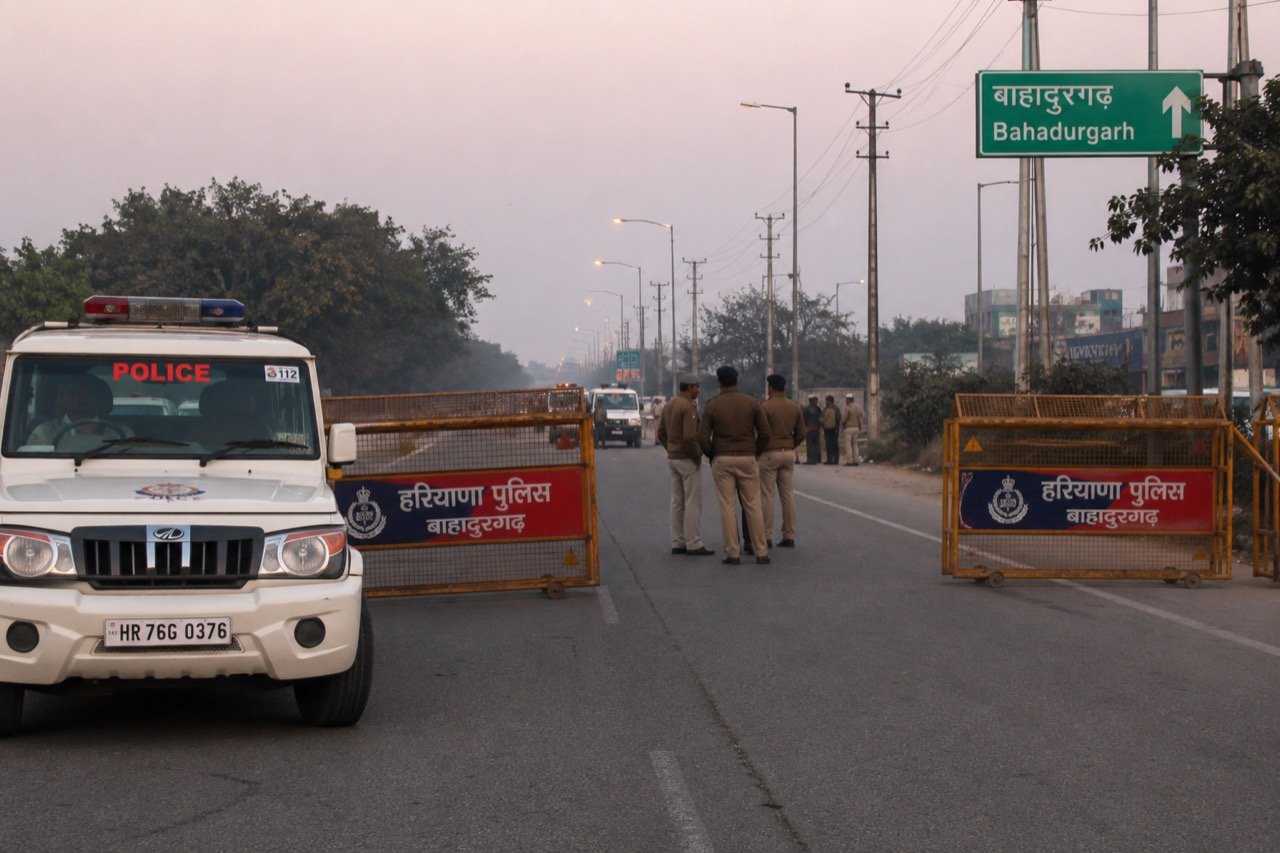
Bishnoi Gang Suspects Injured in Haryana Encounter as Police Tighten Net
A joint Haryana-Delhi Police operation in Bahadurgarh left two suspected Lawrence Bishnoi gang members injured, spotlighting the multi-state coordination now central to India's fight against organised crime networks.