Meerut Child Murder: Arrests Made as Police Probe Mother and Co-Accused
A young child's killing in Meerut has triggered arrests and public shock, with investigators examining the role of the mother and another accused as the case heads toward court.
Commentary & Analysis ·

A child's killing in Meerut has shaken Uttar Pradesh and drawn national attention, with police announcing arrests in a case that investigators say involves family and personal relationships. The victim's age and the alleged betrayal of those meant to protect the child have made the case especially disturbing for a public already sensitive to crimes against the young. As the matter moves from initial arrest towards formal investigation and, eventually, trial, it is worth setting out not only what has been alleged but why cases of this particular shape are so difficult to investigate, so painful for communities, and so easily distorted by public anger before the facts are tested.
What Police Have Said So Far
According to police accounts, investigators are examining the role of the child's mother and another accused. The allegations point to a crime that originated within the domestic circle rather than from an outside threat, a pattern that makes detection harder and the aftermath more painful. At this stage these remain allegations. The accused are entitled to due legal process, and the claims must be tested and proven in court before any conclusion is reached. It bears repeating that an arrest is not a verdict, and that the presumption of innocence applies with equal force in a case this emotionally charged as it would in any other. The temptation, in a matter involving a child victim and a parent among the accused, is to treat the police's initial framing as settled fact. That temptation is precisely what a responsible press and a careful judiciary must resist.
The Evidence Test Ahead
In sensitive crimes of this kind, police face a dual demand: act quickly enough to secure suspects and the scene, yet carefully enough that the evidence withstands scrutiny. Rushed investigations can collapse in court; slow ones can let crucial material slip away. Prosecutors will lean on a chain of verifiable findings rather than confessions alone. Each strand must be corroborated, and claims about motive in particular will require independent support before they carry weight before a judge. The building blocks of such a case typically include call records and location data to map movements and contacts, forensic and post-mortem findings establishing cause and timeline, statements from the accused, relatives and witnesses, independent corroboration of any claimed motive, and a documented, court-admissible chain of evidence.
Each of these elements carries its own risk of failure. Call detail records and location data can place a person near a scene, but proximity alone rarely proves intent or action; investigators must connect movement patterns to a coherent, corroborated sequence of events. Forensic and post-mortem findings are often the most durable evidence in such cases, but they depend on the scene being preserved and the post-mortem being conducted without procedural lapses that a defence can later exploit. Witness statements, particularly from relatives, are notoriously vulnerable to inconsistency, retraction or pressure, especially within a household where loyalties and fear may complicate testimony. And where a motive is alleged, whether rooted in a personal relationship, a domestic dispute or some other private matter, it is precisely the element most likely to be sensationalised in public discussion and least likely to be provable without independent, documented support. Courts have repeatedly shown that motive theories unsupported by hard evidence do not survive appellate scrutiny, however plausible they may sound in a headline.
A Wider Question of Child Safety
The Meerut case is more than a single crime report. It is a reminder that the gravest risks to children can sit inside the home, where warning signs are often invisible to outsiders. When danger comes from within the family, the usual protective layers can fail silently. Schools, neighbours, relatives and local services frequently become the only line of defence for a child at risk. Strengthening those networks, alongside responsive policing, is central to preventing the next tragedy rather than only prosecuting it.
This is a pattern seen, unfortunately, across many jurisdictions and many cases: institutions built to detect abuse or danger from strangers are often poorly calibrated to detect it within a family unit, where access is unquestioned and behaviour is shielded by the ordinary privacy afforded to domestic life. That is not a reason for suspicion to fall on every family, but it is a reason for the systems around families, teachers who notice a change in a child's behaviour, relatives who sense something amiss, community health workers, local police who take early complaints seriously, to be resourced and trusted enough to act on early signals. In the aftermath of a case like this, the public conversation often turns briefly towards child protection reform before receding again once the news cycle moves on. Whether that pattern repeats here, or whether Meerut's tragedy prompts more durable local attention to child welfare mechanisms, is itself worth watching.
Due Process Amid Public Anger
Cases involving child victims provoke, understandably, the strongest public emotion of almost any category of crime. That emotion is legitimate, but it creates real pressure on investigators and prosecutors to be seen to act decisively, sometimes faster than the evidence itself justifies. A police official familiar with the investigation offered a measured framing that is worth taking seriously: quick action must go hand in hand with careful evidence work, and the allegations will be tested in court, not in headlines. That statement, simple as it sounds, captures the central tension in every high-profile criminal case: the public wants answers immediately, but justice requires a pace dictated by evidence, not sentiment.
For the accused, including the child's mother, the coming weeks will likely involve remand hearings, forensic reporting and formal charge-framing, each a distinct legal threshold that requires the prosecution to substantiate its case incrementally rather than all at once. For the wider public, the more useful posture is patience: following the case as it develops through the courts rather than treating early police statements as a finished account of what occurred.
The NE Times View
A child's killing rightly shocks, but public fury is no substitute for a watertight case. The NE Times View: investigators must let evidence, not the lurid early narrative around the mother, drive the prosecution. Getting a conviction that survives appeal matters far more than feeding a media frenzy, and a botched probe would compound the original tragedy. Uttar Pradesh's police and prosecutors now carry the burden of building a case methodically, resisting the pull of a ready-made villain, and allowing the forensic and evidentiary record to speak before the courts. As the investigation proceeds and the matter moves toward trial, the broader lesson endures: child-protection systems depend on alert communities, responsive police and real support for vulnerable families. Meerut's grief should sharpen, not blur, that resolve.
Key takeaways
- Police in Meerut have arrested the child's mother and another accused, but these remain allegations to be tested in court, not a settled account of events.
- A credible prosecution will need to rely on a corroborated chain of evidence, call records, forensic and post-mortem findings, and independently supported witness statements, rather than confessions or assumed motive alone.
- Crimes originating within the family circle expose gaps in child-protection systems that rely on outsiders, schools, neighbours, relatives, noticing warning signs that may otherwise go undetected.
- Public and media pressure for swift resolution must not be allowed to compromise the careful, methodical evidence-gathering that a conviction able to survive appeal requires.
- The case's outcome will depend on court proceedings still ahead; readers should treat early police statements as the starting point of an investigation, not its conclusion.
You may also like to read
Lohagad Fort Death Near Pune Turns Into Murder Probe After Two Arrests
A fall at the popular Lohagad Fort trekking site, first treated as an accident, has become a murder investigation after Pune police arrested the victim's fiancee and an alleged associate.
Delhi Child Murder Case Puts Footpath Safety and Fast Policing Under Scrutiny
The killing of a 10-year-old girl sleeping on a Delhi footpath, with an arrest made within hours, has forced hard questions about pavement dwellers, night-time safety and the speed of missing-child response.
Lucknow Fire Probe Widens After Arrests and Suspensions Over Aliganj Tragedy
Fifteen people died in a fire at a Lucknow commercial building as police make arrests, four officials face suspension and scrutiny turns to fire exits, approvals and inspection failures.
Bathinda Clinic Petrol Bomb Attack Triggers Police Probe and Safety Concerns
A petrol bomb was allegedly hurled at a clinic linked to a BJP leader in Bathinda, prompting a police investigation and fresh worry over targeted intimidation in Punjab's local politics.
More from this section
More
AICTE Industry Fellowship 2026: Rs 1.5 Lakh Scheme Closes July 5
The AICTE Industry Fellowship Programme 2026, which places technical-education faculty inside leading companies on a Rs 1.5 lakh monthly stipend, reached its application deadline on July 5.

Bay of Bengal Low Pressure System Revives Monsoon Over Western India
A low-pressure system over the Bay of Bengal has pushed the monsoon back into an active phase, bringing steady heavy rain to Kerala, coastal Karnataka and Maharashtra, and putting Mumbai and Pune on preparedness watch.
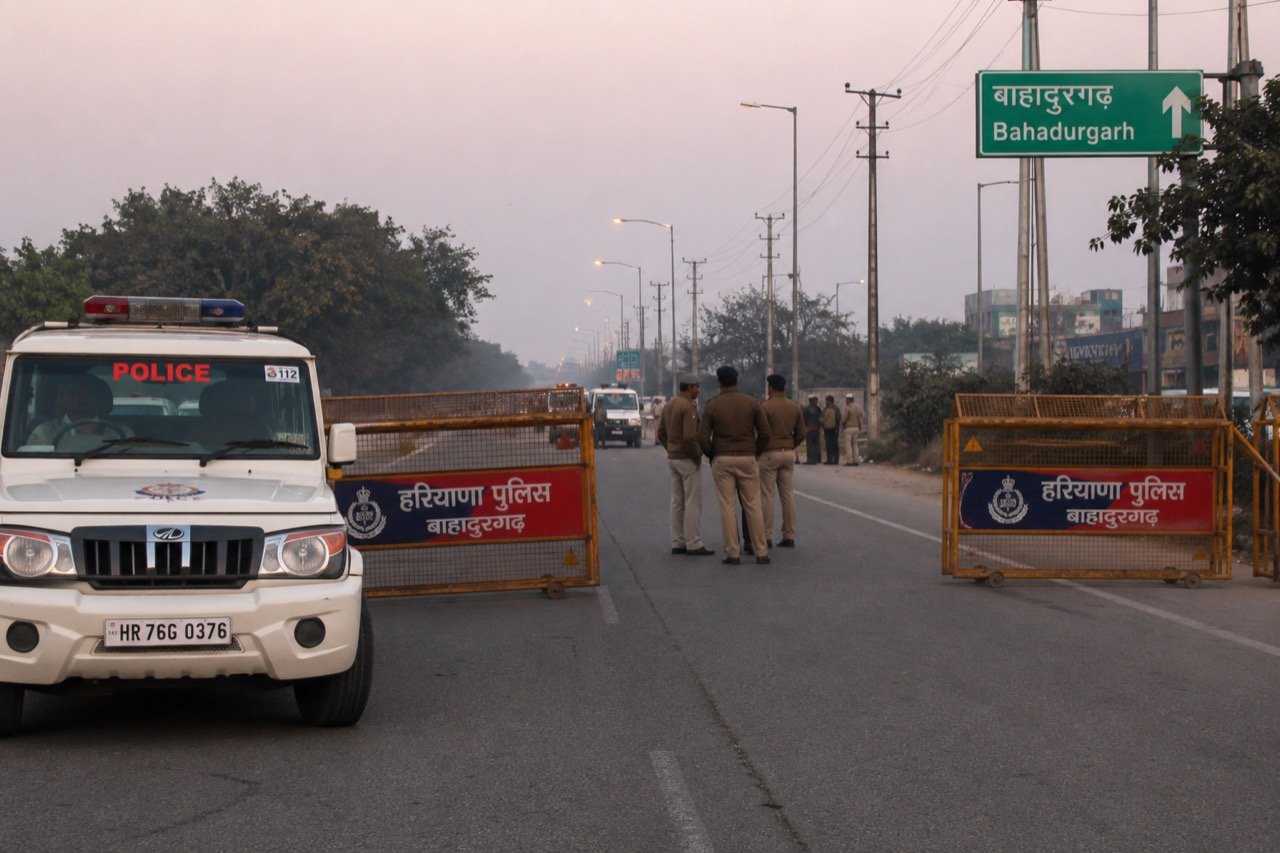
Bishnoi Gang Suspects Injured in Haryana Encounter as Police Tighten Net
A joint Haryana-Delhi Police operation in Bahadurgarh left two suspected Lawrence Bishnoi gang members injured, spotlighting the multi-state coordination now central to India's fight against organised crime networks.