Madhya Pradesh CM's Family Land Deals Near Ujjain Road Projects Face Scrutiny
Reports examining land linked to Chief Minister Mohan Yadav's relatives near Ujjain road corridors have triggered a political row, with the opposition seeking an inquiry and the CM denying any wrongdoing.
Commentary & Analysis ·
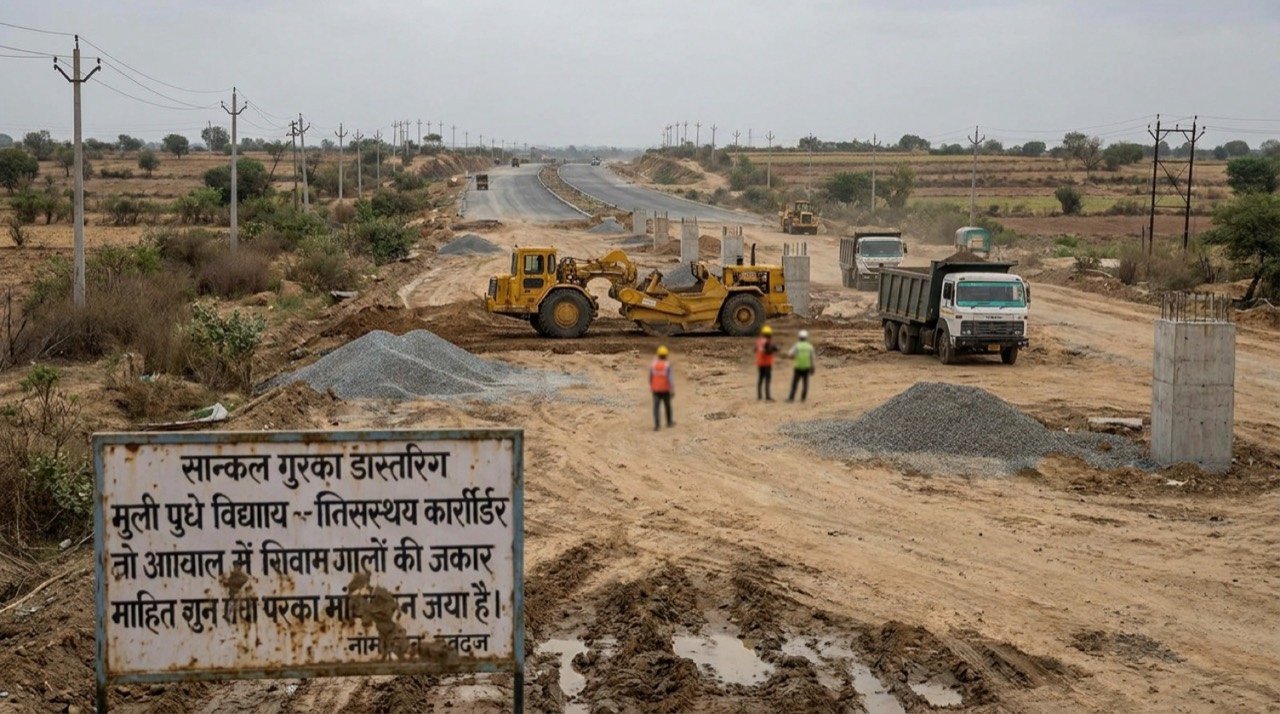
A fresh political controversy has surfaced in Madhya Pradesh after reports examined land transactions involving relatives of Chief Minister Mohan Yadav around road and development corridors near Ujjain. The accounts suggest that parcels linked to family members appreciated in value as public infrastructure plans advanced, putting questions of timing and conflict of interest squarely on the table. It is a familiar pattern in Indian state politics, yet each fresh instance carries its own weight, particularly when it touches the office of the Chief Minister in a state where land, religion and development converge as they do in Ujjain, a city of considerable civic and spiritual significance that has seen sustained state investment in recent years.
What the reports allege
At the heart of the matter is the relationship between land ownership and the trajectory of nearby road alignments and urban-expansion projects. When infrastructure is planned and announced, land along the route can rise sharply in worth, sometimes multiplying several times over within a short span, simply because proximity to a new road, bypass or development zone transforms agricultural or peripheral land into prime real estate. Reports have focused on parcels associated with the Chief Minister's family in that context, tracing how holdings near Ujjain's road and urban-expansion corridors moved in value as official plans advanced. Crucially, the reporting raises questions rather than establishing wrongdoing, and the value movements described are the kind that can occur for any landholding near a major public project, irrespective of who owns it. That caveat matters, because it is the very ordinariness of land appreciation near infrastructure that makes such cases hard to adjudicate from the outside; the pattern alone is not proof of impropriety, but it is precisely the pattern that invites scrutiny.
The Chief Minister's response
Mohan Yadav has denied any wrongdoing, stating that his family has long been engaged in agriculture and land ownership and that the holdings predate the controversy. The government's position is that legal procedures were followed in the relevant transactions. That defence frames the holdings as ordinary family assets rather than acquisitions timed to benefit from official decisions, a distinction that documentary evidence will ultimately have to settle. It is worth noting that this line of defence, land ownership predating any office held, is one of the most common responses public officials offer in such controversies across India, and it is not inherently implausible. Families with agricultural roots in a region often do hold land for generations before any of their members enter politics. The difficulty is that such a defence, on its own, cannot distinguish between coincidence and calculation. Only a transparent trail of purchase dates, registry entries and the timeline of official planning decisions can do that.
Why the issue is politically sensitive
The episode is potent because it combines several charged elements at once: land records, urban expansion, road planning and the appearance of a possible conflict of interest at the highest level of the state government. Each of these elements, on its own, is a familiar irritant in Indian governance; together, they form a combination that opposition parties find difficult to resist. Opposition leaders are demanding answers and pressing for scrutiny, while the ruling side maintains that nothing improper occurred. This is not simply a partisan skirmish. Land near planned infrastructure is one of the few assets whose value can be materially altered by a government decision made in advance of public disclosure, which is why conflict-of-interest rules in most democracies pay particular attention to landholding by public officials and their families near projects those officials have influence over. Madhya Pradesh's political landscape, where road-building and urban development have been central planks of the ruling party's development narrative, makes the optics especially delicate. A controversy of this kind can quickly become shorthand in opposition messaging for a broader critique of governance, regardless of how the specific facts eventually resolve.
The stakes for governance and public trust
Beyond the immediate political theatre, cases like this test the strength of a state's institutional safeguards. Revenue records, registry offices and planning departments are the custodians of the very documents that would either substantiate or dispel the allegations. If those records are made public and demonstrate that transactions occurred well before any relevant planning decision, the matter would likely fade as a non-issue. If, however, timelines show land changing hands or gaining recorded value shortly before or after official announcements, the pressure for a formal inquiry would intensify considerably. For ordinary citizens, the underlying concern is less about this one family and more about a broader principle: that public office should not become a vehicle for private enrichment through advance knowledge of state decisions. Ujjain, given its religious prominence and the scale of urban development tied to it, is a place where land values are unusually sensitive to state action, which only sharpens the stakes involved.
What happens next
The story will be watched closely for documentary evidence from revenue records, for official clarification, and for whether any independent inquiry is ordered. Until those threads are resolved, the dispute is likely to remain a recurring point of friction between the government and the opposition in Madhya Pradesh. In practice, this means the matter could linger for months, resurfacing in assembly sessions, opposition press conferences and follow-up reporting, without a definitive resolution unless one side produces conclusive documentation or a formal probe is constituted. The absence of an independent inquiry so far leaves the field open to competing narratives, with the government's denial and the opposition's demand for scrutiny talking past each other rather than converging on a shared set of facts.
The NE Times View
Land near infrastructure corridors is where political influence and private gain most often quietly meet, which is precisely why such deals demand transparent scrutiny rather than denials. A chief minister's family transacting near road projects he oversees is a textbook conflict-of-interest concern, the sort of situation good governance frameworks are designed to pre-empt through disclosure rather than leave to after-the-fact controversy. The NE Times View: the answer is a credible, independent inquiry with documents made public; opposition noise and official denial both fall short of that standard. Only the release of revenue records and a clear timeline, set against the dates of official planning decisions, can settle whether this is an unfortunate coincidence of geography or something that warrants firmer accountability.
Key takeaways
- Reports have examined land parcels linked to Chief Minister Mohan Yadav's relatives near Ujjain road and development corridors, noting a reported rise in value as infrastructure plans advanced.
- The Chief Minister has denied wrongdoing, citing his family's long-standing history in agriculture and landholding, and the government maintains that legal procedures were followed.
- Opposition leaders are demanding documentary scrutiny and an inquiry, framing the matter as a possible conflict of interest at the highest level of state government.
- Resolution hinges on revenue records and timelines that can show whether transactions predated or followed official planning decisions.
- The NE Times View holds that only a credible, independent inquiry with public documentation can settle the matter, since denial and opposition demands alone do not meet that standard.
You may also like to read
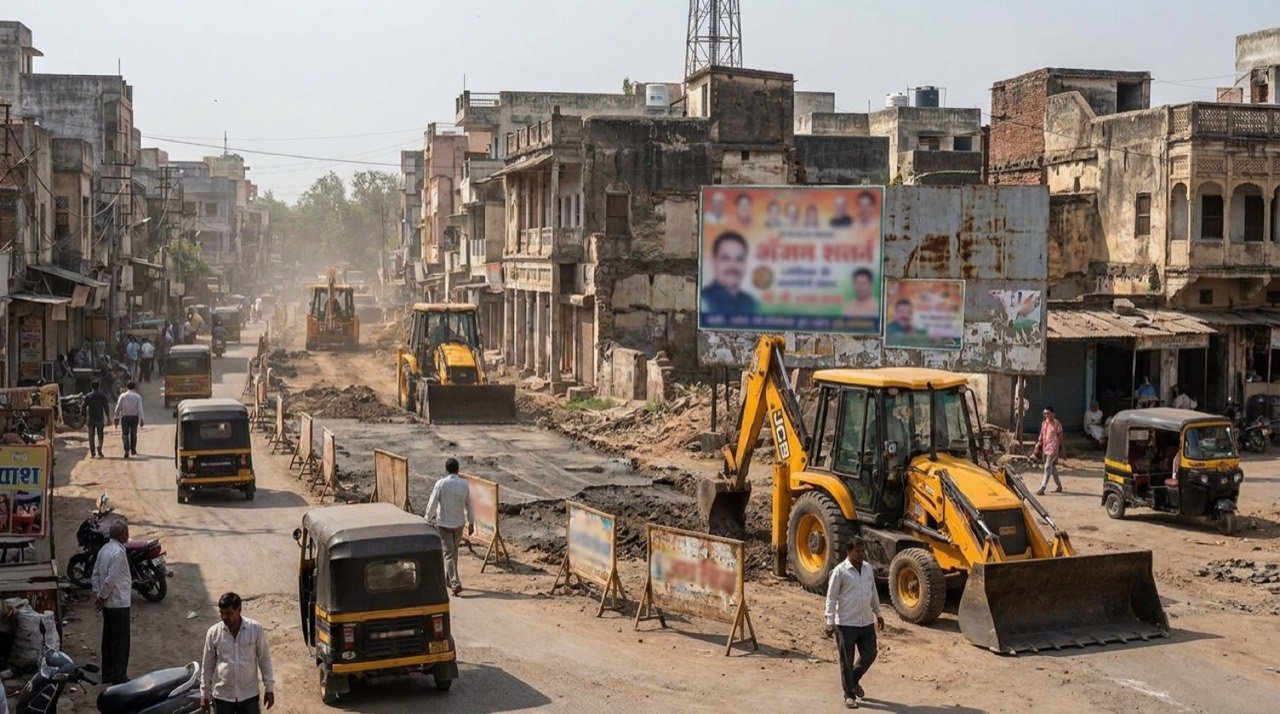
Madhya Pradesh CM's Family Land Deals in Ujjain Draw Scrutiny Amid Road-Project Push
An investigation into 137 plots worth about Rs 45 crore acquired near Ujjain by Chief Minister Mohan Yadav's family has put the city's development map and questions of transparency at the centre of a political row.
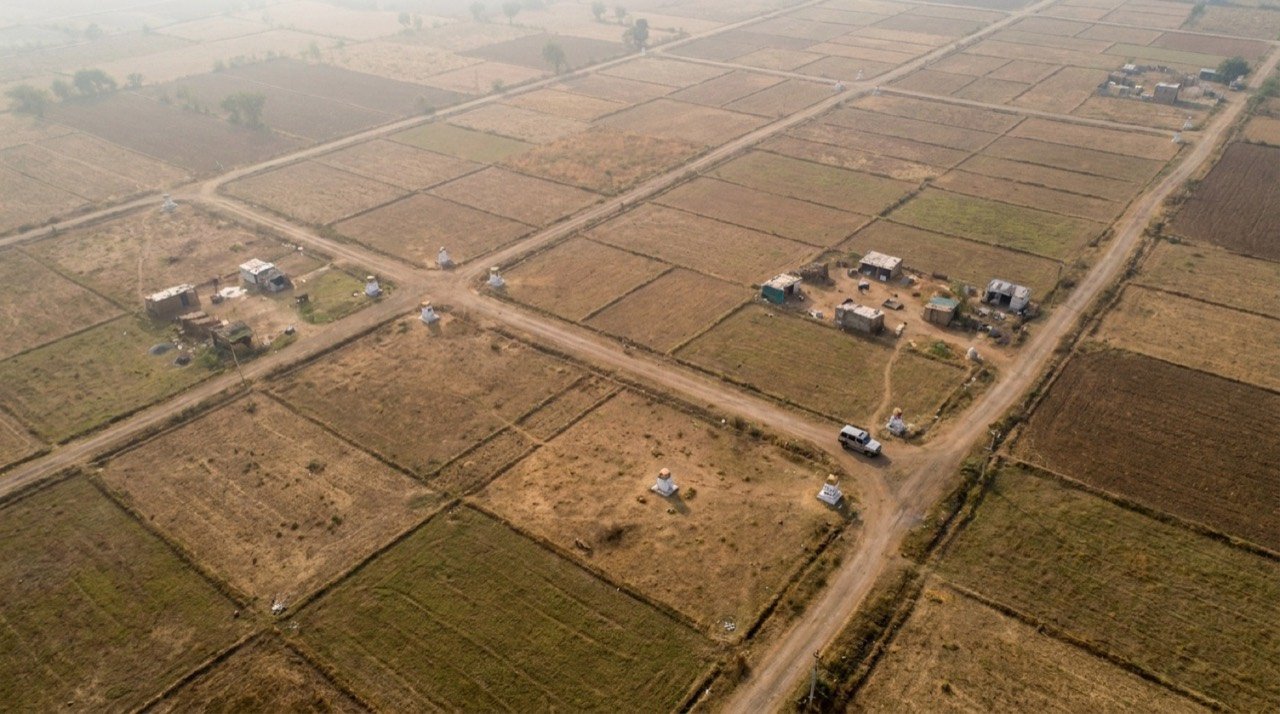
Mohan Yadav Family's Ujjain Land Purchases Draw Scrutiny in Madhya Pradesh
An Indian Express investigation reports that Madhya Pradesh Chief Minister Mohan Yadav's family and linked real estate firms bought 137 plots across 168 acres in Ujjain after he took office, in areas later touched by road projects.
Madhya Pradesh Moves Closer to a Uniform Civil Code Draft as Consultations Advance
Madhya Pradesh is preparing a draft Uniform Civil Code covering marriage, divorce, inheritance and adoption, setting up a politically sensitive debate over religion, gender justice and state powers.
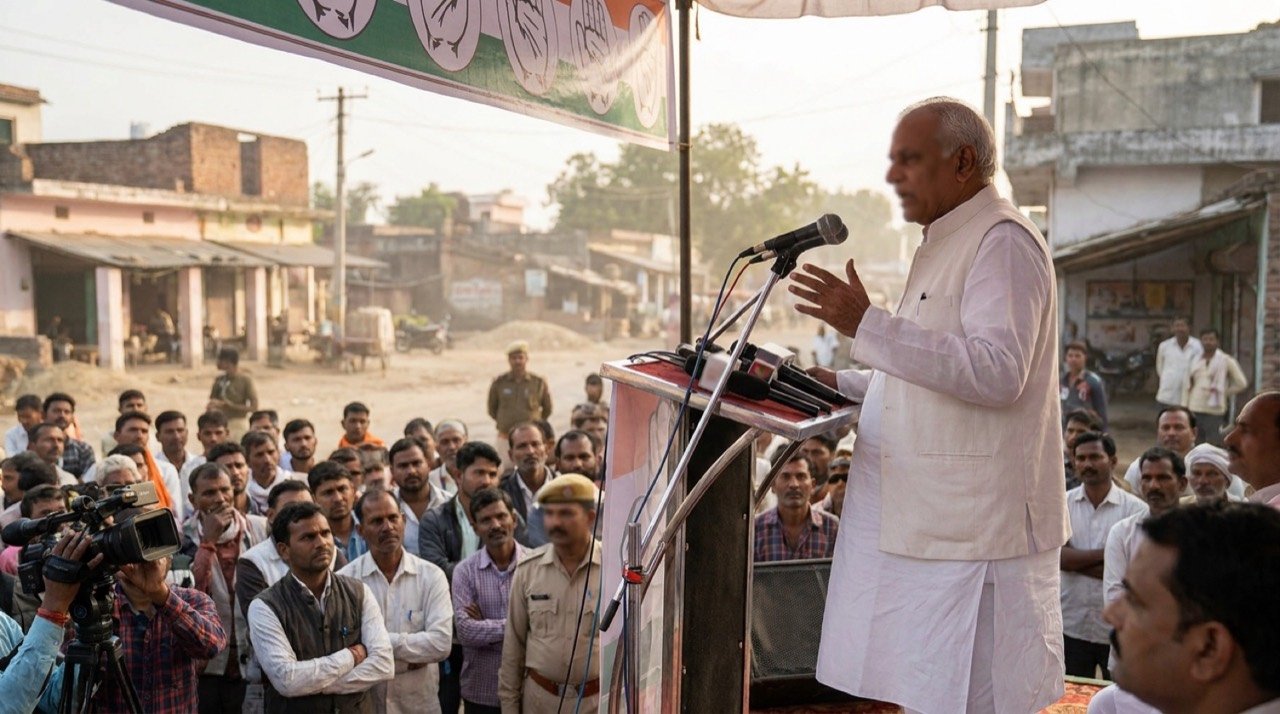
Vijayvargiya's 'Don't Use Our Roads' Remark Sparks Political Row in Madhya Pradesh
A reported comment by Madhya Pradesh minister Kailash Vijayvargiya linking public road use to political loyalty has triggered a sharp clash over civic rights and the language of public office.
More from this section
More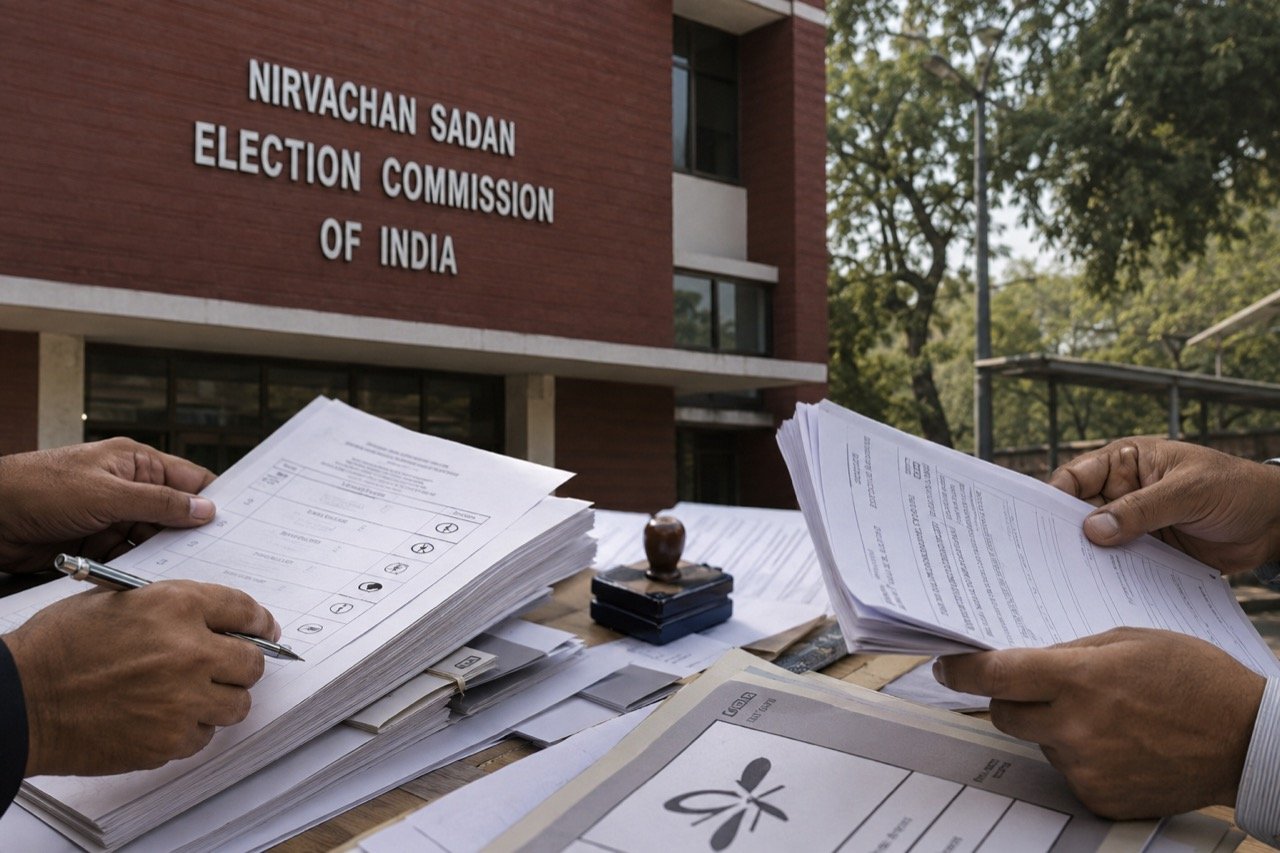
K Kavitha Party Denied TRS Name by Election Commission
The Election Commission has refused to register K Kavitha's Telangana Rakshana Sena under the TRS acronym after objections, forcing a branding reset for the new party at a politically sensitive moment in Telangana.
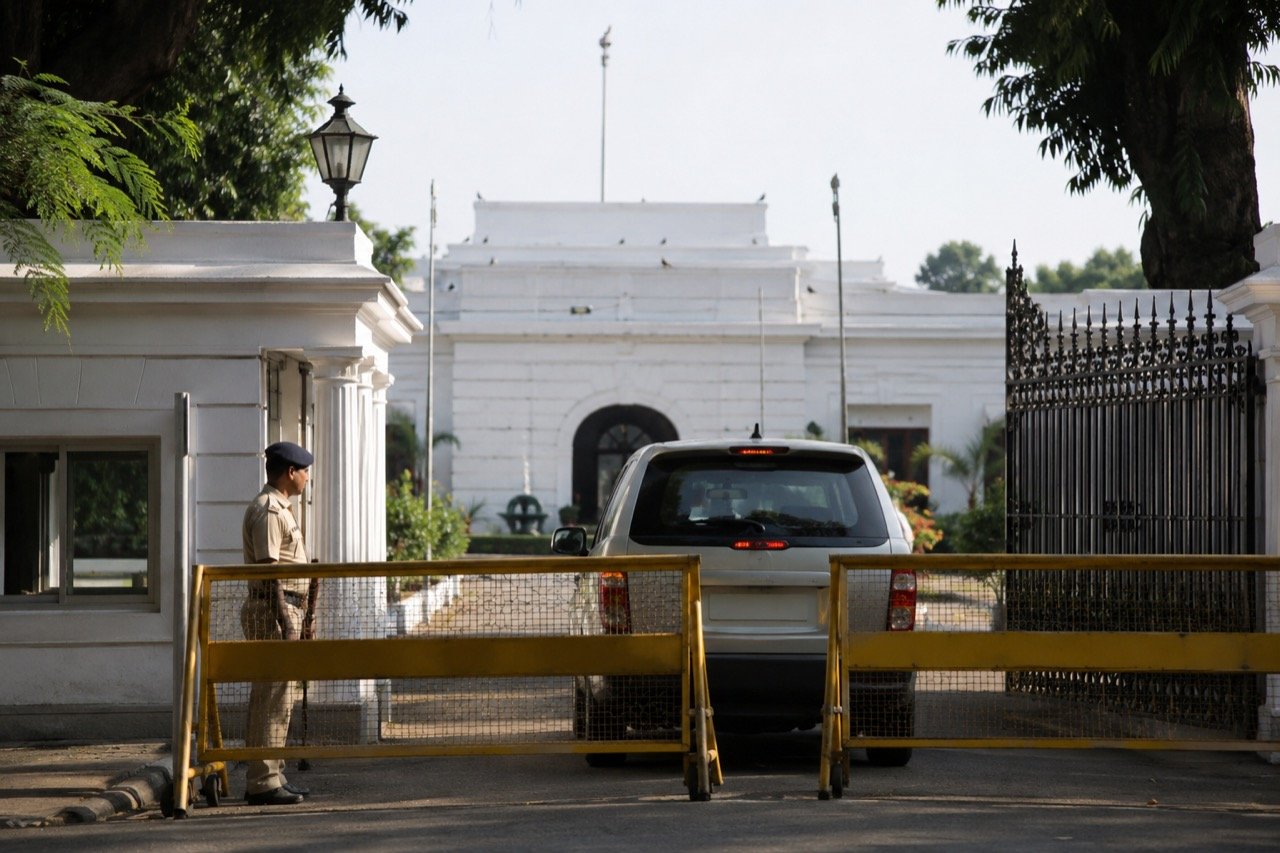
Lalu Prasad Yadav Security Downgrade, Bungalow Order Stir Bihar
A government order downgrading Lalu Prasad Yadav's security cover and asking him to vacate an official bungalow has opened a fresh political flashpoint in Bihar, with the RJD chief's reaction fuelling the row.
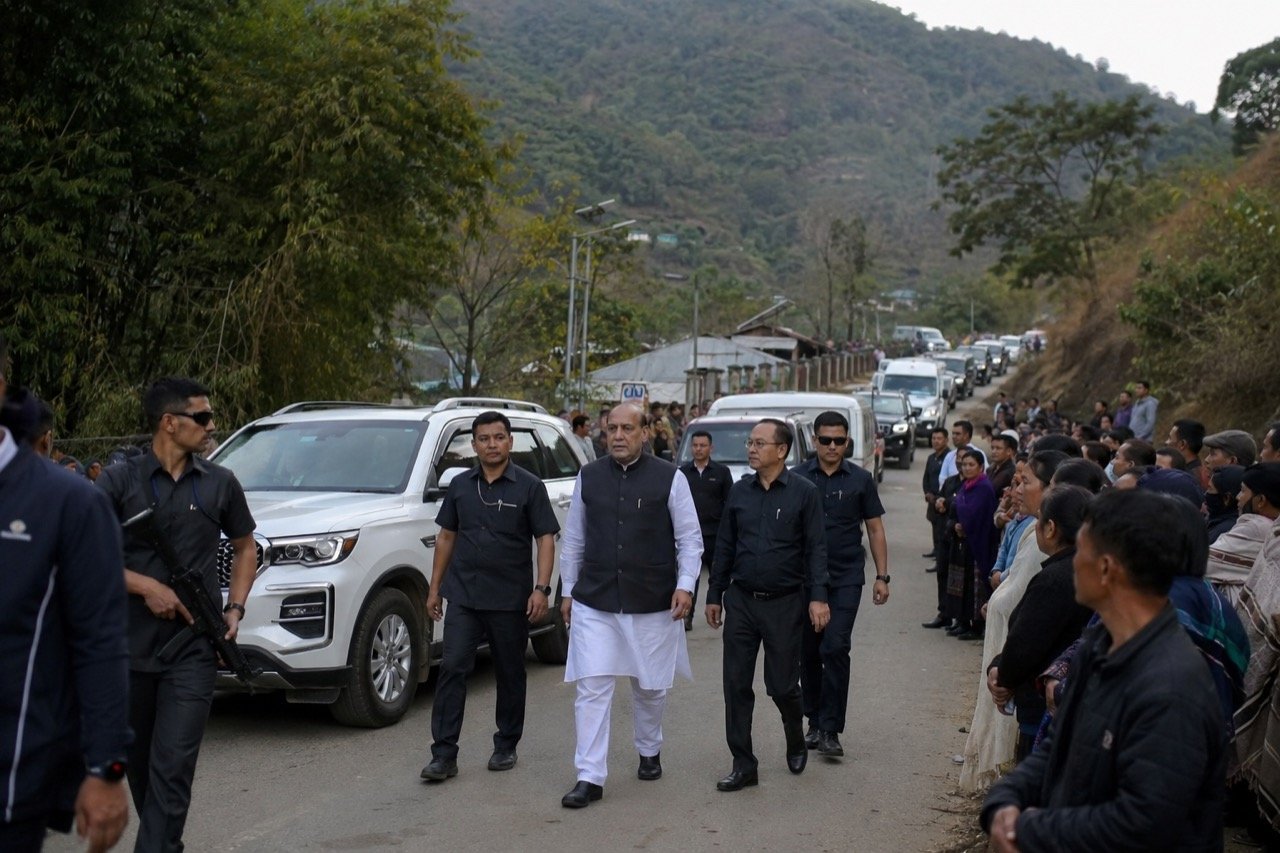
Manipur CM's Churachandpur Visit: First Since 2023 Unrest
The Manipur Chief Minister travelled to Churachandpur for a BJP MLA's funeral, his first visit to the district since the 2023 violence, lending the sombre occasion an unmistakable political significance.