DK Shivakumar Takes Over as Karnataka CM in Long-Anticipated Congress Handover
Karnataka's drawn-out power-sharing saga reached its climax as DK Shivakumar was sworn in as chief minister in early June, with Siddaramaiah accommodated in the Congress Working Committee.
Commentary & Analysis ·
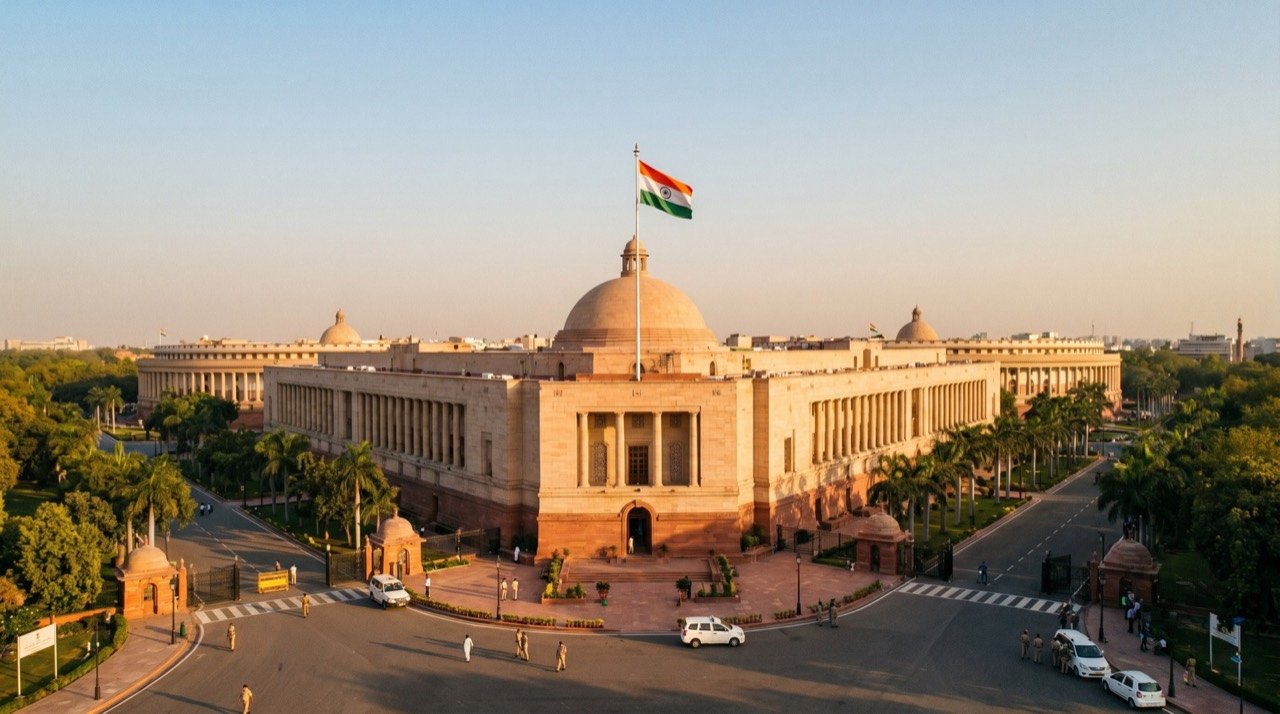
One of Indian politics' most closely watched power-sharing arrangements has finally been honoured. DK Shivakumar, the Congress's chief organiser and self-styled troubleshooter in the south, was sworn in as chief minister of Karnataka on 3 June 2026, ending a long-running and often tense rivalry with Siddaramaiah that had simmered ever since the party returned to power in the state. The transition, though widely expected, marks the end of one of the more delicate balancing acts in contemporary Congress politics, and the beginning of what may prove an equally difficult one.
A rotation finally enforced
The handover followed an internal understanding, widely acknowledged in political circles though never formally announced, under which Shivakumar would take charge after the midpoint of the government's term. This was, in effect, an unwritten contract between two rival power centres within the state unit of the Congress, struck at a moment when the party needed unity above all else to wrest Karnataka back from its opponents. That such an arrangement was ever agreed to speaks to how finely balanced the contest for leadership was when Congress returned to power in the state; neither Siddaramaiah nor Shivakumar commanded a decisive enough edge over the other for the high command to simply anoint one and sideline the other.
The Congress high command, after consultations involving Siddaramaiah, party president Mallikarjun Kharge and Rahul Gandhi, directed the outgoing chief minister to step aside, clearing the path for the transition. That the decision required direct intervention from the party's top leadership, rather than being settled quietly within the state unit, is itself telling. It suggests that even with an understanding in place, neither side was prepared to move first without the explicit sanction of Delhi, an indication of how much trust between the two camps had eroded over the intervening years and how much the final call still rests with the central leadership rather than local consensus.
Shivakumar took oath alongside a slate of ministers, with the new cabinet reflecting an attempt to balance the two camps that have defined Congress politics in the state. The composition of the cabinet is arguably as important as the change at the top; a lopsided ministry favouring one faction over the other would have undercut the very purpose of the rotation, which was to demonstrate that the transfer of power need not mean the eclipse of the outgoing camp's influence.
Keeping Siddaramaiah on board
Managing the bruised pride of an outgoing chief minister with his own substantial following was the delicate part of the exercise. Siddaramaiah has long commanded a formidable base within the state, built over decades of political work and reinforced by his tenure at the helm. A leader of that stature does not step down merely because a prior understanding says he should; the high command needed to offer him something concrete in return, both to save face and to keep his loyalists invested in the new arrangement rather than agitating against it.
A day before the swearing-in, the party leadership appointed Siddaramaiah to the Congress Working Committee, its highest decision-making body, a gesture designed to acknowledge his stature and keep the faction war from boiling over. The timing of the appointment, coming just ahead of the handover rather than after it, was almost certainly deliberate, intended to signal continuity and reassurance to his supporters at the very moment their leader was relinquishing the chief minister's chair. It positions Siddaramaiah as an elder statesman with a national role, rather than a defeated rival cast aside at the state level.
Stability or fresh friction
The orderly transfer is a relief for a Congress beset by problems elsewhere, but the durability of the truce is far from assured. Siddaramaiah's supporters in the legislature remain a substantial bloc, and any sense that their leader has been sidelined could quickly reopen old wounds in a state crucial to the party's national standing. Karnataka is not a peripheral prize for Congress; it is one of the party's few significant strongholds in the south and a base from which it draws organisational strength and finances that matter well beyond the state's borders. Instability there would ripple outward into the party's national fortunes at a time it can ill afford further setbacks.
As one political analyst in Bengaluru put it, "A peaceful handover is a win for the high command, but the real test is whether two power centres can coexist without paralysing the government." That observation cuts to the heart of the matter. A cabinet built to placate both factions can just as easily become a cabinet where neither faction has enough authority to govern decisively, with ministers loyal to Siddaramaiah and those loyal to Shivakumar working at cross purposes on appointments, transfers and policy priorities. Coalition government within a single party can be just as fractious as coalition government between parties, if the underlying rivalry is not genuinely resolved.
For now, Shivakumar inherits both the chief minister's chair and the unenviable task of proving that the rotation has bought stability rather than merely postponing the next confrontation. He must govern in a manner that neither appears to marginalise Siddaramaiah's camp, which would risk provoking exactly the backlash the high command sought to avoid, nor concedes so much ground that his own authority as chief minister is hollowed out. It is a narrow path, and one that will be tested repeatedly over the remainder of the government's term, whether through cabinet reshuffles, allocation of portfolios, or decisions on the party's organisational structure in the state.
What the high command's role reveals
The fact that Kharge and Rahul Gandhi had to personally direct Siddaramaiah to step aside underscores a broader pattern in the Congress today: its state units, even in a stronghold like Karnataka, are unable to resolve leadership questions without central intervention. This is not necessarily a sign of central overreach so much as a reflection of how deep the factional divide had become; left to their own devices, the two camps may well have been unable to agree on the timing or terms of the handover at all. The episode reinforces the centrality of the high command's arbitration role in a party that has struggled, in state after state, with unresolved leadership contests.
It also raises a question for the future: will this model of a negotiated, high-command-brokered rotation become a template the party reaches for elsewhere, or was Karnataka a special case born of a uniquely evenly matched rivalry? The answer will shape how Congress manages succession questions in other states where multiple strong regional leaders vie for primacy.
The NE Times View
The Congress finally honouring its power-sharing pact is welcome, but the long, public wrangling that preceded it damaged the party's credibility in a key state. A high command that has to personally intervene to enforce an internal understanding, rather than seeing it observed as a matter of course, has already revealed the fragility of party discipline in Karnataka. Shivakumar takes charge having already spent political capital on the chair itself, capital he will now need to husband carefully as he tries to govern.
Accommodating Siddaramaiah keeps the peace for now; whether it holds through a full term is doubtful. A Congress Working Committee seat is a genuine honour, but it is not the chief minister's office, and there will be moments in the months ahead, whether over cabinet reshuffles, ticket distribution, or simply perceived slights, when the durability of this settlement is tested afresh. Karnataka deserves governance, not a permanent succession drama, and the party's larger national ambitions depend on this state remaining a source of strength rather than a running distraction.
Key takeaways
- DK Shivakumar was sworn in as Karnataka chief minister on 3 June 2026, fulfilling a long-rumoured internal Congress rotation agreement.
- The high command, including Mallikarjun Kharge and Rahul Gandhi, had to directly intervene to secure Siddaramaiah's exit from the post.
- Siddaramaiah was appointed to the Congress Working Committee just before the handover, a gesture meant to preserve his standing and pacify his loyalists.
- The new cabinet has been structured to balance the rival camps, but Siddaramaiah's substantial legislative bloc remains a potential source of friction.
- Karnataka's stability matters well beyond the state, given its importance to the Congress's national organisational and financial base.
You may also like to read
Karnataka Cabinet Approves Praja Seva Department to Speed Up Grievance Redressal
Karnataka's cabinet has cleared a dedicated Praja Seva department, with its own minister and senior IAS oversight, to deliver time-bound, integrated resolution of public grievances across the state.
Bidadi Township Debate Intensifies in Karnataka Over Land and Growth
The proposed Greater Bengaluru Integrated Township near Bidadi has become a political flashpoint, as Shivakumar and Kumaraswamy spar over an open debate and farmers raise land and livelihood concerns.
INDIA Bloc Reaches Five-Point Consensus After Allies Push Back on Congress
A tense INDIA alliance meeting in New Delhi ended with a five-point agreement and a vow to meet bimonthly, even as Left, SP and RJD leaders bluntly told the Congress to act as the coalition's glue.
Congress Sends Observers to Jammu and Kashmir as Internal Tensions Sharpen
The Congress high command has moved to assess factional friction in its Jammu and Kashmir unit, deputing senior leaders to gather feedback as the party works to rebuild organisation and protect alliance space.
More from this section
More
K Kavitha Party Denied TRS Name by Election Commission
The Election Commission has refused to register K Kavitha's Telangana Rakshana Sena under the TRS acronym after objections, forcing a branding reset for the new party at a politically sensitive moment in Telangana.
Lalu Prasad Yadav Security Downgrade, Bungalow Order Stir Bihar
A government order downgrading Lalu Prasad Yadav's security cover and asking him to vacate an official bungalow has opened a fresh political flashpoint in Bihar, with the RJD chief's reaction fuelling the row.
Manipur CM's Churachandpur Visit: First Since 2023 Unrest
The Manipur Chief Minister travelled to Churachandpur for a BJP MLA's funeral, his first visit to the district since the 2023 violence, lending the sombre occasion an unmistakable political significance.