Kajal Aggarwal Joins Deepika in Push for Eight-Hour Film Shifts
Kajal Aggarwal has backed Deepika Padukone's demand for eight-hour shooting shifts, revealing similar clauses in her own contracts and reigniting the debate over working conditions across Indian film sets.
Commentary & Analysis ·
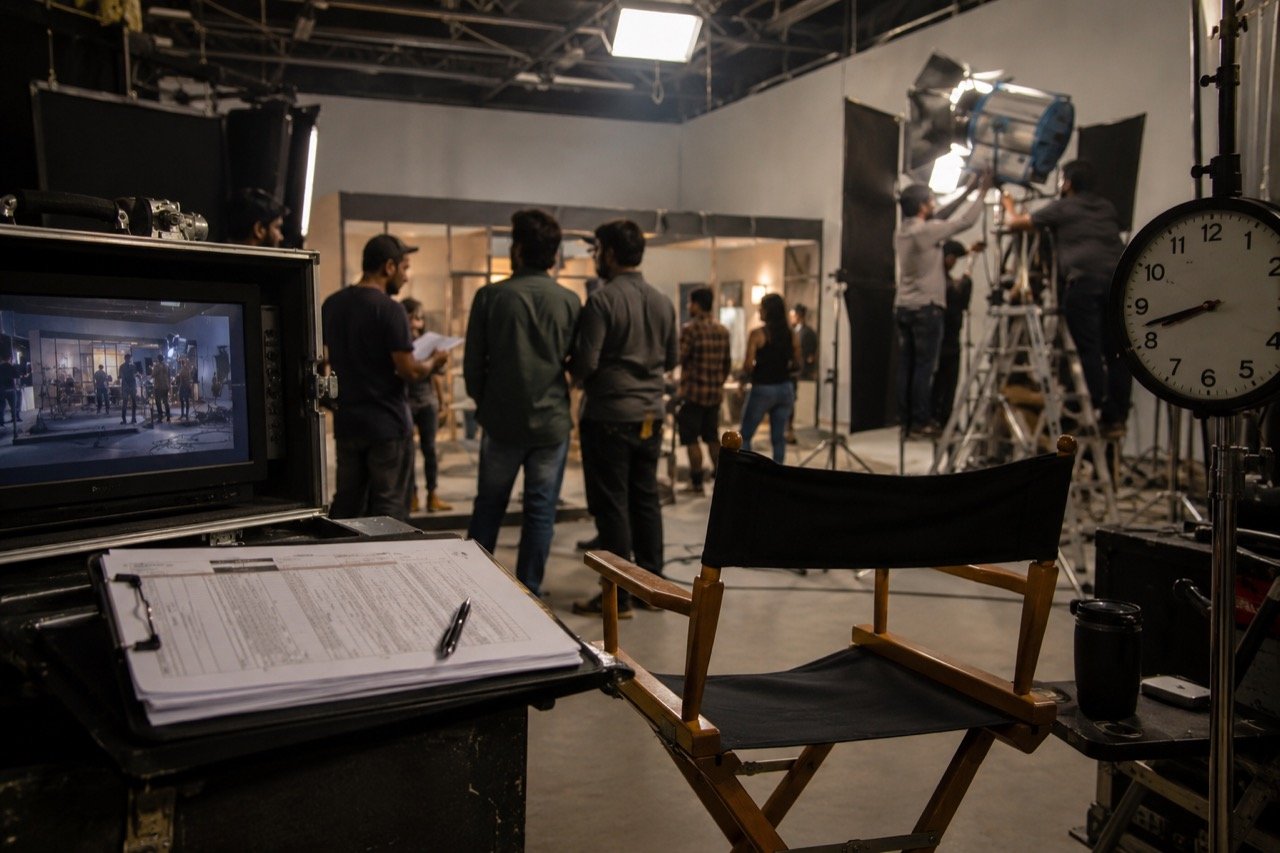
Kajal Aggarwal has given the Indian film industry's simmering labour conversation a fresh public moment. According to Indian Express, the actor voiced support for Deepika Padukone's reported demand for eight-hour shooting shifts and disclosed that her own contracts carry similar clauses. On the surface, this reads as a minor celebrity aside. In substance, it is something more consequential: two of the industry's most bankable names have now placed working hours on the record as a matter of contractual principle rather than personal preference. That distinction matters, because it shifts the debate beyond individual comfort into harder questions of work-life balance, on-set safety and professional boundaries — territory the industry has historically been reluctant to formalise.
A culture of endless shooting days
Indian film production has long run on marathon schedules, shifting call times and punishing shoots that stretch well beyond what would be considered a standard working day in most modern industries. This is not a new complaint; it has circulated for years in interviews, anecdotes and occasional controversies. What has been missing, until now, is the sense that this culture might actually be negotiable rather than simply endured. Aggarwal's disclosure that her own contracts already include eight-hour clauses suggests that some quiet renegotiation has already been underway, even if it has not been widely publicised.
That culture of extended hours weighs heaviest on performers juggling family responsibilities, health concerns or physically demanding roles requiring stunts, dance sequences or prosthetics. Fatigue compounds risk: tired actors and crew are more prone to accidents, and exhausted decision-making on set can affect everything from continuity to safety protocols. When established stars speak openly about contractual limits, the issue becomes harder for producers and studios to dismiss as an individual actor's inconvenience or a diva demand. It becomes, instead, a data point in an emerging industry norm.
Why star power changes the terms of the debate
Producers may worry, not unreasonably, about budgets and delays if shoot days are capped. Film production in India often operates on tight schedules dictated by actor availability, location costs and release-date pressures, and an eight-hour cap could in theory mean more shooting days, more logistics and higher costs. But the counter-argument is gaining ground within the industry itself: disciplined schedules reduce exhaustion, sharpen planning and make sets more professional. A production that knows it has a fixed working window is forced to plan more rigorously, waste less time, and communicate more clearly about what needs to be achieved each day. In that sense, an eight-hour shift is not necessarily a constraint on productivity — it can be an argument for better production discipline.
The real significance of Aggarwal and Padukone's interventions lies in who is making them. When lesser-known actors or crew members raise concerns about hours, they risk being seen as difficult or replaceable. When two of Indian cinema's most prominent leading women raise the same concern, backed by the leverage of their box-office standing, the conversation gains a legitimacy it would otherwise struggle to achieve. The question now is whether that star power can normalise humane hours as an industry standard rather than remain a personal perk available only to those with sufficient bargaining power.
The people the cameras don't linger on
Crucially, the debate extends far past actors. Crew members, technicians, dancers and assistants routinely endure the longest and least visible working days on any film set. These are the workers with the least contractual leverage, the least media attention, and often the least job security. A star-led conversation about shift lengths earns its keep only if it widens attention to everyone on set, not just the marquee names whose faces appear on posters. If eight-hour clauses become common in A-list contracts while junior technicians continue working sixteen-hour days without recourse, the industry will have solved a problem for the people who needed it least and left the actual structural issue untouched.
This is where the conversation could either become genuinely transformative or remain a footnote. Unions and associations representing junior artists and technical crew in the Indian film industry have periodically raised concerns about working conditions, but such efforts rarely receive the same coverage as a star's public comment. If Aggarwal and Padukone's remarks create space for those quieter voices to be heard with the same seriousness, the intervention will have done real work. If it simply becomes another cycle of celebrity commentary that fades within a news cycle, the underlying conditions on most sets will remain unchanged.
What producers and studios might do next
The practical test of this moment will be whether production houses respond with policy or merely with statements. Genuine change would look like standardised contractual language on shift limits extended across cast and crew, transparent scheduling practices, and enforcement mechanisms rather than aspirational guidelines. It would also require producers to accept that predictable hours may mean adjusted budgets or timelines, which is a commercial conversation as much as a cultural one. Given how competitive and cost-sensitive Indian film production can be, especially outside the top tier of big-budget productions, this shift is unlikely to happen uniformly or quickly. It is more plausible that eight-hour clauses become a feature first negotiated by top-tier stars with the leverage to demand them, before slowly filtering down — if it filters down at all — to the rest of the workforce.
The NE Times View
This is one celebrity story that deserves to outlast the news cycle. India's entertainment industry is becoming more formal, platform-driven and globally scrutinised, yet its working conditions still belong to an older, more feudal era in which endurance was treated as a professional virtue rather than a risk to be managed. Stars like Kajal Aggarwal and Deepika Padukone negotiating eight-hour clauses is a start, but real change arrives only when the spot boy and the junior technician get the same protection without needing bargaining power to secure it. If India wants its film business treated as a modern global industry, predictable working hours are not a luxury demand — they are the baseline of professionalism. Until that baseline extends beyond the industry's most famous faces, the conversation Aggarwal has reopened remains promising rather than proven.
Key takeaways
- Kajal Aggarwal has publicly backed Deepika Padukone's reported push for eight-hour shooting shifts and revealed her own contracts include similar clauses.
- The intervention reframes shift length from a personal preference into a broader question of professionalism, safety and work-life balance on Indian film sets.
- Producers face genuine budget and scheduling pressures, but proponents argue fixed hours can improve planning discipline rather than simply raise costs.
- The greater test is whether such protections extend to crew, technicians, dancers and assistants who lack the bargaining power of leading stars.
- Lasting change will depend on structural policy from production houses, not just high-profile statements from top-billed actors.
You may also like to read

Kajal Aggarwal Confirms Only Ramayana Part One Is Filmed So Far
Kajal Aggarwal's production update on the big-budget Ramayana project confirms that only Part One has been shot, giving audiences a rare firm fact amid constant speculation about India's most ambitious multi-part film.

Ramayana Part 1 Filmed So Far, Says Kajal Aggarwal on Yash Epic
Kajal Aggarwal's disclosure that only Part 1 of the multi-part Ramayana has been filmed so far has given fans a rare, grounded status check on one of Indian cinema's most anticipated productions.

'Raaka': Allu Arjun, Deepika Padukone and Atlee Unite for a Creature-Driven Fantasy Spectacle
Director Atlee's reunion with Deepika Padukone, this time alongside Allu Arjun, has been formally titled 'Raaka', with a dark, creature-inspired poster and a reported 100-day shoot signalling one of Indian cinema's most ambitious upcoming productions.
Dharna Durga on the Self-Doubt of Sharing a Set With Madhuri Dixit
The young actor's candid admission of overthinking and comparison after working alongside Madhuri Dixit has struck a chord, turning a film-set anecdote into a wider conversation about confidence.
More from this section
More
72nd National Film Awards: Fans Back Mammootty, Allu Arjun, Sai Pallavi
Speculation around the 72nd National Film Awards is intensifying as fan communities across India's language film industries champion favourites including Mammootty, Allu Arjun and Sai Pallavi ahead of any official announcement.

Aamir Khan Marries Gauri Spratt in Private Pali Hill Ceremony
Aamir Khan and Gauri Spratt tied the knot at the actor's Pali Hill home in Mumbai on July 5, turning a deliberately small family ceremony into Bollywood's biggest story of the day.
Akanksha Chamola's Lock Upp 2 Confession Sets Reality TV Abuzz
A personal revelation by Akanksha Chamola ahead of Lock Upp 2 has handed the reality show a viral talking point, underlining how confession-driven formats continue to dominate Indian television conversation.