Dharna Durga on the Self-Doubt of Sharing a Set With Madhuri Dixit
The young actor's candid admission of overthinking and comparison after working alongside Madhuri Dixit has struck a chord, turning a film-set anecdote into a wider conversation about confidence.
Commentary & Analysis ·
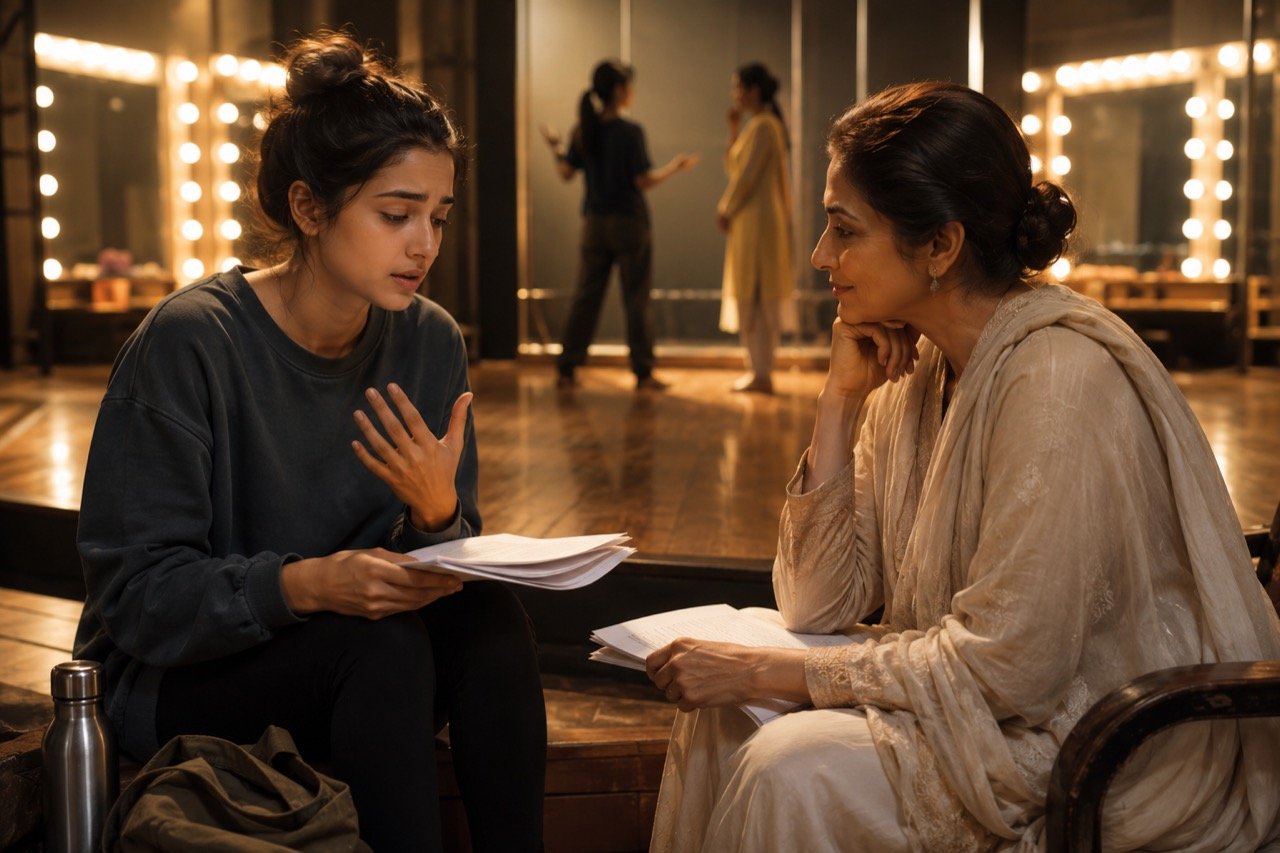
Dharna Durga's frank admission that she wrestled with self-doubt after sharing a film set with Madhuri Dixit has become one of the more talked-about entertainment stories of the week. What began as a personal reflection in an interview has grown into a broader conversation about how younger performers cope with working beside industry icons. The remark was not designed to generate headlines, yet its plain honesty has given it a life of its own across entertainment coverage, precisely because it says something recognisable about work, hierarchy and confidence that extends well beyond the film industry.
More than screen space
Film sets are routinely portrayed as glamorous, but they are also workplaces shaped by hierarchy, experience and public memory. Standing next to a performer of Madhuri Dixit's stature means confronting decades of audience expectation, a storied dance legacy and a level of professional discipline that can feel intimidating to anyone earlier in their career. A senior actor of that calibre is not simply a co-star; she is a living reference point against which every gesture, line reading and expression is likely to be measured, both by the crew on set and by audiences watching the finished film.
That is what gives Durga's comments their weight. She was not discussing box office numbers or stoking controversy; she was describing the emotional mechanics of performance — the overthinking, the comparison, the quiet pressure of proximity to greatness. It is a description of the internal experience of working life, the kind that rarely makes it into promotional interviews, which tend to stay on safer ground such as anecdotes from the shoot or praise for the director.
Why the story resonates
The appeal lies in its universality. Most people, whatever their profession, know the feeling of measuring themselves against a senior figure they admire, whether that is a mentor at work, a senior colleague, or simply someone whose reputation precedes them into every room. The film industry simply plays out that anxiety in public, under lights and in front of a camera, where the stakes of underperforming feel magnified and the comparison is available for anyone to see once the film is released.
Durga's honesty also reflects a healthier turn in entertainment coverage, where actors can speak about uncertainty without it being framed as weakness — an acknowledgement that confidence is usually built through rehearsal, support and repetition rather than granted at the door. For years, the dominant script in Bollywood interviews has been one of effortless self-assurance, as though talent alone should erase nerves. Durga's comments quietly push back against that script, suggesting that even accomplished performers experience a learning curve when placed opposite someone as established as Dixit.
What it reveals about mentorship and hierarchy on set
The story also raises a useful question about how film sets function as workplaces. Formal mentorship structures in the Hindi film industry remain informal at best; there is no standard system by which senior actors are expected to guide or reassure newer colleagues. Much of what passes for support depends on the personal disposition of the more established star, the atmosphere fostered by the director, and simple chance. Durga's remarks, read in that light, are less a complaint than an observation about a gap that many younger performers may quietly experience but rarely voice on record.
Naming that gap, even gently, matters. It gives producers, directors and senior actors a specific, low-stakes example to reflect on: a young performer who felt the weight of comparison keenly enough to mention it publicly, without rancour, months after the fact. That is a far more constructive entry point for the industry than the usual conversations sparked by controversy or conflict.
The audience's relationship with stardom
There is also something worth noting about how Indian audiences relate to figures like Madhuri Dixit. Decades of iconic performances have cemented an image of complete command over the craft, and that image, useful as it is for sustaining a career, can obscure the ordinary uncertainties that even veteran performers once faced and that newcomers face now. When a younger actor describes feeling daunted by that same aura, it offers audiences a reminder that the icon they see on screen was itself built over years, through practice and setbacks, not delivered fully formed.
This matters for how the public consumes celebrity narratives more broadly. Admissions of self-doubt, when reported with care rather than sensationalised, help recalibrate the distance between star and viewer without diminishing the star's achievements. Dixit's legacy is not lessened by another actor admitting to nerves in her presence; if anything, it is reinforced, since it underlines just how significant her presence on a set continues to be for those who grew up watching her films.
The NE Times View
Bollywood's star system has long rewarded projected invincibility, so a young actor openly describing self-doubt is quietly significant. It humanises the creative process for millions of Indian viewers who see only the finished, polished frame. We think this kind of candour is good for the industry: it lowers the emotional cost of ambition for newcomers and reminds audiences that even the most glamorous sets are workplaces of vulnerability and learning. If more established stars responded to such admissions with visible mentorship, the industry's culture would be the better for it.
Such a shift need not be dramatic. It could be as simple as senior actors publicly acknowledging their own early anxieties, or directors building in space during rehearsals for newer performers to ask questions without embarrassment. None of this requires structural upheaval, only a willingness among those at the top of the industry to treat candour as a strength worth encouraging rather than an oddity worth noting and moving past.
Key takeaways
- Dharna Durga's admission of self-doubt while working alongside Madhuri Dixit has resonated because it captures a universal workplace anxiety, not merely a film industry quirk.
- The remarks highlight the informal, uneven nature of mentorship on Indian film sets, where support for newer performers depends largely on individual goodwill rather than any established structure.
- Public honesty about uncertainty represents a shift away from Bollywood's traditional culture of projected invincibility, and may make ambition feel less daunting for newcomers.
- Audiences benefit too: such admissions humanise established stars without diminishing their legacy, reminding viewers that expertise is built rather than innate.
- The NE Times View is that the industry would benefit from senior stars responding to such candour with visible mentorship, turning a personal reflection into a broader cultural shift.
You may also like to read

Madhuri Dixit's Dark Comedy 'Maa Behen' Storms Into Netflix's Global Top 10
Suresh Triveni's mother-daughter crime caper, co-starring Triptii Dimri, has trended in 15 countries and notched one of 2026's biggest Indian-original debuts on the platform.

Bollywood's Box Office Bounce: First Half of 2026 Points to Recovery
A first-half review of Hindi cinema's 2026 box office shows record-breaking hits lifting industry confidence, though analysts caution that lasting recovery will depend on consistency beyond a handful of blockbusters.

Aamir Khan Confirms July 5 Wedding to Gauri Spratt: 'The News About the Marriage Is True'
The 61-year-old superstar has put months of speculation to rest, confirming an intimate registered marriage to longtime partner Gauri Spratt at his Mumbai home, with no grand celebration planned.

Aamir Khan's quiet July 5 wedding becomes Bollywood's big story
Reports that Aamir Khan has confirmed an intimate July 5 ceremony with Gauri Spratt have captivated Bollywood watchers precisely because the star is choosing privacy over spectacle.
More from this section
More
72nd National Film Awards: Fans Back Mammootty, Allu Arjun, Sai Pallavi
Speculation around the 72nd National Film Awards is intensifying as fan communities across India's language film industries champion favourites including Mammootty, Allu Arjun and Sai Pallavi ahead of any official announcement.

Aamir Khan Marries Gauri Spratt in Private Pali Hill Ceremony
Aamir Khan and Gauri Spratt tied the knot at the actor's Pali Hill home in Mumbai on July 5, turning a deliberately small family ceremony into Bollywood's biggest story of the day.

Akanksha Chamola's Lock Upp 2 Confession Sets Reality TV Abuzz
A personal revelation by Akanksha Chamola ahead of Lock Upp 2 has handed the reality show a viral talking point, underlining how confession-driven formats continue to dominate Indian television conversation.