Kailash Vijayvargiya's Indore Remarks Spark Row Over Roads and Welfare
Madhya Pradesh minister Kailash Vijayvargiya has triggered controversy with Indore remarks suggesting those who call leaders 'Kafirs' should not use roads they built or claim welfare benefits.
Commentary & Analysis ·
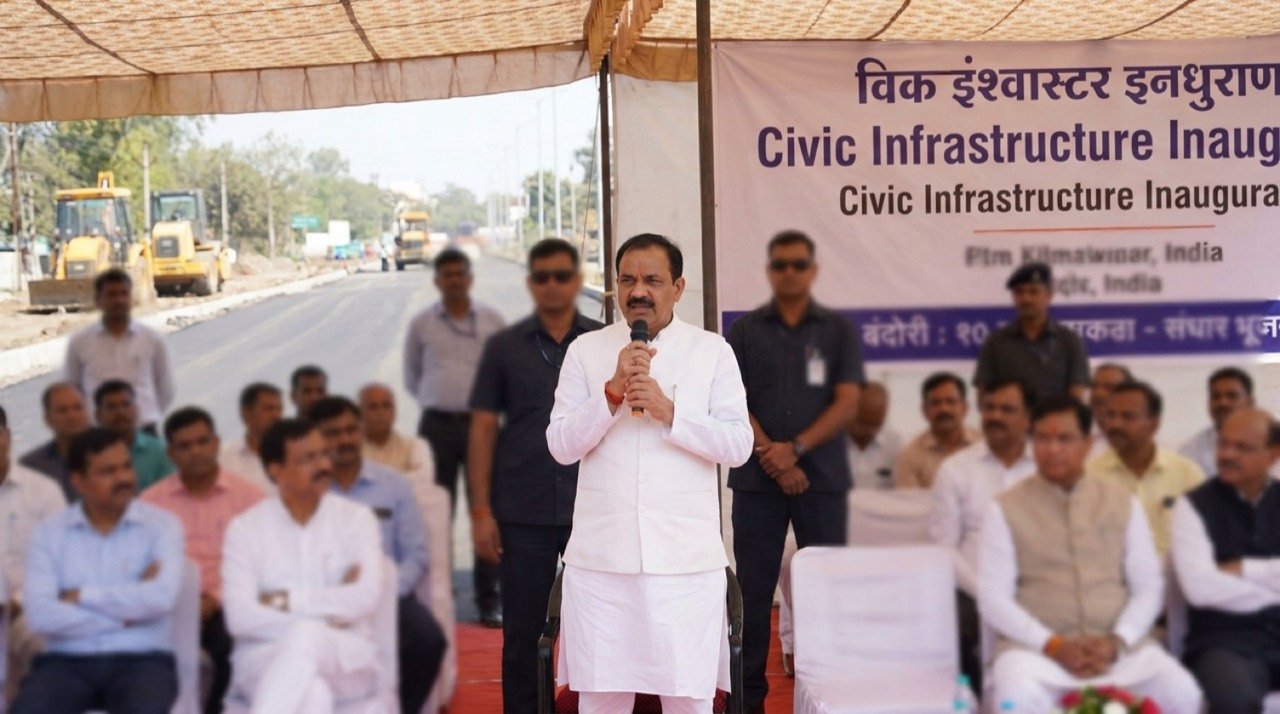
Madhya Pradesh minister Kailash Vijayvargiya has ignited a political controversy after remarks at an event in Indore, where he suggested that people who call their elected representatives "Kafirs" should not use the roads those representatives built or draw welfare benefits linked to them. The comments, made before a public audience, quickly drew sharp reactions and have since travelled well beyond the Indore venue where they were first spoken.
What was said and where
According to reporting, the remarks were delivered during the inauguration of civic works valued at around Rs 2.4 crore. Such inaugurations are routine fixtures of local political life in Madhya Pradesh, typically brief, celebratory occasions where a minister cuts a ribbon, thanks the engineering department, and moves on. That this particular event became the setting for a nationally noticed controversy says something about how quickly ordinary political theatre can turn into a flashpoint when a senior figure chooses combative language. Vijayvargiya is quoted as saying, "Those who call us Kafirs should not use the roads we built or take the benefits of our welfare schemes." In tying access to public infrastructure and welfare to the language some constituents use about leaders, the minister framed development benefits in starkly conditional terms, a framing that opponents seized upon almost immediately. Vijayvargiya is a senior and influential figure in Madhya Pradesh politics, a former state minister with a long public profile, and that stature is precisely what amplified the reach and resonance of his comments far beyond the immediate audience gathered for the civic works ceremony.
Why the remarks are contentious
Roads, drainage and other civic works of the kind inaugurated in Indore are funded from public money, collected through taxes paid by residents regardless of their religion, caste, political affiliation or personal opinion of any particular leader. The basic premise of public infrastructure, and indeed of welfare schemes designed to reach eligible citizens, is universality: entitlement flows from citizenship and need, not from professed loyalty to whoever happens to hold office at the time. Suggesting that access to such infrastructure or to welfare schemes could be contingent on a citizen's stance toward particular leaders cuts against that founding principle. It reframes a public good, paid for collectively, as something closer to a personal favour bestowed by the minister, to be withdrawn from those who show insufficient deference or use language he finds offensive. That inversion, treating what is owed to all as though it were a gift from one, is why the statement drew criticism, and why critics describe it as constitutionally untenable rather than merely intemperate.
The weight of the word used
Central to the controversy is the specific term the minister invoked. Describing critics or opponents as people who call representatives "Kafirs" imports a loaded religious framing into what would otherwise be an ordinary political grievance about disrespect. Whatever the minister's intent, using that particular word in a public, official setting risks being read as an attempt to sort constituents along communal lines, rather than simply along lines of political support or opposition. In a country where communal language carries a long and often painful history, and where public officials are expected to speak for all residents of a jurisdiction rather than a subset defined by faith, the choice of that word rather than a more neutral one is unlikely to be treated as incidental by observers, however the minister himself later chooses to explain it.
The political backdrop
Such remarks tend to sharpen the broader debate over polarising rhetoric in Indian public life, particularly when made by ministers at official events rather than at party rallies or campaign gatherings, where a degree of partisan combativeness is more expected. An inauguration of civic works is, by convention, a moment when a representative addresses the entire constituency he or she serves, not merely supporters. Critics argue that remarks of this kind risk dividing constituents by signalling that some residents are more deserving of the state's attention than others, undermining the basic compact between an elected official and the people in the constituency who did not necessarily vote for him. Supporters, on the other hand, often cast such lines as blunt but understandable responses to perceived disrespect toward elected leaders, arguing that ministers, too, are entitled to push back against insults directed at them personally. That divide in interpretation, between a comment read as an abuse of office and one read as a fair riposte to provocation, is likely to define how the episode is discussed in Madhya Pradesh in the days ahead.
What happens next
As reactions continue to build, the episode is likely to feed the wider conversation about the tone of political discourse in Madhya Pradesh and the responsibility of office-holders when speaking at state functions. Opposition parties can be expected to press the matter, both to extract an apology or clarification and to use it as evidence in a broader argument about the ruling party's approach to minority communities. The minister's own camp, meanwhile, is likely to argue that the comments have been taken out of context or exaggerated by opponents looking to make political capital. Whether the row produces any lasting consequence, such as a formal clarification, a retraction, or simply a news cycle that moves on within days, will depend partly on how much sustained attention opposition figures and media commentary choose to give it. For now, the episode underscores how a single line delivered at a routine civic event can reverberate across a state's political landscape long after the ribbon has been cut and the crowd has dispersed.
The NE Times View
Public roads and welfare are built with everyone's taxes and belong to every citizen, regardless of what they say about their leaders, so tying access to loyalty tests is constitutionally untenable. Ministers are free to defend themselves against slurs, and there is nothing wrong with a public figure objecting when he feels genuinely insulted. But suggesting, even rhetorically, that critics forfeit public goods because of the language they use is a different matter entirely, and a corrosive idea for any elected official to voice from an official platform. Such rhetoric from those in office normalises exclusion, sends a signal that entitlement to the state's resources is conditional on political or communal alignment, and is best retracted rather than amplified or defended. The measure of a democracy is not how its representatives respond to praise but how carefully they guard the principle that public provision belongs to all, especially when tempers are frayed and audiences are receptive to a sharper line.
Key takeaways
- Kailash Vijayvargiya's remarks at an Indore civic event, during the inauguration of works worth about Rs 2.4 crore, suggested that those who call representatives "Kafirs" should not use the roads built or draw welfare benefits linked to them.
- Critics argue the comments undermine the universal, tax-funded nature of public infrastructure and welfare, which are meant to serve all residents regardless of political or communal alignment.
- The use of a religiously loaded term intensified the backlash, raising concerns about communal framing in official political speech.
- The episode has become part of a wider debate on polarising rhetoric from office-holders at state functions, with supporters and critics divided over whether it was a fair response to disrespect or an abuse of office.
- The controversy is likely to continue feeding political debate in Madhya Pradesh, with opposition parties expected to press for clarification or retraction.
You may also like to read
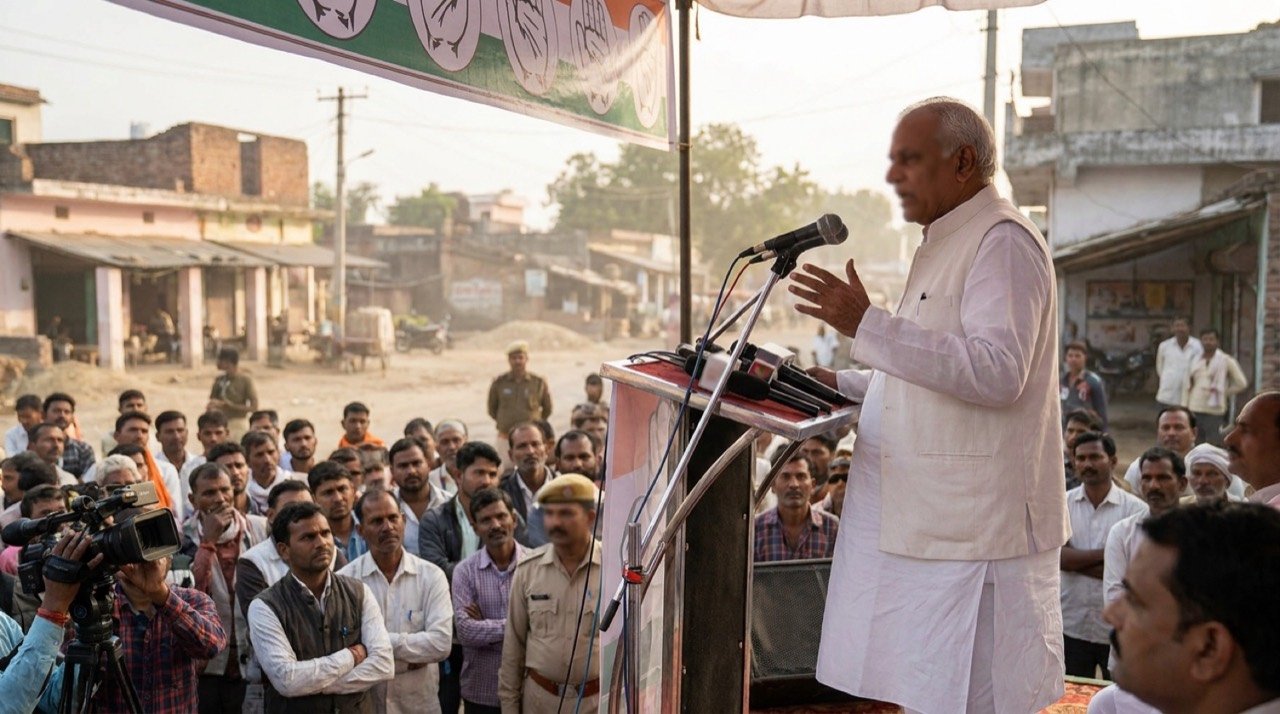
Vijayvargiya's 'Don't Use Our Roads' Remark Sparks Political Row in Madhya Pradesh
A reported comment by Madhya Pradesh minister Kailash Vijayvargiya linking public road use to political loyalty has triggered a sharp clash over civic rights and the language of public office.
West Bengal's First BJP Budget Bets on DA Hike, One Lakh Jobs and Welfare
Finance Minister Swapan Dasgupta's debut budget pairs a 20-point DA hike, one lakh government jobs and a major Annapurna Yojna outlay with industry incentives, framing the BJP's first big policy test in Bengal.
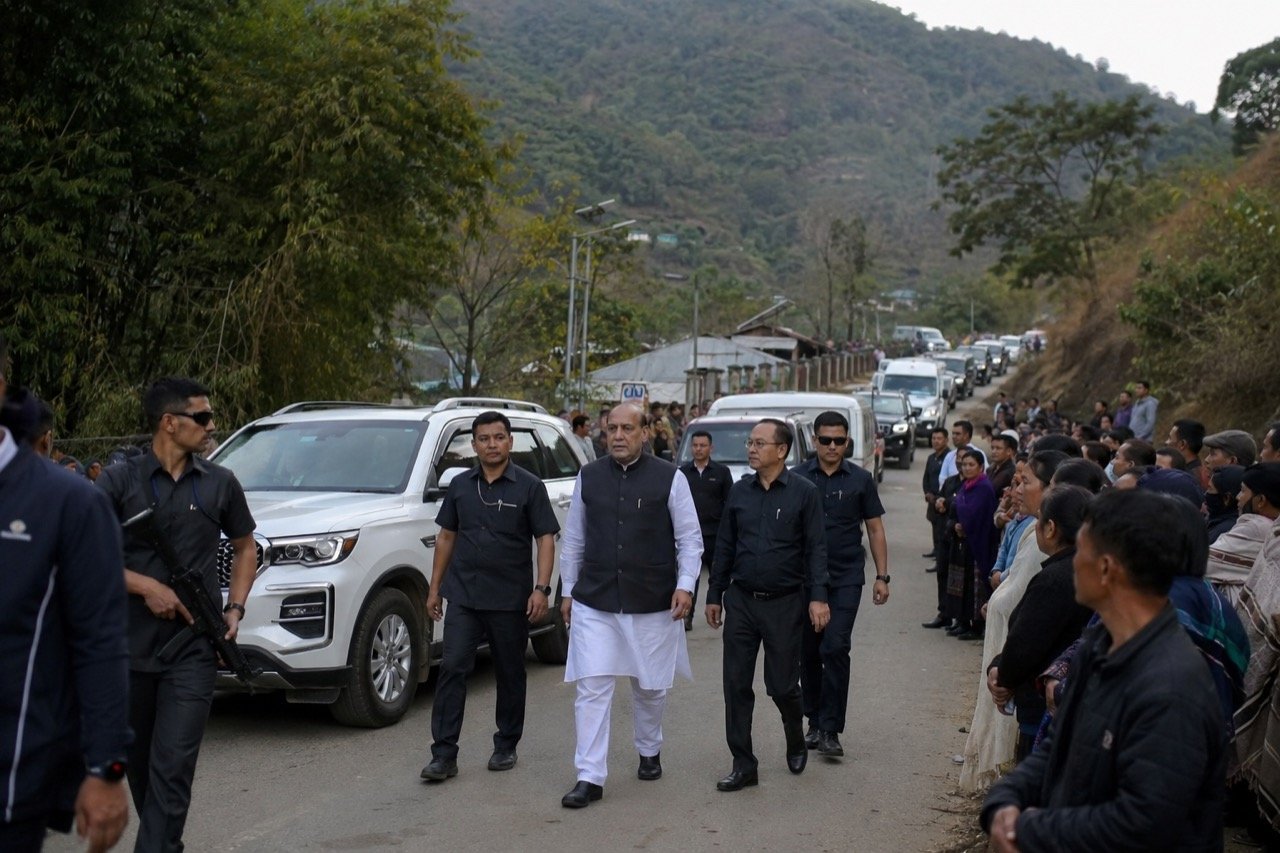
Manipur CM's Churachandpur Visit: First Since 2023 Unrest
The Manipur Chief Minister travelled to Churachandpur for a BJP MLA's funeral, his first visit to the district since the 2023 violence, lending the sombre occasion an unmistakable political significance.
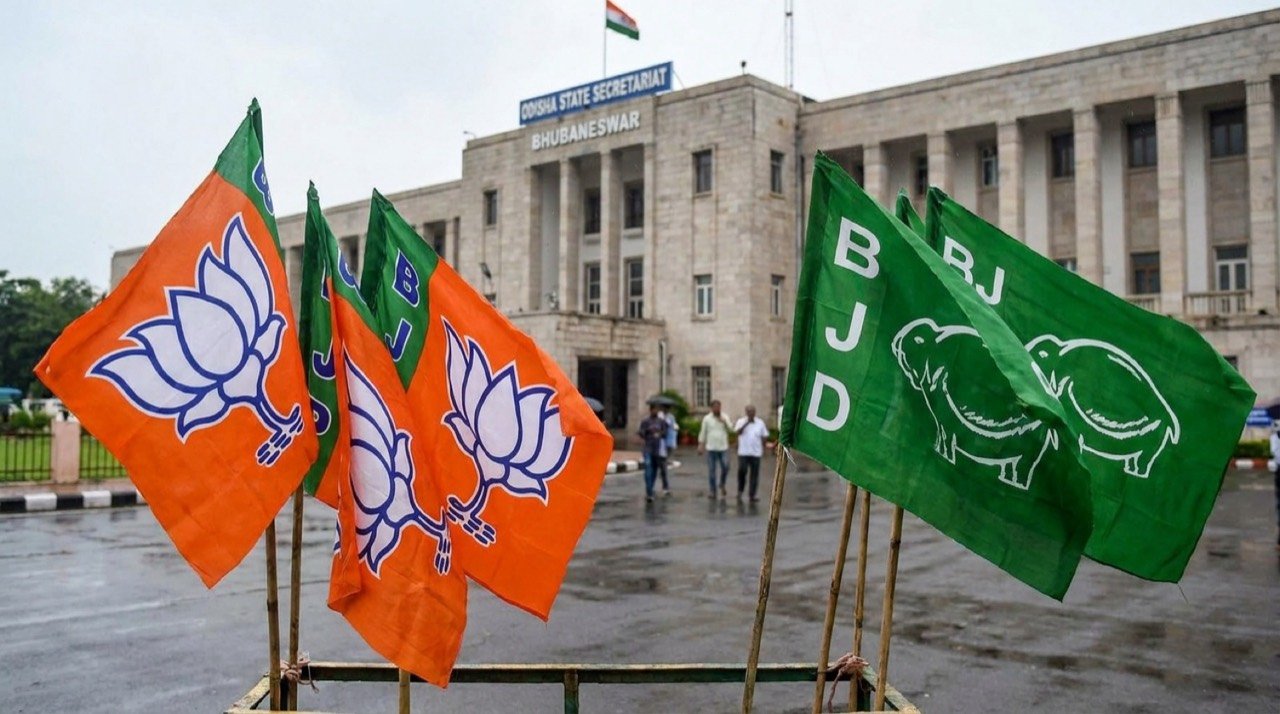
Odisha BJP Claims Several BJD Leaders Are Keen to Switch Sides
BJP leaders in Odisha claim several BJD figures want to switch sides, comparing the possible churn to earlier splits in regional parties, though no mass defection has been confirmed.
More from this section
More
K Kavitha Party Denied TRS Name by Election Commission
The Election Commission has refused to register K Kavitha's Telangana Rakshana Sena under the TRS acronym after objections, forcing a branding reset for the new party at a politically sensitive moment in Telangana.
Lalu Prasad Yadav Security Downgrade, Bungalow Order Stir Bihar
A government order downgrading Lalu Prasad Yadav's security cover and asking him to vacate an official bungalow has opened a fresh political flashpoint in Bihar, with the RJD chief's reaction fuelling the row.
Manipur CM's Churachandpur Visit: First Since 2023 Unrest
The Manipur Chief Minister travelled to Churachandpur for a BJP MLA's funeral, his first visit to the district since the 2023 violence, lending the sombre occasion an unmistakable political significance.