India-US AI Chips Roundtable Puts Critical Minerals in the Spotlight
Discussions between India and the United States on AI, semiconductors and critical minerals underline how technology cooperation is fast becoming a supply-chain and resource-security story, not just a software one.
Commentary & Analysis ·
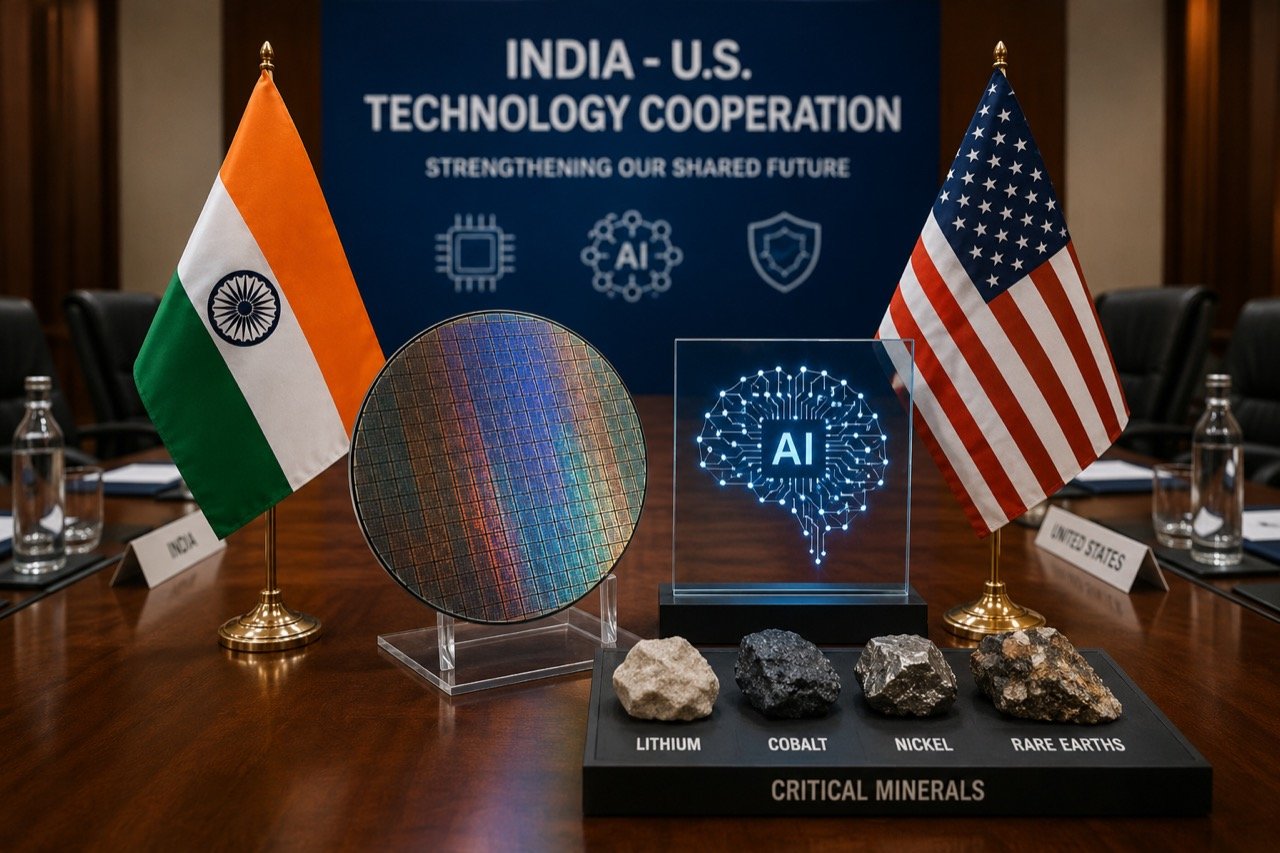
India-US technology cooperation is back in focus after fresh discussions bringing together artificial intelligence, semiconductors and critical minerals in a single conversation. The roundtable format itself tells a story: these themes are now treated as one interconnected agenda rather than three separate policy tracks. The logic linking them is straightforward. AI systems run on advanced chips. Advanced chips depend on secure manufacturing capacity and reliable inputs. Critical minerals, in turn, feed batteries, electronics and a range of strategic technologies. Any country serious about building an AI and electronics ecosystem has to think about hardware, logistics and resource security, not just software talent.
That a single roundtable could credibly cover chips, AI and minerals is itself notable. A decade ago, these would have sat in different ministries, different trade delegations and different sets of experts. Bringing them into one room signals that policymakers on both sides now see the AI race as fundamentally a hardware and materials race as much as an algorithms race. The framing matters because it shapes what gets negotiated, funded and prioritised in the months ahead.
What each side brings to the table
For India, closer cooperation with the United States can unlock investment, standards alignment, research partnerships and supply-chain diversification. These are not small gains. Investment brings capital for capacity that India currently lacks. Standards alignment reduces friction for Indian firms trying to plug into global electronics and AI supply chains. Research partnerships give Indian institutions and companies access to frontier know-how that is otherwise guarded closely by a small number of firms and governments. And supply-chain diversification, from India's perspective, means becoming less dependent on any single external source for chips, components or the minerals that go into them.
For Washington, India offers scale, deep engineering talent and a strategic partner outside the narrow manufacturing geographies that currently dominate chipmaking. The United States has spent recent years trying to reduce its own exposure to concentrated chip production hubs, and India's combination of a large workforce, an established IT and electronics services sector, and government appetite for semiconductor investment makes it an attractive partner in that diversification effort. This is a case of complementary interests rather than one-sided courtship: both sides have something the other genuinely wants.
The hard part is execution. Policy incentives, infrastructure, skilled labour, export controls and private investment all need to pull in the same direction, a coordination challenge that has tripped up ambitious technology partnerships before. Semiconductor fabrication in particular is unforgiving of half-measures. It requires uninterrupted power supply, vast quantities of ultra-pure water, specialised technicians, and long-term policy stability that survives changes in government. Many countries have announced chip ambitions with fanfare only to see projects stall for want of one or more of these ingredients.
The new vocabulary of tech power
The roundtable matters because it reflects how the language of technology power has shifted. AI is no longer only about models and apps; it is about wafers, minerals, fabs, logistics and trusted partnerships. Supply chains have become strategy. Where once technology diplomacy centred on software exports, data flows and intellectual property, the conversation now runs through physical infrastructure and raw materials that cannot be conjured by policy announcements alone.
This shift has been building for several years, driven by growing recognition that a handful of geographies control the most advanced chip manufacturing, and that an even smaller number of countries dominate the processing of critical minerals essential to batteries and electronics. Any nation that wants a durable seat at the AI table now has to grapple with this concentration risk, and that is precisely why a country like India, with its scale and talent pool but underdeveloped manufacturing base, has become a partner of interest for the United States as it seeks alternatives.
Why critical minerals now sit alongside chips and AI
The inclusion of critical minerals in this conversation is not incidental. Minerals used in batteries and electronics are foundational to the entire technology stack that AI and semiconductors depend on, from the power infrastructure that runs data centres to the devices that run AI applications at the edge. A country cannot build a durable chip or AI ecosystem while remaining entirely dependent on external sources for these inputs, since disruptions anywhere in that chain can stall production regardless of how much capital or talent is available downstream.
This is why the roundtable format, treating AI, chips and minerals as one agenda, is more than a scheduling convenience. It reflects an emerging consensus that securing the full stack, from raw material to finished chip to deployed AI system, is the only credible path to technological resilience. For India, this means mineral security has to be part of any serious semiconductor or AI strategy, not an afterthought bolted on later.
The NE Times View
India should treat this moment as leverage, not flattery. The country is being courted precisely because the world wants alternatives to concentrated chip and mineral supply chains, and that gives New Delhi room to negotiate technology transfer, not just assembly work. There is a meaningful difference between hosting the final, lower-value stages of chip assembly and testing versus securing genuine transfer of fabrication know-how, and India's negotiating position should aim squarely at the latter.
The real test will be domestic: land, power, water and skilled technicians decide where fabs get built, not communiqués. No amount of high-level diplomatic warmth substitutes for the unglamorous work of securing industrial land parcels, guaranteeing uninterrupted power and water supply, and training the specialised technician workforce that semiconductor fabrication demands. These are the bottlenecks that have determined success or failure in chip manufacturing efforts globally, and they will determine it in India's case too.
If India converts roundtable goodwill into even two or three anchor manufacturing projects with genuine know-how sharing, the strategic payoff for its AI ambitions would outlast any single diplomatic cycle. Anchor projects of this kind tend to generate their own momentum, drawing in ancillary suppliers, training pipelines and follow-on investment once the first plants prove viable. The alternative, a series of announcements without anchor projects to show for them, would leave India no better positioned than it was before the roundtable, regardless of how cooperative the tone of the discussions.
What to watch next
The coming period should show whether this roundtable translates into concrete commitments or remains at the level of dialogue. Signals worth tracking include whether specific investment figures, project locations or technology-transfer terms emerge from follow-up engagements, and whether India's own policy incentives, land allocation and infrastructure build-out keep pace with whatever commitments are made on the American side. Equally important will be whether critical minerals cooperation produces tangible sourcing or processing arrangements, rather than remaining a rhetorical add-on to the chips and AI conversation.
Key takeaways
- India-US talks now treat AI, semiconductors and critical minerals as one interconnected agenda rather than separate policy tracks.
- India offers scale and engineering talent; the US offers investment, standards alignment and diversification away from concentrated chip geographies.
- Execution risk is high: fabs require reliable power, water, skilled technicians and stable policy, factors that have derailed other countries' chip ambitions.
- India's negotiating leverage should be used to secure genuine technology transfer, not just low-value assembly work.
- The real measure of success will be anchor manufacturing projects with real know-how sharing, not diplomatic statements alone.
You may also like to read
Digital India Turns 11: AI GPUs, Chips and the Harder Next Phase
Eleven years in, Digital India is being judged less by its early public-service wins and more by whether it can deliver semiconductors, AI compute and resilient payments infrastructure at scale.

Anthropic puts a Mythos-class model in public hands with Claude Fable 5
The company is releasing its most capable widely available model yet, paired with a locked-down sibling reserved for cybersecurity work, in a careful balancing act between power and safety.
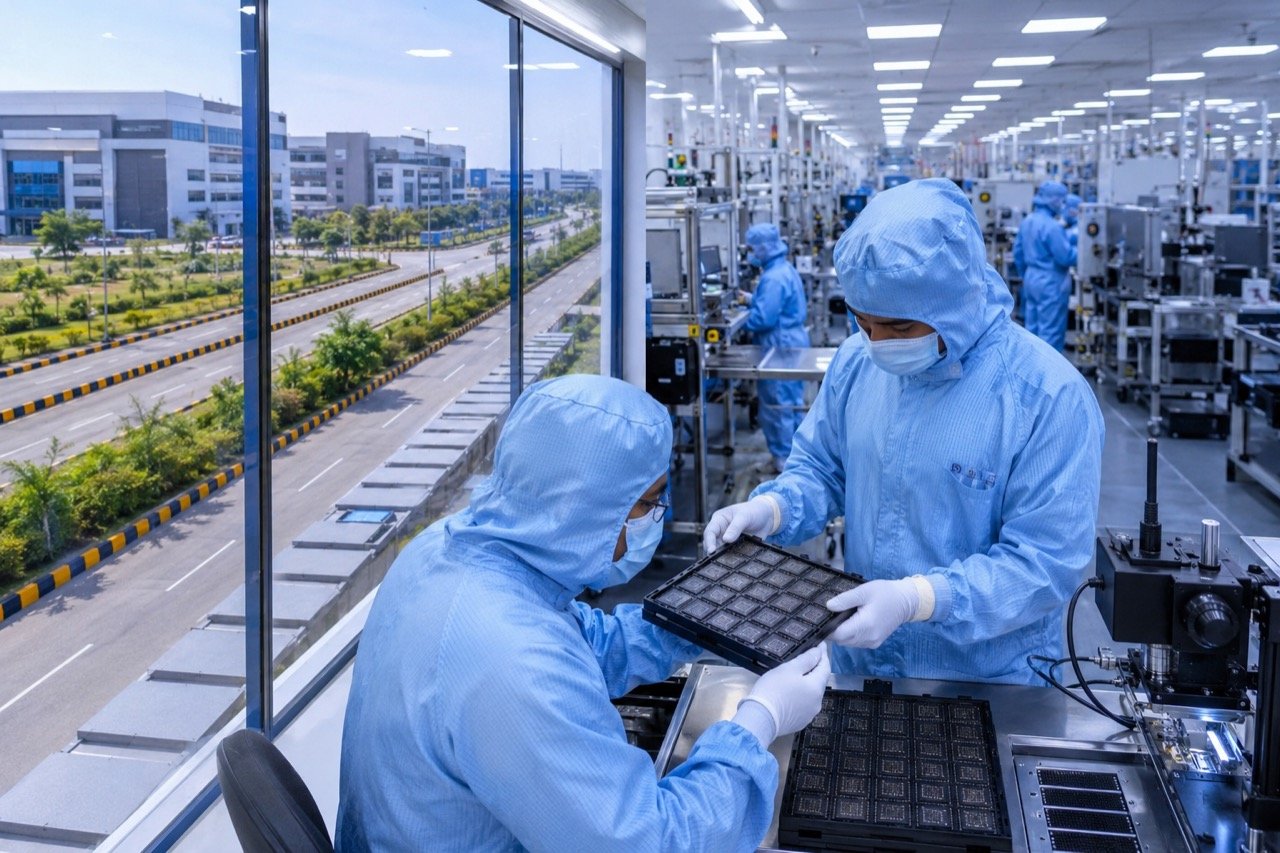
CG Semi Sanand Plant Opens, Boosting India's Semiconductor Drive
Prime Minister Narendra Modi inaugurated CG Semi's chip assembly and test facility in Sanand, Gujarat, giving India's semiconductor mission a working manufacturing milestone rather than another policy promise.

Microsoft unveils seven in-house MAI models at Build 2026, loosening its grip on OpenAI
With a reasoning model, a coding flash variant and image generators trained on its own licensed data, Microsoft is signalling it wants to build at the frontier rather than rent it.
More from this section
MoreCG Semi Sanand Plant Opens, Boosting India's Semiconductor Drive
Prime Minister Narendra Modi inaugurated CG Semi's chip assembly and test facility in Sanand, Gujarat, giving India's semiconductor mission a working manufacturing milestone rather than another policy promise.

Chinese E-Rickshaw Apps Banned in India Over Remote Disable Risk
The Centre has ordered the removal of three Chinese apps — BAT-BMS, Lossigy and Epoch-i-ion — over fears they could remotely disable battery-run e-rickshaws, turning mobility software into a public safety concern.

Connected Car Rules: India Plans Vehicle Software Update Norms
With cars increasingly run by software, the government is reportedly preparing update and security norms aimed at preventing vehicle hijacking and governing how connected cars in India are patched and protected.