India Crush Pakistan 7-1 in FIH Pro League London Finale as Pro-Hockey Campaign Closes Out
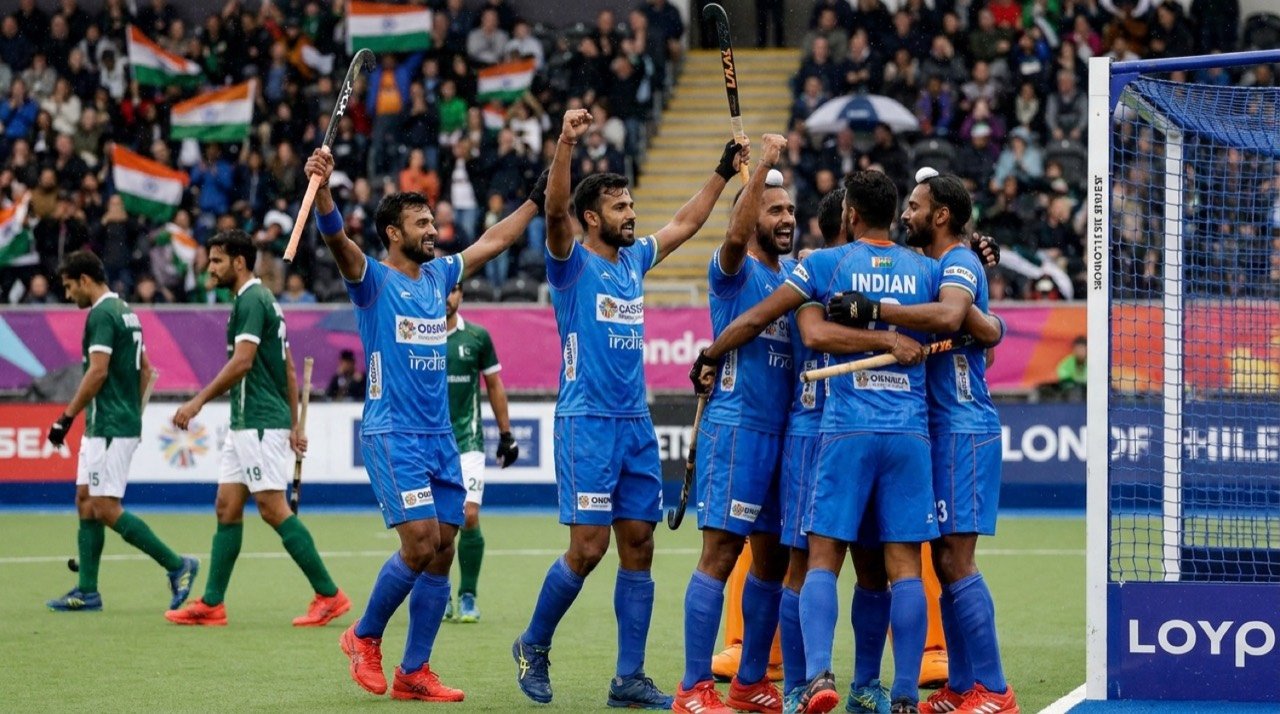
India ran riot against arch-rivals Pakistan with a 7-1 rout at Lee Valley in their FIH Pro League finale, a result that sealed Pakistan's relegation and capped India's European leg in style.
Commentary & Analysis ·
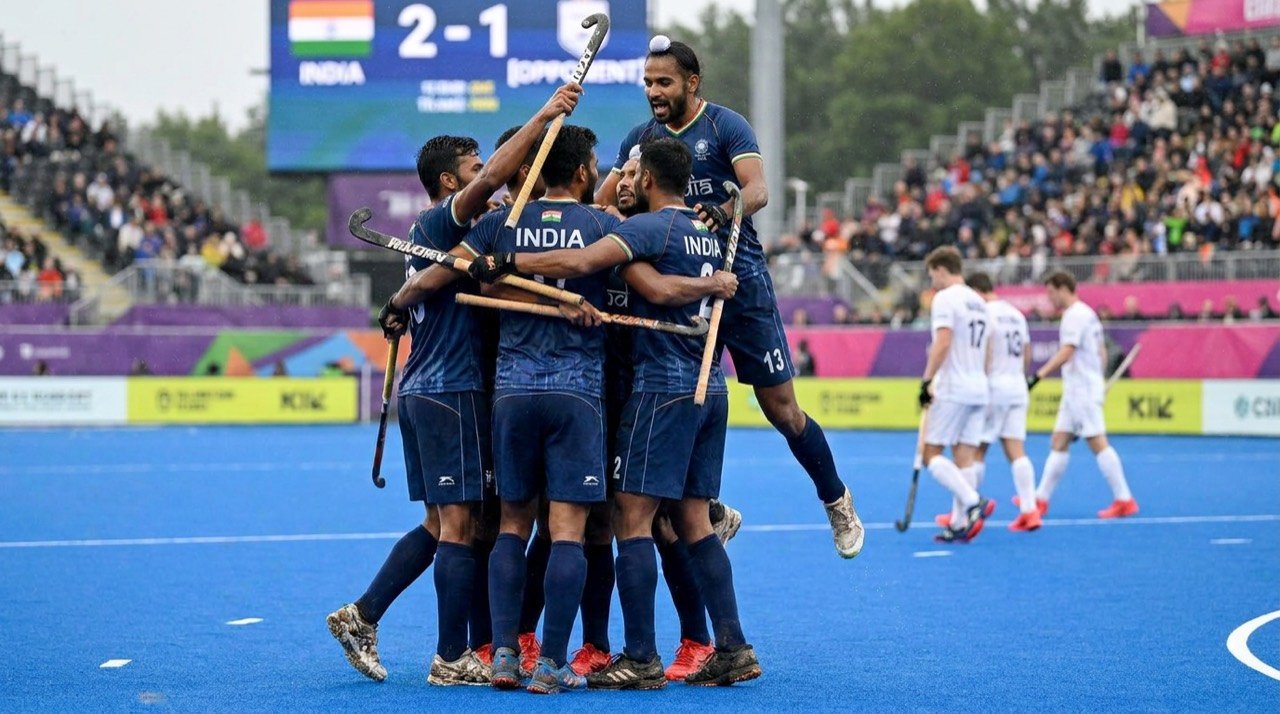
India's men's hockey team brought down the curtain on their FIH Pro League season in emphatic fashion, hammering arch-rivals Pakistan 7-1 at the Lee Valley Hockey and Tennis Centre in London. The scoreline was decisive by any measure, but its significance runs well beyond a single fixture. It was a statement of intent from a side that has spent the campaign rebuilding momentum, and it carried real consequences at the bottom of the standings, confirming Pakistan's relegation from the men's Pro League. For a rivalry that has long carried outsized emotional weight in South Asian sport, this result will be read on both sides of the border as a marker of how far the two programmes have diverged.
A rout built on depth, not one performer
The final score, India 7, Pakistan 1, tells only part of the story. What stood out was the distribution of goals: Sukhjeet Singh, captain Harmanpreet Singh, Hardik Singh, Jugraj Singh, Abhishek, Raj Kumar Pal and Dilpreet Singh all found the net. Seven different scorers in a single match is not a common occurrence even in one-sided contests, and it points to something more structural than a good day in front of goal. The goals came from open play, from set pieces and from penalty corners, suggesting India were not relying on a single avenue of attack that Pakistan could have shut down with better defending. Harmanpreet's continued threat from drag-flicks remained central to India's structure, as it has for several seasons now, but the fact that his contribution was only one of seven scoring threads is arguably the more instructive detail for anyone assessing where this team is headed.
For a national team, squad depth of this kind is not accidental. It reflects rotation policies, competitive domestic and league hockey, and a coaching setup willing to trust multiple players in high-pressure roles rather than concentrating responsibility in one or two individuals. When goals arrive from forwards, midfielders and specialists alike, opposition defences lose the option of designing a game plan around nullifying a single player. That versatility was on full display against Pakistan, and it is precisely the kind of trait that tends to matter more in tournament hockey, where opponents have days to prepare specifically for India's known threats.
What relegation means for Pakistan hockey
The heavier story out of London may not even be India's win but Pakistan's fall. The defeat confirmed Pakistan's relegation from the men's Pro League, a competition that sits at the top table of international hockey outside the Olympics and World Cup. For a country that once defined the sport globally, with a hockey heritage that produced multiple Olympic and World Cup triumphs in past decades, relegation from the top tier is a difficult marker of decline. It is also, in a broader sense, a difficult chapter for a hockey nation now battling simply to re-establish itself, rather than to compete for titles.
The scale of the gap on display in London, a six-goal margin against their fiercest rival, will invite uncomfortable questions within Pakistan hockey circles about investment, structure and player pathways. Relegation is rarely the product of a single bad match; it is typically the accumulation of results across a campaign, and this 7-1 defeat was simply the most visible and painful instance of a wider pattern. For Indian followers of the sport, there may be little satisfaction in seeing a storied rival slide, since a weakened Pakistan also diminishes the intensity and stakes of a fixture that has historically been one of hockey's great occasions.
Reading India's European leg in full
The Pakistan result should also be placed in the context of the European leg as a whole. India's campaign in this window was not only about beating a struggling rival; it also tested them against the continent's strongest sides, including tight contests decided by shootouts. Matches that go to shootouts are, by definition, close affairs, and the fact that India were involved in several suggests a squad that can hold its own against elite European opposition even when games are not settled comfortably inside regulation time. That mix, of a routine victory over a traditional rival and hard-fought contests against Europe's best, gives coaches a genuinely rounded picture of where the team stands.
This is valuable precisely because tournament hockey rarely offers only comfortable fixtures. A side that can dispatch a weaker opponent 7-1 while also grinding through shootouts against strong European teams is being tested across the full range of scenarios it is likely to face in bigger events. Coaches will take more from the shootout contests, in terms of composure and game management under pressure, than from the margin of victory against Pakistan, even if the latter offers the more eye-catching headline.
The road ahead
With the Pro League season now wrapped up, India's focus shifts to the continental and global assignments on the horizon. The London demolition offered a confidence boost and a reminder of the firepower at the team's disposal as it eyes silverware in the seasons to come. As one voice inside the set-up put it, performances like this show the depth that has been built, but the real measure will be carrying this consistency into the major tournaments ahead. That framing is worth taking seriously: a Pro League fixture against a relegation-threatened Pakistan side, however satisfying, is not the same test as a knockout match at a World Cup or an Olympic Games, where margins are thinner and opponents are uniformly elite.
The task facing the coaching staff now is to translate the attacking variety and squad depth shown in London into a template that holds up against the world's very best, not only during a strong run in Europe. That means continuing to develop multiple penalty corner options beyond Harmanpreet, sustaining the goal-scoring contributions from midfield, and using the shootout experience gained against European opposition to sharpen composure in the tightest moments of major tournaments.
The NE Times View
A 7-1 demolition is a statement result, but the more meaningful story is the gulf it exposes: India closing out a strong European leg while Pakistan slide toward relegation. For a rivalry once played on level terms, the divergence reflects years of differing investment in the sport, from grassroots structures to league exposure to sports science support. The challenge for India is to treat dominance over a declining rival as a floor, not a ceiling, against the world's best. The Pro League table will soon be forgotten; what will matter is whether the depth and variety shown against Pakistan can be reproduced against sides that do not hand India seven goals in an afternoon.
Key takeaways
- India beat Pakistan 7-1 at Lee Valley Hockey and Tennis Centre, London, with goals from Sukhjeet Singh, Harmanpreet Singh, Hardik Singh, Jugraj Singh, Abhishek, Raj Kumar Pal and Dilpreet Singh.
- The result confirmed Pakistan's relegation from the men's FIH Pro League, marking a difficult chapter for a once-dominant hockey nation.
- India's goals came from open play, set pieces and penalty corners, reflecting genuine squad depth rather than reliance on one player.
- The European leg also featured tight, shootout-decided contests against top European sides, giving coaches a fuller picture of the team's readiness.
- The NE Times View: the win is a confidence boost, but the real test lies in carrying this consistency into major tournaments against elite opposition, not merely a declining Pakistan side.
You may also like to read
India Brace For High-Stakes Pakistan Double-Header In FIH Pro League London Leg
India's struggling Pro League campaign heads to London for two charged clashes with Pakistan, as the men's hockey team chases form and momentum before a demanding World Cup year.
India-Pakistan Hockey Opener Set to Headline FIH Pro League 2026-27
The FIH Pro League 2026-27 men's season is set to open with an India-Pakistan hockey clash in London, handing the competition a marquee fixture and a global audience from day one.
India Fall Short Again as Netherlands Edge Five-Goal Pro League Thriller
Dilpreet Singh and Sukhjeet Singh found the net but the Indian men could not overturn the Dutch lead in a 2-3 defeat to open their European leg in Rotterdam.
India Survive Late Scare to Beat Pakistan 4-3 in FIH Pro League Thriller
India held their nerve through a tense final quarter to edge arch-rivals Pakistan 4-3 in a men's FIH Pro League hockey clash at London's Lee Valley centre on June 23.
More from this section
More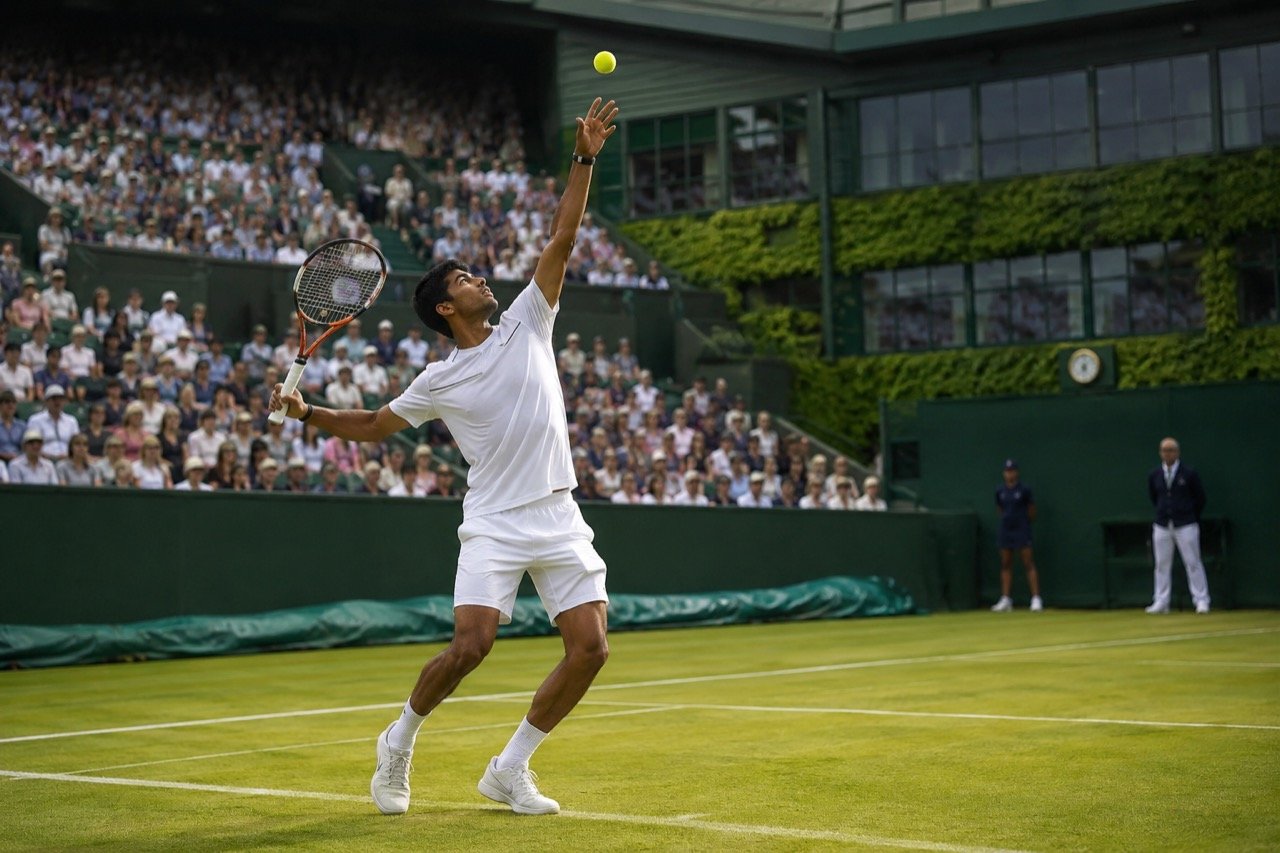
Arnav Paparkar Advances at Wimbledon Boys' Singles in Boost for India
Indian junior Arnav Paparkar has moved into the second round of the Wimbledon boys' singles with a commanding serving display, handing Indian tennis a rare and encouraging grass-court result at the sport's biggest stage.

Axar Patel Becomes First Indian Spinner With 100 T20I Wickets
Axar Patel reached 100 T20 international wickets in the second T20I against England, becoming the first Indian spinner to hit the mark and cementing his standing as one of India's most durable white-ball performers.
BCCI Emerging Men's Tournament to Hunt Test Prospects in Bengaluru
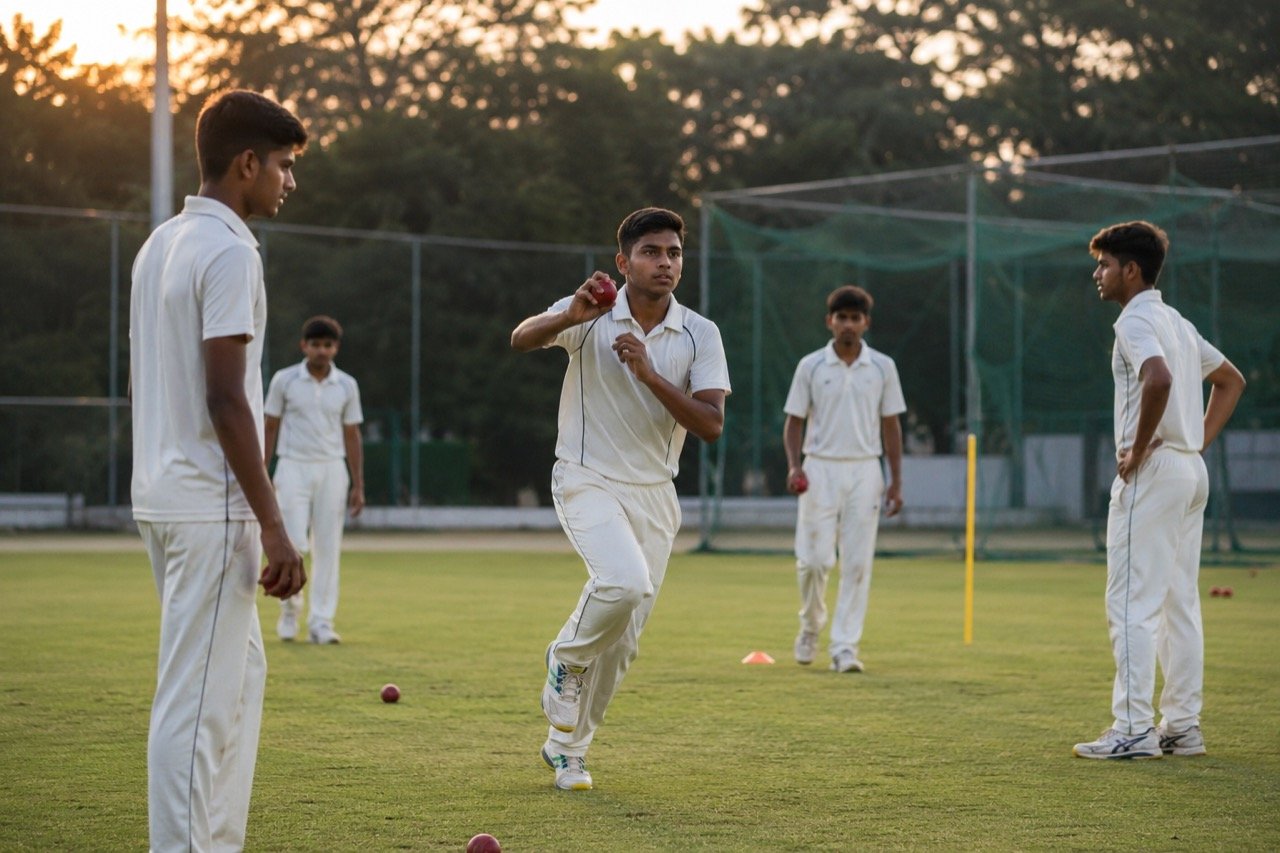
The BCCI's red-ball Emerging Men's Tournament, running at the Centre of Excellence in Bengaluru through July, is designed to give selectors a longer, harder look at India's next generation of Test cricketers.