India A Storm Into Dambulla Tri-Series Final
Half-centuries from Tilak Varma, Priyansh Arya and Kumar Kushagra, backed by a disciplined spin attack led by Nishant Sindhu, carried India A past Afghanistan A and into the tri-series final in Dambulla.
Commentary & Analysis ·
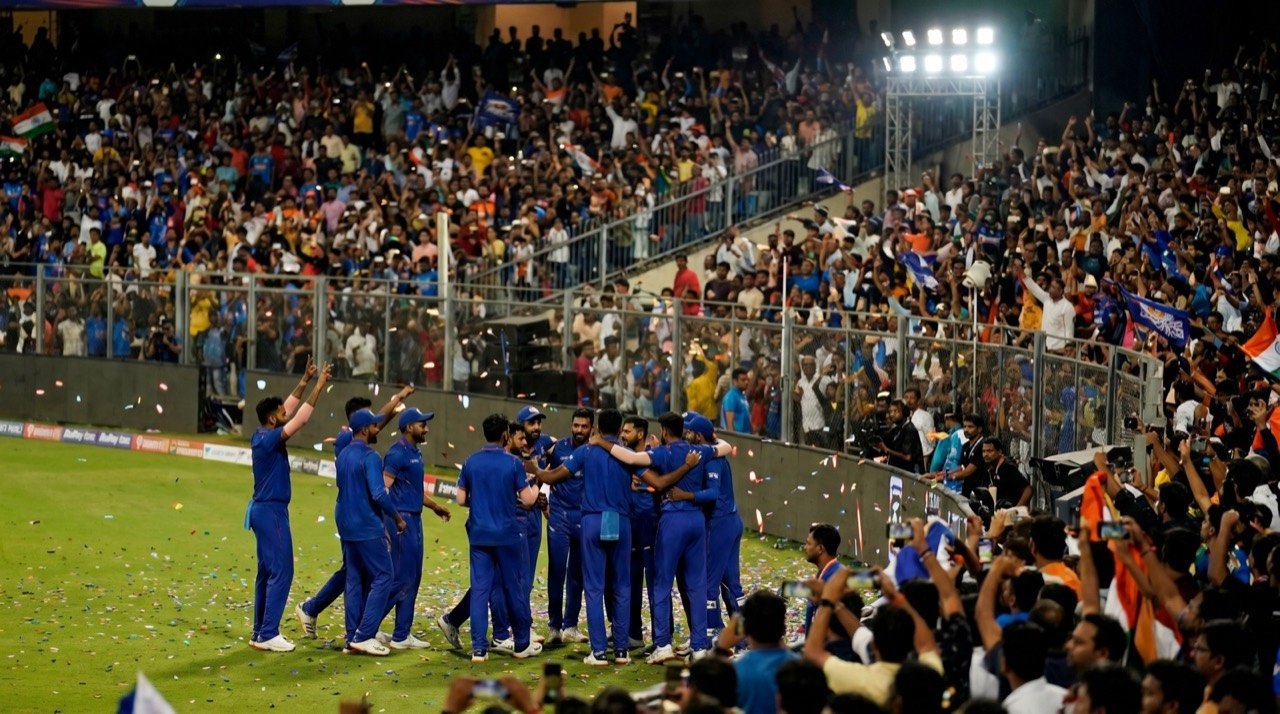
India A booked their place in the final of the one-day tri-series in Dambulla with a commanding win over Afghanistan A, recovering from a Super Over heartbreak earlier in the week to reassert themselves as the form side of the tournament. The result, built on runs from the middle order and control from the spinners, sets up a title decider at the same venue. For a side stitched together largely from fringe internationals and emerging talent, the manner of the win, comprehensive rather than nervy, is arguably as significant as the fact of it.
The tri-series, running through 21 June and involving Afghanistan A, India A and Sri Lanka A, exists precisely for moments like this. These are not high-stakes bilateral fixtures with results that shift world rankings; they are proving grounds, structured so that the selectors and think tank can observe how players perform under quality opposition away from the glare and financial incentives of franchise cricket. That India A have bounced back from a Super Over defeat to Sri Lanka A earlier in the week, and done so with authority, adds a layer of character to the statistical case being built for several individuals.
Batting depth on show
Posting 319 for 9, India A leaned on three substantial contributions rather than a single standout innings, which is itself a notable feature of the performance. Tilak Varma raised his third fifty in four innings of the series, anchoring the innings with a measured 67-ball half-century. Consistency of this kind across a short tournament is difficult to manufacture and hard to dismiss as a one-off; four innings, three fifties is the sort of return that forces selectors to take notice regardless of what is happening elsewhere in the domestic or franchise calendar.
Opener Priyansh Arya provided the early impetus that allowed the innings to build a platform, doing the less celebrated work of taking the shine off the new ball and giving the middle order room to construct. Meanwhile Kumar Kushagra, playing his first match of the competition, made an immediate impression with wristy drives and full-blooded sweeps on his way to a fifty of his own. A debut half-century in a virtual knockout fixture is a meaningful marker; it suggests a player untroubled by occasion, which is precisely the temperament selectors look for when assessing readiness for higher honours.
The total of 319 for 9 proved more than sufficient on a surface that offered increasing grip as the innings wore on, with Afghanistan A unable to sustain the required rate against a varied Indian attack. The fact that the pitch turned progressively more helpful for spin as the match progressed also frames the bowling effort that followed in useful context: India A did not merely defend a total, they exploited conditions with precision.
Spinners seal it
Left-arm spinner Nishant Sindhu led the way with 4 for 31, exploiting the conditions to strangle Afghanistan A's middle order and trigger a collapse. The visitors were bowled out for 218 in 36.5 overs, with the spin trio sharing the bulk of the wickets. This is arguably the most encouraging thread running through the match. Fast bowling all-rounders and top-order batting tend to dominate selection conversations in Indian cricket, given the volume of white-ball cricket and the emphasis on power-hitting in franchise formats. A spin attack doing the unglamorous, patient work of squeezing an opposition batting line-up dry, rather than relying on raw pace or short-form hitting, points to a deeper and more varied bowling pipeline than is often credited.
It is worth noting how rare it is for an A-team attack to bowl out a fellow A-side inside 37 overs chasing a target above 300. That kind of collapse is not accidental; it reflects sustained pressure built over the course of an innings, with wickets falling as a consequence of accumulated dot balls and rising required rates rather than individual brilliance alone. For a spinner such as Sindhu, figures of 4 for 31 in this context serve as a strong data point regardless of the relatively low profile of the fixture itself.
Why the final matters beyond the trophy
With Tilak Varma in commanding touch and a clutch of young batters and spinners staking claims, the final offers India A a chance to convert promising form into silverware. But for the selectors watching from afar, the bigger prize is the data this kind of tour generates on who is ready to step up when the senior side next needs reinforcements. A-team cricket occupies an unusual space in the modern calendar: it lacks the visibility of IPL cricket and the prestige of full internationals, yet it often provides a truer test of a player's game, played as it is against comparable quality opposition in more traditional formats and conditions, without the compressed pressures and gimmicks that define franchise tournaments.
For a player like Kushagra, uncapped at this level before this series, a fifty on debut in a virtual semi-final is exactly the kind of contextual pressure that selectors want to see negotiated successfully. For Arya, the value lies in repeated exposure to the top of the order against genuine international-standard bowling. And for Varma, already the most established name in this group, the series serves a different function: not proving raw ability, which is not in question, but demonstrating the sustained application needed to convert potential into a fixture in India's middle order.
The spin pipeline question
Indian cricket has historically never lacked spin talent, but the depth being shown here, a trio capable of sharing the wicket-taking burden and choking scoring rates on a turning surface, speaks to a broader institutional point. Fast-bowling depth has been the headline story of Indian cricket over the past decade, largely because of the National Cricket Academy's sustained focus on physical conditioning and workload management for pacers. Series such as this one suggest that spin bowling development has not been neglected in parallel, even if it receives less attention. Sindhu's performance in Dambulla will not by itself settle debates about India's spin succession planning, but it adds a useful data point to a conversation that matters as older spin-bowling stalwarts approach the end of their international careers.
The NE Times View
India A's run to the Dambulla final matters less for the trophy than for the audition it provides. Performances from Tilak, Arya and Kushagra against quality A-team opposition are precisely the evidence selectors should weigh over IPL hype, which too often rewards conditions and match-ups rather than all-round game management. The encouraging note is a spin attack doing the unglamorous work; that, more than the runs, points to a maturing pipeline that extends beyond the headline names India's selectors already trust. If the final in Dambulla is won with a similar balance of application from the batters and discipline from the bowlers, it will reinforce rather than merely repeat the message of this semi-final: that India's depth chart is deeper and more varied than the conversation around the senior team's fixed places tends to suggest.
Key takeaways
- India A posted 319 for 9 and bowled out Afghanistan A for 218 in 36.5 overs to reach the Dambulla tri-series final, having recovered from a Super Over loss to Sri Lanka A earlier in the week.
- Tilak Varma's third fifty in four innings underlines a consistency that selectors are likely to weigh heavily when assessing middle-order options for the senior side.
- Kumar Kushagra's fluent half-century on debut and Priyansh Arya's early impetus at the top of the order add fresh names to the conversation about batting depth beyond the established core.
- Nishant Sindhu's 4 for 31, backed by a spin trio sharing the wickets, highlights a less-discussed strength in India's bowling pipeline alongside the well-documented pace depth.
- The final itself is almost secondary to the broader purpose of A-team cricket: generating selection evidence on players ready to step into the senior set-up when needed.
You may also like to read

Vaibhav Sooryavanshi's Record Fifty Powers India A to Tri-Series Title
Fifteen-year-old Vaibhav Sooryavanshi smashed a stunning 94 off 29 balls, with a reported List A record 11-ball fifty, as India A crushed Sri Lanka A by 66 runs in the Dambulla tri-nation final.
Three Fifties Not Enough as Afghanistan A Edge India A on DLS in Dambulla
India A posted 349 but were undone by a rain-interrupted chase, Afghanistan A sneaking home by four runs on the DLS method in the Sri Lanka tri-series.

Gaikwad Century Powers India A to a Tense Eight-Run Win Over Sri Lanka A
Ruturaj Gaikwad's composed 101 and a death-overs spell from Arshad Khan gave India A a winning start to the Dambulla tri-series before their fortunes turned.
Gill Anchors India to ODI Series Lead as Gurbaz Century Goes in Vain
Shubman Gill's unbeaten 84 steered India to a seven-wicket win in a rain-shortened first ODI against Afghanistan in Dharamsala, overshadowing Rahmanullah Gurbaz's blazing hundred.
More from this section
More
Arnav Paparkar Advances at Wimbledon Boys' Singles in Boost for India
Indian junior Arnav Paparkar has moved into the second round of the Wimbledon boys' singles with a commanding serving display, handing Indian tennis a rare and encouraging grass-court result at the sport's biggest stage.

Axar Patel Becomes First Indian Spinner With 100 T20I Wickets
Axar Patel reached 100 T20 international wickets in the second T20I against England, becoming the first Indian spinner to hit the mark and cementing his standing as one of India's most durable white-ball performers.
BCCI Emerging Men's Tournament to Hunt Test Prospects in Bengaluru
The BCCI's red-ball Emerging Men's Tournament, running at the Centre of Excellence in Bengaluru through July, is designed to give selectors a longer, harder look at India's next generation of Test cricketers.