Ikka Trailer: Sunny Deol, Akshaye Khanna Clash In Netflix Drama
The trailer for Netflix courtroom drama Ikka pits Sunny Deol against Akshaye Khanna in a morally charged legal battle, reigniting a screen pairing that has Hindi cinema audiences talking.
Commentary & Analysis ·

The trailer for Ikka has vaulted the Netflix courtroom drama to the centre of this week's Hindi entertainment conversation. Sunny Deol appears as a forceful lawyer pulled into a morally fraught case, while Akshaye Khanna's casting hands the film a reunion hook for viewers who remember the pair's earlier screen association. The response to a single trailer, arriving without the usual weeks of promotional build-up, suggests that streaming platforms have found a formula that lets a legacy cast generate conversation with comparatively modest marketing spend.
More than a casting coup
The buzz rests on more than star names. The trailer frames Ikka as a legal drama built on emotional pressure, public stakes and a central defence dilemma. Deol's long-standing image as a righteous, high-voltage performer makes the courtroom setting unusually marketable, because it transplants a screen persona built on moral conviction into a genre where conviction is precisely what is being tested and cross-examined. That tension between image and role is often what makes a trailer land: audiences arrive with expectations formed over decades of Deol playing men who fight for the truth, and a courtroom is simply a different arena in which to stage that same fight, argued in language rather than through physical confrontation.
The launch conversation gained an added emotional layer when the trailer credits underlined his relationship with Dharmendra, a touch that felt personal to long-time Hindi cinema followers. Such gestures do more than pad running time. They anchor a contemporary release within a family lineage that Hindi film audiences have followed across generations, and they invite viewers to bring pre-existing goodwill into a new, otherwise unfamiliar story. For a streaming release competing against dozens of other titles for attention in any given week, that inherited emotional capital is a meaningful advantage.
Why courtroom drama suits streaming
The film also lands at a convenient moment for Indian streaming platforms. Courtroom stories have become a dependable digital genre because they deliver debate, suspense and performance-led drama without demanding theatrical spectacle. Unlike action franchises or period epics, legal dramas do not require large budgets for effects, stunts or scale; their tension is generated through dialogue, pacing and the slow reveal of facts, all of which translate comfortably to a smaller screen and an audience that may be watching in short, interrupted sittings rather than in a single cinema visit. This makes the genre economically attractive to platforms even as it remains creatively demanding for writers and actors, since the entire weight of the drama rests on how convincingly an argument is built and dismantled.
The trailer answers the questions audiences typically search for: the case, the cast, the platform and the moral conflict, by placing Deol and Khanna at the heart of a clash over law, guilt and professional duty. That the trailer can do this efficiently, in the space allotted to a promotional clip, is itself a sign of a well-constructed marketing package. It suggests the makers understand that streaming viewers decide quickly, often within the length of a single trailer, whether a title merits a spot on their watchlist.
Streaming's second act for 90s stars
Ikka extends a wider industry trend in which actors associated with 1990s and early-2000s stardom are being reintroduced through streaming projects offering sharper character parts. This is not a small shift. For much of the previous decade, actors who once carried theatrical hits found their opportunities narrowing as youthful box-office openers moved to a new generation of leading men. Streaming has altered that calculation by rewarding performance and recognisability over box-office bankability alone, since a subscription platform does not need an opening weekend in the way a cinema release does. It needs sustained viewership across weeks, which favours actors whose names still carry weight with an older, loyal viewing base while also intriguing younger audiences discovering their earlier work for the first time.
Khanna's recent run of acclaimed performances has made his casting a talking point in its own right, while Deol's return to intense dramatic territory helps the film stand apart from lighter OTT fare that leans on comedy or romance. Placing the two together in adversarial roles, rather than as allies, adds a further layer of interest: audiences are curious to see how two actors associated with different eras and different registers of performance measure up against one another when the material demands restraint rather than spectacle.
The risks facing Ikka
The risk is familiarity. Indian streaming is crowded with legal dramas, and viewers punish trailers that promise intensity without detail. A courtroom setting alone is not a differentiator any longer; audiences have seen enough of the genre to recognise when a trailer is leaning on genre conventions rather than revealing genuine narrative substance. If the writing beneath the trailer's polish turns out to be formulaic, the goodwill generated by casting and nostalgia could dissipate quickly once viewers reach the actual episodes.
Its advantage, however, is performer credibility. Courtroom drama lives on verbal confrontation and moral tension, and the trailer suggests the film leans into exactly those strengths. Actors of Deol and Khanna's experience are well equipped to carry scenes that depend on delivery, pause and restraint rather than on scale or effects, and if the finished film trusts them to do that work, it has a genuine chance of standing out in a crowded field.
The NE Times View
Ikka's trailer is a reminder that India's streaming era is quietly rewriting the careers of its 1990s stars, and audiences are the beneficiaries. Casting Sunny Deol in a talk-heavy courtroom role rather than an action vehicle is a calculated bet that gravitas now sells as well as spectacle. If the film matches the trailer's restraint, it could set a template for how legacy stars transition to the OTT age, offering a viable path for veteran performers beyond nostalgia cameos or supporting parts. The real test will be whether the writing gives its two leads a case worth arguing, not just a stage to share. A courtroom drama succeeds or fails on the strength of its central argument, and no amount of star wattage can substitute for a script that earns its tension honestly. Either way, the appetite this trailer has generated says much about what Indian viewers now want from their screens: performances with weight, conflicts with moral complexity, and familiar faces given the chance to do unfamiliar work.
Key takeaways
- Ikka's trailer positions Sunny Deol and Akshaye Khanna in adversarial courtroom roles, generating buzz through star reunion appeal and genre credibility.
- The trailer's reference to Deol's relationship with Dharmendra added an emotional, generational resonance for long-time Hindi cinema followers.
- Courtroom drama suits streaming platforms because it delivers tension through dialogue and performance rather than costly spectacle.
- The release reflects a broader trend of 1990s and early-2000s stars finding sharper, more substantial roles through OTT platforms.
- The film's success will depend on whether its writing matches its cast's credibility, since audiences are wary of legal dramas that promise intensity without depth.
You may also like to read
Akshaye Khanna's Nod to Sunny Deol Stirs 90s Bollywood Nostalgia
A warm remark from Akshaye Khanna about Sunny Deol has revived affection for Bollywood's 1990s generation, showing how memory and mutual respect still power Hindi cinema's news cycle between big releases.

Akshaye Khanna's Ikka Set Discipline Praised by Director
A director's anecdote about Akshaye Khanna arriving prepared before co-star Sunny Deol has given the Netflix India thriller Ikka a craft-led talking point ahead of its streaming release.
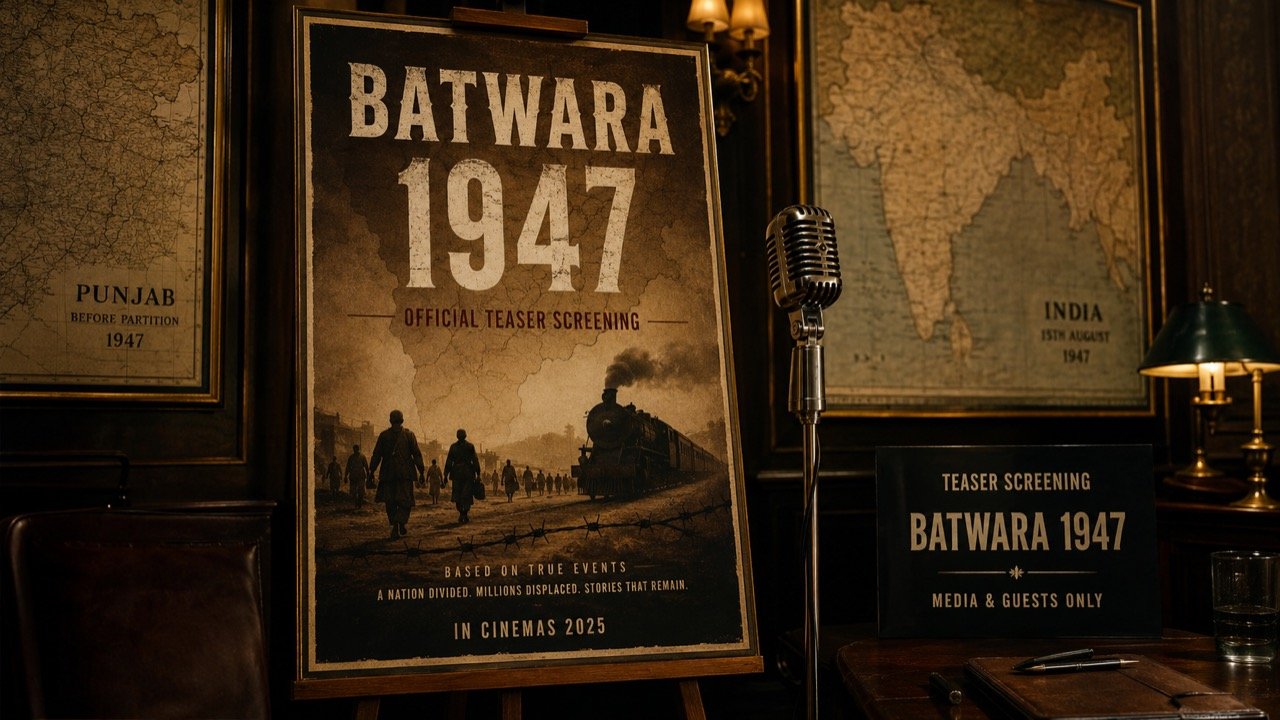
Batwara 1947 Teaser: Bobby Deol Backs Sunny Deol's Period Drama
Bobby Deol's enthusiastic response to the Batwara 1947 teaser has handed Sunny Deol's Aamir Khan Productions period drama a fresh burst of family-powered publicity ahead of its planned release.

Madhuri Dixit's Dark Comedy 'Maa Behen' Storms Into Netflix's Global Top 10
Suresh Triveni's mother-daughter crime caper, co-starring Triptii Dimri, has trended in 15 countries and notched one of 2026's biggest Indian-original debuts on the platform.
More from this section
More
72nd National Film Awards: Fans Back Mammootty, Allu Arjun, Sai Pallavi
Speculation around the 72nd National Film Awards is intensifying as fan communities across India's language film industries champion favourites including Mammootty, Allu Arjun and Sai Pallavi ahead of any official announcement.

Aamir Khan Marries Gauri Spratt in Private Pali Hill Ceremony
Aamir Khan and Gauri Spratt tied the knot at the actor's Pali Hill home in Mumbai on July 5, turning a deliberately small family ceremony into Bollywood's biggest story of the day.

Akanksha Chamola's Lock Upp 2 Confession Sets Reality TV Abuzz
A personal revelation by Akanksha Chamola ahead of Lock Upp 2 has handed the reality show a viral talking point, underlining how confession-driven formats continue to dominate Indian television conversation.