Gold Blazes To Record Highs As Safe-Haven Demand Grips Indian Buyers
Gold scaled fresh records in mid-June 2026, with domestic prices near Rs 1.69 lakh per 10 grams as geopolitical tension, a weak rupee and resilient investment demand fuelled a relentless rally.
Commentary & Analysis ·
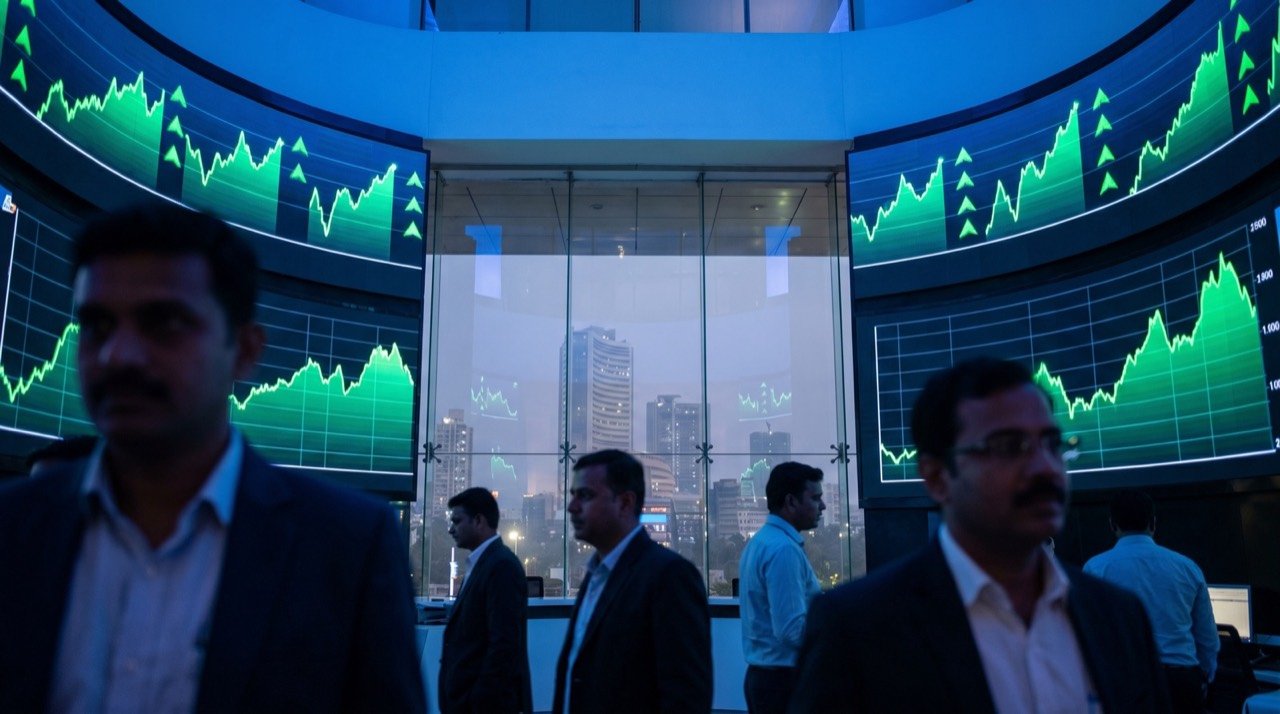
Gold has rarely looked more like the asset of the moment. With prices in India climbing toward Rs 1.69 lakh per 10 grams in 2026, the metal has rewarded a year of war, currency weakness and policy uncertainty, drawing in everyone from temple-trust treasurers to first-time retail investors hunting for a hedge. What was once a festival purchase and a store of family wealth has, in the space of a few quarters, become the clearest barometer of how anxious Indian savers are about the state of the world.
A relentless climb
The MCX spot gold price rose roughly 20% quarter-on-quarter and 81% year-on-year to a record quarterly average of around Rs 1,51,108 per 10 grams in the first quarter of 2026, and has pushed higher since as the West Asia conflict added a fresh risk premium. The ascent has turned gold into one of the best-performing asset classes available to Indian savers, outpacing many equity benchmarks and putting fixed-income returns in the shade. That such a staid, centuries-old asset should suddenly be the standout performer says as much about the fragility of the broader environment as it does about gold itself.
Investment demand has been the standout driver, surging 54% year-on-year in volume terms as bar and coin purchases nearly matched jewellery consumption and gold ETFs hit record holdings, the World Gold Council reported. This shift is significant: for decades, Indian gold demand was dominated by ornamentation, driven by weddings and festivals rather than by portfolio strategy. The narrowing of the gap between jewellery and pure investment buying signals a change in mindset, with households increasingly treating gold as a financial instrument to be accumulated and held, not merely worn.
Festival and wedding pull
The rally has collided with India's peak buying season. The April-to-June window spans Akshaya Tritiya, traditionally the single biggest gold-buying day, and a packed wedding calendar, sustaining jewellery demand even as record prices nudged some households toward lighter pieces and digital gold. This is a familiar Indian pattern: cultural obligation tends to override price sensitivity, at least up to a point. Even so, the response to record prices has been telling. Rather than abandoning gold purchases altogether, buyers have adapted, trading down to lighter-weight jewellery, opting for gold coins in smaller denominations, or turning to digital gold platforms that allow fractional ownership without the making charges attached to ornaments.
India's Q1 2026 gold demand rose 10% year-on-year to 151 tonnes, a figure that captures both the resilience of cultural buying patterns and the parallel rise of investment-driven purchases. That demand grew even as prices climbed so sharply underscores how deeply gold is woven into household financial planning in India, functioning simultaneously as adornment, insurance and inheritance.
Why the safe-haven premium has swelled
The scale of this year's rally cannot be separated from the geopolitical backdrop. The West Asia conflict has injected a fresh risk premium into an asset that already carried the weight of currency weakness and policy uncertainty. A weaker rupee makes gold, priced in dollars on international markets, more expensive in domestic terms even before any global price movement, compounding the effect of the international rally for Indian buyers. At the same time, central-bank buying globally has provided a steady bid beneath the market, reinforcing the sense that gold is being accumulated not just by nervous households but by sovereign institutions hedging against currency and geopolitical risk.
For Indian investors specifically, gold's appeal in this cycle has been its dual identity. It is simultaneously a culturally mandated purchase, tied to weddings and festivals that proceed regardless of price, and a rational financial hedge against a currency that has been under pressure and a world that has looked more unstable than usual. Few other assets can claim that combination of emotional and financial pull, which helps explain why demand has held up even as prices reached levels that would ordinarily be expected to choke off buying.
Can it last?
Analysts are split on where gold goes from here. Bulls point to enduring geopolitical risk, central-bank buying and a softer dollar as reasons the run can extend, arguing that none of the underlying drivers show signs of reversing quickly. Sceptics warn that a credible US-Iran de-escalation and a recovering rupee could deflate the safe-haven premium and trigger profit-taking after such a steep ascent. As one commodities analyst at a bullion house put it, gold has done its job as a hedge this cycle, and the question now is how much of the geopolitical premium unwinds if peace actually holds.
That framing captures the central tension facing anyone holding gold today. A meaningful share of the current price reflects fear rather than fundamentals, whether fear of currency depreciation, of prolonged conflict, or of broader macroeconomic instability. Fear-driven premiums can persist for a long time, but they are also prone to sudden reversal when the underlying source of anxiety eases. For Indian households, the metal's twin role as ornament and investment ensures demand rarely vanishes, even at records. But with prices this high, buyers are growing more selective, and the next leg may hinge less on sentiment than on whether the world's flashpoints cool.
What it means for Indian households
For the ordinary Indian saver, the practical implications are considerable. Gold has historically been viewed as a near-riskless store of value, the asset one buys without needing to think too hard about timing. The events of the past year complicate that assumption. Buyers who have entered at these record levels, whether through jewellery, coins, bars or ETFs, are exposed to a genuine risk of correction should the geopolitical premium unwind. That risk is not hypothetical: gold has corrected sharply in the past whenever the crises driving safe-haven demand have resolved.
At the same time, the structural drivers of Indian gold demand, cultural obligation, inheritance planning, and a persistent distrust of paper currency and even of formal financial instruments in some households, are unlikely to disappear regardless of what happens to geopolitical risk. This means that while the investment case for gold at these prices deserves scrutiny, the cultural case for continued, if more measured, buying will likely persist.
The NE Times View
Gold near Rs 1.69 lakh per 10 grams is both a hedge and a warning, reflecting how much fear over geopolitics and a weak rupee has crept into Indian portfolios. Households piling in at record highs should remember that safe havens can correct sharply when calm returns. The metal's rally is a symptom of anxiety, not a sign of prosperity. Chasing the top rarely ends well, and investors would do well to distinguish between gold bought for its enduring cultural and hedging value and gold bought simply because its price has been rising.
Key takeaways
- Domestic gold prices climbed toward Rs 1.69 lakh per 10 grams in 2026, with Q1 MCX spot gold averaging a record Rs 1,51,108 per 10 grams, up 81% year-on-year.
- Investment demand jumped 54% year-on-year as bar and coin purchases nearly matched jewellery consumption, and gold ETFs hit record holdings, according to the World Gold Council.
- India's Q1 2026 gold demand rose 10% year-on-year to 151 tonnes, sustained by Akshaya Tritiya and wedding-season buying even as households traded down to lighter pieces and digital gold.
- The rally reflects a safe-haven premium tied to the West Asia conflict, rupee weakness and central-bank buying, with analysts split on whether de-escalation and a rupee recovery could trigger a correction.
- The NE Times View: gold's climb is a symptom of anxiety rather than prosperity, and households buying at record highs should be wary of chasing the top.
You may also like to read
Gold Prices Ease Across Indian Cities: What the July 4 Dip Means
Gold rates for 24-karat and 22-karat metal edged lower across Delhi, Mumbai, Bengaluru, Chennai and Hyderabad on July 4, offering a window for buyers weighing jewellery and investment purchases.
Crude spike from West Asia conflict pins rupee near record low, widens deficit fears
Surging oil prices have revived pressure on the currency and the current account, exposing India's enduring vulnerability to energy shocks.
Sensex Scales Fresh Record as Foreign Inflows Return to Indian Equities
Benchmark indices closed at an all-time high, powered by banking and IT stocks as overseas investors turned net buyers after months on the sidelines.
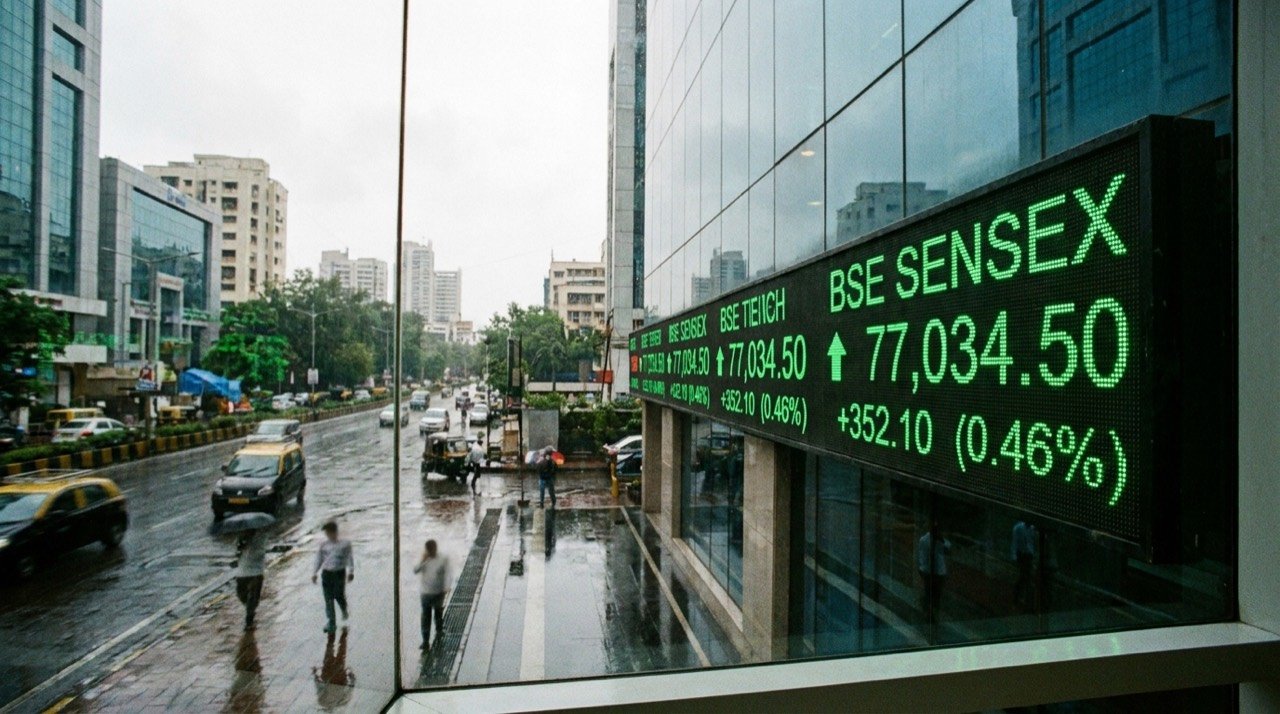
Sensex Holds Above 77,000 As Crude Pullback And RBI Liquidity Push Lift Indian Markets
Indian benchmarks extended gains around 24 June 2026 as easing crude prices, calmer West Asia tensions and fresh RBI liquidity support kept financial and auto stocks firmly in demand.
More from this section
More
Adani Case: US DOJ Pushes for Permanent Dismissal of Charges
The US Department of Justice has urged a judge to permanently dismiss charges against Gautam Adani, calling the case legally flawed — a reversal with consequences for markets, diplomacy and cross-border enforcement.

Akasa Air Inducts 40th Aircraft in Indian Aviation Scale-Up
Akasa Air's 40th aircraft, ferried to Bengaluru via Seattle, Reykjavik and Cairo, marks a fleet milestone for the young carrier and a fresh signal that India's aviation market remains firmly in expansion mode.
BARC Ratings Suspension Leaves Indian TV Industry Flying Blind
BARC's pause on television ratings has put India's broadcast measurement system under fresh scrutiny, leaving broadcasters, advertisers and media planners without the weekly audience data that anchors the TV economy.