George Kurian Resigns as Union Minister After BJP Skips Rajya Sabha Renomination
Union minister George Kurian has resigned after the BJP did not renominate him to the Rajya Sabha, a reminder of how ministerial tenure hinges on parliamentary membership and party seat calculations.
Commentary & Analysis ·
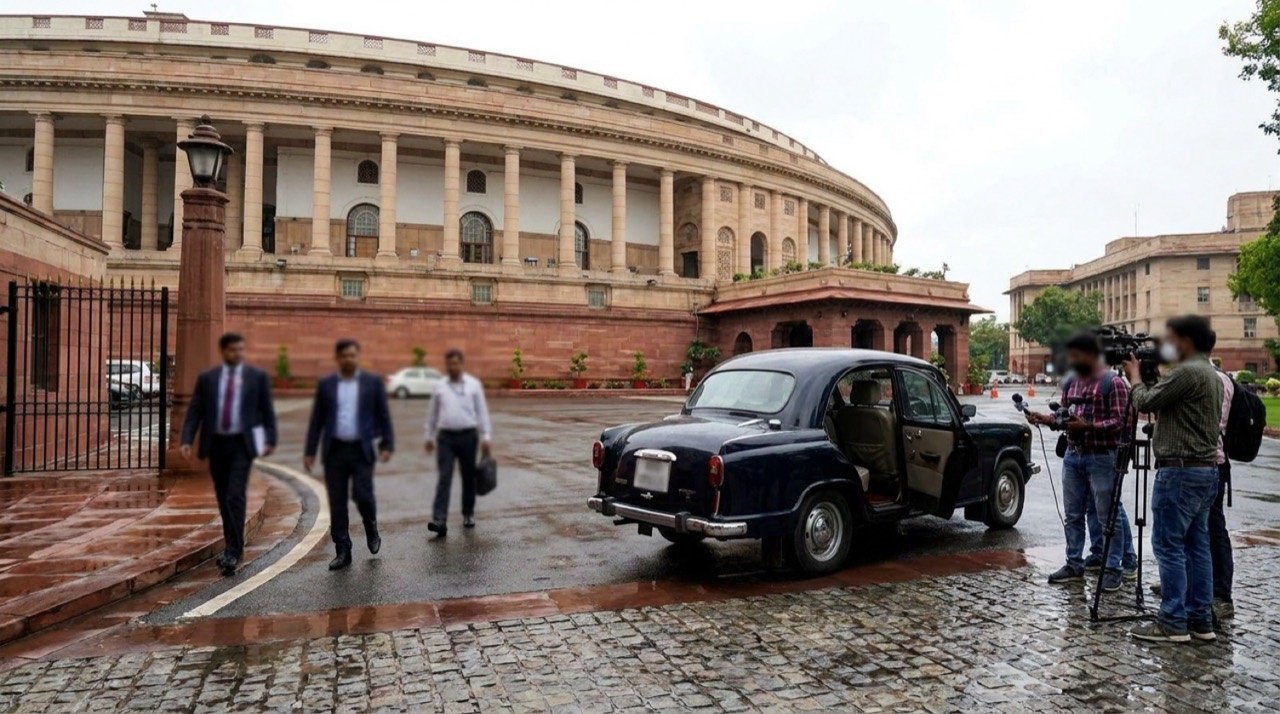
Union minister George Kurian has resigned after the BJP did not renominate him for a fresh Rajya Sabha term, according to reports. On its face, this is a routine administrative footnote, one minister's exit amid the constant churn of India's political personnel. But the episode is worth pausing over precisely because it is so routine: it is a pointed reminder that in India's parliamentary system, ministerial continuity can rest as much on membership of Parliament and party arithmetic as on performance in office. A minister's fate, in other words, can turn less on the work done in the ministry and more on a seat allocation decided in a party's central leadership.
The constitutional trigger
Under the Constitution, a minister who is not a member of either House of Parliament must secure membership within a fixed time frame, typically six months, or relinquish office. This is not a discretionary courtesy extended by the Prime Minister or the party; it is a hard constitutional deadline embedded to preserve the basic logic of parliamentary government, that those who hold executive power must also be answerable to, and drawn from, the legislature. When the BJP chose not to renominate Kurian to the upper house, the path to retaining his ministerial position effectively closed, making resignation the procedural outcome rather than a discretionary choice on his part.
This distinction matters. It would be easy to read a ministerial resignation as evidence of controversy, non-performance or a falling-out with the leadership. In this case, the mechanism is far more mundane and, in a sense, more revealing: the clock simply ran out. The constitutional design does not ask whether a minister has been effective or popular; it asks only whether that minister sits in Parliament. Kurian's case shows how a seemingly technical rule, one buried in the fine print of how the Council of Ministers is constituted, can end a ministerial career as decisively as any scandal.
Why the Rajya Sabha route matters
The episode illustrates how the Rajya Sabha, an indirectly elected and partly nominated chamber, functions as a key route through which governments accommodate ministers who do not hold a Lok Sabha seat. This is a well-worn feature of Indian governance: prime ministers of every major party have used Rajya Sabha nominations to bring technocrats, regional leaders or trusted allies into the Council of Ministers without requiring them to contest and win a Lok Sabha constituency. It is a flexible instrument, but flexibility cuts both ways. The very mechanism that allows a party to elevate someone to ministerial rank without a popular mandate is the same mechanism that can just as quietly remove them, simply by declining to renew the parliamentary seat that underwrites their office.
Seen this way, Kurian's resignation is not an aberration but a demonstration of the system working exactly as designed. The upper house was never meant to be a permanent perch; it is renewed in cycles, and every renewal is an opportunity for a party to reassess who it wants in that chamber and, by extension, who it wants in government. For ministers who owe their position to a Rajya Sabha berth rather than a directly contested seat, this in-built cyclical uncertainty is simply the cost of that route into office.
Party calculations at play
Decisions on who is renominated to the upper house reflect a mix of factors, including regional balance, social representation, organisational priorities and the limited number of seats available in any cycle. Rajya Sabha seats are apportioned state by state, and within any state's allocation a party must weigh competing claims: geographic spread across the state, representation for particular communities or social groups, rewarding long-serving organisational workers, and accommodating leaders who bring specific expertise or symbolic value to the government. With only a handful of seats coming up for renewal at any given time, even a minister who has performed capably in office can lose out simply because the arithmetic did not work in his favour that cycle.
A non-renomination, therefore, is rarely read in isolation; it tends to be interpreted as a signal about a party's evolving choices. Observers and rival parties alike will parse such decisions for clues about shifting internal priorities, whether a party is recalibrating its regional focus, making room for a new social constituency, or simply rotating personnel to refresh its ranks. Kurian's exit is likely to prompt exactly this kind of scrutiny, prompting questions about how the BJP weighs these considerations in its upcoming nominations and whom it chooses to elevate in his place.
Political and procedural significance
The resignation carries weight on two levels. Procedurally, it reaffirms the constitutional discipline that ties ministerial office to parliamentary membership, a discipline that, while well established, is periodically tested and reaffirmed by cases exactly like this one. Each such instance serves as a public, visible demonstration that the rule is not merely theoretical but is actually enforced when the moment arrives, reinforcing a norm that underpins the accountability structure of the Westminster-style system India has adapted.
Politically, it opens a conversation about representation and the strategy guiding the party's choices for the upper house. For a party managing a large and diverse coalition of regional interests, caste and community considerations, and competing claims from state units, each Rajya Sabha nomination cycle is an exercise in balancing multiple, sometimes conflicting, pressures. Kurian's non-renomination will inevitably be read alongside whoever is chosen to succeed him, and that choice will carry its own signal about where the party's priorities currently lie.
What to watch next
Looking ahead, attention will turn to how the BJP fills the space left by the change and what its nomination decisions reveal about regional balance and representation. Will the replacement be drawn from the same state or region as Kurian, suggesting continuity in regional accommodation? Will the choice reflect a new social or community consideration? Will the ministerial berth itself be reassigned to someone else entirely, or restructured within the Council of Ministers? Each of these outcomes would carry its own message about the party's internal calculus heading into the next phase of its term.
For now, the resignation stands as a clear example of the interplay between constitutional rules and party strategy that shapes who serves in government. It is a reminder that ministerial tenure in India's system is never fully autonomous from the legislative arithmetic underpinning it, however capable or well regarded an individual minister may be.
The NE Times View
Kurian's exit is a quiet lesson in constitutional plumbing: a minister must hold a seat within six months, and party arithmetic, not performance, often decides who keeps one. The episode underlines how the Rajya Sabha route lets governments parachute ministers without a popular mandate, a tool every ruling party uses, and just as readily withdraws when the arithmetic shifts. There is no suggestion here of wrongdoing or falling from favour; the mechanism is procedural, not punitive, and that is precisely what makes it instructive. The real signal lies in who the BJP renominates instead, and what that says about its priorities, whether regional, social or organisational. Until that choice is made, Kurian's resignation remains less a story about one minister than about the structural realities that govern ministerial life in India.
Key takeaways
- George Kurian has resigned as Union minister after the BJP declined to renominate him to the Rajya Sabha.
- Under the Constitution, ministers who are not members of either House must secure parliamentary membership within a set period, typically six months, or vacate office.
- The Rajya Sabha nomination process weighs regional balance, social representation, organisational priorities and limited seat availability, meaning performance in office is not the only, or even primary, factor in renomination.
- The episode reaffirms how the Rajya Sabha functions as a route for governments to induct and, by omission, remove ministers without requiring a Lok Sabha mandate.
- Attention now shifts to whom the BJP nominates in Kurian's place, a decision likely to reveal more about the party's current regional and representational priorities.
You may also like to read
George Kurian Resigns as Minister After Rajya Sabha Term Ends
The exit of one of Kerala BJP's most prominent national faces reopens questions over the party's southern strategy and its Rajya Sabha arithmetic.
Manipur CM's Churachandpur Visit: First Since 2023 Unrest
The Manipur Chief Minister travelled to Churachandpur for a BJP MLA's funeral, his first visit to the district since the 2023 violence, lending the sombre occasion an unmistakable political significance.
Odisha BJP Claims Several BJD Leaders Are Keen to Switch Sides
BJP leaders in Odisha claim several BJD figures want to switch sides, comparing the possible churn to earlier splits in regional parties, though no mass defection has been confirmed.
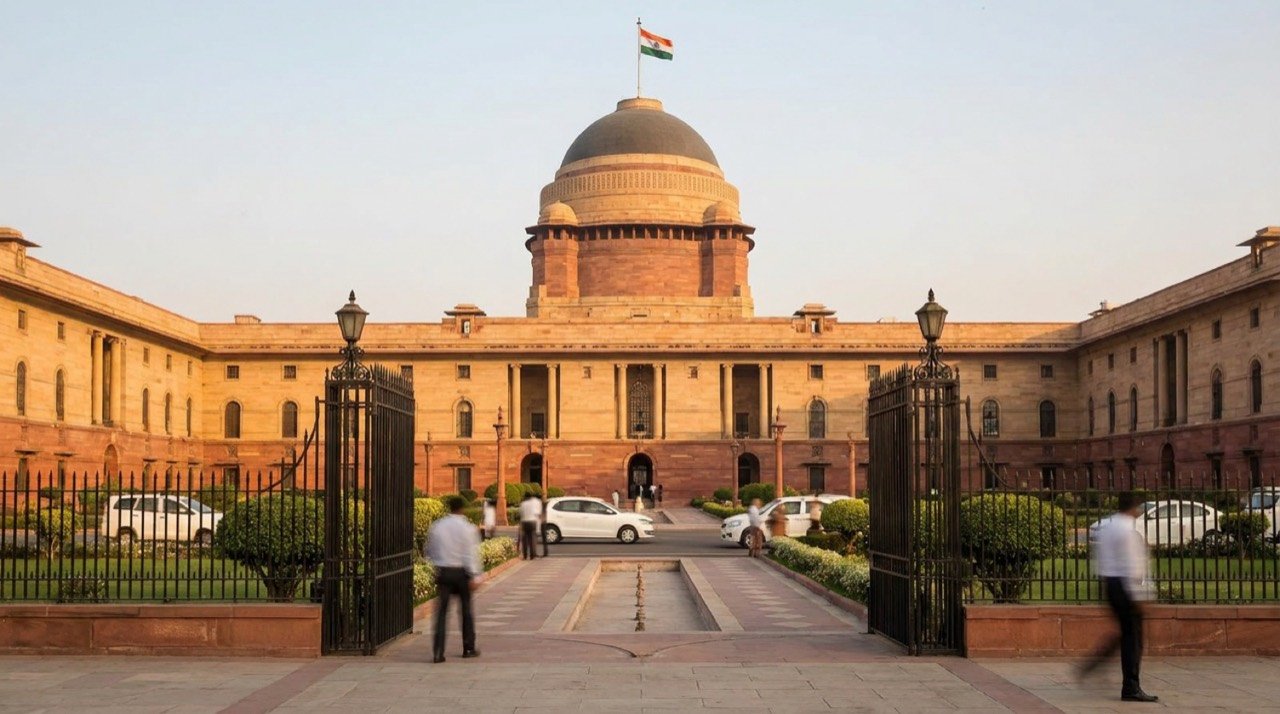
PM Modi Calls on President Murmu as Cabinet Reshuffle Speculation Grows in Delhi
Prime Minister Narendra Modi met President Droupadi Murmu at Rashtrapati Bhavan on June 23, a call that drew sharp political attention amid mounting speculation over a possible Union Council of Ministers reshuffle.
More from this section
More
K Kavitha Party Denied TRS Name by Election Commission
The Election Commission has refused to register K Kavitha's Telangana Rakshana Sena under the TRS acronym after objections, forcing a branding reset for the new party at a politically sensitive moment in Telangana.
Lalu Prasad Yadav Security Downgrade, Bungalow Order Stir Bihar
A government order downgrading Lalu Prasad Yadav's security cover and asking him to vacate an official bungalow has opened a fresh political flashpoint in Bihar, with the RJD chief's reaction fuelling the row.
Manipur CM's Churachandpur Visit: First Since 2023 Unrest
The Manipur Chief Minister travelled to Churachandpur for a BJP MLA's funeral, his first visit to the district since the 2023 violence, lending the sombre occasion an unmistakable political significance.