Gem-Quality Diamonds Found in Chhattisgarh Exploration Block
Officials say five diamonds, including two of gem quality, were recovered during scientific exploration at the Baloda-Belmundi block in Chhattisgarh's Mahasamund district, hinting at a wider diamond-bearing zone.
Commentary & Analysis ·
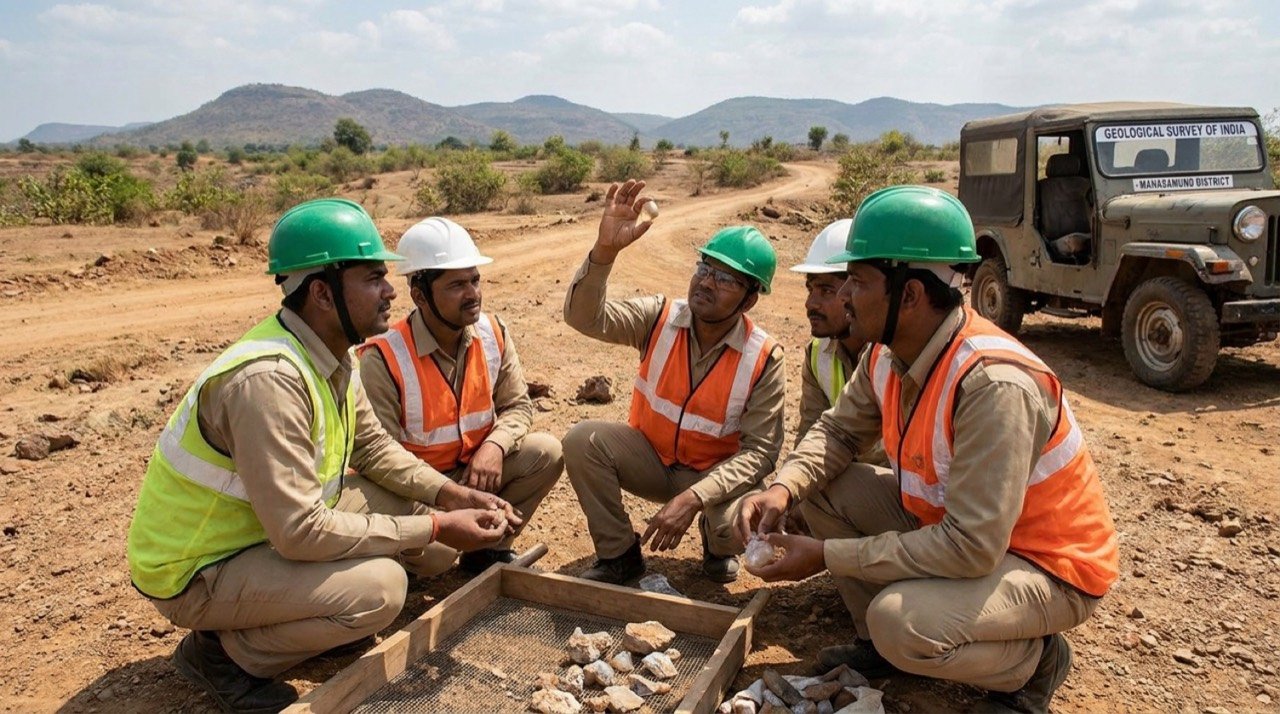
Officials in Chhattisgarh have confirmed that five diamonds, two of them of gem quality, have been recovered during scientific exploration at the Baloda-Belmundi block in the state's Mahasamund district. The find is at an early stage, but it has already drawn attention for what it might suggest about a wider diamond-bearing zone in central India. For a region whose mineral wealth has long been discussed in geological circles but rarely translated into confirmed commercial deposits, even a modest recovery of this kind is newsworthy. The task now is to understand what has actually been found, why it matters, and why the appropriate response is measured interest rather than premature celebration.
What was found, and where
The diamonds emerged from a structured scientific exploration programme rather than a chance discovery, and that distinction matters. Chance finds, of the sort occasionally reported from riverbeds or agricultural land, tell us little about the underlying geology because they are not tied to a systematic survey. A recovery made through deliberate exploration, by contrast, is the product of targeted sampling and analysis designed to test a specific hypothesis about the rock formations in question. That the Baloda-Belmundi block has now yielded five stones, two of gem quality, is therefore a more meaningful data point than an equivalent find made incidentally.
Gem quality is the category most prized for jewellery, and it is also the category of greatest commercial interest to any future mining operation. Industrial-grade diamonds have their uses, but it is gem-quality stones that drive the economics of a diamond deposit, since they command far higher prices per carat. The presence of two such stones among the five recovered is what has elevated this from a routine exploration update to a discovery worth reporting.
The location itself is not incidental. The Baloda-Belmundi block sits in a part of central India that has long been considered geologically promising for diamonds, sharing characteristics with other known diamondiferous formations in the region. The latest recovery adds to that existing body of interest, reinforcing rather than establishing the area's prospectivity.
Why caution comes first
It is worth stating plainly what this find does, and does not, establish. Early-stage finds of this kind are encouraging signals, not guarantees. A handful of stones, even gem-quality ones, does not by itself confirm the existence of a deposit large or rich enough to mine commercially. Diamond exploration is notoriously prone to raising expectations that are never matched by subsequent findings, precisely because the presence of diamonds in a sample does not tell you their concentration, distribution or the economic feasibility of extracting them at scale.
The next phase, geological verification, will need to map the extent and concentration of any diamond-bearing rock across the block and, if the results warrant it, beyond it. This is painstaking, technical work involving further sampling, bulk testing and modelling of the underlying kimberlite or lamproite formations typically associated with primary diamond deposits. Only after that verification work is complete can questions of commercial viability be answered with any real confidence. Exploration programmes of this nature can take years to mature from an initial promising find to a bankable feasibility study, and many never reach that point at all.
The questions that follow a discovery
Beyond the geology, a find of this nature raises broader issues about how mineral wealth is developed responsibly in India, particularly in regions with significant forest cover and tribal populations. Central India's mineral-rich belts frequently overlap with areas of dense forest and communities whose land rights and livelihoods are closely tied to that forest. Mahasamund district sits within this broader central Indian context, and any eventual move from exploration to extraction would inevitably intersect with these considerations.
Environmental safeguards will be central if exploration advances toward mining, as will the question of whether nearby communities share in any gains. These are not abstract concerns. Mining projects in resource-rich but ecologically sensitive districts have historically required careful balancing of economic and environmental interests, and the record across India's mineral belts shows that this balance is not always struck well. Where it is struck poorly, the result is often prolonged conflict between state authorities, mining interests and local populations, delays that can stall projects for years, and environmental costs that persist long after any economic benefit has been extracted.
These questions matter well before the first prospecting licence for commercial mining is even contemplated, because the framework for consultation, environmental clearance and benefit-sharing is typically easier to build early, before commercial and political pressures intensify around a confirmed deposit. Getting the process right from the outset of any escalation in exploration activity would serve the state, any future operator, and local communities alike.
What the find could mean for Chhattisgarh
Should further verification confirm a genuine diamond-bearing zone at Baloda-Belmundi, the implications for Chhattisgarh would be significant. Diamond mining, where commercially viable, tends to generate substantial state revenue through royalties and taxes, along with direct and indirect employment in a district that may otherwise have limited industrial activity. For a state government, the prospect of a confirmed diamond field is naturally attractive, both fiscally and politically.
That attraction is precisely why caution is warranted at this stage. The gap between an exploratory find and a producing mine is wide, and filled with technical, financial and social hurdles. Overstating the significance of an early-stage recovery risks raising expectations, among officials, investors and local communities alike, that the subsequent verification work may not support. A premature narrative of an imminent diamond boom could also complicate the more sober, deliberate process of environmental and social assessment that any responsible development pathway would require.
For now, the discovery is best read as a promising lead rather than a confirmed bonanza. Whether Baloda-Belmundi becomes a working diamond field will depend on the science, the economics and the safeguards that follow in the months and years ahead. Each of those three factors carries its own timeline and its own risks, and none can be shortcut without compromising the eventual outcome.
The NE Times View
A handful of stones is a geological signal, not yet an industry, and the sensible reaction is curiosity tempered with caution. If exploration confirms a viable diamond-bearing zone, Chhattisgarh gains revenue and jobs, but mining in a forested, tribal-belt district raises real questions about land, environment and consent. The state should let the science mature before promising windfalls. How fairly any future extraction is governed will matter more than the carats themselves. That principle should guide official communication about this find just as much as it should guide any eventual decision on extraction: manage expectations now, so that if the geology does confirm a workable deposit, the institutional and social groundwork for developing it responsibly is already in place.
Key takeaways
- Five diamonds, including two of gem quality, were recovered through scientific exploration at the Baloda-Belmundi block in Mahasamund district, Chhattisgarh.
- The find resulted from a structured exploration programme, not a chance discovery, giving it added geological significance, though it remains an early-stage result.
- Detailed geological verification is required before the extent, concentration and commercial viability of any diamond-bearing deposit can be established, a process that can take years.
- Any future move toward mining would need to address environmental safeguards and the interests of local, often tribal, communities in a forested district.
- The appropriate response is measured interest: a genuine geological signal, but not yet confirmation of a commercially viable diamond field.
You may also like to read
Supreme Court Fines Chhattisgarh Rs 2 Lakh in Decades-Old Land Compensation Case
The Supreme Court has fined the Chhattisgarh government Rs 2 lakh and upheld compensation with interest for landowners whose plot was taken for a road in 1986 without payment.
Chhattisgarh Shopkeeper Arrested in Alleged Serial Poisoning of Eight Men
Police in Chhattisgarh's Balodabazar district have arrested a shopkeeper accused of poisoning eight men over months with borax-laced alcohol, in a case that gripped Kharve village with fear.
NEET-UG Retest 'Leak' Video Found Fake; NTA Launches Cyber Probe
The Centre and NTA have rejected a viral video claiming the June 21 NEET-UG retest paper was leaked on Telegram, with a cyber probe now under way to trace those behind the misleading content.

NITI Aayog MCQ Exam Proposal Revives Assessment Quality Debate
A NITI Aayog-linked recommendation backing multiple-choice exams has reignited India's debate over whether standardised testing can measure real learning without rewarding rote memorisation and coaching patterns.
More from this section
More
AICTE Industry Fellowship 2026: Rs 1.5 Lakh Scheme Closes July 5
The AICTE Industry Fellowship Programme 2026, which places technical-education faculty inside leading companies on a Rs 1.5 lakh monthly stipend, reached its application deadline on July 5.

Bay of Bengal Low Pressure System Revives Monsoon Over Western India
A low-pressure system over the Bay of Bengal has pushed the monsoon back into an active phase, bringing steady heavy rain to Kerala, coastal Karnataka and Maharashtra, and putting Mumbai and Pune on preparedness watch.
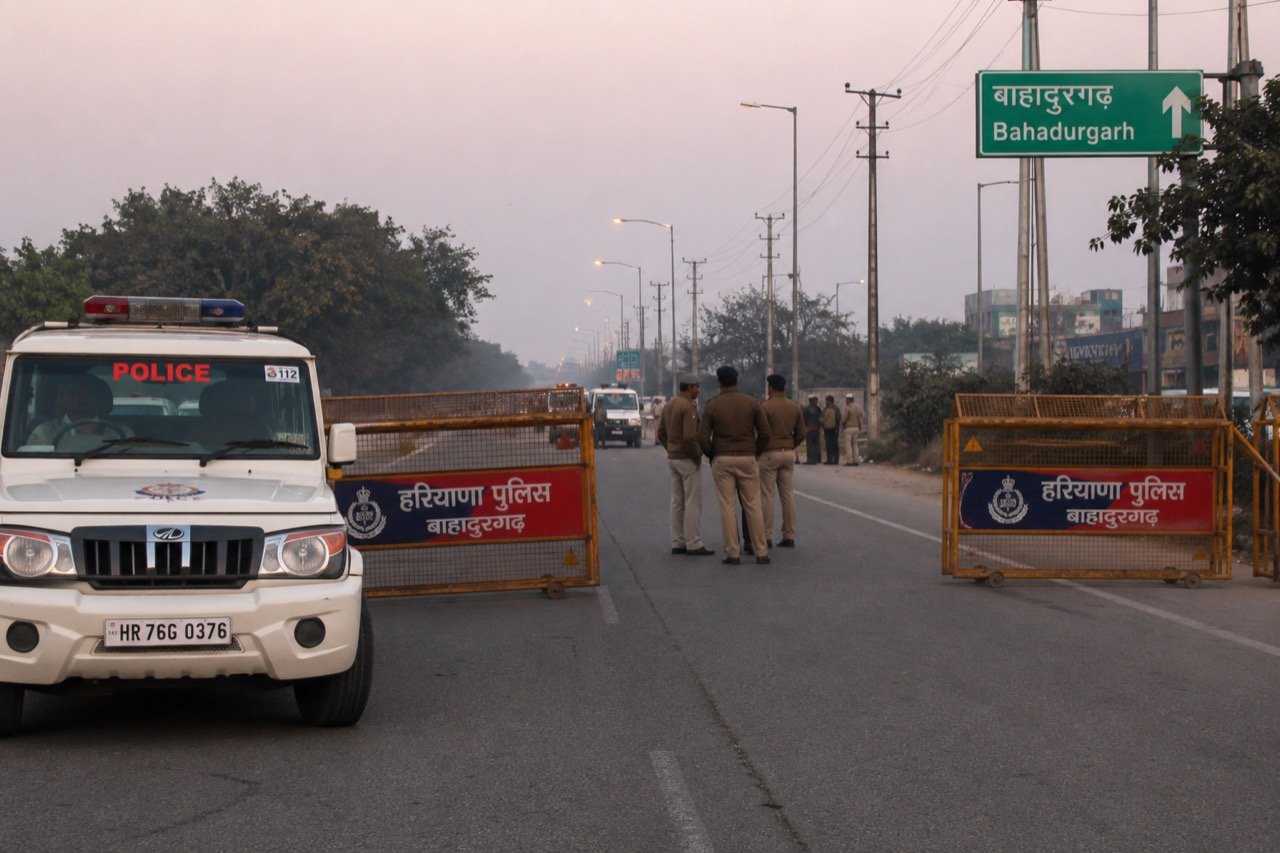
Bishnoi Gang Suspects Injured in Haryana Encounter as Police Tighten Net
A joint Haryana-Delhi Police operation in Bahadurgarh left two suspected Lawrence Bishnoi gang members injured, spotlighting the multi-state coordination now central to India's fight against organised crime networks.