Chhattisgarh Biogas Policy 2026: Farm Waste to Clean Fuel and Jobs
Chhattisgarh has approved a compressed biogas policy for 2026 that aims to convert agricultural residue, cattle dung and organic waste into clean fuel while opening up new employment opportunities across rural districts.
Commentary & Analysis ·
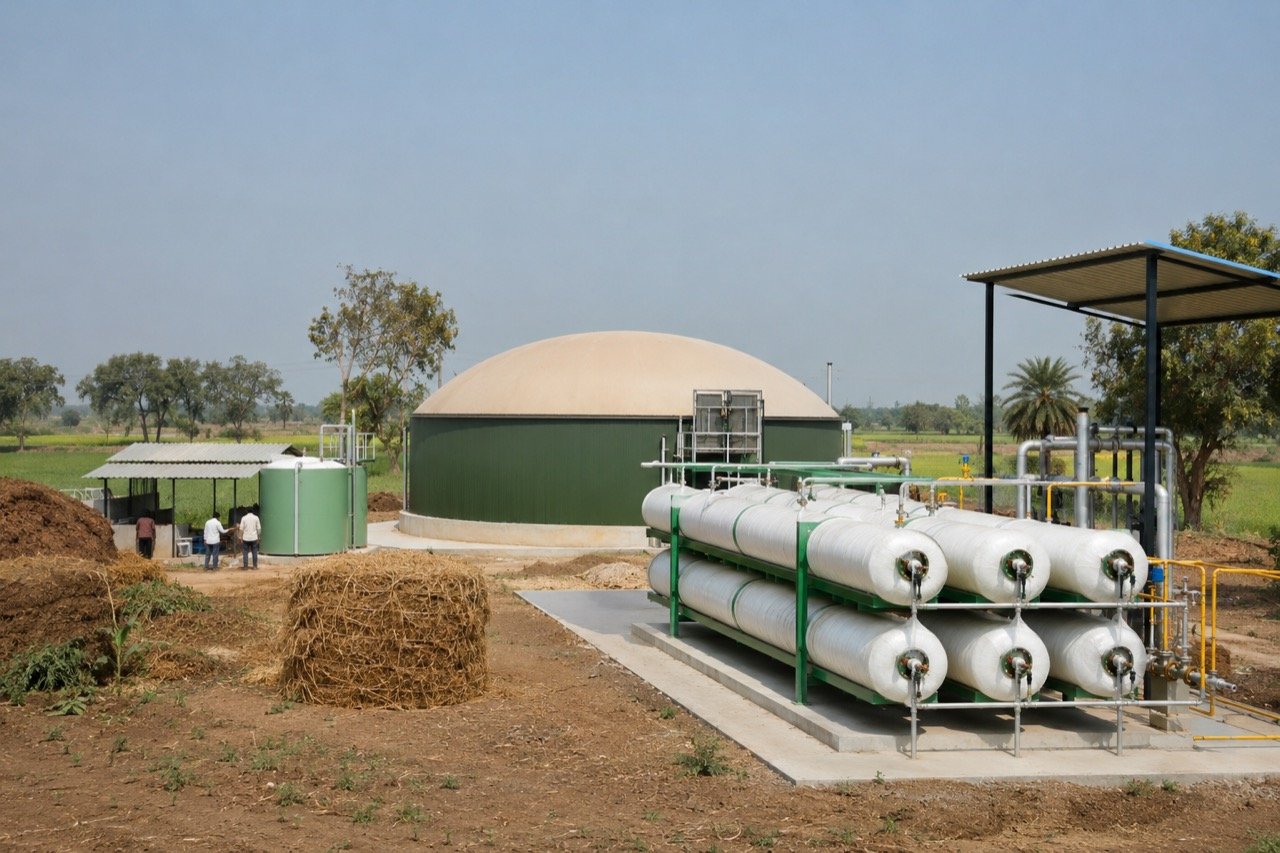
Chhattisgarh has approved a compressed biogas (CBG) policy for 2026 designed to turn agricultural residue, cattle dung and organic waste into clean fuel, according to ET Government. Alongside energy generation, the framework is explicitly pitched at creating rural employment, tying the state's climate ambitions to local incomes. On paper, this is a modest administrative announcement. In substance, it is an attempt to answer a question that has dogged India's clean-energy push for years: how does the transition away from fossil fuels actually reach the villages that produce most of the country's biomass waste in the first place?
A circular economy bet
The policy's core idea is circular: materials usually written off as waste become energy feedstock if collection, processing and market linkages can be made to work. Compressed biogas can support a cleaner fuel supply, cut open burning of crop residue and seed local enterprise around plants, from feedstock aggregation to distribution. This is not a novel concept in isolation; India has experimented with biogas and bioenergy schemes for decades, largely at the household or community-digester scale. What makes the Chhattisgarh framework notable is the attempt to formalise this at a policy level, with the state acting as convenor and enabler rather than leaving the market to organise itself around scattered, informal digesters.
The logic is straightforward enough. Crop residue that would otherwise be burned in fields, contributing to air pollution and soil degradation, is instead diverted to a plant. Cattle dung, abundant in a state with a strong livestock-linked agrarian economy, becomes an input rather than a disposal problem. If the economics can be made to work at scale, the same tonnage of waste that once represented a cost or an environmental liability starts to represent revenue for the farmer, the aggregator and the plant operator alike.
Why Chhattisgarh is well placed
Chhattisgarh's agriculture and livestock-linked biomass is available across many districts, giving the state a natural feedstock base. This matters more than it might first appear. Bioenergy policies that are not backed by a genuine, geographically distributed supply of raw material tend to falter regardless of how well-designed the incentive structure is on paper. A state with biomass concentrated in a handful of districts faces very different logistics and transport-cost challenges than one where feedstock is spread more evenly. Chhattisgarh's profile, at least in principle, gives it an advantage: shorter average collection distances, more potential plant sites, and a broader base of farmers and rural households who could plausibly participate in the supply chain.
If implementation holds up, jobs could emerge across the chain, spanning collection, transport, plant operation and maintenance, putting rural workers at the centre of a clean-energy value chain rather than at its margins. This is the aspect of the policy most worth dwelling on. Much of India's renewable-energy narrative to date has centred on capital-intensive, technology-led installations, solar parks, wind farms, EV manufacturing, that generate employment concentrated among skilled technicians and are often sited with limited reference to local labour markets. A bioenergy chain built around feedstock aggregation is different in character: it depends on distributed, relatively low-skill labour inputs at the collection and transport stages, which is precisely the kind of employment rural India has in surplus and needs channelled productively.
Execution is the real test
Policy is not production. Feedstock aggregation at scale, plant financing, offtake agreements, gas quality standards and distribution infrastructure will decide whether the 2026 framework delivers. Each of these is a distinct point of failure, and each has tripped up comparable schemes elsewhere in the country. Aggregation requires that farmers and dung collectors are paid promptly and fairly enough to keep supplying material rather than reverting to burning or dumping. Plant financing requires that investors and promoters see a credible, de-risked return, which typically hinges on long-term offtake agreements with fuel marketing companies or industrial buyers. Gas quality standards must be met consistently for CBG to be accepted into existing distribution networks. And distribution infrastructure, pipelines, cylinder logistics, or blending arrangements, has to exist or be built before the fuel produced can actually reach a paying market.
CBG is also no complete energy solution; it is one component of a broader clean-energy mix, though its distinctive strength is connecting climate goals with waste management and rural income. It would be a mistake to read this policy as a substitute for solar, wind or grid modernisation efforts already under way nationally. Its value proposition is narrower and, in some ways, more socially significant: it is one of the few clean-energy interventions that pays rural households directly for participating in emissions reduction, rather than treating them as passive beneficiaries of a transition designed elsewhere.
Stakeholders to watch
Several groups will determine whether this policy becomes a template or a footnote. Farmers and cattle owners are the primary feedstock suppliers, and their willingness to sustain participation will depend entirely on whether payment is timely and pricing is transparent. Plant promoters and investors will be watching offtake guarantees and financing terms before committing capital. Fuel marketing companies and industrial gas buyers are the demand side of the equation, and their appetite to sign long-term purchase agreements will shape whether plants can secure financing at all. State administrators, finally, carry the burden of coordinating across these interests, a role that has proven difficult in comparable central and state schemes where enthusiasm at the announcement stage has not translated into sustained bureaucratic follow-through.
The NE Times View
Chhattisgarh's move underlines a quiet shift in India's energy transition: it is becoming local. Solar parks and EVs dominate headlines, but state-level bioenergy frameworks like this one may matter just as much for rural India, because they convert an environmental liability, crop residue and animal waste, into livelihoods. The risk is familiar: ambitious state policies often stall at the financing and offtake stage, leaving plants half-built and farmers unpaid. If Chhattisgarh pairs this policy with credible purchase guarantees and transparent feedstock pricing, it could offer a template for other agrarian states; if not, it will join a long list of well-intentioned announcements. The coming months, as implementation details, plant tenders and offtake agreements begin to take shape, will tell us far more than the policy announcement itself about whether this circular-economy bet actually pays off for the farmers and rural workers it is designed to serve.
Key takeaways
- Chhattisgarh's 2026 compressed biogas policy aims to convert crop residue, cattle dung and organic waste into clean fuel while creating rural jobs across collection, transport and plant operations.
- The state's widespread agricultural and livestock-linked biomass gives it a genuine feedstock advantage over states with more concentrated waste sources.
- Success hinges on execution: feedstock aggregation, plant financing, offtake agreements, gas quality standards and distribution infrastructure must all align.
- CBG is not a standalone solution but a complement to India's broader clean-energy mix, distinguished by its direct link between emissions reduction and rural income.
- Credible purchase guarantees and transparent feedstock pricing will determine whether Chhattisgarh's approach becomes a replicable template for other agrarian states.
You may also like to read
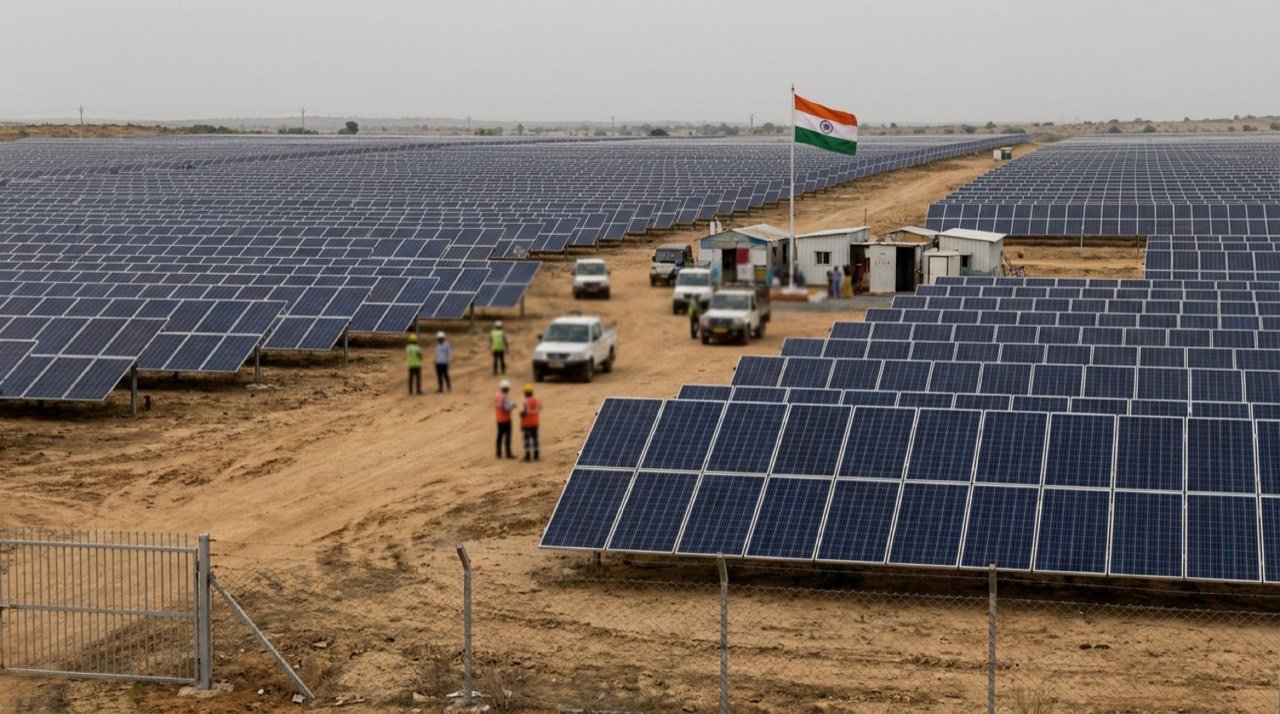
WTO Sets Up Panel in China's Challenge to India's Solar and IT Goods Tariffs
A World Trade Organization dispute panel will now examine China's complaint against Indian duties on solar cells, modules and IT goods, testing New Delhi's tariff policy space.
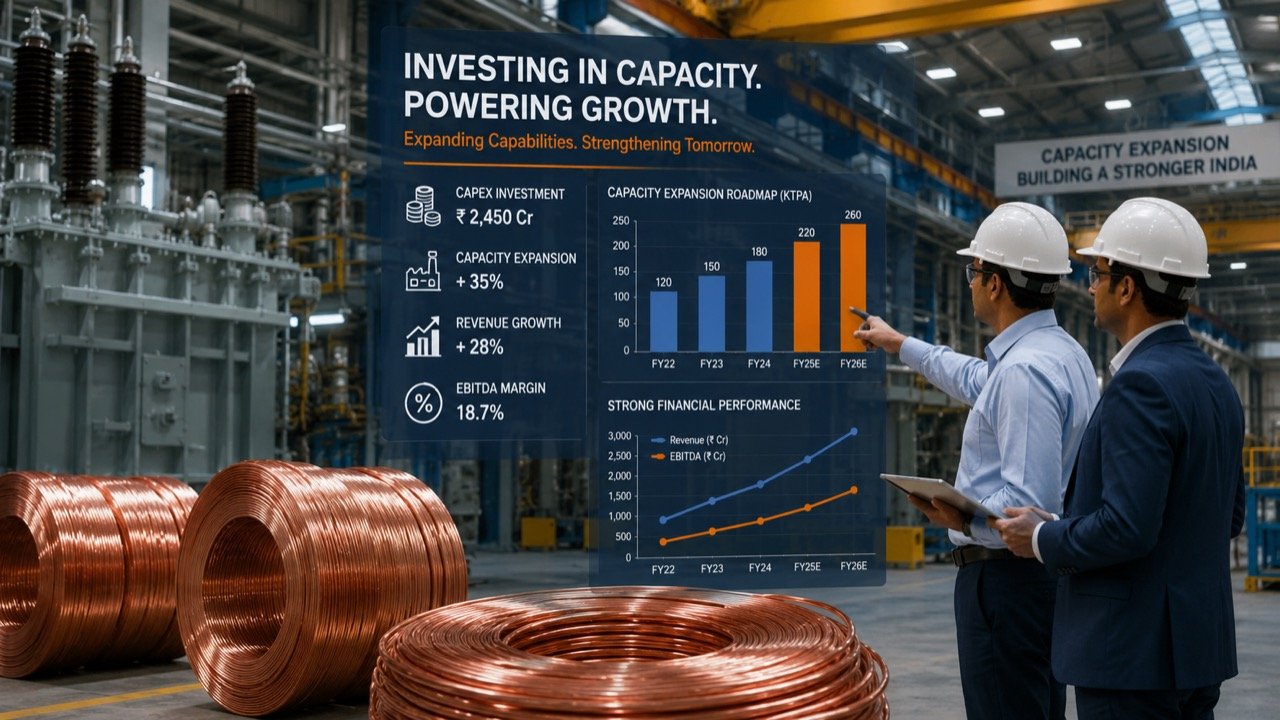
India Copper Capacity Push Grows Urgent as Clean Energy Demand Rises
Rising demand from solar, wind, electric vehicles and grid expansion is turning India's copper supply into a strategic industrial question, with capacity gaps threatening costs and project timelines.

Gender Pay Gap in Urban India Widens Even as Jobs Improve, Report Finds
A new report finds that India's big cities offer women better salaries and more formal jobs, yet only one in four urban women is employed and the pay gap with men remains stark.

Oil Shock Tests India: Fuel Hikes, Wider Deficit Risk Loom Over Recovery
A West Asia-driven crude spike forced India's first petrol and diesel price hikes in four years and revived fears of a wider current account deficit, even as hopes of a US-Iran deal offered a lifeline.
More from this section
More
Adani Case: US DOJ Pushes for Permanent Dismissal of Charges
The US Department of Justice has urged a judge to permanently dismiss charges against Gautam Adani, calling the case legally flawed — a reversal with consequences for markets, diplomacy and cross-border enforcement.

Akasa Air Inducts 40th Aircraft in Indian Aviation Scale-Up
Akasa Air's 40th aircraft, ferried to Bengaluru via Seattle, Reykjavik and Cairo, marks a fleet milestone for the young carrier and a fresh signal that India's aviation market remains firmly in expansion mode.

BARC Ratings Suspension Leaves Indian TV Industry Flying Blind
BARC's pause on television ratings has put India's broadcast measurement system under fresh scrutiny, leaving broadcasters, advertisers and media planners without the weekly audience data that anchors the TV economy.