Bharti Airtel Raises Airtel Africa Stake to 79% in Rs 28,000 Crore Deal
Bharti Airtel has lifted its effective stake in Airtel Africa to about 79 percent via a Rs 28,000 crore-plus share swap with a promoter-group entity, tightening its grip on a key growth market.
Commentary & Analysis ·
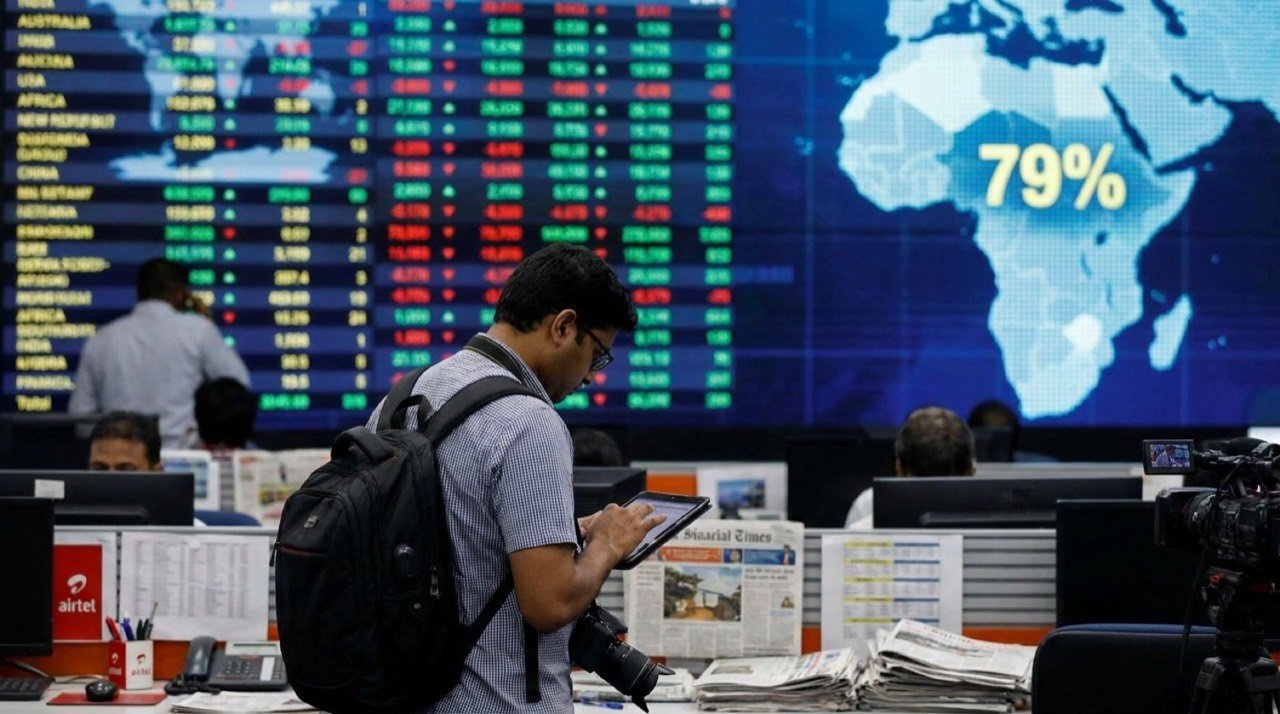
Bharti Airtel has raised its effective stake in Airtel Africa to about 79 percent after acquiring a 16.31 percent holding from the promoter-group entity Indian Continent Investment Limited (ICIL) through a share-swap transaction. The deal, estimated at more than Rs 28,000 crore, strengthens the Indian telecom major's control over one of its most important growth markets. On the surface this is an internal reshuffle within the Bharti promoter structure rather than a market-facing acquisition, but its scale and timing make it a significant marker of where the group sees its future earnings coming from.
How the deal is structured
Rather than a cash purchase, the transaction is being executed as a share swap, in which Bharti Airtel consolidates the Airtel Africa holding from ICIL, an entity within its own promoter group. Structuring it this way lets Airtel raise its stake without a large cash outflow, while simplifying ownership within the group. The move follows shareholder approval for raising the stake by 16.31 percent, lifting Bharti Airtel's effective interest in the African business to roughly 79 percent.
The choice of a share swap over a cash-funded purchase is telling in itself. A transaction of this size, if funded through debt or existing cash reserves, would have placed a visible strain on Bharti Airtel's balance sheet at a time when the group is also investing heavily in 5G rollout, spectrum payments and network expansion in India. By instead exchanging shares within the promoter fold, the company achieves the same strategic outcome, deeper ownership of a high-growth asset, without touching its liquidity position or its debt covenants. It is, in effect, a bookkeeping-efficient way of tightening the corporate architecture around a subsidiary that has become increasingly central to the group's growth narrative.
Why Africa matters to Airtel
Airtel Africa operates across multiple high-growth markets where mobile connectivity and mobile-money services are expanding rapidly. Greater ownership gives Bharti Airtel a larger share of the profits, cash flows and strategic direction of that business. For a company facing intense competition and heavy capital demands in its home market, a consolidated, higher-margin African franchise offers a valuable diversification of earnings.
The appeal of the African operations lies in the underlying demographics and the relative immaturity of digital penetration compared with India. Mobile-money services, in particular, have become a defining feature of Airtel's African footprint, offering a revenue stream that is less exposed to the intense price competition seen in voice and data services in more saturated markets. As smartphone adoption and data consumption continue to climb across the continent, a business in which Bharti Airtel holds a near-79-percent stake stands to capture a correspondingly larger share of that expansion, rather than having a meaningful slice of the upside diluted among minority shareholders.
What the move signals about strategy
Deepening its bet on Africa underscores how central the continent has become to Bharti Airtel's long-term strategy. Tightening control allows quicker decision-making and a fuller claim on the upside as digital adoption rises across its markets. It also suggests that the group views Airtel Africa less as a peripheral international venture and more as a core pillar of its earnings base, one deserving of the same level of ownership commitment that Bharti Airtel maintains over its Indian operations.
There is also a governance dimension worth noting. Consolidating the stake within the listed Bharti Airtel entity, rather than leaving a meaningful chunk sitting with a separate promoter-group vehicle in ICIL, simplifies the ownership chain and could make the group's overall structure easier for investors and analysts to assess. A cleaner, more direct line of ownership between Bharti Airtel and its African subsidiary reduces the complexity that sometimes weighs on how conglomerate structures are valued by the market.
Weighing the risks alongside the opportunity
A telecom-sector analyst quoted in connection with the deal observed that consolidating the African business gives Airtel a bigger claim on one of its fastest-growing profit pools without straining its balance sheet. That assessment captures the upside cleanly, but the flip side deserves equal attention. A larger ownership stake also means a larger exposure to the risks inherent in operating across multiple African economies: currency volatility, regulatory shifts, and the political and macroeconomic unpredictability that can accompany operations spread across a diverse set of national markets.
Currency risk in particular is not a trivial consideration. Airtel Africa's revenues are generated in a range of local currencies, many of which have historically been prone to depreciation against the US dollar and the Indian rupee. As Bharti Airtel's effective ownership climbs, so does its proportional exposure to translation losses whenever those currencies weaken, even if the underlying local businesses are performing well in operational terms. Similarly, regulatory environments across the African markets Airtel serves vary considerably, and a shift in policy, taxation or licensing conditions in any single significant market could have an outsized effect on a business in which Bharti Airtel now holds a much larger interest.
What comes next
With the higher stake secured, attention turns to how Bharti Airtel deploys its expanded African position, from network investment to mobile-money expansion, and whether the consolidated structure translates into stronger group earnings over the coming years. Investors and analysts will likely watch for signs of increased capital allocation toward African network infrastructure, further growth in mobile-money adoption figures, and how the enlarged stake feeds through into Bharti Airtel's consolidated financial results in subsequent quarters.
It will also be worth observing whether this move is a standalone consolidation or the first step in a broader tidying of the group's ownership structure, one that could eventually see further simplification of stakes held through promoter-group entities. For now, the transaction stands as a clear statement of intent: Bharti Airtel wants a fuller, more direct claim on the future of its African business, and it has chosen a capital-efficient route to get there.
The NE Times View
Doubling down on Airtel Africa signals confidence in a market where mobile money and data demand are still climbing steeply, and an internal share swap tightens control without straining cash. The strategic logic is sound, but concentration cuts both ways: Africa now carries more of Airtel's growth story, exposing it to currency swings and regulatory shifts across multiple economies. A bet on the continent's digital future, with the risk firmly attached.
Key takeaways
- Bharti Airtel's effective stake in Airtel Africa has risen to about 79 percent after acquiring a 16.31 percent holding from promoter entity ICIL.
- The deal, valued at more than Rs 28,000 crore, was structured as a share swap rather than a cash purchase, preserving Bharti Airtel's balance sheet strength.
- Greater ownership gives Bharti Airtel a larger claim on profits, cash flows and strategic direction from a high-growth, mobile-money-driven African market.
- The consolidation simplifies the group's ownership structure but also increases Bharti Airtel's exposure to currency volatility and regulatory risk across African economies.
- Markets will now watch how the expanded stake translates into network investment, mobile-money growth and consolidated group earnings in coming quarters.
You may also like to read

Bharti Airtel Leads Weekly Market Cap Gains Among Top Six Firms
Six of India's most valuable companies added to their combined market capitalisation this week, with Bharti Airtel leading the wealth gain in a snapshot of where large-cap investor confidence is accumulating.

Square Yards Raises Rs 900 Crore, Crosses $1 Billion to Join Unicorn Club
Real estate technology platform Square Yards has raised Rs 900 crore in a debt-and-equity round that values it above $1 billion, setting up an IPO push as revenue jumps 48 percent.

GPS Renewables raises Rs 635 crore to scale compressed biogas and bioenergy
The Bengaluru company is channelling fresh equity into a build-out of bioenergy infrastructure, with backing from domestic and Korean investors.
India Emerges as a Hybrid Video Entertainment Economy as Audiences Splinter Across Screens
A new industry report shows India's video market abandoning the simple subscription-versus-advertising split, as platforms blend streaming, short video, commerce and live events to win price-sensitive viewers.
More from this section
More
Adani Case: US DOJ Pushes for Permanent Dismissal of Charges
The US Department of Justice has urged a judge to permanently dismiss charges against Gautam Adani, calling the case legally flawed — a reversal with consequences for markets, diplomacy and cross-border enforcement.

Akasa Air Inducts 40th Aircraft in Indian Aviation Scale-Up
Akasa Air's 40th aircraft, ferried to Bengaluru via Seattle, Reykjavik and Cairo, marks a fleet milestone for the young carrier and a fresh signal that India's aviation market remains firmly in expansion mode.

BARC Ratings Suspension Leaves Indian TV Industry Flying Blind
BARC's pause on television ratings has put India's broadcast measurement system under fresh scrutiny, leaving broadcasters, advertisers and media planners without the weekly audience data that anchors the TV economy.