Anakapalle Industrial Fire Kills Two Workers and Raises Hard Safety Questions
A major fire at Dakshin Energy's plant in Paravada, Anakapalle, killed two workers and left others feared trapped, reigniting concern over industrial safety and inspections in Andhra Pradesh's pharma city.
Commentary & Analysis ·
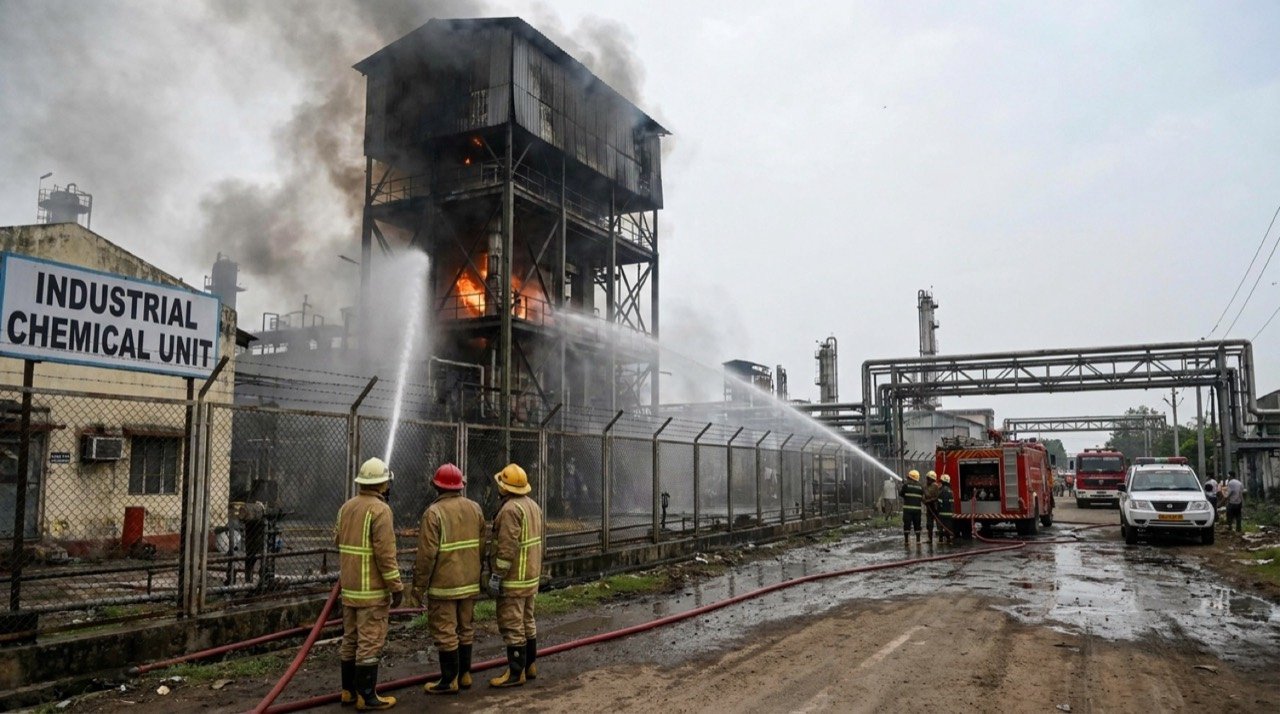
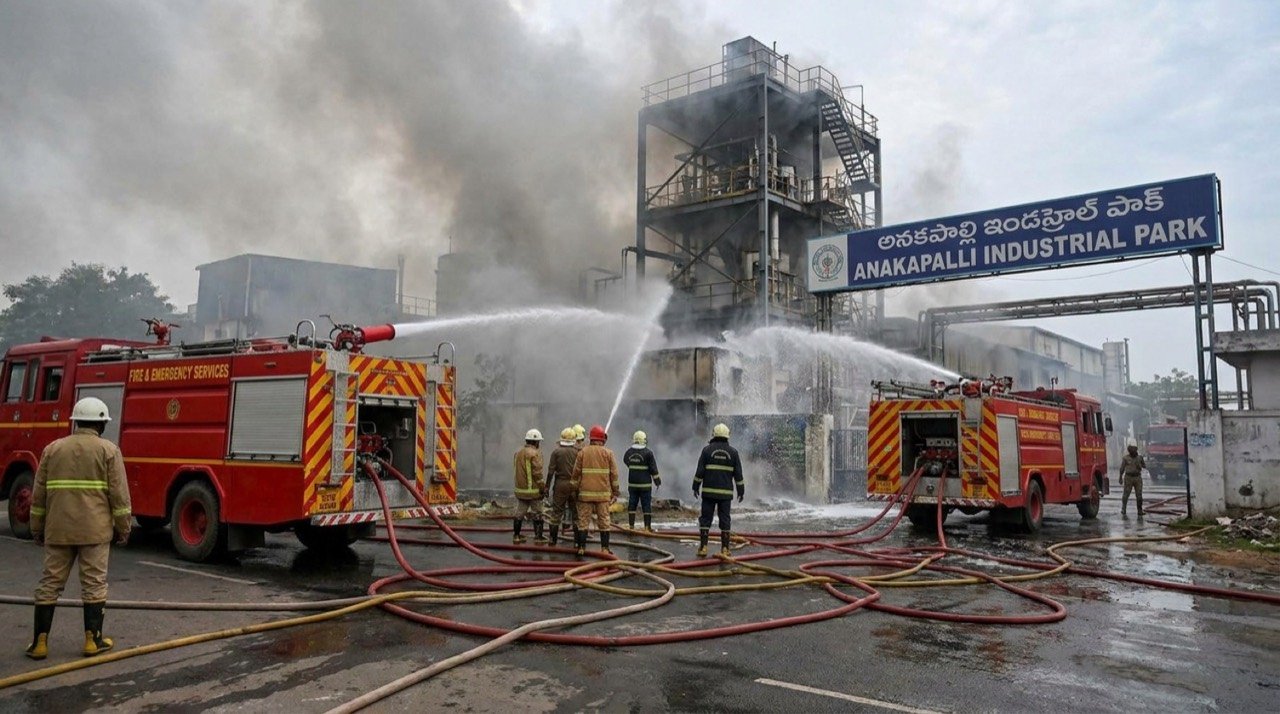
A major fire at Dakshin Energy's facility in Paravada, in Andhra Pradesh's Anakapalle district, has killed two workers and left others injured or feared trapped, according to reports. The blaze, in an industrial unit within the state's pharma city region, triggered an urgent emergency response and has reopened uncomfortable questions about workplace safety, the handling of hazardous materials and whether inspection systems are keeping pace with industrial growth. That such a tragedy has occurred in one of Andhra Pradesh's most closely watched industrial corridors makes it a matter of state-wide, and arguably national, concern.
What Happened at Paravada
The fire broke out at the Dakshin Energy plant in the Paravada belt near Visakhapatnam, an area that hosts a dense cluster of chemical and pharmaceutical units. Two workers were killed in the blaze, while others were reported injured, and there were fears that some remained trapped as the fire took hold. Emergency teams were deployed to bring the flames under control and search for those caught inside, in a response complicated by the hazardous nature of materials commonly present at such sites. The bare facts of the incident are simple to state, but their implications run deep, because Paravada is not an isolated facility standing alone in open countryside. It sits within a tightly packed industrial zone where one unit's failure can have consequences well beyond its own boundary walls.
The pharma city designation itself signals the scale of ambition behind this cluster. Andhra Pradesh has positioned the region as a hub for pharmaceutical and chemical manufacturing, drawing investment and employment on the promise of a modern, well-regulated industrial ecosystem. A fatal fire at one of its constituent units is therefore not merely a local tragedy; it is a test of whether that promise has been matched by the infrastructure and oversight needed to keep it safe.
Why Chemical Clusters Carry Outsized Risk
Industrial fires are, unfortunately, not new to India, but incidents at chemical and pharmaceutical sites carry a distinct category of risk. Such facilities routinely handle flammable solvents, reactive intermediates and other hazardous substances as part of ordinary production processes. When something goes wrong, the presence of these materials can turn a containable fire into a fast-moving and difficult-to-control emergency, as appears to have happened at Paravada. The fact that workers were feared trapped underscores how quickly such fires can escalate, cutting off escape routes before evacuation protocols can be fully executed.
The density of the Paravada cluster compounds this risk. When multiple chemical and pharmaceutical units operate in close proximity, a fire at one facility can threaten neighbouring plants and nearby communities, not just the workforce directly employed on site. This is precisely why hazardous industries are typically subject to layered regulatory requirements, covering everything from material storage and fire suppression systems to emergency drills and buffer zones. Whether those layers held up at Paravada, or whether gaps in one or more of them allowed the fire to take the toll it did, is now the central question facing investigators.
Safety Under Scrutiny
Officials were expected to examine the cause of the fire and, critically, whether established safety protocols were followed at the unit. Incidents in industrial clusters often expose gaps between the regulations on paper and the conditions on the factory floor. A facility may hold all the requisite certifications and clearances, and still fall short in the everyday practice of hazard management, whether that is in how materials are stored, how equipment is maintained, or how seriously fire drills and emergency exits are treated when no inspector is present.
The Paravada area's concentration of pharma and chemical operations heightens the stakes, since a single failure can endanger not only workers inside a plant but the wider neighbourhood around it. This is the uncomfortable arithmetic of industrial clustering: the same proximity that makes such zones efficient for supply chains and logistics also makes them more vulnerable to cascading harm when safety systems fail. Any investigation into the Dakshin Energy fire will need to look not just at the immediate causes within the plant, but at whether the cluster as a whole has adequate shared emergency infrastructure, from fire services response times to coordinated evacuation planning.
The Gap Between Regulation and Reality
India's industrial safety framework is, on paper, extensive, encompassing factory inspection regimes, hazardous substance handling rules, and mandatory safety audits for high-risk units. Yet incidents of this kind recur with troubling regularity, suggesting that the existence of rules is not the same as their consistent enforcement. Inspection systems that rely on periodic, scheduled visits can miss the day-to-day lapses that actually cause accidents, such as blocked emergency exits, poorly maintained fire suppression equipment, or workers who have not been adequately trained to respond to an emerging hazard.
For the families of the two workers who died, the coming investigation into fire-safety norms, hazardous material storage and prior inspection history will offer little comfort; their loss has already occurred. But those findings matter enormously for everyone else working in the Paravada cluster and in comparable industrial zones across India. If earlier inspections did flag risks at the Dakshin Energy facility, that would point to a specific failure of follow-through, one with a clearer, more damning line of accountability. If they did not, that would raise a different but equally serious question about whether the inspection regime itself is adequate to the scale and hazard profile of India's expanding pharma and chemical sector.
What This Means for Andhra Pradesh's Industrial Ambitions
Andhra Pradesh has invested heavily in positioning Visakhapatnam and its surrounding industrial belts, including the Paravada pharma city, as engines of economic growth. That strategy depends on convincing both investors and workers that the state can offer a modern industrial environment, not just cheap land and tax incentives. A fatal fire of this nature complicates that pitch. Investors will want reassurance that the incident was an aberration rather than a symptom of systemic under-enforcement, while workers and their families, along with labour unions, will rightly ask what concrete changes are being made rather than merely promised.
There is also a broader reputational dimension. As India competes to attract pharmaceutical and chemical manufacturing that might otherwise go to other countries, safety incidents that draw national attention can undercut the narrative of a reliable, well-regulated manufacturing base. The response to this fire, in terms of transparency, accountability and follow-through, will say as much about the credibility of Andhra Pradesh's industrial policy as the incident itself says about conditions on the ground.
The NE Times View
Two deaths in Paravada are not an accident of fate but the predictable cost of a safety regime that inspects on paper and ignores in practice. Andhra's pharma city cannot keep selling itself as an industrial magnet while treating worker lives as overhead. Industrial growth must be matched by strong compliance, worker training and transparent accident reporting, as any credible industrial safety assessment of this fire would conclude. The NE Times View: until inspection failures carry consequences for plant owners and regulators alike, the next fire is only a matter of time. Sustainable industrial growth is not simply a matter of attracting investment; it requires an equally serious, equally well-resourced commitment to the safety of the people who staff the factories that generate that growth.
Key takeaways
- A fire at Dakshin Energy's unit in Paravada, Anakapalle district, killed two workers, with others injured and some feared trapped.
- The blaze occurred within Andhra Pradesh's pharma city cluster near Visakhapatnam, a densely packed zone of chemical and pharmaceutical facilities where risks to one plant can spread to neighbours.
- Officials are expected to investigate the cause of the fire, compliance with safety protocols, and the handling and storage of hazardous materials on site.
- The incident highlights a recurring gap between India's formal industrial safety regulations and their enforcement on the factory floor.
- The NE Times View holds that without real consequences for inspection failures, both for plant owners and regulators, further such tragedies remain likely.
You may also like to read
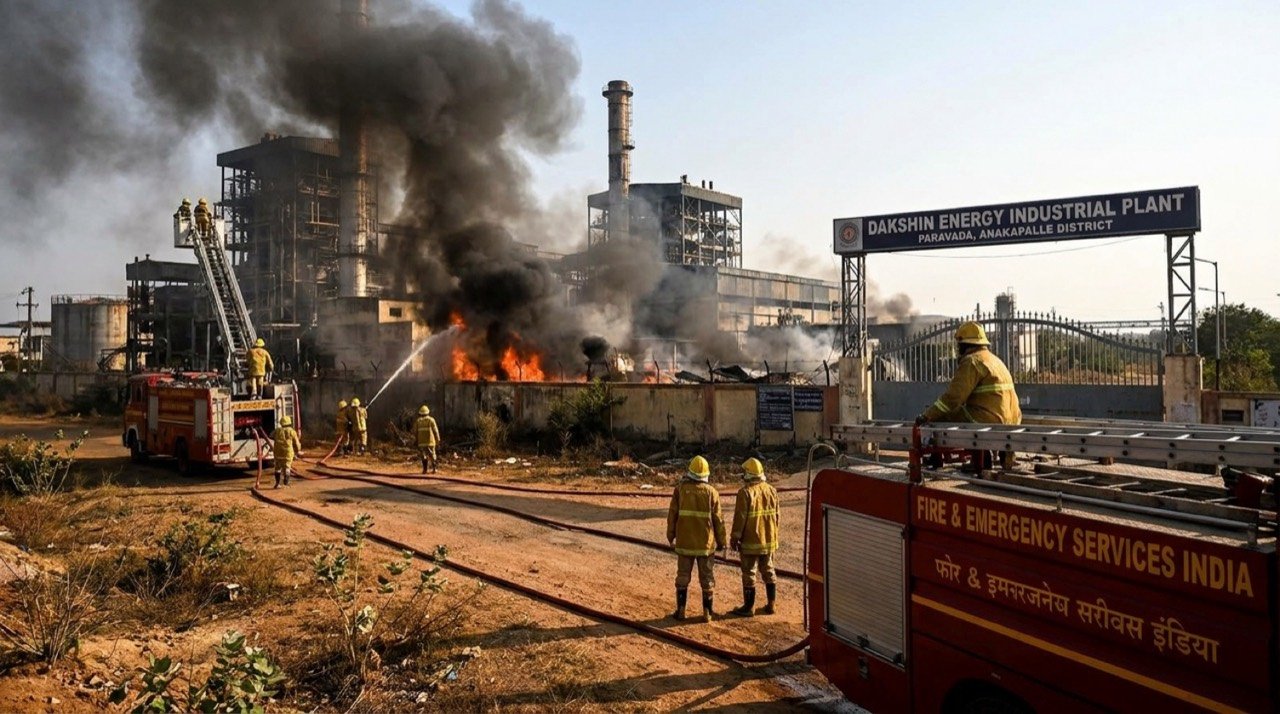
Anakapalle Plant Fire Kills Two Workers, Renews Industrial-Safety Concerns
A major fire at the Dakshin Energy plant in Andhra Pradesh's Anakapalle district has killed two workers and trapped others, reviving urgent questions over factory fire controls and inspections.
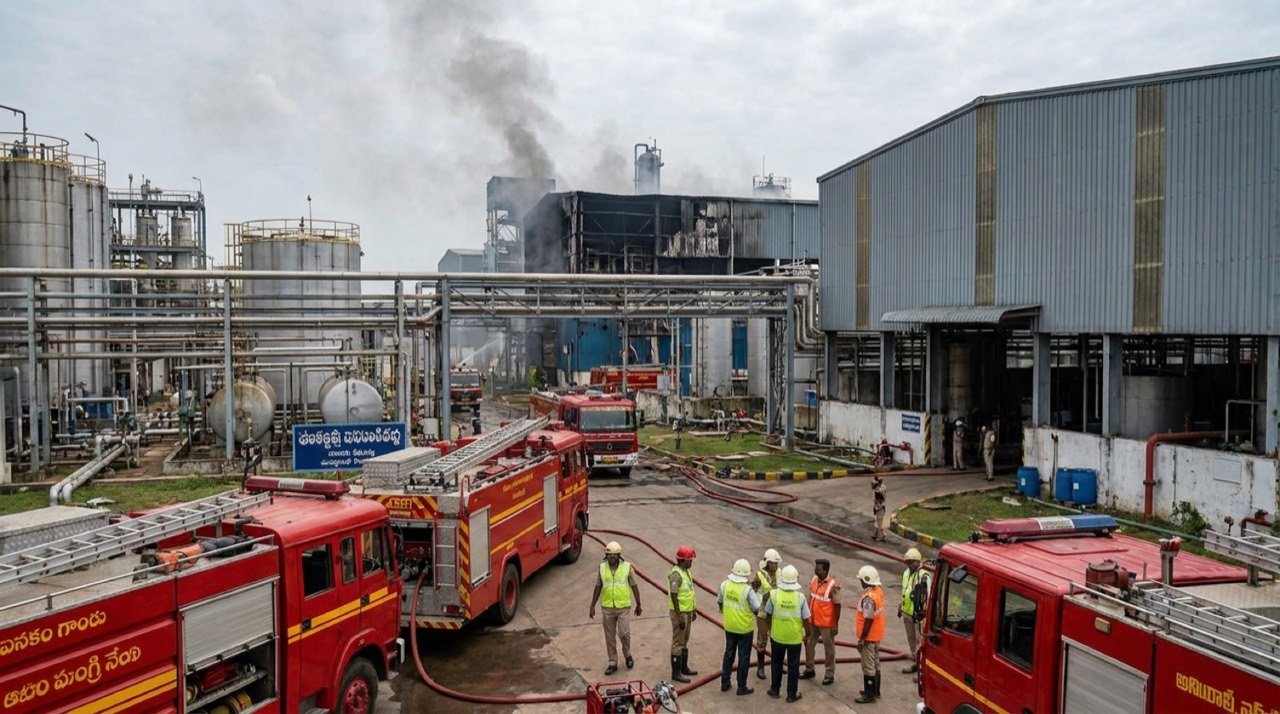
Anakapalli Pharma-City Fire Puts Andhra Pradesh Industrial Safety Back Under the Lens
A deadly fire at a unit in Andhra Pradesh's Anakapalli pharma-city has reignited scrutiny of industrial safety, compliance and worker protection across one of the state's key manufacturing belts.
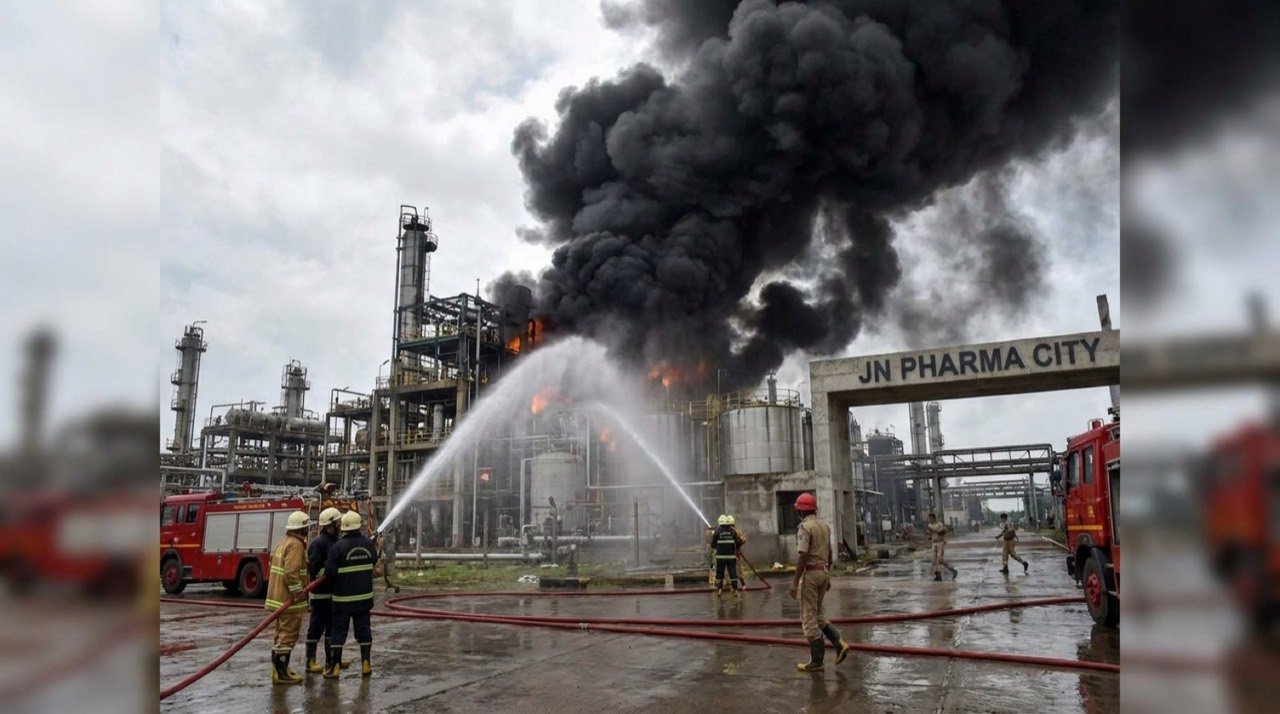
Two Workers Killed in Anakapalli Pharma City Fire at Dakshin Energy Plant
A blaze at a plastic pyrolysis unit in Andhra Pradesh's Jawaharlal Nehru Pharma City has killed two workers, reviving hard questions about safety audits in the Visakhapatnam industrial belt.
Anakapalli Pharma City Fire at Dakshin Energy Kills Two Workers, Reignites Safety Concerns
A fire at Dakshin Energy Industries in Anakapalli's Jawaharlal Nehru Pharma City killed two workers on June 23, with others feared trapped, putting Andhra Pradesh's industrial safety record back in focus.
More from this section
More
AICTE Industry Fellowship 2026: Rs 1.5 Lakh Scheme Closes July 5
The AICTE Industry Fellowship Programme 2026, which places technical-education faculty inside leading companies on a Rs 1.5 lakh monthly stipend, reached its application deadline on July 5.

Bay of Bengal Low Pressure System Revives Monsoon Over Western India
A low-pressure system over the Bay of Bengal has pushed the monsoon back into an active phase, bringing steady heavy rain to Kerala, coastal Karnataka and Maharashtra, and putting Mumbai and Pune on preparedness watch.
Bishnoi Gang Suspects Injured in Haryana Encounter as Police Tighten Net
A joint Haryana-Delhi Police operation in Bahadurgarh left two suspected Lawrence Bishnoi gang members injured, spotlighting the multi-state coordination now central to India's fight against organised crime networks.