WhatsApp Usernames: Why Reserving a Handle Is a Big Privacy Shift
WhatsApp is letting users reserve unique usernames ahead of a wider rollout, giving Indians a way to be reachable on the app without handing out their personal phone number in every new interaction.
Commentary & Analysis ·
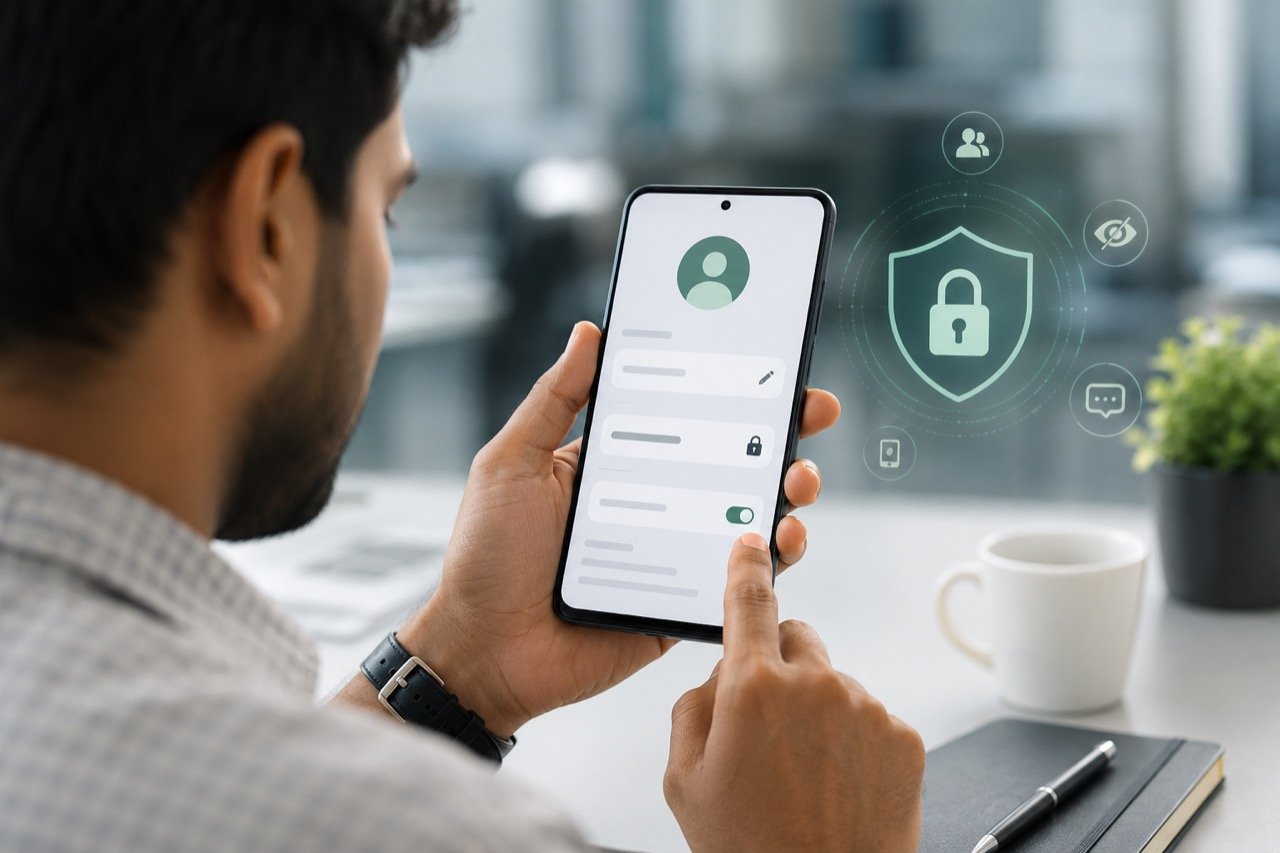
WhatsApp has begun letting users reserve usernames ahead of the feature's broader launch, a change with outsized consequences in India, where the app underpins everything from family groups and school circulars to small-business commerce and customer support. The premise is simple: instead of surrendering a personal phone number in every new interaction, a user can share a unique handle. Technology reports from Moneycontrol, Economic Times and The Verge describe the move as a privacy upgrade, with the reservation window opening before general availability. The precise rollout experience may vary by device and region, so step-by-step instructions remain rollout-dependent for now. Taken at face value, this looks like a modest cosmetic tweak — a new field in a settings menu. Looked at more carefully, in the Indian context specifically, it is a change to the terms on which hundreds of millions of people are reachable at all.
Why the phone number has been the real problem
In most markets, a WhatsApp account is simply an app people use. In India, it has become something closer to a default communications utility, and the mobile number tied to it has become a de facto identity credential — used to join school parent groups, order groceries, coordinate with domestic staff, apply for gig work, and reach small businesses that have no separate customer-service line. The trouble with a number-as-identity system is that it does not distinguish between contexts. The same ten digits shared with a close relative are the ones that must also be handed to a stranger replying to a classified advert, a delivery agent, or a customer inquiring about a shop's stock. Once shared, a number cannot easily be withdrawn from circulation; it can be forwarded, saved, sold on to marketing lists, or misused in ways the original sharer never intended. A username changes this dynamic at the root, by giving people a second, non-permanent form of reachability that sits in front of the number rather than replacing it.
What usernames do — and don't — change
The careful answer to the most-searched question is that usernames reduce unnecessary phone-number sharing; they do not eliminate the need for a number to operate a WhatsApp account. Crucially, the system is positioned around privacy rather than public search: a handle must be known in advance, working like a controlled contact detail rather than a searchable directory — a design choice that limits spam and unwanted discovery. This distinction matters more than it may first appear. A searchable directory of usernames, of the kind seen on some social platforms, would have made WhatsApp accounts easier to find but also easier to scrape, harvest and target — precisely the outcome India's vast, less digitally cautious user base is most vulnerable to. By instead requiring the handle to be shared deliberately, WhatsApp appears to be trying to preserve the app's closed, contact-based architecture while still solving the number-exposure problem. Whether this balance holds up once the feature reaches general availability, rather than a limited reservation window, is one of the more important things to watch.
A practical win for freelancers, shops and creators
The feature is most useful where numbers are currently shared too casually. A freelancer can hand a client a handle, a shop can publish a username for enquiries, a community organiser can accept first contact without exposing a personal line, and a creator can separate public reachability from private identity. For India's vast base of small merchants who use WhatsApp as their de facto storefront, a handle also looks more professional and less tied to one individual's SIM. This last point deserves emphasis: a phone number changes when a SIM is lost, a device is upgraded, or a shopkeeper switches carriers for better rates, and every such change currently forces a business to notify every customer individually or risk losing them. A username, in principle, can persist across such changes, giving small enterprises something closer to the stable public identity that larger companies take for granted with a website or a listed landline. It also offers a subtler benefit: it lets a person present a single, consistent face to customers or contacts even while the underlying number changes for personal reasons, such as moving between prepaid connections.
The unresolved risks that will determine whether this succeeds
Open questions remain around impersonation, handle squatting, account recovery and how usernames will interact with existing contacts and groups. Each of these is not a minor implementation detail but a potential failure mode. Impersonation risk rises whenever a recognisable name or brand can be claimed by someone other than its rightful owner — a well-known shop, a local politician, or a public charity could find a lookalike handle used to solicit money or spread misinformation before the genuine account is even aware a rival exists. Handle squatting, where opportunists reserve popular or valuable names early with an eye to reselling or extorting the rightful claimant, is a problem every platform that has introduced usernames has had to contend with, from early social networks to messaging apps in other markets. Account recovery raises a further complication: if a username becomes the primary point of contact for a business, losing access to it during a phone or device change could be more disruptive than losing the number itself. Public figures and businesses may need stronger verification or reservation protections before the system can be trusted at scale, and WhatsApp will likely face early pressure to introduce some form of priority claims process for recognised brands and officials, similar to verification systems used elsewhere.
Who stands to gain the most
The people most likely to benefit are those who have historically had the least control over how their contact information circulates. Women who have long been advised, for safety reasons, against sharing personal numbers with unfamiliar contacts gain a genuine alternative rather than simply being told to be more cautious. Gig workers — delivery riders, tutors, domestic-service providers, and platform-based freelancers — who currently must expose a personal number to every new client stand to gain a layer of separation between their working life and their private one. Small traders, who make up a very large share of WhatsApp's commercial use in India, gain a way to look more established and to protect themselves from having their personal number saved into thousands of customer address books, with all the exposure that entails long after a transaction is complete. None of these groups gains anything, however, unless WhatsApp's enforcement of impersonation and squatting rules proves robust in practice rather than merely in policy documents.
The NE Times View
For a country where a phone number doubles as a de facto identity document, loosening the bond between reachability and the number itself is quietly consequential. The biggest beneficiaries will be women, gig workers and small traders who have long had to trade personal exposure for economic participation on the platform. The test now is execution: if WhatsApp polices squatting and impersonation firmly, usernames could become one of its most meaningful privacy changes in years; if it does not, the feature risks becoming a new vector for fraud. Indian users should reserve their handles early — and watch the safeguards as closely as the rollout. A feature of this scale rarely reveals its true character in its first weeks; it is in the handling of the first wave of impersonation complaints, squatting disputes and recovery failures that WhatsApp's real commitment to the "privacy upgrade" framing will become clear.
Key takeaways
- WhatsApp's new username reservation feature lets users share a handle instead of a phone number, reducing unnecessary number exposure without removing the number requirement to run an account.
- The system is designed around controlled sharing rather than public searchability, limiting spam and unwanted discovery compared with an open directory model.
- Freelancers, small shops and creators stand to gain a more stable, professional public identity that can persist even when an underlying phone number changes.
- Impersonation, handle squatting, and account recovery remain unresolved risks that will determine whether the feature is trustworthy at scale, particularly for public figures and businesses.
- Women, gig workers and small traders are likely to be the biggest beneficiaries, provided WhatsApp enforces safeguards firmly as the feature moves from reservation to general availability.
You may also like to read

WhatsApp begins its shift from phone numbers to usernames, with India in the firing line
The messaging giant is rolling out optional handles that let people connect without sharing their number, a change that quietly rewrites how its largest market communicates.

Meta Backs CRED With $900 Million As Kunal Shah Is Tapped To Lead WhatsApp Globally
Meta is investing about $900 million in Indian fintech CRED and has chosen founder Kunal Shah to lead WhatsApp globally, a twin move that ties one of the world's biggest platforms ever closer to Indian consumer technology.

Kunal Shah Named WhatsApp Global CEO as Meta Leads $900 Million CRED Round
CRED founder Kunal Shah has been named global CEO of WhatsApp as Meta leads a $900 million round valuing the Indian fintech at about $4.5 billion, placing a homegrown founder atop one of the world's biggest apps.

Kunal Shah Named WhatsApp Global Head, Putting India at Centre of Meta's Strategy
CRED founder Kunal Shah has been named global head of WhatsApp as Meta deepens its India bets, placing an Indian fintech entrepreneur in charge of the platform's largest market.
More from this section
More
CG Semi Sanand Plant Opens, Boosting India's Semiconductor Drive
Prime Minister Narendra Modi inaugurated CG Semi's chip assembly and test facility in Sanand, Gujarat, giving India's semiconductor mission a working manufacturing milestone rather than another policy promise.
Chinese E-Rickshaw Apps Banned in India Over Remote Disable Risk
The Centre has ordered the removal of three Chinese apps — BAT-BMS, Lossigy and Epoch-i-ion — over fears they could remotely disable battery-run e-rickshaws, turning mobility software into a public safety concern.
Connected Car Rules: India Plans Vehicle Software Update Norms
With cars increasingly run by software, the government is reportedly preparing update and security norms aimed at preventing vehicle hijacking and governing how connected cars in India are patched and protected.