Uttar Pradesh Doubles Down On Roads And Airports With Record Rs 9 Lakh Crore Budget
From the Ganga Expressway to the Jewar airport and a wave of new city projects, the Yogi Adityanath government is pouring capital into infrastructure as it pitches Uttar Pradesh as one of India's fastest-growing state economies.
Commentary & Analysis ·

Uttar Pradesh is building at a pace that has made it India's expressway capital, and its government is not slowing down. With a 2026-27 budget pegged at around Rs 9 lakh crore and capital expenditure running at nearly a fifth of total spending, the Yogi Adityanath administration is channelling vast sums into roads, airports and urban projects as it positions the state as a magnet for investment. The scale of the number alone is striking: a capital outlay of this size, sustained year after year, marks a deliberate strategic choice to use the state's fiscal muscle to reshape its economic geography, rather than simply to fund recurring administrative expenses.
A network of expressways
The state now claims more expressway kilometres than any other in India, anchored by major corridors including the 341-km Purvanchal Expressway, the 296-km Bundelkhand Expressway, the Gorakhpur Link Expressway and the sprawling 594-km Ganga Expressway. Together they stitch together the state's east, west and centre, cutting travel times and opening up industrial corridors along their routes. The logic behind this expressway-led model is straightforward: a state as large and populous as Uttar Pradesh has historically struggled with poor east-west connectivity, with its eastern districts in particular lagging behind the more industrialised west around Noida and Ghaziabad. By physically linking these regions with high-speed corridors, the government is betting that private capital will follow the roads into districts that have long been starved of investment.
This is not a new theory of development, but it is one that Uttar Pradesh is pursuing with unusual scale and ambition. Expressways of this length require enormous land parcels, sustained construction capacity and, crucially, a functioning ecosystem of industrial parks, logistics hubs and power supply along their length to translate a road into an economic corridor rather than merely a faster route between two points.
Aviation expansion alongside the roads
Aviation has expanded in parallel, with the number of functional airports rising sharply over the past decade and the greenfield Jewar International Airport near Noida under active construction, set to become one of north India's largest aviation hubs. The pairing of road and air infrastructure is significant: expressways move goods and people over land, while an aviation hub of Jewar's scale is designed to plug the state directly into national and international cargo and passenger networks, reducing its historical dependence on Delhi's airport capacity. For a state of Uttar Pradesh's population and industrial ambition, this dual investment in surface and air connectivity is meant to signal to investors that the state is building the full logistical backbone that large-scale manufacturing and export-oriented industry require, not just isolated showcase projects.
Cities and the urban allocation
Urban development has drawn a sizeable slice of the budget, with allocations for the Lucknow Metro extension, smart-city schemes and green roads. The government has framed the spending as a foundation for its 'developed Uttar Pradesh' pitch, citing economic-survey projections of strong double-digit growth in the state's gross domestic product. This urban component matters because expressways and airports alone do not create the kind of livable, well-serviced cities that skilled workers and their families are willing to relocate to. Metro extensions and smart-city investment are, in effect, an attempt to build the softer infrastructure of urban life alongside the harder infrastructure of transport, recognising that industrial growth ultimately depends on attracting and retaining a workforce, not simply moving goods faster.
The execution test
Headline allocations are only half the story. Land acquisition, the financial health of toll-funded corridors and ensuring that new roads translate into actual factory investment will determine whether the infrastructure delivers the jobs and growth the government promises. Land acquisition in particular has historically been one of the most fraught aspects of large infrastructure projects in Uttar Pradesh and across India more broadly, involving protracted negotiations with farmers and landowners, compensation disputes and delays that can push project timelines out by years. The financial sustainability of toll-funded expressways is a further open question: these corridors typically depend on traffic volumes and toll revenues meeting projections closely enough to service the debt raised to build them, and any shortfall creates a fiscal burden that ultimately falls back on the state.
Economists caution that connectivity alone does not guarantee industrialisation unless logistics, power and skilling keep pace. As one infrastructure economist tracking the state put it, "Roads and airports are the easy part to announce; the harder task is making sure investment follows the concrete." This captures a tension that runs through infrastructure-led development strategies generally: the political and administrative process of announcing and inaugurating a project is far simpler than the slower, less visible work of ensuring reliable power supply, trained labour, efficient customs and logistics support, and a stable regulatory environment for the manufacturers the roads are meant to attract.
For commuters and freight operators, the visible payoff is already real in shorter journeys and smoother corridors. This immediate, tangible benefit is precisely why expressway projects tend to be popular and politically rewarding investments in the near term. Whether that momentum converts into a durable manufacturing base is the wager on which Uttar Pradesh has staked its growth story, and it is a wager that will only be settled over years, not budget cycles, as industrial estates either fill up with factories or remain half-occupied.
The NE Times View
Roads and airports are visible, vote-winning assets, and Uttar Pradesh's building spree has genuinely improved connectivity. But a record capital budget invites a harder question: are these projects generating the jobs and private investment to justify the debt, or are we admiring ribbon-cuttings while health and education starve? Infrastructure is necessary but not sufficient. The real measure of UP's growth story is whether incomes rise, not how many expressways open. A government that can point to hundreds of kilometres of new tarmac deserves credit for execution capacity, a quality that has often been in short supply in Indian public works. Yet execution capacity applied to the wrong priorities, or applied without complementary investment in human capital, risks producing an impressive-looking state that still struggles to convert its geography into shared prosperity. The coming years, as toll revenues mature, as Jewar airport comes online, and as industrial land along these corridors either attracts factories or sits fallow, will offer a much clearer verdict than any single budget announcement can.
Key takeaways
- Uttar Pradesh's 2026-27 budget is pegged at roughly Rs 9 lakh crore, with capital expenditure at nearly a fifth of total spending.
- The state now has more expressway kilometres than any other in India, led by the Ganga, Purvanchal and Bundelkhand expressways and the Gorakhpur Link Expressway.
- Jewar International Airport near Noida is under active construction and is set to become one of north India's largest aviation hubs.
- Urban spending covers the Lucknow Metro extension, smart-city schemes and green roads, aimed at supporting the state's 'developed Uttar Pradesh' ambitions.
- Economists warn that land acquisition, toll-corridor finances, and gaps in logistics, power and skilling will determine whether this infrastructure drive delivers real industrial investment and jobs.
You may also like to read
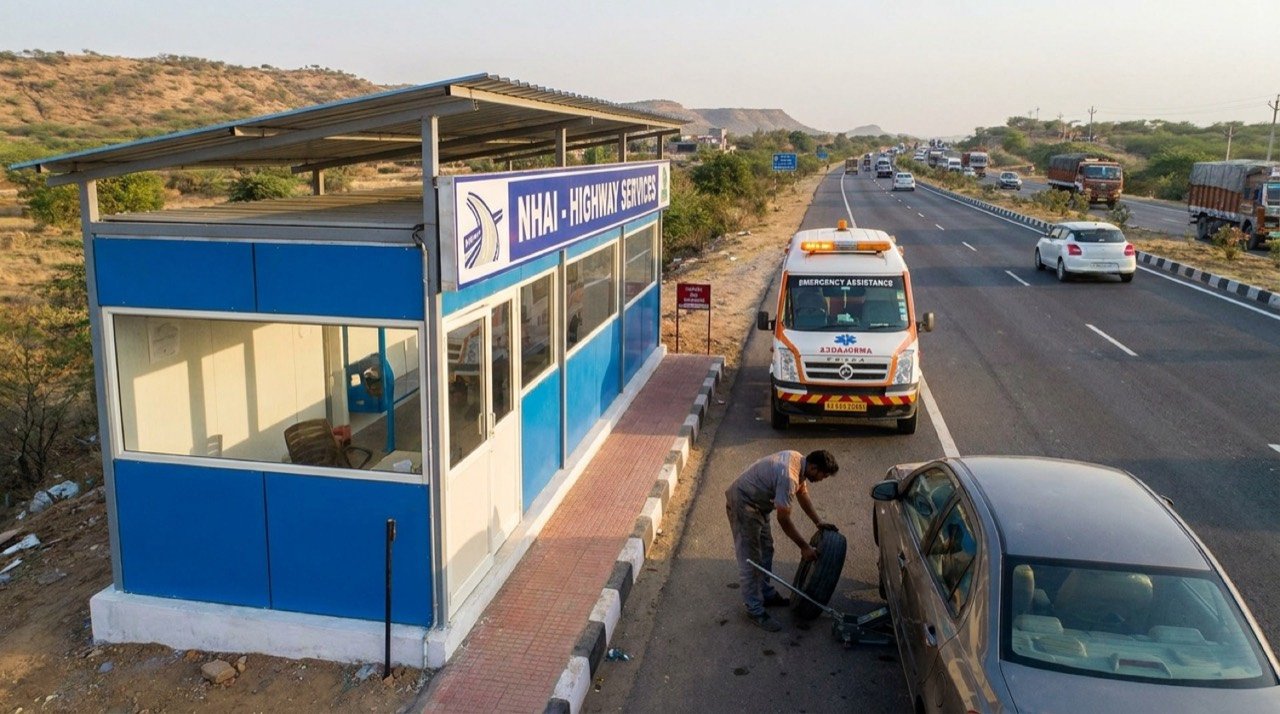
NHAI Plans Puncture and Repair Facilities Along National Highways and Expressways
The National Highways Authority of India is moving to add tyre-puncture support, basic vehicle repair and emergency services along highways, aiming to cut breakdown delays and improve road safety.
PM Modi Launches Over Rs 22,600 Crore Of Projects In Gujarat And Daman
On a single-day visit, the Prime Minister inaugurated and laid foundation stones for projects spanning highways, power transmission, ports and healthcare worth more than Rs 22,600 crore.

Gadkari Opens Northeast Infrastructure Summit, Announces 50,000-Crore-Rupee Projects
Inaugurating NEIINFRA 2026 in Shillong, the Road Transport Minister unveiled a slate of projects spanning highways, aviation, ports and tourism aimed at accelerating development across the region.
Maharashtra Clears AI Policy 2026, Targeting Rs 10,000 Crore And 1.5 Lakh Jobs
The Fadnavis cabinet has approved an ambitious artificial intelligence framework promising centres of excellence, innovation cities, a GPU pool and a startup fund to position the state at the front of India's AI race.
More from this section
More
AICTE Industry Fellowship 2026: Rs 1.5 Lakh Scheme Closes July 5
The AICTE Industry Fellowship Programme 2026, which places technical-education faculty inside leading companies on a Rs 1.5 lakh monthly stipend, reached its application deadline on July 5.

Bay of Bengal Low Pressure System Revives Monsoon Over Western India
A low-pressure system over the Bay of Bengal has pushed the monsoon back into an active phase, bringing steady heavy rain to Kerala, coastal Karnataka and Maharashtra, and putting Mumbai and Pune on preparedness watch.
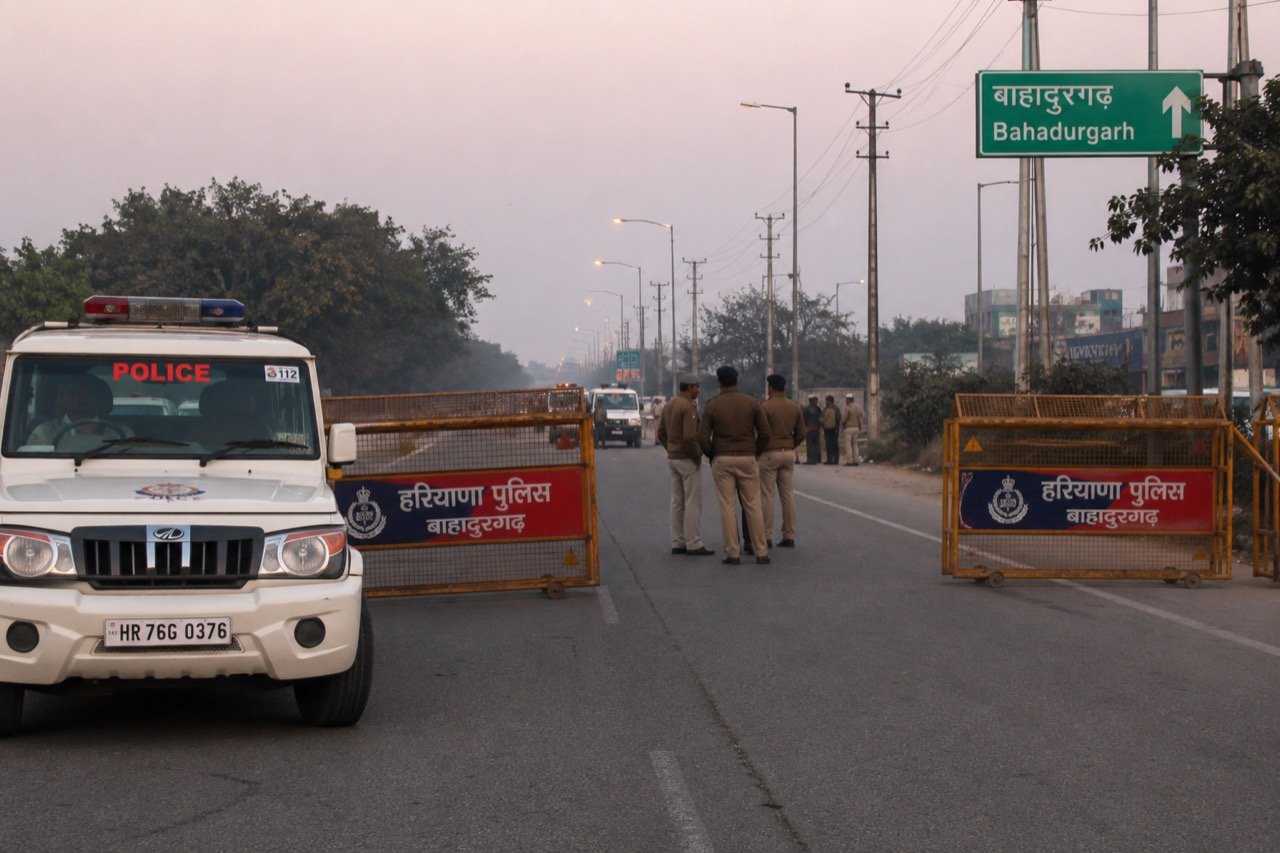
Bishnoi Gang Suspects Injured in Haryana Encounter as Police Tighten Net
A joint Haryana-Delhi Police operation in Bahadurgarh left two suspected Lawrence Bishnoi gang members injured, spotlighting the multi-state coordination now central to India's fight against organised crime networks.