Turtlemint IPO Opens June 19 As Razorpay Joins India's Fintech Listing Wave
Insurance distribution platform Turtlemint opens its ₹883 crore public issue on June 19, just as payments unicorn Razorpay files confidential draft papers, signalling a busy season for Indian fintech IPOs.
Commentary & Analysis ·

India's fintech listing pipeline is filling up fast. Turtlemint Fintech Solutions opens its initial public offering for subscription on Friday, June 19, even as payments major Razorpay confirmed it has confidentially filed draft papers with the market regulator. Taken together, the two developments are the clearest sign yet that a new generation of digital-finance companies is moving, in quick succession, from private capital tables to the scrutiny of public markets.
Turtlemint's offer in detail
Turtlemint, a technology-enabled insurance distribution platform, is looking to raise about ₹882.67 crore at a price band of ₹144 to ₹152 per share. The issue comprises a fresh component of roughly 43.5 million shares worth around ₹660.72 crore and an offer for sale of up to 14.6 million shares aggregating about ₹221.95 crore from promoters and existing investors. Subscription remains open through June 23, with shares scheduled to list on the bourses on June 29.
The structure of the offer is itself instructive. A fresh issue that comfortably outweighs the offer-for-sale component suggests the company is prioritising primary capital for growth over simply providing an exit route for early backers, though the ₹221.95 crore offer-for-sale portion still gives promoters and existing investors a chance to monetise part of their holding at listing. For a business built on distribution rather than manufacturing or balance-sheet lending, the fresh capital raised would presumably go toward deepening its partner network, technology and working capital rather than heavy fixed-asset investment, though the company's own stated use-of-proceeds would be the definitive word on that.
Turtlemint says it works with more than 6.32 lakh digital partners across the country and has tie-ups with 45 insurers, positioning itself as an intermediary layer between insurance companies and last-mile distributors. That scale of partner network is the crux of the investment case: Turtlemint does not itself underwrite risk, but instead earns by connecting a very large, dispersed base of agents and advisors with a wide panel of insurers through its technology platform. The appeal to investors is the asset-light nature of that model, which in principle scales without the capital intensity of an insurer's own balance sheet. The corresponding risk is that the model's economics rest heavily on commission structures set by the 45 insurer partners, on the persistency of policies sold through the platform, and on Turtlemint's ability to keep such a large and geographically spread partner base engaged and productive over time.
Razorpay's confidential filing
Separately, payments unicorn Razorpay has filed a confidential draft red herring prospectus with the Securities and Exchange Board of India. Reports peg the prospective issue at between $500 million and $600 million, or roughly ₹5,500 to ₹6,000 crore, marking one of the most closely watched fintech listings on the horizon.
The choice of the confidential filing route is itself worth dwelling on. It allows Razorpay to advance its IPO preparations, engage with the regulator, and iron out disclosure issues while keeping sensitive financial details out of the public domain until closer to the actual launch. This is a method increasingly favoured by India's larger new-economy issuers, precisely because it reduces the window in which competitors, and the wider market, can pick apart a company's numbers before it is ready to make its full public case. For a company of Razorpay's size and profile in the payments infrastructure space, that discretion buys time to manage the narrative around growth, margins and any regulatory overhang that so often accompanies fintech businesses operating at the intersection of banking and technology.
That the estimated issue size sits at $500 million to $600 million puts Razorpay's prospective float in a different league from Turtlemint's roughly ₹882.67 crore offer. If it proceeds broadly along the lines being reported, it would represent one of the largest fintech listings India has seen, and would inevitably draw comparisons with earlier marquee new-economy debuts. Because the filing remains confidential, though, much about the eventual structure, the split between fresh issue and offer for sale, the pricing, and the precise timeline, remains to be disclosed.
A crowded IPO calendar
The activity comes against a backdrop of strong primary-market momentum, with dozens of companies tapping public markets through the first half of 2026. The filings from Turtlemint and Razorpay add to a broader wave of new-economy listings this year that includes Zepto, Kuku and others, suggesting that the appetite among both issuers and investors for internet-era and fintech businesses has not cooled despite periodic bouts of caution in secondary markets.
A crowded calendar of this kind cuts both ways for issuers. On one hand, a busy IPO season signals healthy investor risk appetite and can create a self-reinforcing enthusiasm, where strong subscription numbers for one issue lift sentiment for the next. On the other, it means each new company is competing for a finite pool of investor capital and attention alongside several other credible names launching in the same window. Companies that list later in a wave sometimes find that early enthusiasm has been exhausted, or that investors have grown more discerning after having already deployed capital into the first few names.
Why this matters for India's fintech sector
Analysts urge caution on valuations even amid the enthusiasm, noting that distribution-led models such as Turtlemint must demonstrate durable unit economics and persistency in renewals to justify investor expectations. This is a meaningful caveat for any business, like Turtlemint, whose revenue depends on commissions tied to policies that must be renewed year after year to keep generating income. A single strong year of new policy sales tells investors relatively little if lapse rates are high and renewal commissions do not materialise as expected.
For Razorpay, the questions facing public-market investors will likely centre on the payments industry's own dynamics, competitive intensity, take rates on transaction volumes, and the path to sustainable profitability in a business where scale is necessary but not sufficient. Because the DRHP is confidential for now, the market will have to wait for fuller disclosure before those questions can be answered with real numbers rather than estimates.
Taken together, the back-to-back developments reinforce a theme that has defined the year: India's digital-finance firms are maturing from private fundraising into the discipline and scrutiny of public ownership. That transition matters beyond the two companies themselves. It is also a test of how well India's capital markets, and its retail investor base in particular, can absorb and price a fast-growing pipeline of internet-native businesses whose financial profiles often differ markedly from those of traditional listed companies.
The NE Times View
A clutch of fintech listings signals maturing confidence, but a busy IPO season is also when valuations outrun fundamentals. Turtlemint and Razorpay are real businesses; the danger is investors treating every fintech float as a guaranteed pop. Profitability and unit economics, not the listing-day buzz, will separate the durable from the hyped. Retail buyers should read the prospectus, not the headlines.
This article is original commentary and analysis by The NE Times. Background facts were referenced from Business Standard and Business Today.
Key takeaways
- Turtlemint's IPO opens June 19 and closes June 23, seeking about ₹882.67 crore at ₹144–₹152 per share, with listing slated for June 29.
- The offer comprises a fresh issue of about ₹660.72 crore and an offer for sale of about ₹221.95 crore, and the company cites 6.32 lakh digital partners and tie-ups with 45 insurers.
- Razorpay has confidentially filed its DRHP with SEBI, with the prospective issue estimated at $500–$600 million, or roughly ₹5,500–₹6,000 crore.
- Both filings arrive amid a crowded 2026 IPO calendar that also includes Zepto, Kuku and other new-economy names, reflecting strong but competitive primary-market momentum.
- Analysts caution that distribution-led and payments businesses alike must show durable unit economics and renewal persistency, rather than listing-day enthusiasm, to justify their valuations.
You may also like to read

Turtlemint IPO Enters Final Day: Rs 883-Crore Issue Tests India's Insurtech Appetite
Turtlemint's Rs 883-crore IPO reached its final bidding day on 23 June, with investors weighing subscription levels, profitability and regulatory risk in India's growing insurance-technology market.

Jio, NSE And Zepto Anchor A Crowded IPO Pipeline As 2026 Listing Wave Builds
With Reliance Jio, NSE, Zepto and dozens of startups in the queue, India's IPO pipeline looked unusually deep in June 2026 even as smaller SME issues kept the primary market humming.

NSE IPO Filing With SEBI Moves India's Top Exchange Closer to Listing
The National Stock Exchange has filed draft IPO papers with SEBI for an offer estimated near Rs 30,000 crore, a long-delayed move that could rank among India's biggest-ever public issues if cleared.
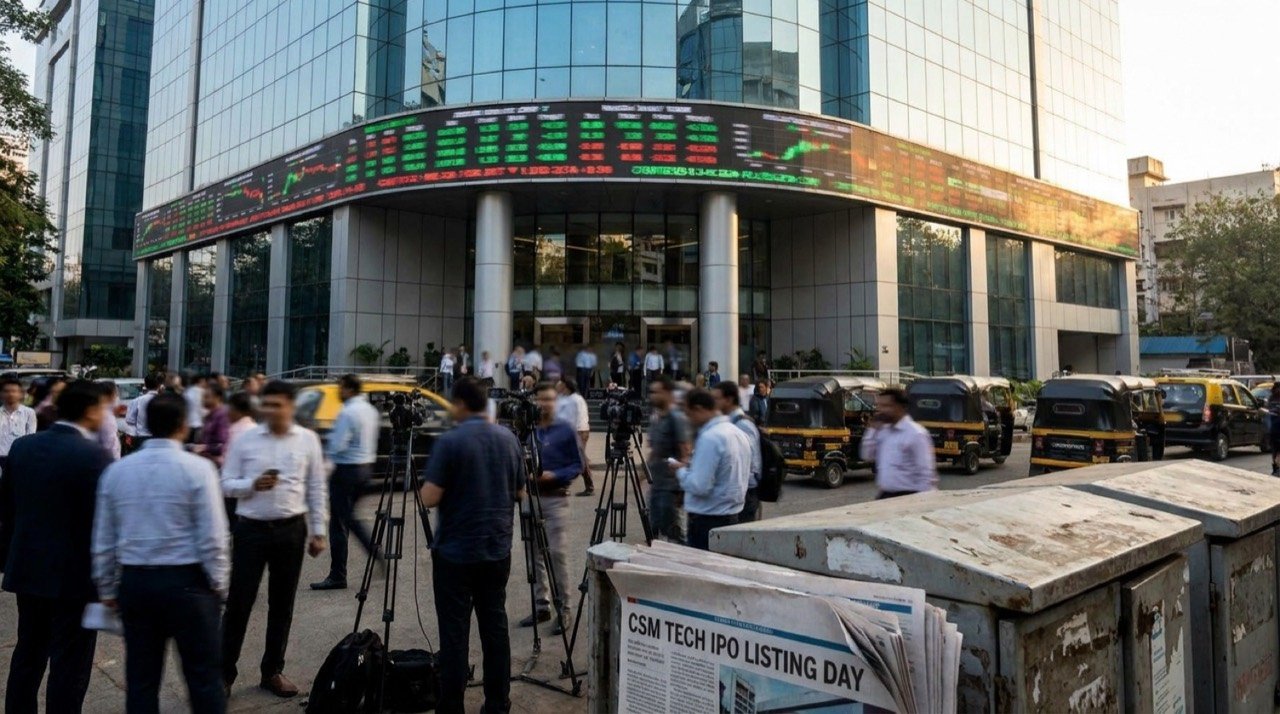
CSM Technologies IPO Opens June 24 With Price Band of Rs 107-113
The Odisha-based govtech and IT services firm enters India's busy primary market on June 24, testing investor appetite for e-governance and digital public infrastructure plays.
More from this section
More
Adani Case: US DOJ Pushes for Permanent Dismissal of Charges
The US Department of Justice has urged a judge to permanently dismiss charges against Gautam Adani, calling the case legally flawed — a reversal with consequences for markets, diplomacy and cross-border enforcement.

Akasa Air Inducts 40th Aircraft in Indian Aviation Scale-Up
Akasa Air's 40th aircraft, ferried to Bengaluru via Seattle, Reykjavik and Cairo, marks a fleet milestone for the young carrier and a fresh signal that India's aviation market remains firmly in expansion mode.

BARC Ratings Suspension Leaves Indian TV Industry Flying Blind
BARC's pause on television ratings has put India's broadcast measurement system under fresh scrutiny, leaving broadcasters, advertisers and media planners without the weekly audience data that anchors the TV economy.