Tamannaah Bhatia and BLACKPINK's Lisa Share Frame at Bangkok Event
Tamannaah Bhatia's appearance alongside BLACKPINK's Lisa at a Bangkok event has become a fast-moving fashion and pop-culture story, placing Bollywood glamour and global K-pop celebrity in the same frame.
Commentary & Analysis ·
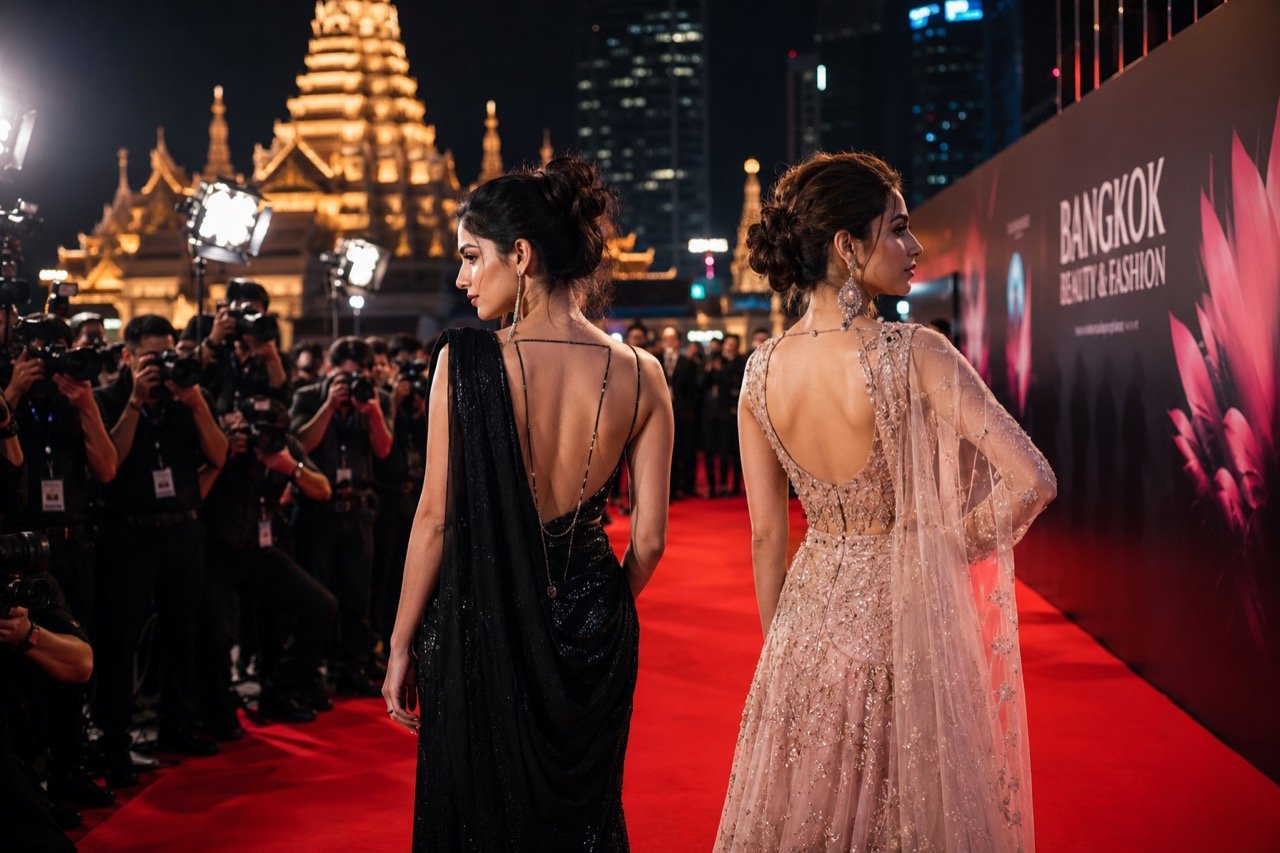
Tamannaah Bhatia and BLACKPINK's Lisa have become a trending entertainment pairing after coverage of a Bangkok event put Bollywood glamour and global K-pop celebrity culture in the same frame. The moment quickly travelled across Indian social media, driving searches around the two stars, the event and their red-carpet looks. The story sits at the intersection of celebrity style, fan culture and cross-market entertainment, precisely the kind of visual-first moment that now moves faster than conventional film news. That a single shared frame from a Bangkok event could dominate entertainment conversation within hours says as much about the current media environment as it does about either star individually.
Why a single event travels so far
Indian entertainment coverage is increasingly global in its frame of reference. A Bollywood actor's presence at an international brand or fashion event is no longer treated as a small photo item tucked into a listicle; it is read, deliberately or not, as a signal of global visibility and market relevance. This shift reflects how Indian audiences now consume entertainment news alongside international pop culture, rather than in a separate, domestic-only lane. A decade ago, a Bollywood star attending an overseas event might have registered only with dedicated film trade press. Today, the same appearance is amplified through social platforms, aggregated by entertainment portals, and pushed into mainstream search trends within hours.
Lisa's enormous pop following adds another, distinct layer to this dynamic. As a member of BLACKPINK, one of the most commercially significant acts in global pop, Lisa commands an international fan base whose engagement patterns are famously intense and highly organised. Her presence at the same event as Tamannaah Bhatia effectively pulls K-pop audiences worldwide into a story that Indian readers might otherwise have consumed as routine fashion coverage. The result is a kind of audience cross-pollination: fans who follow Lisa for K-pop content are exposed to Tamannaah, and fans who follow Tamannaah for Bollywood content are exposed to the wider BLACKPINK ecosystem. Neither side needed to seek the other out; the shared frame did the work.
What the moment means for Tamannaah
For Tamannaah, such appearances reinforce a public image that moves fluidly across film industries, streaming titles, red carpets and brand events. She has built a career that spans multiple language film industries in India as well as streaming projects, and her visibility at an international event alongside a global pop icon fits a broader pattern of Indian actors positioning themselves as recognisable beyond domestic borders. This is not a new phenomenon in itself, but the speed and intensity with which this particular pairing trended illustrates how quickly such positioning can pay off in terms of attention, even without any formal collaboration being announced.
It is worth being precise about what is actually known here. The strongest supported angle remains what was actually visible and reported: the event itself, the shared frame, the fashion response, and the way two very different global fan bases amplified the moment together. There is no reported evidence of a formal collaboration, a planned project, or any deeper relationship between the two stars beyond their shared attendance and the resulting photographs. Responsible coverage stops there. The appeal of the story does not require inventing personal interactions, backstage exchanges, or future plans beyond what has actually been seen and reported. The pictures, and the reaction to them, are the news, and that is enough to sustain a legitimate news story without embellishment.
The mechanics of cross-market virality
It is useful to consider why this particular kind of story spreads so efficiently compared with conventional film news. Visual moments, especially those involving fashion and red-carpet presentation, require no translation and no cultural context to be appreciated. A photograph of two internationally recognisable women at the same event is instantly legible to audiences in India, Southeast Asia, and beyond, regardless of language. This lowers the barrier to engagement dramatically compared with, say, news about a film's box office performance or a plot announcement, which require some prior investment in the subject matter to be interesting.
Additionally, fan communities around figures like Lisa are structurally built for rapid amplification. K-pop fandoms are known for coordinated social media activity, and any appearance by a member of BLACKPINK tends to generate disproportionate engagement relative to the actual news value of the event. When that engagement intersects with an Indian entertainment figure, the effect compounds: Indian entertainment portals pick up the story to capture search interest, while K-pop-focused accounts pick it up to document Lisa's activities. Both audiences converge on the same set of images for different reasons.
Commercial and industry implications
Beyond the immediate fan reaction, moments like this carry commercial weight. Brands that host or sponsor such events benefit directly from the cross-market attention, since the story effectively advertises the event itself to two large and largely non-overlapping audiences. For the entertainment industries involved, on both the Indian and Korean pop sides, these crossover moments serve as informal case studies in the growing commercial logic of pairing regional stars with global icons, even in the absence of any structured collaboration. It signals to advertisers, event organisers and streaming platforms that audiences are receptive to seeing their favourite regional stars positioned alongside global celebrities, which can inform future casting, endorsement and event decisions.
For Indian entertainment media specifically, the episode is also a reminder of how much of the current news cycle is driven by aggregation and search-trend chasing rather than original reporting. The event generated coverage largely because it was visually striking and searchable, not because of any substantive development. That is not necessarily a criticism of the format, but it does shape what kind of stories rise to prominence in the current media landscape.
The NE Times View
This is what soft power looks like in practice: an Indian star and a K-pop icon sharing a frame in Bangkok, and two continents of fans amplifying it within hours. For Indian entertainment, these crossover moments matter more than they appear. They normalise Bollywood's presence in global pop spaces and open commercial doors for brands eyeing both markets simultaneously. Such moments do not need to be engineered by studios or publicists to have real effect; the organic nature of the virality is itself part of what makes it credible and interesting to audiences.
The caution is equally real. Fan-driven virality tempts publications into manufacturing narratives that were never there, whether by implying friendships, rivalries or collaborations that have no basis in what was actually reported. The moment is genuinely significant on its own terms; it does not need embellishment to be worth watching. Editors and readers alike would do well to treat this as an instructive example of how far a single, well-timed photograph can travel in a media environment built for rapid, borderless amplification, while resisting the temptation to read more into it than the facts support.
Key takeaways
- Tamannaah Bhatia and BLACKPINK's Lisa appeared in the same frame at a Bangkok event, sparking trending coverage across Indian social media and entertainment portals.
- The story's rapid spread reflects how visual, fashion-driven moments cross language and cultural barriers more easily than conventional film news.
- Lisa's global K-pop fan base and Tamannaah's presence across Indian film industries combined to pull two largely separate audiences into a single viral moment.
- No formal collaboration or deeper relationship between the two stars has been reported; the credible story is limited to the shared appearance and its reception.
- The episode illustrates the growing commercial and cultural value of cross-market celebrity visibility, while underscoring the need for restraint against manufactured narratives.
You may also like to read
Alpha vs Welcome to the Jungle: Screen-Share Rules Reshape Clash
YRF's reported conditions on screen sharing and ticket pricing have turned the Alpha versus Welcome to the Jungle face-off into a wider debate about multiplex leverage and event-film release economics.

Cinema-Only and Loving It: Nolan's 'The Odyssey' Turns a Trailer Into an Event
Christopher Nolan's refusal to put his first 'Odyssey' trailer online has done the opposite of dampening the hype, with leaked phone footage, sold-out 70mm previews and a fan frenzy turning a teaser into a cultural moment.
Aamir Khan Rejects 'Love Jihad' Allegations, Says His Marriages Were Civil and Involved No Conversion
Aamir Khan rejects politically charged allegations about his marriage to Gauri Spratt, stressing that his relationships were civil marriages and involved no religious conversion.
Satluj Censorship Row Deepens as Anurag Kashyap Questions How the Film Was Blocked
Anurag Kashyap says Satluj director Honey Trehan told him the CBFC chair had objections without watching the film, intensifying debate over certification and OTT removal.
More from this section
More
72nd National Film Awards: Fans Back Mammootty, Allu Arjun, Sai Pallavi
Speculation around the 72nd National Film Awards is intensifying as fan communities across India's language film industries champion favourites including Mammootty, Allu Arjun and Sai Pallavi ahead of any official announcement.

Aamir Khan Marries Gauri Spratt in Private Pali Hill Ceremony
Aamir Khan and Gauri Spratt tied the knot at the actor's Pali Hill home in Mumbai on July 5, turning a deliberately small family ceremony into Bollywood's biggest story of the day.

Akanksha Chamola's Lock Upp 2 Confession Sets Reality TV Abuzz
A personal revelation by Akanksha Chamola ahead of Lock Upp 2 has handed the reality show a viral talking point, underlining how confession-driven formats continue to dominate Indian television conversation.