Alpha vs Welcome to the Jungle: Screen-Share Rules Reshape Clash
YRF's reported conditions on screen sharing and ticket pricing have turned the Alpha versus Welcome to the Jungle face-off into a wider debate about multiplex leverage and event-film release economics.
Commentary & Analysis ·
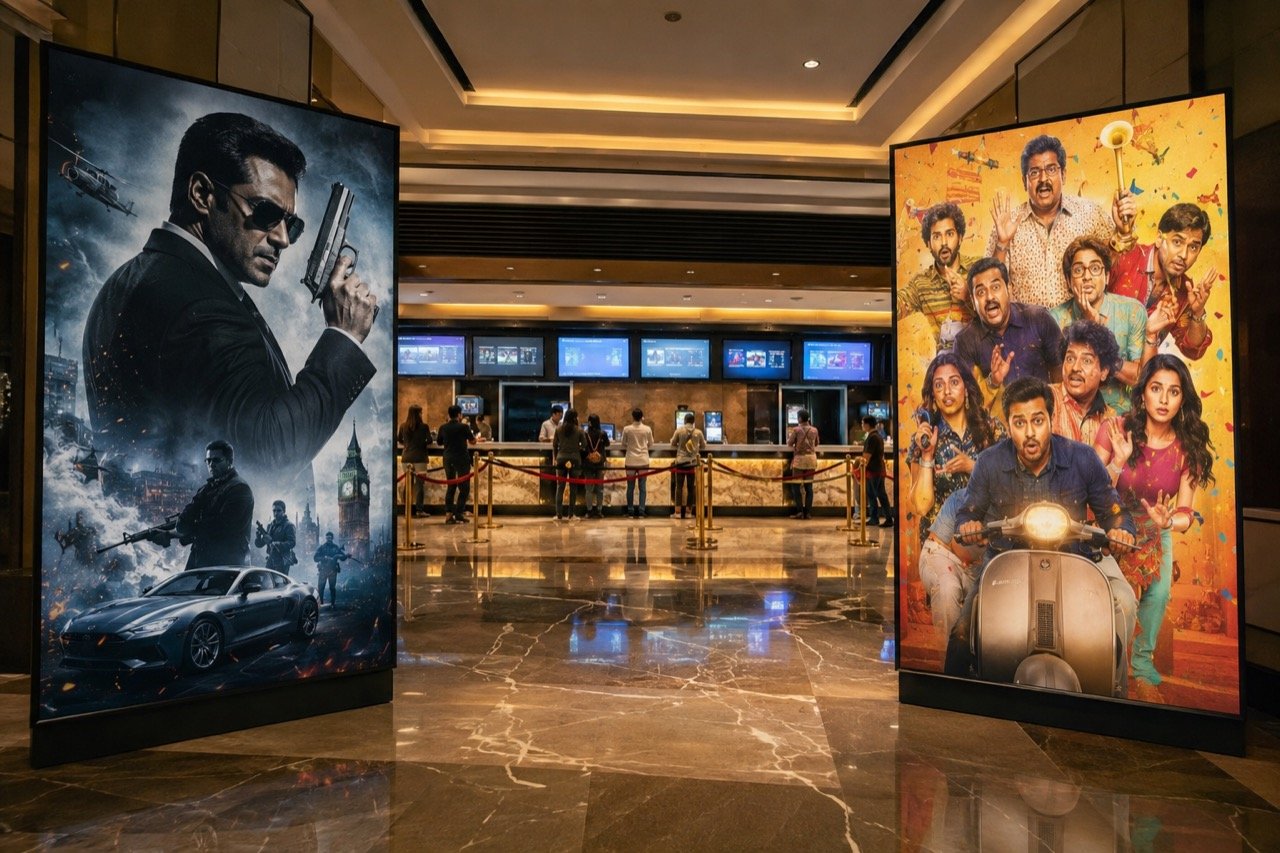
The trade conversation around Alpha and Welcome to the Jungle has shifted from star power to spreadsheet power. According to entertainment coverage in The Indian Express, YRF has set out strict conditions on screen sharing and ticket pricing as its spy-universe film Alpha prepares to face the big comedy franchise in the same theatrical window. On the surface, this reads as a routine box-office skirmish between two Hindi releases. Underneath, it is a reminder that the commercial fate of a big-budget film is often decided in contract rooms and multiplex programming meetings long before a single ticket is sold to the public.
What is actually being fought over
Two big Hindi films are competing for premium show slots, pricing power and marketing attention at a moment when multiplex chains want both footfall and flexibility. A spy-action film and a broad comedy may draw different audience clusters, but they still chase the same prime evening shows and large-format screens. When a studio pushes for minimum screen counts or controlled ticketing, it is protecting the perception of scale as much as the first-day number. This is an important distinction. In an industry where opening-weekend collections are treated as a proxy for a film's overall health, the optics of a packed, well-distributed release schedule can matter almost as much as the underlying audience response. A film that is visibly everywhere, at every convenient showtime, signals confidence to distributors, exhibitors and, ultimately, ticket buyers scrolling through booking apps.
Screen-sharing arrangements, in this sense, are not a peripheral detail of distribution logistics. They are a lever that studios can pull to shape how a film is perceived in its most critical hours. YRF's insistence on specific terms for Alpha suggests an awareness that Welcome to the Jungle, as an established comedy franchise, could otherwise absorb a disproportionate share of prime slots purely on the strength of brand familiarity and reliable family-audience turnout.
Why release strategy now decides outcomes early
For box-office watchers, the significance is that release architecture increasingly shapes results before a single review lands. A film with stronger pre-release buzz can look weaker if its show distribution is diluted, while a mass-appeal comedy can lose momentum if premium screens are locked up elsewhere. This creates a peculiar inversion of the traditional logic of cinema-going, where audience demand was supposed to determine how many shows a film received, rather than the other way around. Increasingly, the allocation of shows is negotiated in advance, and audience demand is left to work within whatever framework has already been set by studios and exhibitors.
This matters because the theatrical window for any big Hindi release is short and unforgiving. Word-of-mouth, weekend collections and social media chatter all compound within the first few days. If a film's access to prime shows is constrained early, it may never get the chance to demonstrate genuine audience pull, regardless of its quality. Conversely, a film that secures generous screen allocation can sustain momentum even if audience reception is mixed, simply because it remains conveniently available at popular showtimes while a rival is harder to find.
The stakeholders and their competing interests
Each party in this negotiation has a rational, self-interested position. YRF is protecting a large investment in a spy-universe franchise that depends on strong opening numbers to justify future instalments. The makers of Welcome to the Jungle, as a comedy franchise with its own loyal following, have every incentive to resist terms that would crowd them out of the same weekend. Multiplex chains, for their part, want both footfall and flexibility — they benefit from having two potential box-office draws in the same window, but they also do not want to be locked into rigid contractual terms that limit their ability to respond to real-time audience demand by shifting shows toward whichever film is actually selling.
This three-way tension is not new during high-demand windows, but the visibility of this particular negotiation is instructive. It shows how dependent Hindi cinema's theatrical revenue has become on opening-weekend engineering — contracts, show allocation and multiplex programming as much as content. What was once handled quietly between studios and exhibitors is now surfacing in entertainment coverage, suggesting that these negotiations are becoming more contentious, or at least more newsworthy, as the stakes for both franchises rise.
What this means for audiences and ticket pricing
Ticket pricing conditions attached to screen-sharing terms deserve particular attention. When a studio negotiates pricing power alongside screen allocation, it is effectively trying to control not just how many people can watch a film, but how much they pay to do so and when. For audiences, this can translate into fewer convenient showtimes for a preferred film, or pricing that does not reflect straightforward supply and demand at the local multiplex level. The ordinary moviegoer, deciding on a Friday evening between two big releases, is navigating a landscape that has already been substantially shaped by decisions made weeks earlier in negotiation rooms they will never see.
The NE Times View
The Alpha–Welcome to the Jungle standoff is a preview of Bollywood's new normal: clashes are settled in exhibition contracts before they are settled at the ticket window. There is a legitimate business logic to studios protecting nine-figure investments, and it would be naive to expect major production houses to leave such outcomes entirely to chance. But audiences lose when show allocation, rather than merit, decides what is easy to watch on a Friday night. A system that rewards negotiating strength over audience preference risks eroding the very thing that makes theatrical cinema valuable in the first place: the sense that going to the cinema is a response to genuine demand, not a product of pre-arranged convenience.
India's multiplex chains should resist terms that squeeze out choice, because the long-term health of theatrical cinema depends on viewers believing the best film wins — not the best-negotiated one. If exhibitors allow studios to dictate terms that consistently favour scale and market power over responsiveness to actual ticket sales, they risk undermining their own commercial interests as well as those of audiences. The coming days, as both films move through their opening weekend, will offer a real test of whether contractual engineering can override genuine audience response, or whether moviegoers ultimately reassert their preferences regardless of how show slots have been allocated.
Key takeaways
- YRF has imposed strict screen-sharing and ticket-pricing conditions for Alpha as it competes with Welcome to the Jungle in the same theatrical window, according to The Indian Express.
- Screen allocation and pricing terms are increasingly decided through studio-exhibitor negotiation rather than left purely to audience demand.
- Release architecture can shape a film's perceived success before reviews or genuine word-of-mouth have a chance to circulate.
- Multiplex chains face competing pressures: maximising footfall from two major releases while retaining flexibility to respond to real ticket sales.
- The episode signals a broader shift in Hindi cinema toward opening-weekend engineering as a determinant of box-office outcomes.
You may also like to read

Welcome To The Jungle Eyes Akshay Kumar's Biggest Comedy Opening On Muharram Weekend
Trade trackers say the Ahmed Khan-directed multi-starrer is on course for a 25-crore-plus first day, which would hand Akshay Kumar his biggest comedy opening of the post-pandemic era.
Welcome To The Jungle Box Office: Akshay Comedy Faces Weekday Test
Akshay Kumar's ensemble comedy-adventure has passed its opening-weekend visibility test at the box office, but its real challenge now lies in weekday holds and sustaining the franchise's word-of-mouth energy.
Rs 106 Crore in Four Days: Jungle Puts Welcome Back on Top
Akshay Kumar's ensemble comedy has reportedly crossed Rs 106 crore worldwide in four days against a Rs 125 crore budget, reviving the Welcome franchise's box-office relevance while leaving its long-run fate open.
Welcome to the Jungle Nears Rs 100 Crore as Alpha Joins the Fray
Akshay Kumar's comedy adventure has crossed roughly Rs 154 crore worldwide and is closing in on the Rs 100 crore domestic mark, even as the new spy-universe release Alpha reshapes the weekend box office battle.
More from this section
More
72nd National Film Awards: Fans Back Mammootty, Allu Arjun, Sai Pallavi
Speculation around the 72nd National Film Awards is intensifying as fan communities across India's language film industries champion favourites including Mammootty, Allu Arjun and Sai Pallavi ahead of any official announcement.

Aamir Khan Marries Gauri Spratt in Private Pali Hill Ceremony
Aamir Khan and Gauri Spratt tied the knot at the actor's Pali Hill home in Mumbai on July 5, turning a deliberately small family ceremony into Bollywood's biggest story of the day.

Akanksha Chamola's Lock Upp 2 Confession Sets Reality TV Abuzz
A personal revelation by Akanksha Chamola ahead of Lock Upp 2 has handed the reality show a viral talking point, underlining how confession-driven formats continue to dominate Indian television conversation.