Pritam And Pedro Review Buzz: Goa Cyber-Crime Drama on OTT
Pratik Gandhi and Divyenndu's odd-couple crime series Pritam And Pedro is drawing early review attention for pairing an old-school Goa cop with a young coder against digital crime.
Commentary & Analysis ·
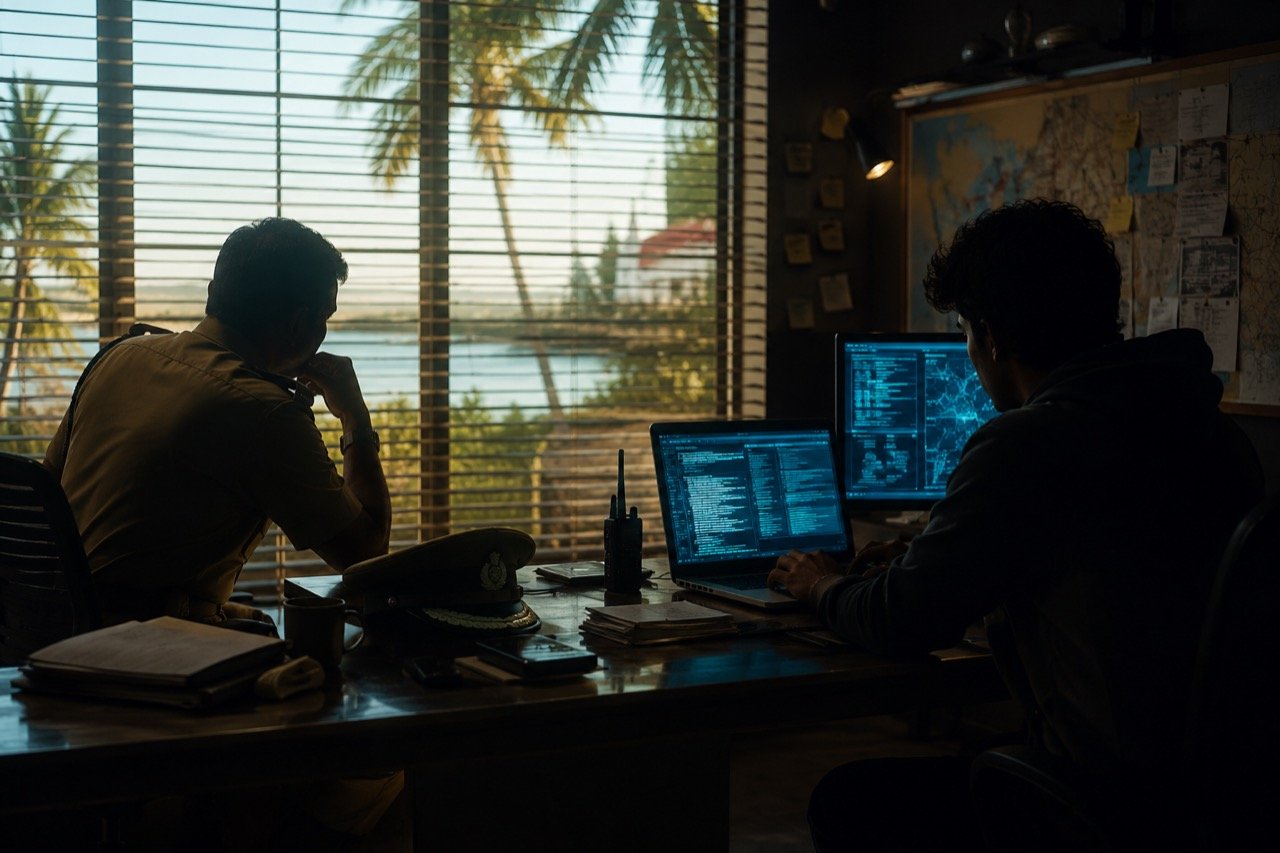
Pritam And Pedro has slipped into the OTT conversation with a compact, well-defined pitch: an old-school police investigator teams up with a young coder in Goa, where ordinary cases increasingly collide with digital crime. Early reviews frame the series as a crime drama powered by contrast, with Pratik Gandhi's Pritam and Divyenndu's Pedro supplying the central odd-couple energy. On paper, it is a simple premise, but simple premises are often where Indian streaming has found its most durable successes, and the early buzz around this one suggests the pairing has struck a chord before a single full-season verdict has been rendered.
A familiar genre with a sharper hook
Indian streaming audiences have watched plenty of police dramas, but the cyber-crime angle gives this one a more current edge. Digital fraud, online identity theft and tech-enabled crime are now part of everyday public discussion, and the show positions itself squarely at that intersection of star curiosity and topical storytelling. This is a shrewd bit of positioning. The traditional cop drama leans on a well-worn grammar of stakeouts, interrogations and turf wars, and audiences can recite its beats in their sleep. By grafting a cyber-crime spine onto that skeleton, Pritam And Pedro gives itself permission to introduce a vocabulary that feels new even when the underlying investigative rhythms are familiar. It is a genre refresh rather than a genre reinvention, which is often the safer and more commercially sound choice for a mid-scale series trying to find an audience quickly.
There is also a broader cultural undercurrent at play. As more Indians conduct banking, shopping, and social life online, the anxieties around digital scams, phishing and identity theft have moved from being a niche technical worry to a mainstream household concern. A series that dramatises this shift, using recognisable urban and small-town settings rather than abstract hacker-movie aesthetics, taps into something viewers already worry about in their own lives. That is a meaningful advantage over crime dramas that rely purely on shock value or exotic settings, because it gives the show a built-in relevance that does not need to be manufactured through marketing.
Goa as more than a backdrop
The setting also works harder than the usual vacation postcard. The premise lets Goa become part of the investigative environment — local networks, tourist churn, digital trails and jurisdictional friction all feed the drama, helping the series sidestep the visual monotony that often flattens procedurals. Goa's dual identity, as a globally recognised holiday destination and as a state with its own particular administrative and law-enforcement texture, offers writers a genuinely useful narrative resource. Tourist inflows create anonymity and opportunity for fraud; the transient population complicates conventional policing; and the contrast between languid coastal life and the invisible machinery of cyber-crime creates a tonal friction that a lesser show might have overlooked in favour of simply using Goa as scenery.
This matters because setting-as-texture, rather than setting-as-postcard, is one of the more reliable signs that a show's writers are thinking structurally rather than just aesthetically. If the jurisdictional and logistical particulars of Goa are allowed to genuinely shape casework, rather than being name-checked and forgotten, the series stands a better chance of avoiding the interchangeable-city problem that afflicts many Indian procedurals, where the same plot could just as easily unfold in Mumbai, Delhi or Bengaluru without any real loss of meaning.
The odd-couple engine
Casting does much of the heavy lifting. Gandhi brings the credibility of character-driven work, while Divyenndu offers volatility and wit, making their partnership the show's main viewing promise. The odd-couple format, an old-school investigator paired with a younger, more digitally fluent partner, is a dependable structure precisely because it lets a show dramatise generational and methodological tension without needing an elaborate plot device to justify it. Pritam's presumed instinct-driven, procedure-bound style set against Pedro's technical fluency and impatience with bureaucracy gives the two leads a built-in source of conflict and, eventually, mutual respect, the classic arc that makes such pairings satisfying to watch over a full season rather than a single episode.
Much will depend on whether the chemistry between the two actors is allowed to breathe. Odd-couple dynamics can curdle quickly into caricature if the writing leans too hard on shorthand, the older cop being reflexively technophobic, the younger coder being reflexively arrogant. Whether Gandhi and Divyenndu are given material that lets their characters evolve past those initial contrasts will likely determine whether critics and audiences view the show as a genuine character study or merely a serviceable genre exercise carried by two capable performers.
What success will actually require
If the performances hold, the series could balance case-of-the-week accessibility with a longer emotional arc, though its success will hinge on whether the writing treats the cyber-crime premise with genuine specificity. This is the central risk facing the show, and it is worth dwelling on. Cyber-crime as a subject is unusually easy to fake and unusually easy to expose as fake. Viewers with even a passing familiarity with how phishing, SIM-swap fraud or online scams actually work will notice quickly if a script substitutes vague technological hand-waving for real procedural logic. A series that wants to be taken seriously as topical storytelling, rather than as a cop show that happens to mention the internet, needs its writers to have done the underlying homework: how investigators actually trace digital money trails, how fraud rings actually operate, how evidence is actually gathered across jurisdictions.
The case-of-the-week format, meanwhile, is a double-edged commercial choice. It offers accessibility, allowing new viewers to join mid-season without feeling lost, and it suits the way many Indian audiences consume streaming content in shorter, more casual bursts. But it also risks episodic repetition unless the writers layer in a genuine season-long arc, whether that is a larger criminal network, an evolving partnership between the two leads, or unresolved personal stakes that carry across episodes. The shows that tend to be remembered fondly are the ones that manage both halves of that equation at once.
The NE Times View
Pritam And Pedro reflects a healthy middle lane in Indian streaming: mid-scale, story-led crime dramas that do not need blockbuster spectacle to earn attention. For platforms, shows like this are a sustainable bet — cheaper than event television yet sticky enough to retain subscribers. This is not a trivial commercial consideration. As streaming platforms in India face growing pressure to manage content budgets while still keeping subscribers engaged month to month, a well-made, moderately budgeted procedural with a recognisable star pairing is precisely the kind of programming that can quietly do the retention work that a handful of expensive tentpole releases cannot do alone.
For viewers, the real test is whether the cyber-crime writing goes beyond buzzwords into the mechanics of digital fraud that millions of Indians now encounter in real life. If it does, the series could be both entertaining and quietly instructive; if not, it risks becoming another buddy-cop show with a laptop on the desk. There is also a modest public-interest dimension worth noting here: a crime drama that accurately, even if dramatically, illustrates how online fraud actually unfolds could do more to sharpen ordinary viewers' caution around digital scams than a dozen banking-app safety notices ever could. That is an ambitious standard to hold an entertainment series to, but it is also the standard that would separate Pritam And Pedro from the crowded field of procedurals it is otherwise competing against.
Key takeaways
- Pritam And Pedro pairs Pratik Gandhi's veteran investigator with Divyenndu's young coder in a Goa-set cyber-crime drama, drawing early buzz on the strength of its casting and topical premise.
- The cyber-crime hook gives a familiar police-procedural format renewed relevance, tapping into widespread public anxiety around digital fraud and online identity theft.
- Goa's tourist churn, local networks and jurisdictional quirks give the setting genuine narrative utility rather than mere scenic value, if the writing uses them well.
- The show's ultimate success depends on whether its scripts treat cyber-crime mechanics with real specificity, rather than relying on technological buzzwords.
- For streaming platforms, mid-scale, story-led procedurals like this represent a sustainable, subscriber-retaining alternative to costlier event television.
You may also like to read

Pritam And Pedro Telugu Dub Widens Reach of Hindi Buddy Comedy
The Hindi buddy-comedy series Pritam And Pedro is now streaming with a Telugu dub, giving the show a fresh discovery route among regional audiences and underlining how Indian OTT libraries are turning multilingual by default.

This Week's OTT Rush: Pritam and Pedro Leads a Crowded Slate
The June 29 to July 5 streaming window brings Indian viewers an unusually packed mix of Hindi, regional and international titles, with Rajkumar Hirani's Pritam and Pedro emerging as the biggest domestic talking point.

Pritam and Pedro: Warsi's Cybercrime Comedy Splits OTT Weekend Verdict
Review coverage of the Arshad Warsi-led series describes a cybercrime comedy that struggles to convert its reunion nostalgia into consistently sharp writing, keeping it in the weekend streaming conversation for mixed reasons.

Rao Bahadur Review Buzz: An Inheritance Drama About More Than Property
Review coverage has pushed Rao Bahadur into the conversation as a strange, stubborn family drama that asks what people inherit beyond land and houses — memory, resentment and unresolved duty.
More from this section
More
72nd National Film Awards: Fans Back Mammootty, Allu Arjun, Sai Pallavi
Speculation around the 72nd National Film Awards is intensifying as fan communities across India's language film industries champion favourites including Mammootty, Allu Arjun and Sai Pallavi ahead of any official announcement.

Aamir Khan Marries Gauri Spratt in Private Pali Hill Ceremony
Aamir Khan and Gauri Spratt tied the knot at the actor's Pali Hill home in Mumbai on July 5, turning a deliberately small family ceremony into Bollywood's biggest story of the day.

Akanksha Chamola's Lock Upp 2 Confession Sets Reality TV Abuzz
A personal revelation by Akanksha Chamola ahead of Lock Upp 2 has handed the reality show a viral talking point, underlining how confession-driven formats continue to dominate Indian television conversation.