This Week's OTT Rush: Pritam and Pedro Leads a Crowded Slate
The June 29 to July 5 streaming window brings Indian viewers an unusually packed mix of Hindi, regional and international titles, with Rajkumar Hirani's Pritam and Pedro emerging as the biggest domestic talking point.
Commentary & Analysis ·

The OTT calendar for June 29 to July 5 is unusually crowded, handing Indian viewers a dense mix of Hindi, regional and international titles across the major platforms. With Pritam and Pedro, Tavvai, Isakapatnam and a clutch of global releases all arriving in the same window, the real challenge this week is not availability but discovery. In a market that once measured its streaming output by the month, the sheer density of this particular week says something about how the business of releasing content in India has changed, and not always for the better.
Streaming as a weekly habit
India's streaming market has matured into a weekly ritual. Viewers no longer ask simply what is new; they ask what is worth starting, what can be watched with family, what fits a weekend binge and which shows are driving online conversation. That shift is precisely why weekly release guides have become a search-traffic staple and a visibility battleground for platforms. The habit has formed gradually, over several years of Friday and Saturday drops, until checking "what's new this week" has become as routine for many urban Indian households as checking the news. That routine, though, is precisely what makes a week like this one so revealing. When the ritual itself becomes crowded, viewers are forced to make sharper, faster choices than the platforms perhaps intended.
This maturing of habit also explains why so much commentary now exists around release scheduling itself, rather than merely around the content. A decade ago, a single big Hindi film or a major international title could anchor an entire fortnight of viewer attention. Today, that anchor is one of many competing for the same slot, in the same week, often on the same evening.
A slate defined by variety, not scarcity
Pritam and Pedro is the most India-specific talking point on the current slate, marking Rajkumar Hirani's move into the series space. This alone would ordinarily be enough to dominate a week's entertainment conversation, given Hirani's standing as one of Hindi cinema's most bankable directors moving into a new format. Isakapatnam brings a South Indian comedy flavour, widening the week's appeal beyond Hindi-speaking audiences, while Tavvai is positioned as a suspense offering aimed at viewers looking for something tighter and more plot-driven. International arrivals such as Enola Holmes 3 and Silo Season 3 compete hard for the attention of urban subscribers who switch easily between Indian and overseas content, a segment of the audience that platforms particularly prize because of its high engagement and willingness to pay for multiple subscriptions.
Taken individually, each of these titles has a clear identity and a built-in audience. Taken together, in the same seven-day window, they represent a level of choice that risks becoming noise rather than abundance. The variety on offer this week is, in principle, a sign of a healthy and confident content pipeline. In practice, it also means several genuinely strong titles will be competing directly against each other for the limited attention span of the same viewer.
Crowded weeks cut both ways
For platforms, a packed week is both opportunity and problem. More titles mean more reasons to open the app, which is valuable in a market where daily engagement determines advertising revenue and subscription renewal alike. But more titles also mean less room for any single release to dominate. A show must now win through genre clarity, cast recall, shareable clips and recommendation algorithms, and the first forty-eight hours often decide whether it becomes a conversation or sinks quietly into the catalogue. This compressed window for success puts enormous pressure on marketing teams, who must now fight not only external competitors but also their own platform's other releases for the same promotional real estate on the app's home screen.
Add India's fragmentation by language and mood, and the sensible viewing strategy is to choose by genre and time commitment rather than by platform loyalty. A viewer weighing up a Hirani series debut against a suspense drama and an international sci-fi sequel is not really comparing platforms at all; they are comparing appetites for the evening. That is a subtle but important change in how Indian audiences now relate to streaming, moving away from brand loyalty to a particular app and towards a more transactional, mood-based approach to choosing what to watch.
What crowding means for creators
The clustering of releases has consequences that extend well beyond this single week's viewing figures. For creators and production houses, a release date is not just a logistical detail but a strategic bet on audience attention. A title released into a quiet week can build word of mouth gradually and steadily climb engagement charts. The same title released into a crowded week, however strong on its own merits, may struggle to break through the noise before the algorithm moves on to newer arrivals. This is particularly consequential for a series marking a major creative pivot, such as Rajkumar Hirani's entry into the series format, where the commercial and reputational stakes of a muted reception are higher than for a routine release.
Regional titles such as Isakapatnam and Tavvai face a related but distinct challenge. They must not only compete against other new arrivals but also overcome the discovery barriers that regional-language content still faces on platforms whose default recommendation logic often favours Hindi and English titles for a pan-India user base. A crowded week makes that uphill climb steeper still.
The NE Times View
The crowded slate is good news for viewers but reveals a structural problem for India's streaming economy. When a Rajkumar Hirani series debut must fight anime drops and Hollywood sequels for the same weekend attention, platforms are effectively cannibalising their own marquee investments. This is not a failure of content quality; it is a failure of calendar discipline. The industry would serve both creators and subscribers better by pacing its calendar instead of clustering releases around month-end windows, a pattern that appears to repeat with predictable regularity and that squanders the very attention platforms spend so heavily to capture.
For audiences, the practical takeaway is to resist the scroll: pick one or two titles that match your mood and give them a fair chance, because algorithmic churn is burying good work faster than ever. The responsibility here is shared. Platforms could stagger their biggest bets more deliberately, and viewers, for their part, might get more out of their subscriptions by resisting the temptation to sample everything shallowly rather than watching a smaller number of titles properly. Until scheduling practices change, weeks like this one will likely remain the norm rather than the exception, and the real casualty will be the shows that deserved a clearer run at the audience's attention.
Key takeaways
- The June 29 to July 5 OTT calendar brought an unusually dense mix of Hindi, regional and international titles, led by Pritam and Pedro, Tavvai, Isakapatnam, Enola Holmes 3 and Silo Season 3.
- Pritam and Pedro marks Rajkumar Hirani's entry into the series format, making it the week's most India-specific talking point despite heavy competition for attention.
- Crowded release weeks force platforms to fight for visibility against their own content, with the first forty-eight hours often deciding a show's fate.
- India's language fragmentation means viewers are increasingly choosing by genre and mood rather than platform loyalty.
- The NE Times View: platforms should pace releases rather than cluster them, and viewers should resist scrolling in favour of committing to a chosen title.
You may also like to read

Pritam And Pedro Telugu Dub Widens Reach of Hindi Buddy Comedy
The Hindi buddy-comedy series Pritam And Pedro is now streaming with a Telugu dub, giving the show a fresh discovery route among regional audiences and underlining how Indian OTT libraries are turning multilingual by default.

OTT Releases This Week: What to Watch June 22–28, 2026
Indian streaming viewers face a packed release window this week, with new films, web series and returning seasons across Netflix, Prime Video, JioHotstar and more for June 22–28.
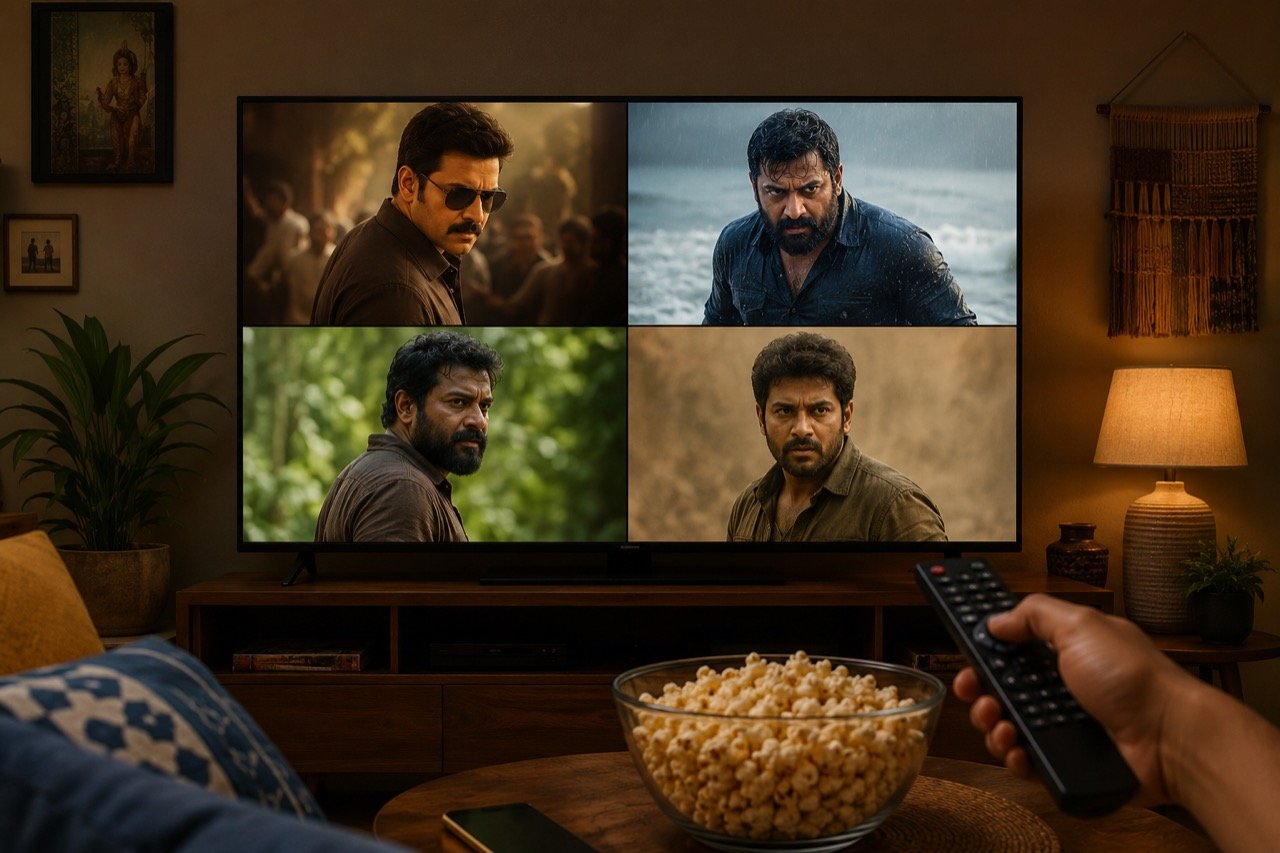
South Indian OTT Releases This Week: Regional Streaming in Focus
This week's South Indian streaming slate, led by titles like Isakapatnam and Mollywood Times, shows how weekly OTT lists now shape viewing choices across Telugu, Tamil, Malayalam and Kannada markets.

Pritam And Pedro Review Buzz: Goa Cyber-Crime Drama on OTT
Pratik Gandhi and Divyenndu's odd-couple crime series Pritam And Pedro is drawing early review attention for pairing an old-school Goa cop with a young coder against digital crime.
More from this section
More
72nd National Film Awards: Fans Back Mammootty, Allu Arjun, Sai Pallavi
Speculation around the 72nd National Film Awards is intensifying as fan communities across India's language film industries champion favourites including Mammootty, Allu Arjun and Sai Pallavi ahead of any official announcement.

Aamir Khan Marries Gauri Spratt in Private Pali Hill Ceremony
Aamir Khan and Gauri Spratt tied the knot at the actor's Pali Hill home in Mumbai on July 5, turning a deliberately small family ceremony into Bollywood's biggest story of the day.

Akanksha Chamola's Lock Upp 2 Confession Sets Reality TV Abuzz
A personal revelation by Akanksha Chamola ahead of Lock Upp 2 has handed the reality show a viral talking point, underlining how confession-driven formats continue to dominate Indian television conversation.