Parliament's Monsoon Session Set For July 20 To August 13
President Droupadi Murmu has approved the government's recommendation for the 2026 Monsoon Session, giving India's political calendar a fixed window for legislation, debate and opposition strategy.
Commentary & Analysis ·
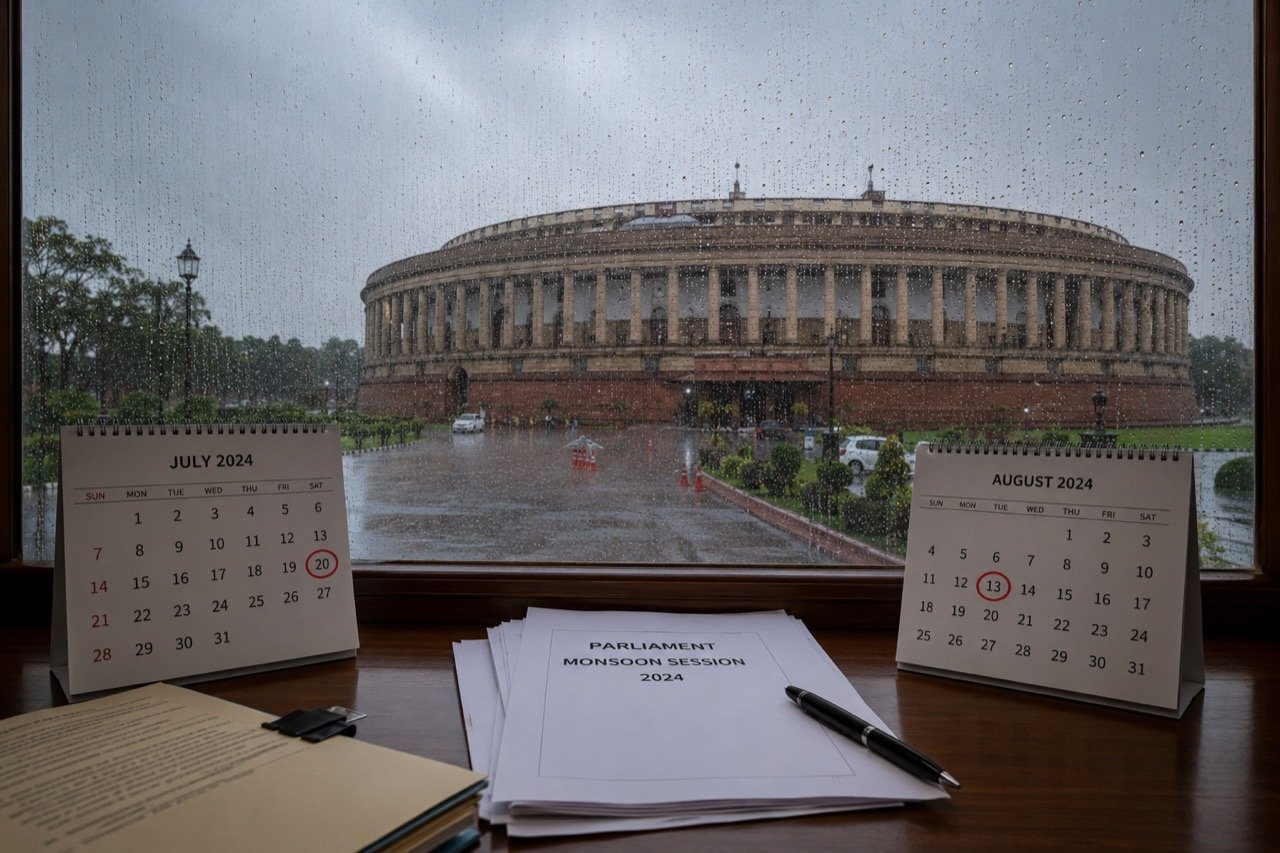
India's political calendar now has its next fixed point. The Monsoon Session of Parliament will begin on July 20 and run until August 13, after President Droupadi Murmu approved the government's recommendation on the dates. The roughly three-and-a-half-week window concentrates the machinery of national politics into a single stretch: legislative business, opposition floor strategy, committee pressure, ministerial statements and the daily theatre of questions and answers. On the surface, this is a routine administrative act, the kind of scheduling notice that rarely draws sustained attention. But the dates themselves matter less than what they set in motion: a compressed period in which the executive, the legislature and the opposition benches will all be tested in full public view.
Why the timing matters
The Monsoon Session tends to be an unusually active one, and its placement on the calendar is part of the reason. Arriving midway through the year, it lands amid live concerns over weather, agriculture and public finances. Monsoon rainfall patterns have direct bearing on crop output, rural incomes and inflation trajectories, all of which tend to surface as talking points on the floor of the House. This is also the first sustained sitting since the Budget Session, which means it functions as a natural checkpoint: enough time has passed for the effects of the Union Budget's provisions to become visible, and enough new developments will have accumulated on the economy, federal relations, security and social welfare to give opposition parties fresh material to press the government on.
For the government, the stakes are different but no less real. Every session is, in effect, a report card on floor management. Ministers must defend policy choices under direct questioning, whips must hold coalition arithmetic together during votes, and the Treasury benches must decide how much legislative capital to spend pushing through bills versus how much time to yield to debate. A session that runs smoothly, with substantive business conducted and disruptions minimised, tends to be read as a sign of political control. One that descends into repeated adjournments is read as the opposite, regardless of the underlying policy substance.
A recurring pattern of friction
Recent sessions have often featured sharp exchanges between the Treasury and opposition benches, and there is little reason to expect this one to be an exception. Disruption is never a certainty, and both sides typically insist beforehand that they intend to prioritise substantive debate. Yet the pattern of Indian parliamentary sessions in recent years has been one of carefully choreographed confrontation: opposition parties arrive with a list of issues they intend to force onto the agenda, the government arrives with a counter-strategy for managing or deflecting those issues, and the resulting friction plays out as much for television cameras and social media clips as for the official record. Both sides will arrive with carefully planned messaging that will ripple out into state-level politics and media coverage, shaping narratives that persist well beyond the session's final day on August 13.
This dynamic is not unique to India, but it has particular consequences here given the country's size and the diversity of issues competing for floor time. A single session must accommodate national security matters, economic policy, agrarian distress, social welfare legislation and federal disputes between the Centre and states, often within the same fortnight. The result is that any one issue rarely receives the sustained scrutiny that its complexity might warrant, and legislative time becomes a genuinely scarce resource that both sides have an incentive to spend strategically rather than generously.
What the bill list will reveal
The dates tell readers when Parliament sits; the legislative agenda will reveal what the government actually wants to prioritise. That bill list, expected closer to the session, is the next genuinely informative signal, and it deserves close attention precisely because it is where intention becomes concrete. A government's choice of which bills to list, which to hold back, and which to push through in a single sitting says more about its immediate priorities than any speech delivered on the floor. Similarly, the opposition's response, whether it chooses to contest bills clause by clause, seek referral to select committees, or focus its energy on walkouts and boycotts, will indicate how it intends to use its limited but real leverage during this window.
Committees, too, will play a quieter but consequential role. Much of the detailed, less theatrical work of Parliament happens away from the main chamber, in standing and select committees where bills are examined clause by clause and expert testimony is heard. How much legislation is routed through this process, as opposed to being passed with minimal debate on the floor, is often a better indicator of governance quality than the noise levels captured in television coverage.
The stakes for ordinary governance
It is worth remembering that the Monsoon Session's outcomes will have effects well beyond Delhi's political class. Legislation passed or stalled during this window can affect agricultural policy at a moment when monsoon performance is already shaping rural livelihoods, welfare programmes that touch millions of households, and regulatory frameworks that businesses and state governments alike are waiting on. The theatre of Question Hour and the drama of walkouts tend to dominate headlines, but the substantive content of what is debated, amended or passed carries consequences long after the session adjourns on August 13. Readers who want to understand how this session actually affects them would do well to look past the daily clash and toward the substance of what is actually enacted.
The NE Times View
A session calendar sounds like procedural housekeeping, but it is really a countdown clock for accountability. Twenty-five days is not long to scrutinise a year's worth of governance, so the quality of this session will depend on whether both benches treat floor time as a resource rather than a battlefield. Readers should watch the ratio of bills passed to hours debated: rushed legislation with minimal scrutiny has become a quiet habit of Indian parliaments, and it costs citizens more than any noisy walkout does. If the government publishes a substantive agenda early and the opposition engages with it, this session could be more productive than recent precedent suggests. The test, as ever, will not be how loud the session is, but how much of it survives scrutiny once the cameras move on to the next news cycle.
Key takeaways
- Parliament's Monsoon Session runs July 20 to August 13, following President Droupadi Murmu's approval of the government's recommended dates.
- The session arrives amid live concerns over monsoon performance, agriculture and public finances, giving it a natural connection to pressing economic issues.
- It is the first sustained sitting since the Budget Session, offering the opposition its first major chance to press the government on the economy, federal relations, security and welfare.
- The forthcoming bill list, expected closer to the session, will be the clearest signal of the government's actual legislative priorities.
- The real measure of the session's success will be the ratio of substantive scrutiny to bills passed, not the volume of floor disruption.
You may also like to read
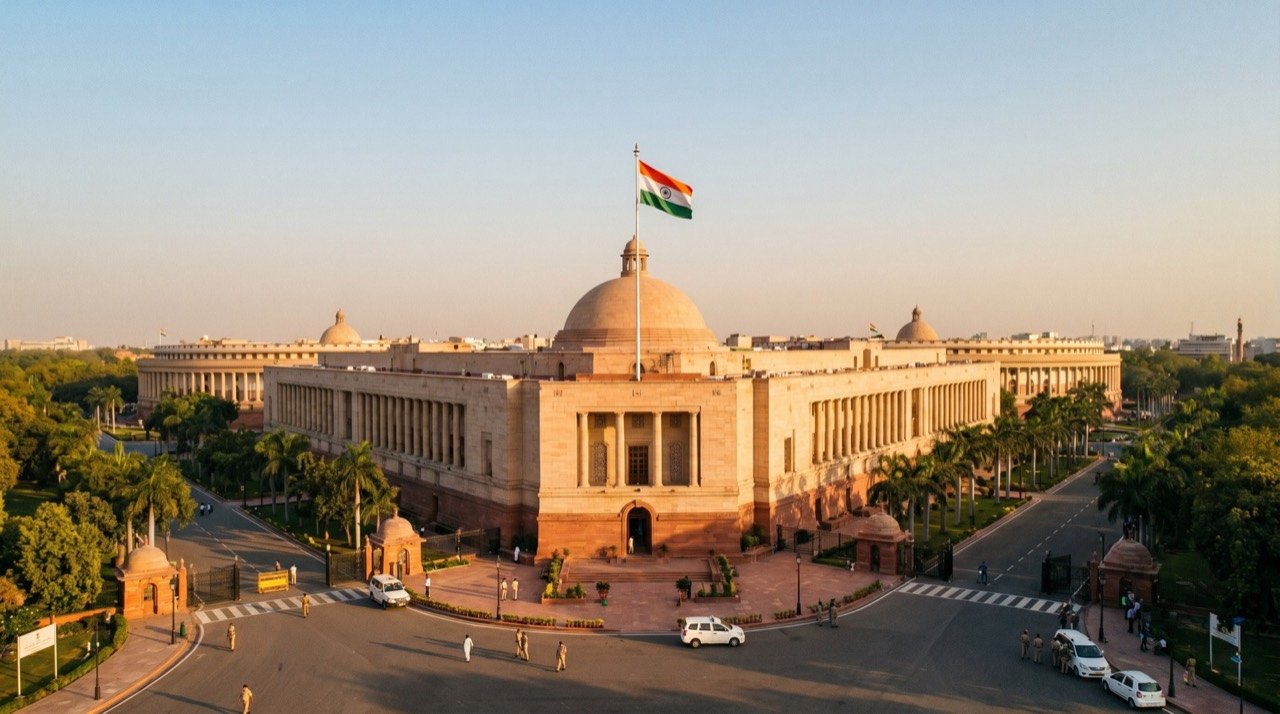
Parliament Monsoon Session Set For July 21 To August 12 With Heavy Legislative Load
Parliamentary Affairs Minister Kiren Rijiju has confirmed the 2026 monsoon session will run from July 21 to August 12, with the government lining up a crowded bills agenda for both Houses.
Parliament's Monsoon Session to Take Up Key Economic and Welfare Bills
Lawmakers return to a packed legislative agenda, with debate expected on data-protection rules, labour codes and a fresh welfare push ahead of state polls.
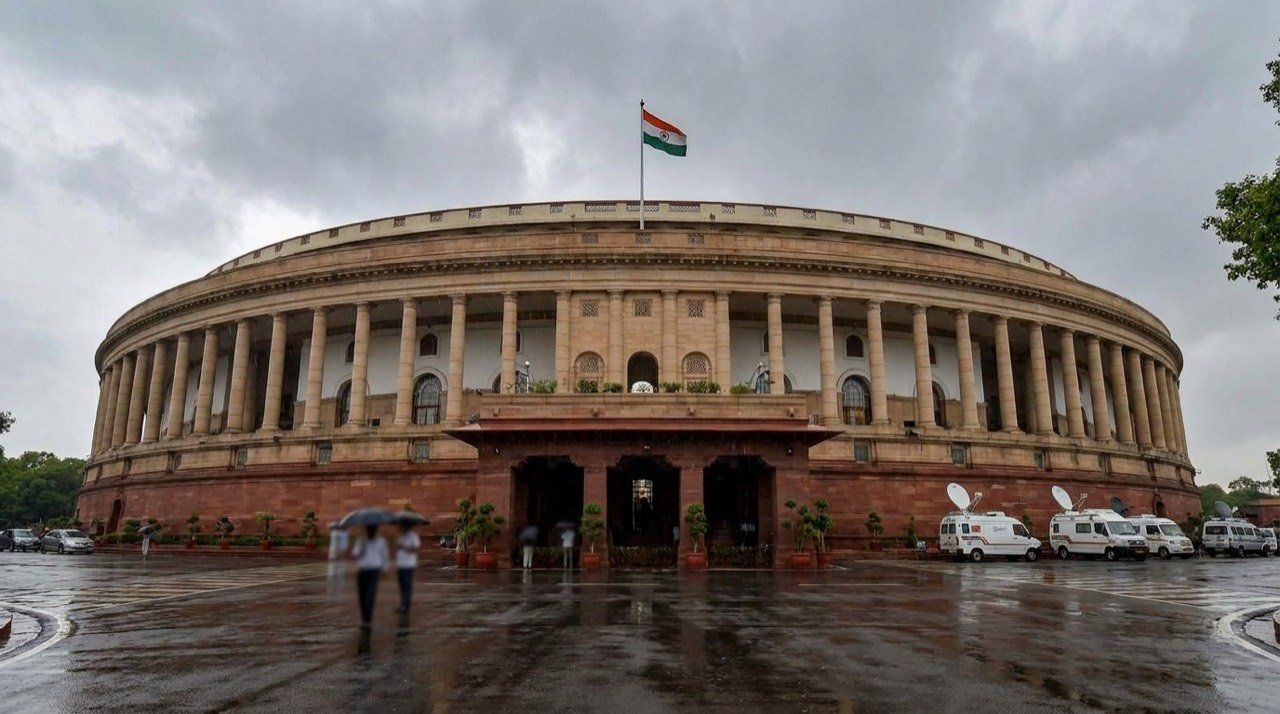
Centre Lines Up Six New Bills for Monsoon Session as Crowded Legislative Agenda Takes Shape
The Union government is preparing a packed monsoon session of Parliament, slating six fresh bills alongside the Finance Bill and a high-stakes return of the delimitation legislation in late July.
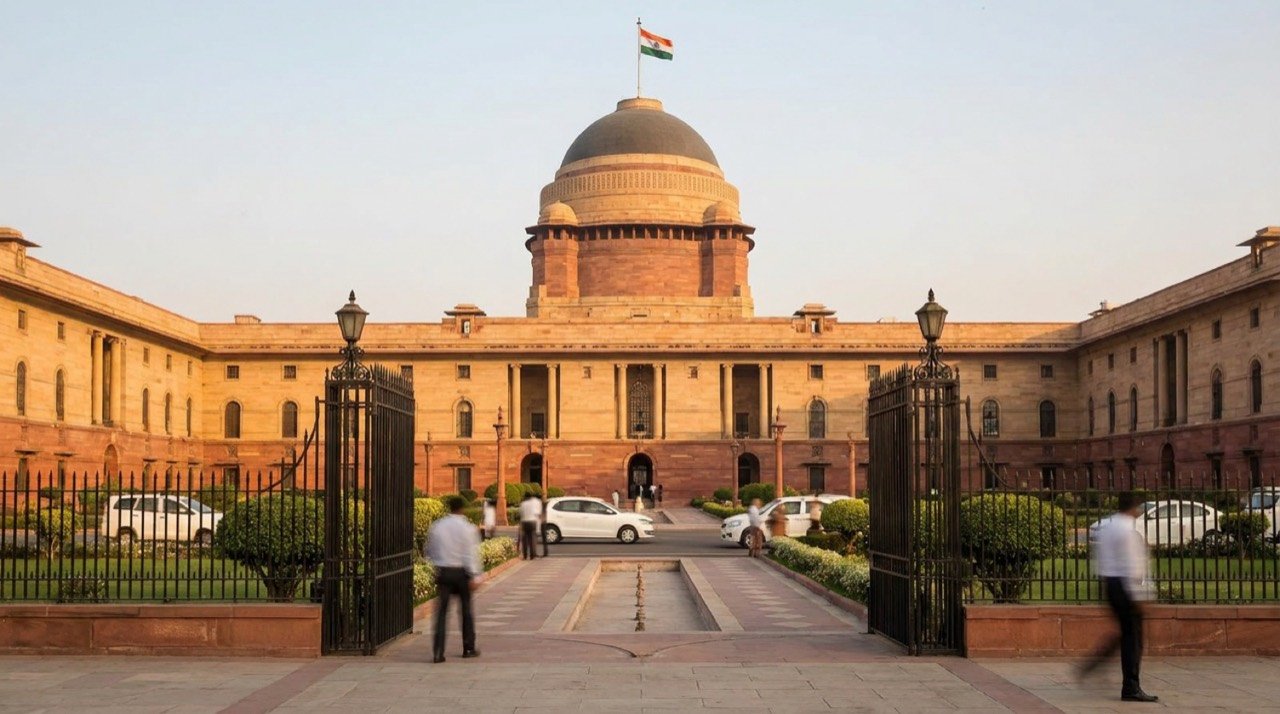
PM Modi Calls on President Murmu as Cabinet Reshuffle Speculation Grows in Delhi
Prime Minister Narendra Modi met President Droupadi Murmu at Rashtrapati Bhavan on June 23, a call that drew sharp political attention amid mounting speculation over a possible Union Council of Ministers reshuffle.
More from this section
More
K Kavitha Party Denied TRS Name by Election Commission
The Election Commission has refused to register K Kavitha's Telangana Rakshana Sena under the TRS acronym after objections, forcing a branding reset for the new party at a politically sensitive moment in Telangana.
Lalu Prasad Yadav Security Downgrade, Bungalow Order Stir Bihar
A government order downgrading Lalu Prasad Yadav's security cover and asking him to vacate an official bungalow has opened a fresh political flashpoint in Bihar, with the RJD chief's reaction fuelling the row.
Manipur CM's Churachandpur Visit: First Since 2023 Unrest
The Manipur Chief Minister travelled to Churachandpur for a BJP MLA's funeral, his first visit to the district since the 2023 violence, lending the sombre occasion an unmistakable political significance.