Ladakh Shutdown Reflects Mistrust Over Statehood and Safeguards Talks
A shutdown call in Ladakh has pushed the region's demands for statehood, constitutional safeguards and job and land protection back into national focus amid frustration over stalled talks with the Centre.
Commentary & Analysis ·
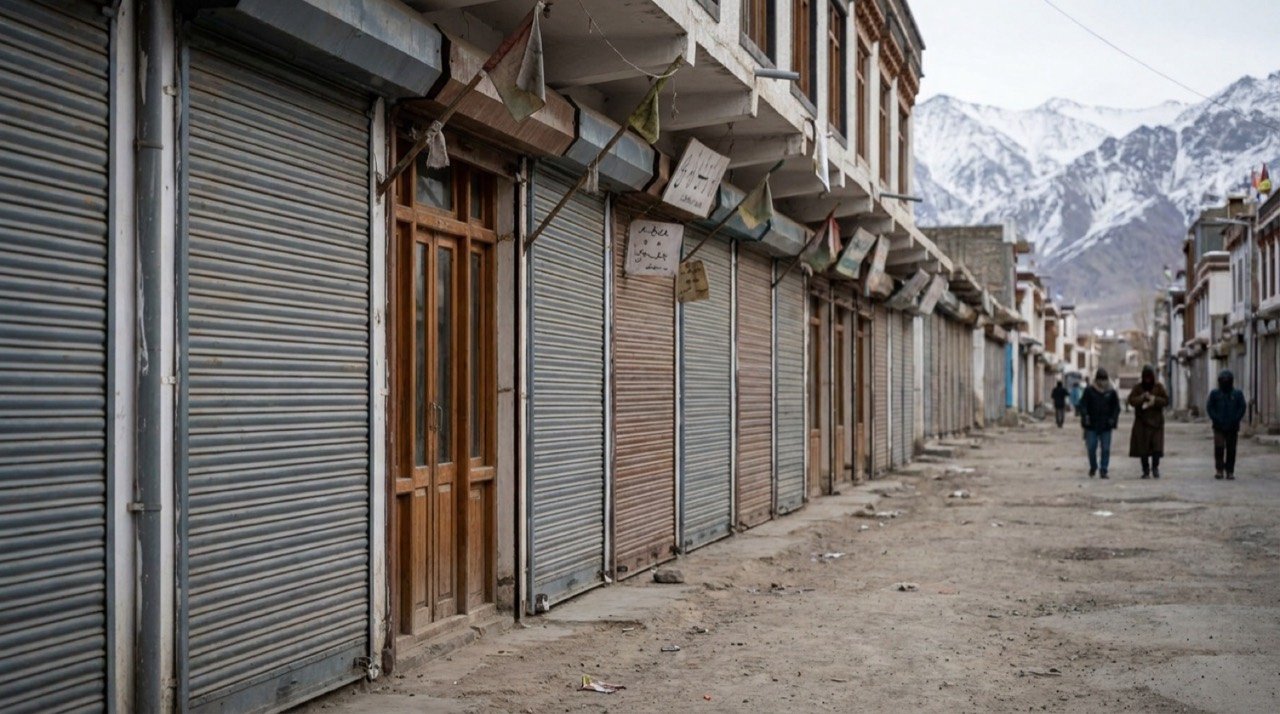
A shutdown call in Ladakh has once again pulled the region's political demands into national focus. Local groups have continued to press for statehood, constitutional safeguards, job protection, land rights and stronger democratic representation, and the protest mood reflects a wider sense that talks with the Centre have not yet delivered the assurances many residents are seeking. That a shutdown, rather than continued negotiation, has become the preferred instrument of expression is itself a signal worth pausing on. It suggests that the ordinary channels of dialogue are seen locally as insufficient, and that residents feel the need to escalate simply to be heard.
The demands behind the shutdown
At the heart of the agitation is a cluster of linked demands: full statehood, constitutional protections of the kind associated with the Sixth Schedule, safeguards for local jobs, secure land rights and a fuller, more accountable form of democratic representation. These are not new asks, and that is part of the problem. The recurrence of shutdowns signals that successive rounds of engagement have not closed the gap between what residents want and what they feel they have been promised. When a demand resurfaces year after year in the same form, it stops being a single grievance and becomes evidence of a structural mismatch between the pace of local expectation and the pace of central response. Each fresh shutdown, in that sense, is not really a new event but a repeated marker of unfinished business.
It is also worth noting that these demands are interconnected rather than separate line items. Statehood is sought partly because it is seen as the institutional vehicle through which the other protections, on jobs, land and representation, could be secured and enforced. Constitutional safeguards on the Sixth Schedule model are sought because residents fear that without such formal protection, demographic and economic change could erode local control over land and livelihood. Viewed this way, the shutdown is not a scattergun protest but an attempt to force movement on a coherent, long-standing package.
Why Ladakh's case is especially sensitive
Ladakh sits at an unusually delicate intersection of concerns. It is a strategic border region, an ecologically fragile high-altitude environment, a tourism-dependent economy, a source of youth-employment anxiety and a focal point for identity politics. Any single one of these would complicate policymaking; together they make the region's demands hard to address piecemeal. A decision that looks purely administrative, say, on land classification or resource allocation, can carry security implications given the proximity of sensitive borders. A decision that looks purely economic, such as opening land to outside investment, can carry ecological consequences in a high-altitude terrain that is slow to recover from disturbance. And a decision that looks purely economic can also read, locally, as a question of identity and survival, given how closely land, livelihood and belonging are bound together in the region's self-understanding.
This layering explains why New Delhi cannot simply treat the Ladakh demands as a routine administrative matter to be settled through incremental concessions. Every proposed safeguard has to be weighed simultaneously against strategic, environmental, economic and political considerations, which naturally slows the process. But slowness, however understandable from the Centre's vantage point, reads very differently from the ground in Ladakh, where each additional delay reinforces the sense that the region's concerns are being managed rather than resolved.
From statements to a timetable
The immediate question is whether dialogue can move beyond statements of intent into a concrete timetable that addresses representation and protections. For residents, the stakes are tangible: local control over development choices, safeguards for land and jobs, and renewed confidence that New Delhi's promises will be honoured. A statement of intent costs a government little and can be issued repeatedly without commitment; a timetable, by contrast, creates an obligation that can be tracked, measured and, if unmet, cited as a broken promise. This is precisely why residents are asking for the latter and have grown wary of the former. The absence of dates attached to any assurance is, in effect, read locally as an absence of seriousness.
The core demands remain consistent across rounds of engagement: statehood, constitutional safeguards, job and land protection, and stronger representation. Shutdowns recur precisely because earlier talks have not closed this gap. Border security considerations and the region's fragile ecology raise the stakes further, since any misstep carries consequences well beyond Ladakh's own boundaries. Meanwhile, tourism dependence and youth-employment anxiety shape the everyday economic pressures that make these demands feel urgent rather than abstract to ordinary residents, rather than a matter confined to political elites or activist groups.
What continued ambiguity risks
If the pattern of statements without timetables continues, the most likely consequence is not calm but a deeper entrenchment of mistrust. Each shutdown that fails to produce concrete commitments makes the next one more likely, and arguably more intense, because it confirms to residents that protest, rather than negotiation, is what moves the needle, if anything does. This is a corrosive dynamic for both sides: it raises the political cost of any eventual settlement, since concessions offered only after repeated agitation will always be read as having been extracted rather than granted in good faith, and it narrows the space for the kind of quiet, technical negotiation that constitutional safeguards typically require.
There is also a broader signalling risk. Ladakh's situation is being watched, implicitly, by other regions with their own unresolved demands for autonomy or protection. How the Centre handles this case, whether through sustained engagement culminating in dated commitments or through further deferral, will inevitably be read as an indicator of how seriously such demands are treated more generally. This raises the stakes of the Ladakh talks beyond the region's own boundaries.
The NE Times View
A shutdown is the language a region reaches for when it feels talks have stopped listening, and Ladakh's demands for statehood, Sixth Schedule-style safeguards and job and land protection are not fringe grievances but mainstream local consensus. The Centre's silence carries a cost in trust that is hard to recover; sustained, good-faith engagement on constitutional safeguards now is cheaper, in every sense, than managing the alienation that stalled negotiations inevitably breed in a sensitive border region. The path forward depends largely on whether the Centre can convert engagement into commitments with dates and detail attached. Concrete movement on representation and safeguards could ease the cycle of shutdowns; continued ambiguity is likely to keep mistrust, and protest, alive in a region where geography and identity make every decision consequential. For Ladakhis, the real test is whether dialogue produces a timetable, not just reassurance, and that test remains, for now, unmet.
Key takeaways
- The shutdown centres on a linked package of demands: statehood, Sixth Schedule-style constitutional safeguards, job and land protection, and stronger democratic representation.
- Repeated shutdowns reflect an unclosed gap between resident expectations and the outcomes of previous rounds of talks with the Centre.
- Ladakh's status as a strategic border region, fragile high-altitude ecology and tourism-dependent economy makes its demands difficult to address through piecemeal measures.
- Residents are seeking a concrete, dated timetable rather than further statements of intent, viewing the latter as insufficient after past experience.
- Continued ambiguity risks deepening mistrust and entrenching a cycle of protest, while sustained engagement on safeguards could ease tensions before they harden further.
You may also like to read
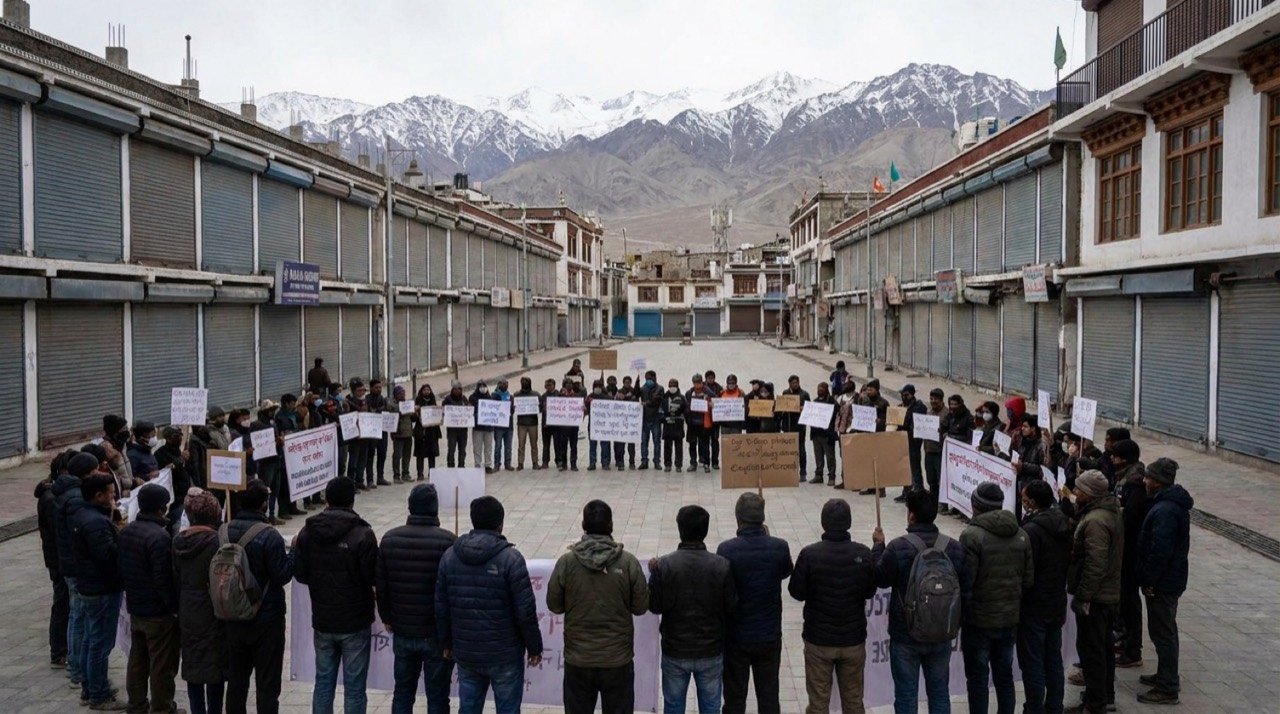
Ladakh Shutdown Pushes Statehood Dialogue With Centre Back Into Focus
A near-total shutdown across Ladakh on June 23 saw Leh and Kargil bodies press New Delhi for credible dialogue, reviving demands for statehood, Sixth Schedule safeguards and land and job protections.
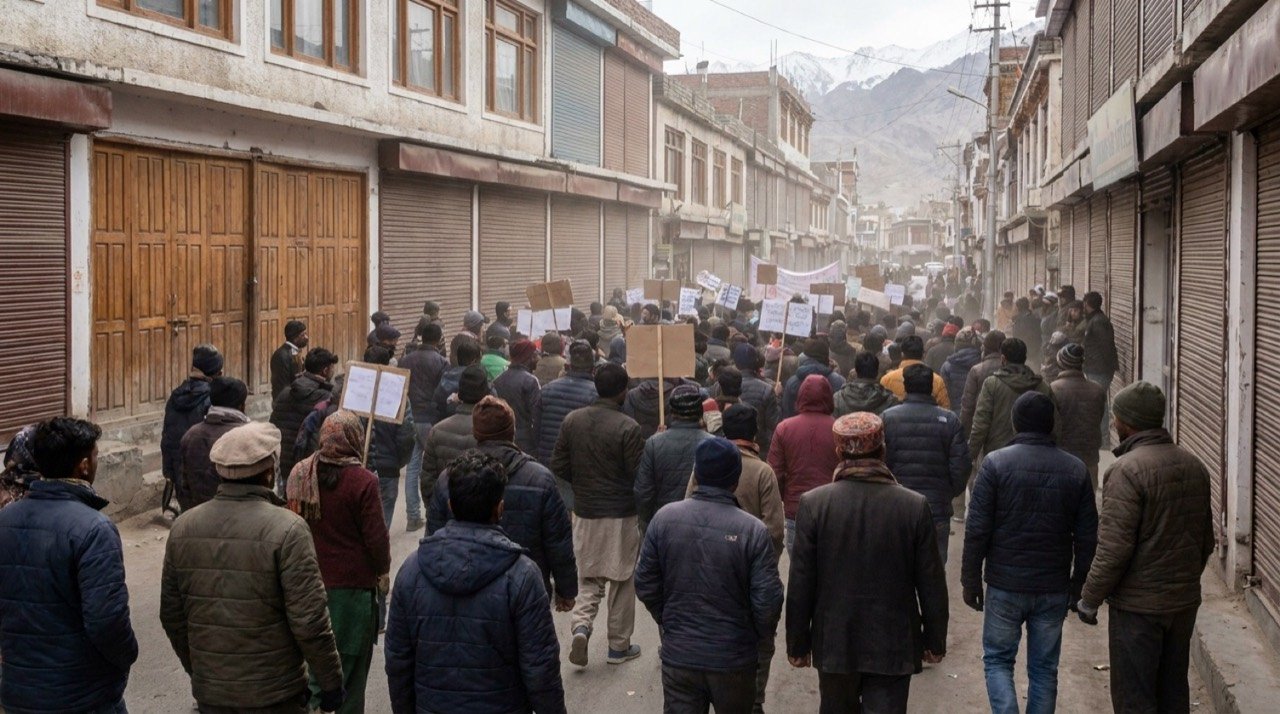
Ladakh Shutdown Exposes Deepening Trust Gap With Centre Over Meeting Minutes
A near-total shutdown across Ladakh over disputed high-powered committee minutes signals that months of talks have failed to resolve demands for statehood, Sixth Schedule safeguards and job protection.
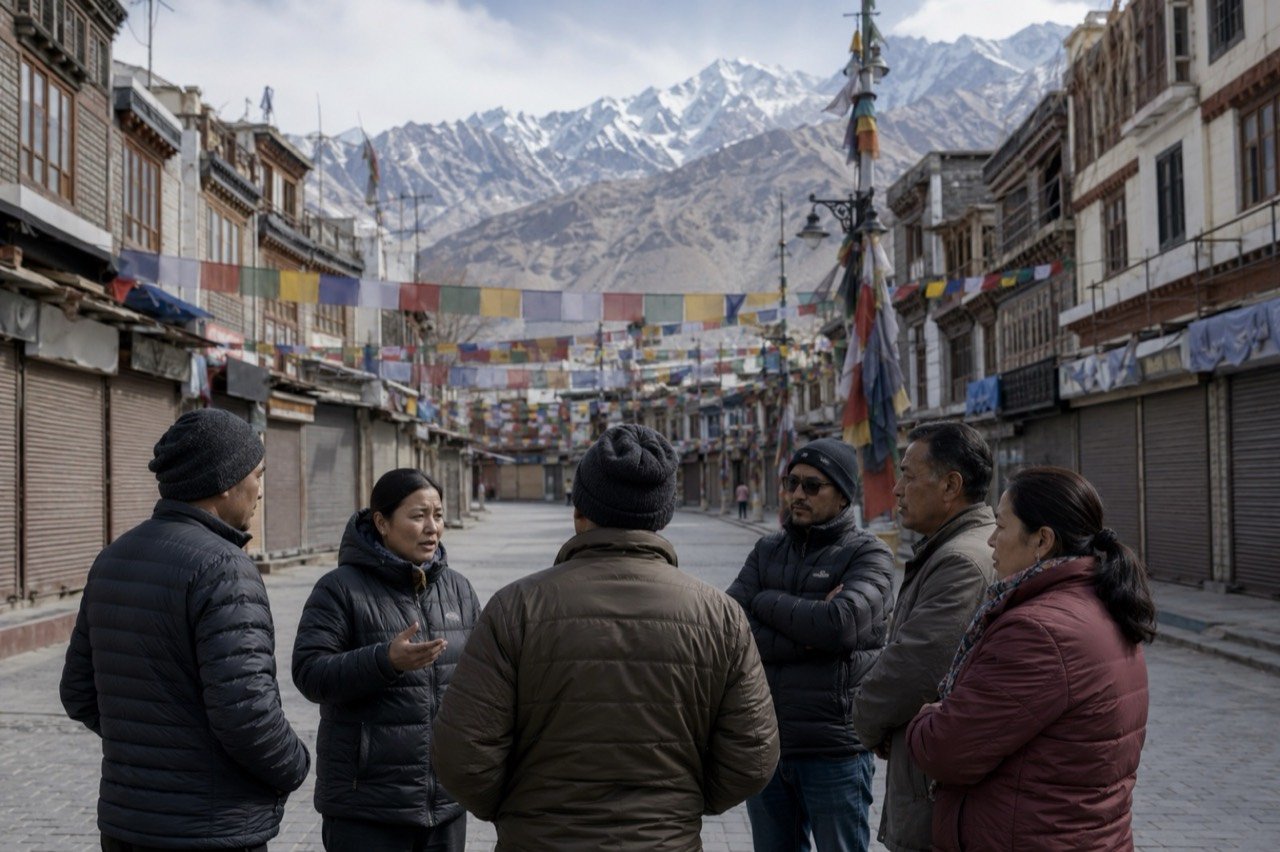
Ladakh Groups Call June 23 Shutdown Over Disputed Record Of Centre Talks
The Leh Apex Body and Kargil Democratic Alliance have called a June 23 shutdown across Ladakh, accusing the Centre of leaving key understandings out of the official record of recent negotiations on statehood and safeguards.
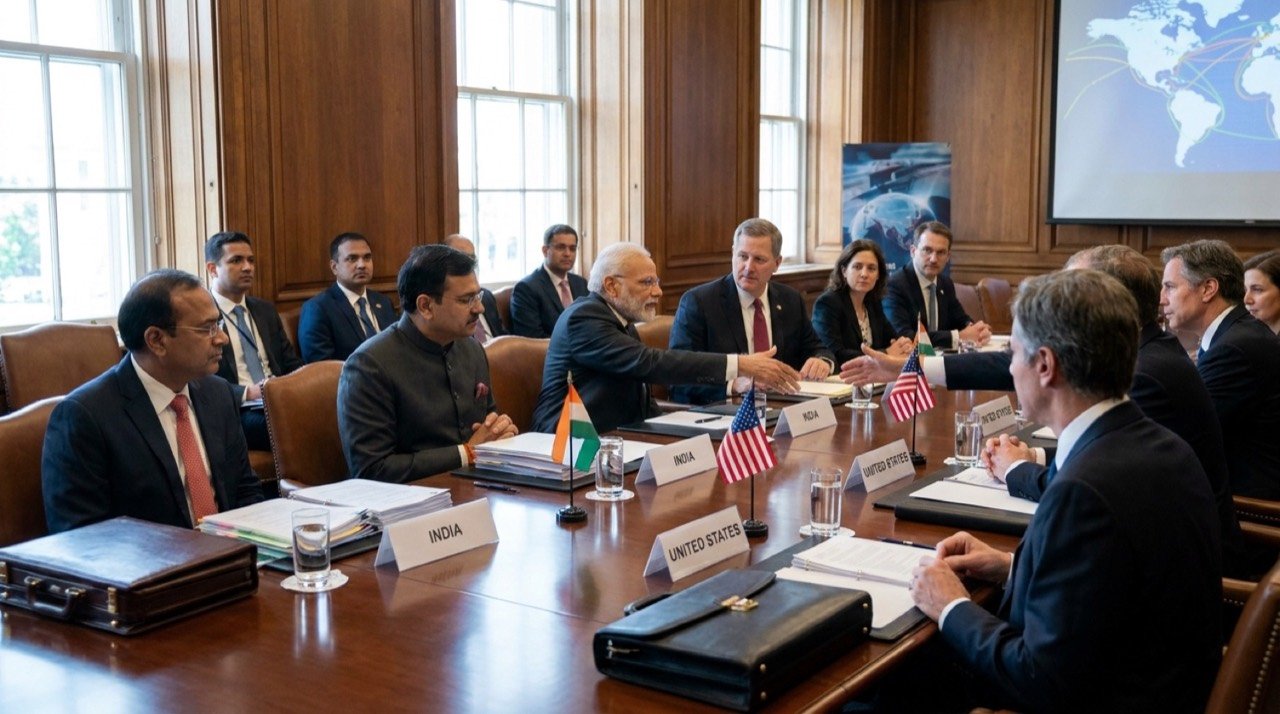
India-US Trade Talks Put Export Gains and Domestic Safeguards in Focus
As India weighs preferential access for the United States, Commerce Minister Piyush Goyal vows to protect national interest while Congress warns a hurried pact could hurt farmers and small producers.
More from this section
More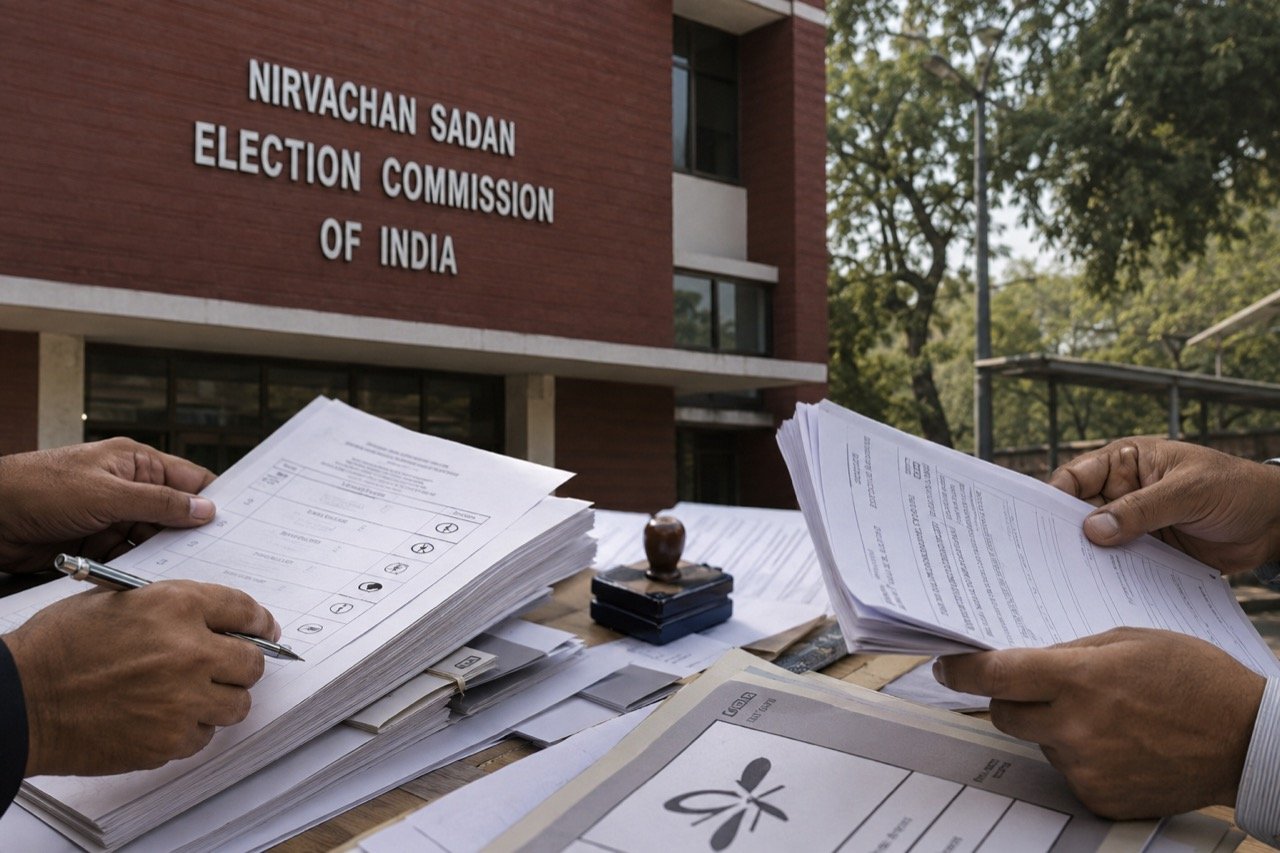
K Kavitha Party Denied TRS Name by Election Commission
The Election Commission has refused to register K Kavitha's Telangana Rakshana Sena under the TRS acronym after objections, forcing a branding reset for the new party at a politically sensitive moment in Telangana.
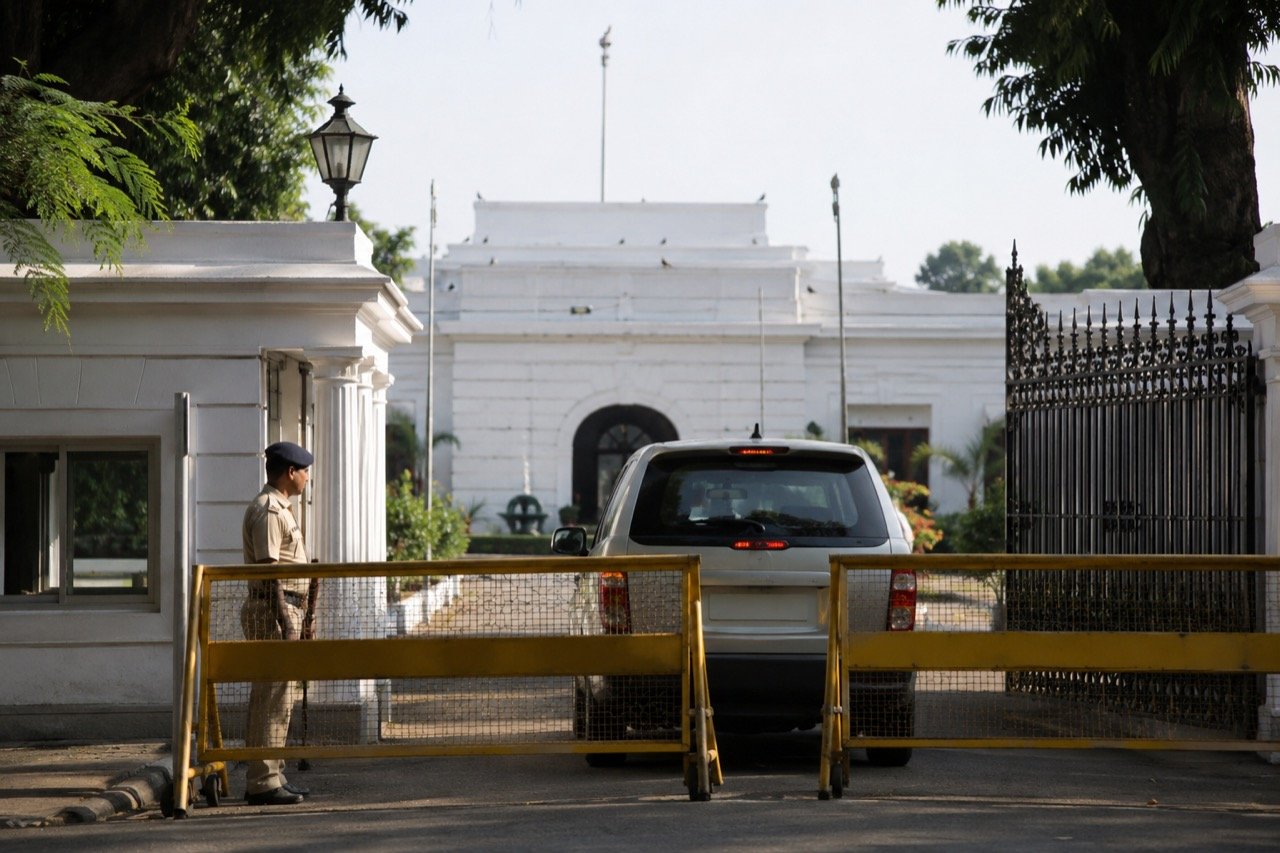
Lalu Prasad Yadav Security Downgrade, Bungalow Order Stir Bihar
A government order downgrading Lalu Prasad Yadav's security cover and asking him to vacate an official bungalow has opened a fresh political flashpoint in Bihar, with the RJD chief's reaction fuelling the row.
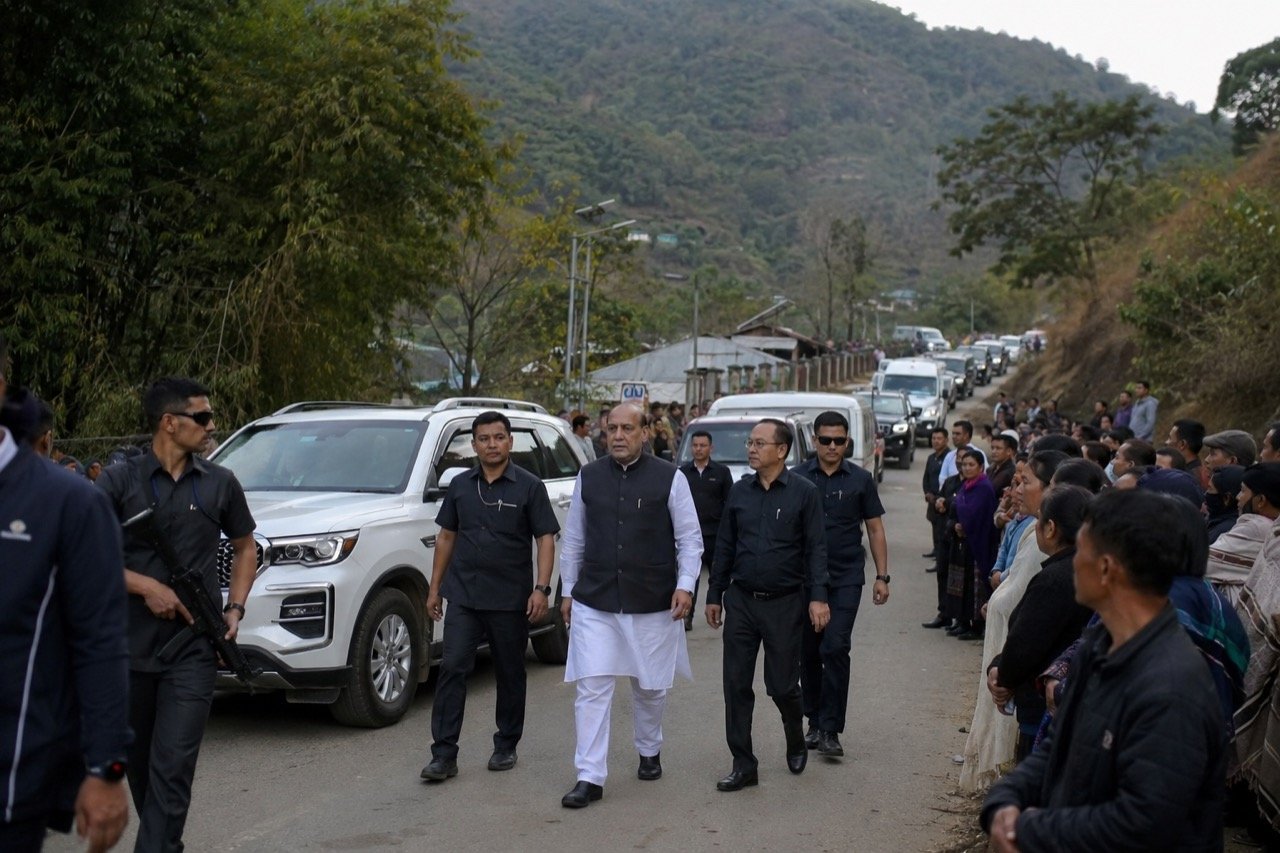
Manipur CM's Churachandpur Visit: First Since 2023 Unrest
The Manipur Chief Minister travelled to Churachandpur for a BJP MLA's funeral, his first visit to the district since the 2023 violence, lending the sombre occasion an unmistakable political significance.