Hoax Bomb Threat to Kodagu District Court Sparks Security Alert in Madikeri
An email claiming cyanide bombs would detonate at the Madikeri court triggered a full security response before being declared a hoax, renewing focus on threat-screening protocols.
Commentary & Analysis ·
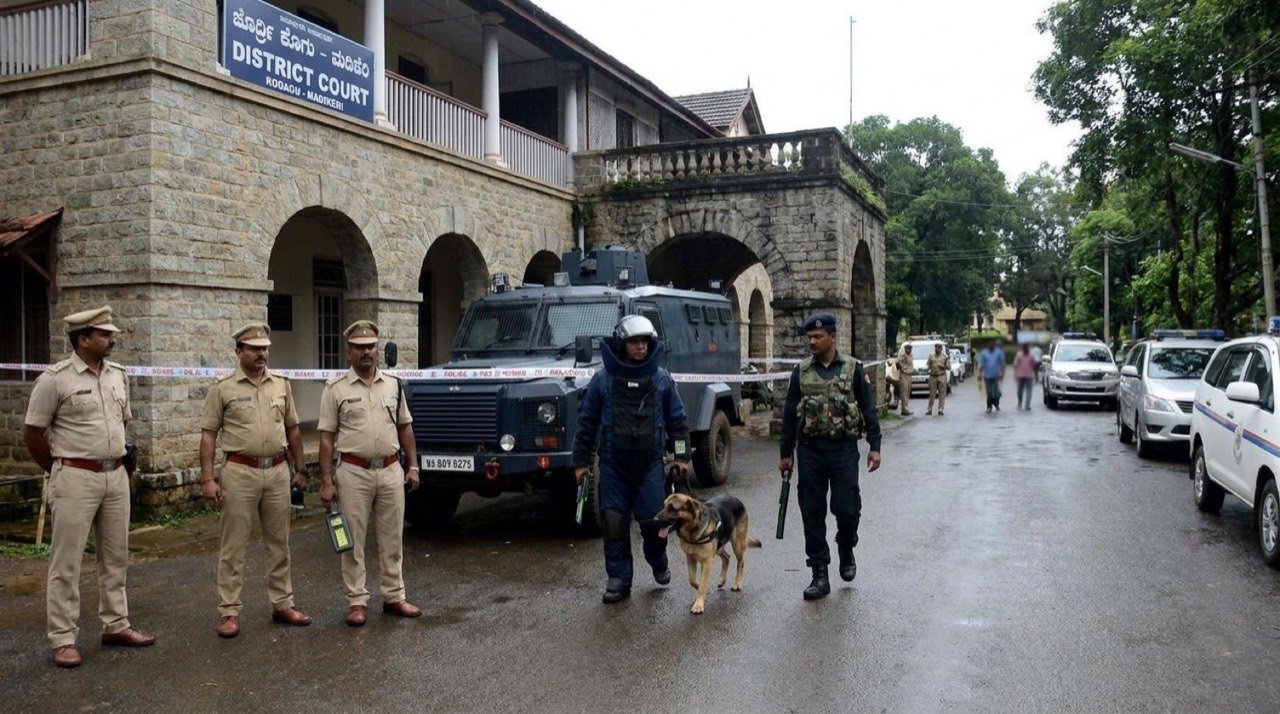
A hoax bomb threat sent by email to the Kodagu District Court in Madikeri triggered panic and a swift security response on June 23, 2026. Though the threat was ultimately found to be false, it disrupted court functioning for the day and renewed concern over a pattern of menacing emails targeting public institutions in Karnataka. The episode, however brief, is a useful reminder of how a single anonymous message can paralyse an entire institution for hours, and of how thin the margin is between a false alarm handled well and a tragedy narrowly averted.
What the email claimed
According to police details, the email arrived at around 8.30 am on the official account of the Principal District and Sessions Judge. It claimed that cyanide bombs would be detonated at 2 pm, a specific time that compelled authorities to act well before the stated deadline. The specificity of the threat is itself significant: a vague warning might have been weighed and perhaps discounted more quickly, but a stated hour forces a linear countdown, converting an ordinary working day into a slow-burning emergency. Security personnel treated the message seriously from the outset, and rightly so. Courts and public buildings are obliged to respond cautiously to such threats even when they later prove baseless, because the cost of dismissing a genuine warning is far higher than the disruption of a precautionary response. This is the essential asymmetry that governs all such incidents: the price of overreacting to a hoax is inconvenience, while the price of underreacting to a genuine threat could be lives lost. No institution can afford to gamble on the latter.
How authorities responded
The threat set off standard security procedures at the court complex, interrupting normal proceedings for the day. Litigants, lawyers, witnesses and court staff would have found their schedules upended, hearings postponed, and the ordinary business of justice halted while personnel verified the premises were safe. This is not a trivial cost. Court calendars are congested at the best of times, and a single day's disruption can cascade into weeks of rescheduled hearings, delayed judgments and inconvenienced litigants who may have travelled some distance to be present. The incident added to a wider unease about repeated threat emails directed at public institutions across the state in recent months, suggesting that Madikeri's experience was not an isolated event but part of a recognisable pattern that security planners in Karnataka must now treat as a standing risk rather than a one-off aberration.
Why hoax threats are not a minor nuisance
It is tempting, once a threat is confirmed false, to treat the matter as closed. That would be a mistake. Hoax threats impose real and measurable costs even when no explosive materialises. Police resources are diverted from other duties to search a building, secure a perimeter and coordinate with bomb-disposal or forensic teams if required. Court staff and the public experience genuine fear, however briefly, and that fear does not evaporate the moment the threat is declared false; it lingers as a background anxiety the next time an unusual email or unattended bag appears. There is also a corrosive effect on institutional vigilance: each hoax that passes without consequence for its author makes the next hoax slightly more likely, and each cycle of alarm and stand-down risks dulling the very alertness that a real threat would require. Karnataka's recent run of such incidents against public institutions, referenced in the original police assessment, indicates that this dulling effect is a genuine operational risk, not a hypothetical one.
Tracing the sender and closing the gaps
With the immediate danger ruled out, attention now turns to tracing the sender and reviewing how such emails reach official inboxes in the first place. This is where the case moves from crisis management to institutional reform, and it is arguably the more consequential phase. Several gaps stand out. First, the origin of the threat email needs to be traced and the sender identified, both to deter future hoaxers and to determine whether the message was an isolated prank or connected to a wider campaign against Karnataka's courts. Second, email-screening systems for official court accounts require strengthening, since a message threatening cyanide bombs evidently reached a judge's official inbox without being intercepted or flagged. Third, evacuation and lockdown protocols for court complexes need clarification, so that staff and the public know precisely what steps to follow the moment such a threat is received, rather than improvising under pressure. Fourth, emergency-response coordination with local police must be made faster, shortening the interval between a threat being received and a verified, calibrated response being mounted. Fifth, the broader pattern of hoax threats to Karnataka institutions needs to be tracked systematically, so that what currently looks like a series of disconnected incidents can be analysed as a single trend with shared characteristics, whether in method, timing or apparent motive.
Stakeholders and what they now face
For the judiciary, the incident is a reminder that court complexes, like schools and hospitals, sit in a category of institutions that cannot simply harden their perimeter and move on; they must remain open and accessible to the public while also being prepared for exactly this kind of disruption. For the police, the case adds another entry to a growing caseload of email-based threats that consume investigative time even when they do not result in violence, raising questions about whether Karnataka's cyber-crime and threat-assessment units are adequately resourced for a phenomenon that appears to be recurring rather than exceptional. For the public and litigants who use the Kodagu District Court, the episode is a smaller but real cost: a day's business disrupted, appointments missed, and a fresh reason to wonder whether the next such email might not be a hoax at all. Each of these stakeholders has an interest in the same outcome, a system that responds quickly and proportionately without becoming either complacent or perpetually on edge.
The NE Times View
Hoax threats are not harmless pranks; they drain police resources, terrorise the public and erode the urgency owed to real alerts. Kodagu's swift response was correct, but the pattern of emailed scares across Indian courts and schools demands a tougher deterrent and better digital tracing. Authorities should treat the sender's prosecution as seriously as they treated the evacuation. A response that stops at "the threat was false" without following through to "the sender was found and punished" sends precisely the wrong signal, that anonymous threats to public institutions carry little practical risk for their authors. If Karnataka is indeed facing a recurring pattern of such emails, as this and other recent incidents suggest, then the state's response cannot remain purely reactive, incident by incident. It needs a coordinated framework, spanning email security for judicial and government accounts, standardised evacuation protocols across court complexes, and a dedicated investigative effort to trace repeat offenders, that treats the deterrence of hoaxers with the same seriousness as the protection of the public from a genuine attack.
Key takeaways
- A hoax email threatening cyanide bombs at 2 pm was sent to the Kodagu District Court's Principal District and Sessions Judge account around 8.30 am on June 23, 2026, disrupting court proceedings for the day.
- The threat proved false, but the precautionary security response was appropriate given the far higher cost of ignoring a genuine warning.
- The incident fits a wider pattern of threat emails against public institutions in Karnataka in recent months, raising concerns about email-screening, evacuation protocols and emergency-response coordination.
- Authorities must now prioritise tracing the sender, since deterrence depends on hoaxers facing real consequences, not just on institutions weathering the disruption.
- Strengthening digital screening for official accounts and standardising lockdown and response protocols across court complexes are the concrete reforms the episode points to.
You may also like to read
Bengaluru Triple Murder Probe Focuses On Daughter And Her Live-In Partner
Police investigating the killing of an elderly couple and their 19-year-old daughter in Bengaluru are examining whether family opposition to a relationship escalated into extreme violence.

Supreme Court to Weigh Ethanol Allocation Row Hitting 20% Goal
The Supreme Court will examine a challenge to a Karnataka High Court order reopening the 2025-26 ethanol allocation process, a dispute that could ripple through India's 20 percent petrol blending programme.
Supreme Court Issues Notice on Bail Plea in Zubeen Garg Death Case
The Supreme Court has issued notice on a bail plea tied to the probe into singer Zubeen Garg's death, reviving an emotionally charged case that has gripped Assam for months.
Madras High Court Seeks Action Reports on Stray Dog Management
The court has given Tamil Nadu and Puducherry four weeks to detail sterilisation, vaccination and animal birth control efforts, shifting focus from rhetoric to implementation.
More from this section
More
AICTE Industry Fellowship 2026: Rs 1.5 Lakh Scheme Closes July 5
The AICTE Industry Fellowship Programme 2026, which places technical-education faculty inside leading companies on a Rs 1.5 lakh monthly stipend, reached its application deadline on July 5.

Bay of Bengal Low Pressure System Revives Monsoon Over Western India
A low-pressure system over the Bay of Bengal has pushed the monsoon back into an active phase, bringing steady heavy rain to Kerala, coastal Karnataka and Maharashtra, and putting Mumbai and Pune on preparedness watch.
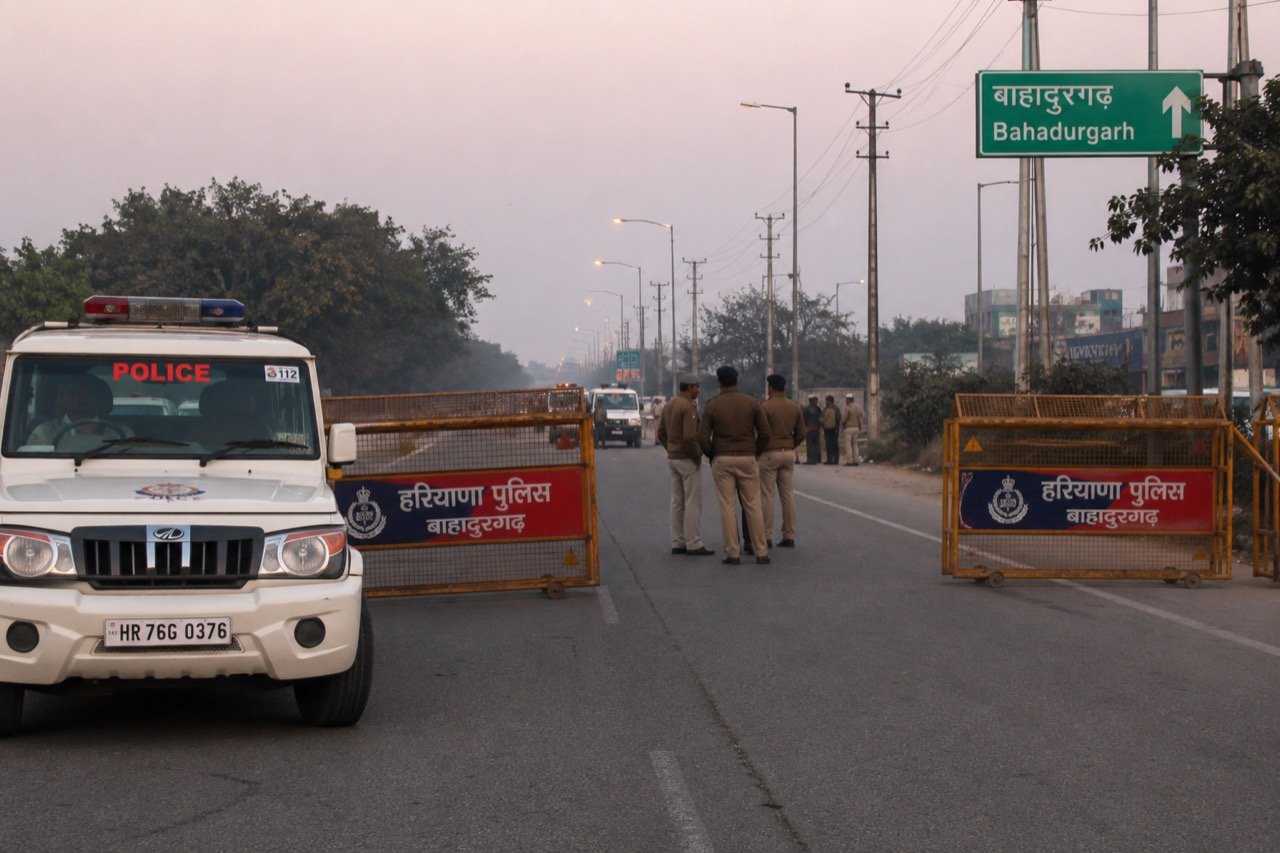
Bishnoi Gang Suspects Injured in Haryana Encounter as Police Tighten Net
A joint Haryana-Delhi Police operation in Bahadurgarh left two suspected Lawrence Bishnoi gang members injured, spotlighting the multi-state coordination now central to India's fight against organised crime networks.