Supreme Court to Weigh Ethanol Allocation Row Hitting 20% Goal
The Supreme Court will examine a challenge to a Karnataka High Court order reopening the 2025-26 ethanol allocation process, a dispute that could ripple through India's 20 percent petrol blending programme.
Commentary & Analysis ·

The Supreme Court is set to hear a plea against a Karnataka High Court order that directed the reopening of the ethanol allocation process for 2025-26. The oil marketing company behind the challenge has argued that unwinding a completed allocation could jeopardise India's national target of 20 percent ethanol blending in petrol. On the surface, this looks like a routine procurement dispute working its way up the judicial ladder. In substance, it touches one of the more consequential energy-policy commitments India has made in recent years, and the manner in which the apex court resolves it will say a great deal about how durable that commitment actually is.
Why allocation is more than paperwork
Ethanol blending sits at the intersection of energy policy and the agricultural economy. India has pushed blending to cut crude import dependence, support sugarcane-linked ethanol supply chains and reduce certain fuel emissions. None of these goals can be delivered through a target figure alone. They depend on a working mechanism underneath the headline number, and that mechanism is the allocation process itself. Allocation decisions determine which producers supply ethanol, and in what quantities, which makes them commercially decisive for suppliers. A distillery that wins a share of an allocation cycle plans its production, its cane procurement and its financing around that award. A distillery that loses out adjusts accordingly. When that settled picture is disturbed after the fact, the disruption does not stay confined to one company or one contract; it ripples through an entire supply chain that has been built, deliberately, to be predictable.
This is why a court-directed reopening creates uncertainty when an allocation cycle has already been completed and implemented. Contracts have presumably been signed, volumes committed, and in some cases fuel may already be moving through the blending chain. Asking that process to be unwound is not a paperwork correction; it is a request to re-litigate commercial outcomes that other parties have already relied upon. At the same time, legal challenges of this kind can raise legitimate questions about fairness, process and eligibility. A losing bidder alleging that an allocation process was flawed is not automatically wrong simply because reopening it is inconvenient. The Supreme Court must now weigh those competing claims without flattening a complex policy dispute into a simple industry fight between an aggrieved petitioner and an inconvenienced incumbent.
Timing is the real pressure point
Blending targets depend on predictable procurement, logistics and refinery planning, so any disruption can knock implementation schedules off course. Ethanol cannot simply be diverted into the blending stream instantly; it has to be sourced, transported and integrated into fuel supply chains on schedules that refiners and oil marketing companies fix well in advance. If an allocation that has already been executed is reopened mid-cycle, the practical consequence is not merely legal uncertainty for the companies involved, it is a scheduling problem for the entire blending programme. Volumes that were expected from one set of suppliers may need to be re-sourced, re-verified and re-contracted, potentially at short notice and at a point in the crop or production cycle where alternatives are limited.
The case is also a reminder that national policy frequently meets judicial review at the level of technical implementation. A headline target such as 20 percent blending may be clear and politically settled, but the mechanics of allocation, tendering, eligibility criteria and quantity distribution can still generate serious legal conflict. It is at this granular level, rather than in debates over the target itself, that policy commitments are actually tested. A programme can enjoy broad consensus in principle while still being vulnerable to disruption in practice if the administrative and legal scaffolding beneath it is not robust.
What the litigation reveals about the blending programme's maturity
That a completed allocation cycle can be challenged and partially reopened by a High Court, only to then require Supreme Court intervention, suggests the ethanol procurement framework is still being stress-tested through litigation rather than resolved purely through administrative design. This is not unusual for a programme scaling as rapidly as India's blending initiative has; rules, tendering processes and eligibility norms drafted for an earlier, smaller phase of the programme may not anticipate every dispute that arises once volumes, participants and commercial stakes grow. The current case, whatever its outcome, will effectively become a precedent for how allocation disputes are handled going forward, which is arguably as important as the specific relief either party is seeking.
For the oil marketing company that brought the challenge, the argument is straightforward: predictability in a completed process is itself a public interest, because the entire blending target rests on suppliers and refiners being able to trust that finalised allocations will stand. For parties on the other side of such disputes, the countervailing interest is equally real: an allocation process that cannot be challenged even when flawed offers no real accountability, and companies that lose out through a defective process have limited recourse if courts decline to intervene once implementation has begun.
The NE Times View
This case matters well beyond one allocation cycle. India's ethanol programme has been sold to farmers, distillers and refiners as a stable, long-horizon commitment, and its credibility rests on procurement processes that are both fair and final. If the Supreme Court finds the original allocation flawed, that verdict should force cleaner, more transparent tendering rather than ad hoc fixes. A ruling that simply reopens this one cycle without addressing the underlying process weaknesses would leave the same vulnerabilities in place for the next round of allocations, inviting repeat litigation rather than resolving it.
But if completed allocations can be routinely reopened through litigation, investors in ethanol capacity will price in legal risk, and the 20 percent target will become harder and costlier to reach. Capital committed to distillery expansion, storage and logistics is patient only if the rules of the game are seen as settled once a cycle concludes. Uncertainty at the allocation stage does not merely inconvenience the parties directly involved in a dispute; it raises the implicit risk premium for the entire sector, from cane growers upstream to refiners downstream. Clear, fast adjudication here is itself good energy policy. The Supreme Court does not need to resolve every underlying tension between fairness and finality in the abstract; it needs to give this specific case a swift and well-reasoned answer, so that the ethanol programme's institutional credibility survives the dispute intact.
What to watch next
The most immediate signal to track is simply how quickly the Supreme Court schedules and disposes of this matter, given that timing pressure is central to the underlying policy concern. A prolonged pendency would itself function as a form of disruption, leaving the 2025-26 allocation cycle in limbo regardless of the eventual merits. Beyond the immediate ruling, it is worth watching whether the judgment addresses process design questions, such as eligibility criteria or tendering transparency, or confines itself narrowly to the specific facts of this allocation cycle. A narrow ruling resolves this dispute but leaves the door open to similar litigation in future cycles; a broader one could meaningfully reduce that risk.
Key takeaways
- The Supreme Court will hear a challenge to a Karnataka High Court order reopening the 2025-26 ethanol allocation process, with an oil marketing company arguing this threatens India's 20 percent ethanol blending target.
- Allocation decisions are commercially decisive, determining which producers supply ethanol and in what quantities, so reopening a completed cycle creates uncertainty for suppliers who have already acted on the original outcome.
- Blending targets depend on predictable procurement, logistics and refinery planning, meaning legal disruption at the allocation stage can directly delay implementation.
- The dispute illustrates how a clear national policy target can still face serious conflict at the level of technical implementation and process fairness.
- How swiftly and comprehensively the Supreme Court rules will shape investor confidence in ethanol capacity and the broader credibility of India's blending programme.
You may also like to read
Supreme Court Fines Chhattisgarh Rs 2 Lakh in Decades-Old Land Compensation Case
The Supreme Court has fined the Chhattisgarh government Rs 2 lakh and upheld compensation with interest for landowners whose plot was taken for a road in 1986 without payment.
Supreme Court Issues Notice on Bail Plea in Zubeen Garg Death Case
The Supreme Court has issued notice on a bail plea tied to the probe into singer Zubeen Garg's death, reviving an emotionally charged case that has gripped Assam for months.
Supreme Court Recall of Ban on Retrospective Green Clearances Sparks Pollution-Law Debate
A 2-1 majority recall of the 2025 verdict outlawing ex post facto environmental clearances has reopened a fierce debate over whether penalties can substitute for prior approval on major projects.
Supreme Court Points West Bengal Ration-Linked SIR Plea Toward Calcutta High Court
The Supreme Court declined urgent listing of a plea alleging ration denial to people dropped from West Bengal voter lists after the SIR exercise, indicating the petitioner should approach the High Court.
More from this section
More
AICTE Industry Fellowship 2026: Rs 1.5 Lakh Scheme Closes July 5
The AICTE Industry Fellowship Programme 2026, which places technical-education faculty inside leading companies on a Rs 1.5 lakh monthly stipend, reached its application deadline on July 5.

Bay of Bengal Low Pressure System Revives Monsoon Over Western India
A low-pressure system over the Bay of Bengal has pushed the monsoon back into an active phase, bringing steady heavy rain to Kerala, coastal Karnataka and Maharashtra, and putting Mumbai and Pune on preparedness watch.
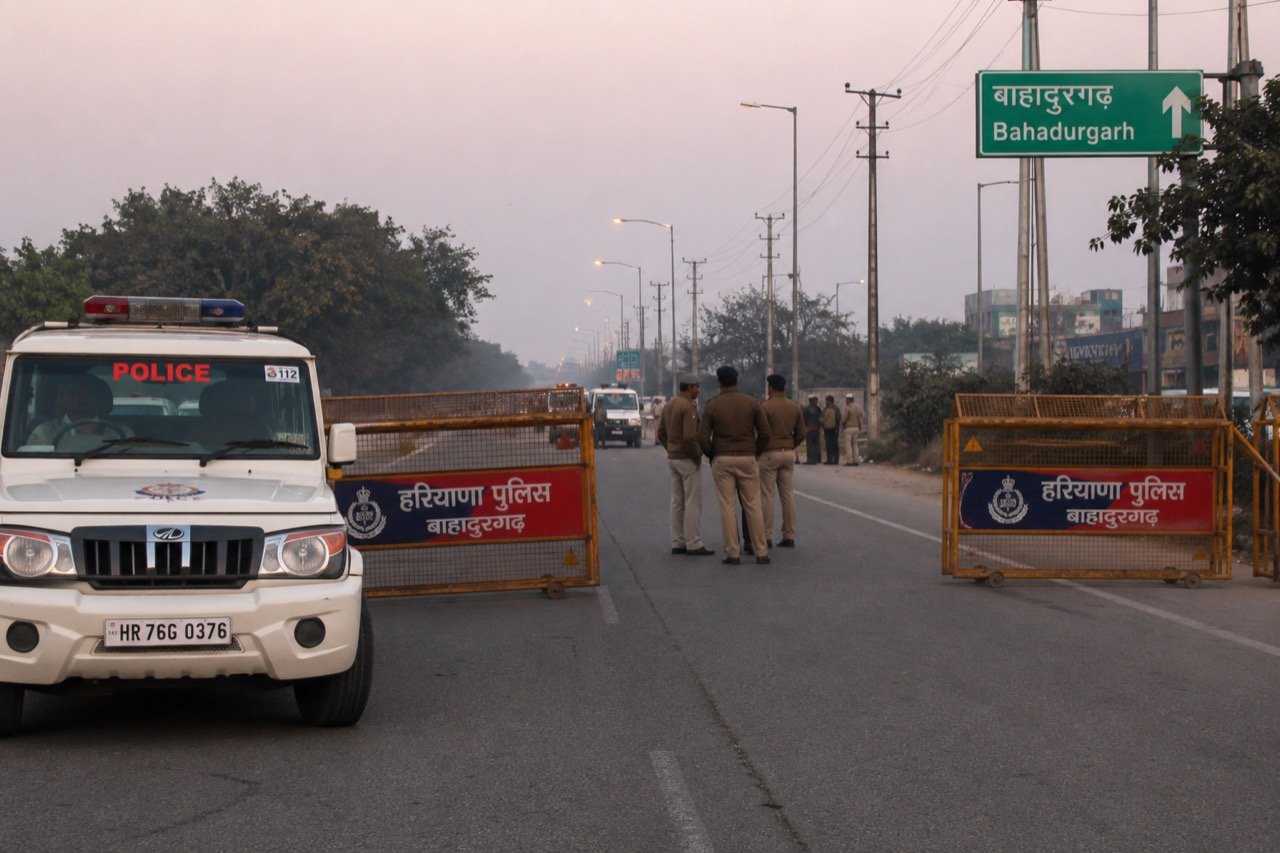
Bishnoi Gang Suspects Injured in Haryana Encounter as Police Tighten Net
A joint Haryana-Delhi Police operation in Bahadurgarh left two suspected Lawrence Bishnoi gang members injured, spotlighting the multi-state coordination now central to India's fight against organised crime networks.