Kheer Bhawani Mela Returns to Public Focus as a Marker of Kashmir's Shared Life
The annual Kheer Bhawani Mela has again drawn devotees and attention to Kashmir, read by many as a barometer of confidence, continuity and coexistence in the Valley's public life.
Commentary & Analysis ·
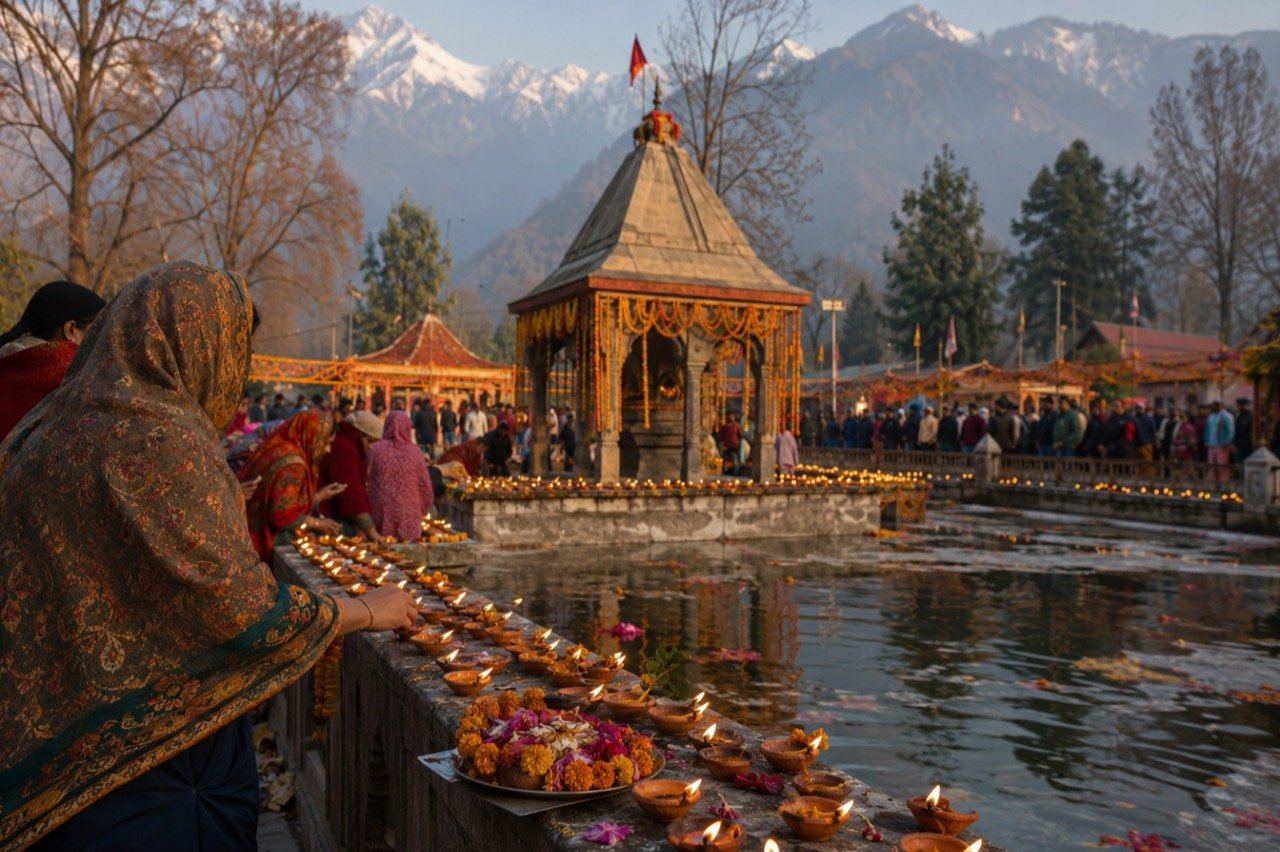
The Kheer Bhawani Mela in Kashmir has once again become a visible moment of faith, memory and community participation, drawing devotees back to one of the Valley's most revered shrines. Beyond its ritual significance, the annual gathering carries a weight that extends into Kashmir's wider public life, which is why each year's mela is watched so closely by residents, administrators and observers well beyond the immediate pilgrim community. In a region where public gatherings of any scale are routinely read for their underlying signals, a festival of this stature inevitably becomes a text to be interpreted rather than simply an event to be attended.
A festival rich in meaning
Dedicated to the goddess Ragnya Devi, the Kheer Bhawani shrine holds deep importance for Kashmiri Pandits, many of whom travel back to the Valley specifically for the festival. The offering of kheer at the sacred spring is the spiritual heart of the gathering, but for a displaced community the journey itself is an act of remembrance and belonging that goes well beyond ritual observance. For families who left the Valley decades ago, and for their children who may have only heard of the family home through stories, the pilgrimage becomes a rare, tangible link to a place that otherwise exists mostly in memory. The return of devotees, often in large numbers, transforms the mela from a purely religious observance into a statement about continuity, about a community maintaining its ties to a homeland even after years of upheaval, displacement and distance. That such continuity persists across generations, despite the practical difficulties of travel and the emotional weight of return, speaks to how deeply the shrine is woven into Kashmiri Pandit identity.
A barometer for the Valley
For those who track Kashmir closely, events like the Kheer Bhawani Mela are read as signals: of confidence among returning devotees, of continuity in religious and cultural practice, and of the civic readiness of local administration to host large gatherings smoothly. The scale of participation each year is itself informative, offering an informal gauge of how secure and welcome visiting devotees feel making the journey. Security coordination is a central part of the picture. The peaceful conduct of the mela, with arrangements for travel, accommodation and crowd management, is often taken as a sign of the broader environment in the Valley, and of the cooperation between authorities, local residents and visiting devotees. This is not a trivial logistical exercise. Moving and hosting large numbers of pilgrims safely requires sustained coordination among security agencies, local administration and community volunteers, and any lapse would be quickly noticed and widely discussed. That the mela can proceed year after year without major incident is, in itself, treated as meaningful evidence about conditions on the ground, even as observers rightly caution against reading too much into a single event.
The story of coexistence
Perhaps the most enduring theme around the mela is coexistence. Local Muslim residents have long played a role in welcoming pilgrims and supporting the festival's arrangements, a tradition frequently cited as evidence of the shared social fabric that has historically defined the Valley. This local participation is not incidental; it reflects long-standing neighbourly relationships and a shared sense of custodianship over the Valley's religious and cultural sites, regardless of which community they primarily serve. For many who write and speak about Kashmir, this pattern of local support is held up as a counter-narrative to the more familiar stories of division and conflict that dominate coverage of the region. It suggests that beneath the layers of political tension and historical grievance, everyday social bonds between communities have not been entirely severed, and in some pockets continue to be actively renewed each year around events such as this.
Why this pattern of observation matters
The recurring practice of reading the Kheer Bhawani Mela as a barometer says as much about the state of public discourse on Kashmir as it does about the festival itself. In the absence of straightforward, uncontested indicators of normalcy in the Valley, symbolic events take on outsized interpretive importance. A revered shrine and pilgrimage for Kashmiri Pandits becomes, in public commentary, a stand-in for questions about the community's broader relationship with its former home. The return of devotees as a marker of community continuity becomes a proxy for asking whether displacement is being reversed, even partially, or whether such visits remain occasional and symbolic rather than a sign of durable resettlement. Security coordination as a sign of civic readiness becomes shorthand for asking whether the administrative and security apparatus in Kashmir can support ordinary civic life at scale, not just tightly controlled events. And local cooperation reflecting the Valley's shared social fabric becomes a hopeful data point in a wider, more contested conversation about whether trust between communities can be rebuilt. None of these readings should be treated as conclusive, but their persistence each year reflects a genuine hunger, among both Kashmiris and outside observers, for signs of stability and shared belonging.
What continuity actually represents
An event read as a barometer of confidence in Kashmir inevitably carries more weight than its organisers might intend, precisely because so few other annual events offer a comparable, visible test of coexistence and civic capacity. As another mela passes, its significance lies less in any single moment than in what it represents: a community sustaining its faith and memory, an administration managing a major gathering, and a Valley once again narrating its story of shared public life. For Kashmir watchers, that quiet continuity is itself the headline, more meaningful in its steady repetition than in any single year's turnout figures or security arrangements. The value of the mela, in this sense, lies in its dependability as much as in its symbolism: it is precisely because it recurs, year after year, without becoming a flashpoint, that it retains its power as a marker of something larger than itself.
The NE Times View
The Kheer Bhawani Mela endures as a quiet emblem of Kashmir's plural past, and its return to public focus carries real symbolic weight. The NE Times View: festivals are barometers, not guarantees. A peaceful mela signals confidence, but coexistence is built in everyday economic and civic life, not annual gatherings alone. It is worth being disciplined about what a single successful mela can and cannot tell us. It demonstrates that, under the right conditions of security and local goodwill, communities can still come together around shared sacred spaces. It does not, on its own, resolve the deeper and more difficult questions of displacement, political trust and long-term resettlement that continue to shape the Kashmiri Pandit experience. The image is heartening; the harder work of trust and security must continue well beyond the crowds, in the quieter, less visible work of policy, dialogue and everyday civic interaction that receives far less attention than a single festive gathering.
Key takeaways
- The Kheer Bhawani Mela remains a significant pilgrimage for Kashmiri Pandits, centred on offerings to the goddess Ragnya Devi at the sacred spring.
- The scale of devotee turnout and the smoothness of security arrangements are widely read as informal indicators of confidence and stability in the Valley.
- Local Muslim participation in supporting the festival is repeatedly cited as evidence of Kashmir's historically shared social fabric.
- Commentators caution that a peaceful festival is a hopeful sign rather than proof that deeper issues of trust, security and displacement have been resolved.
- The mela's real significance lies in its consistent, peaceful recurrence over time rather than in any single year's events.
You may also like to read
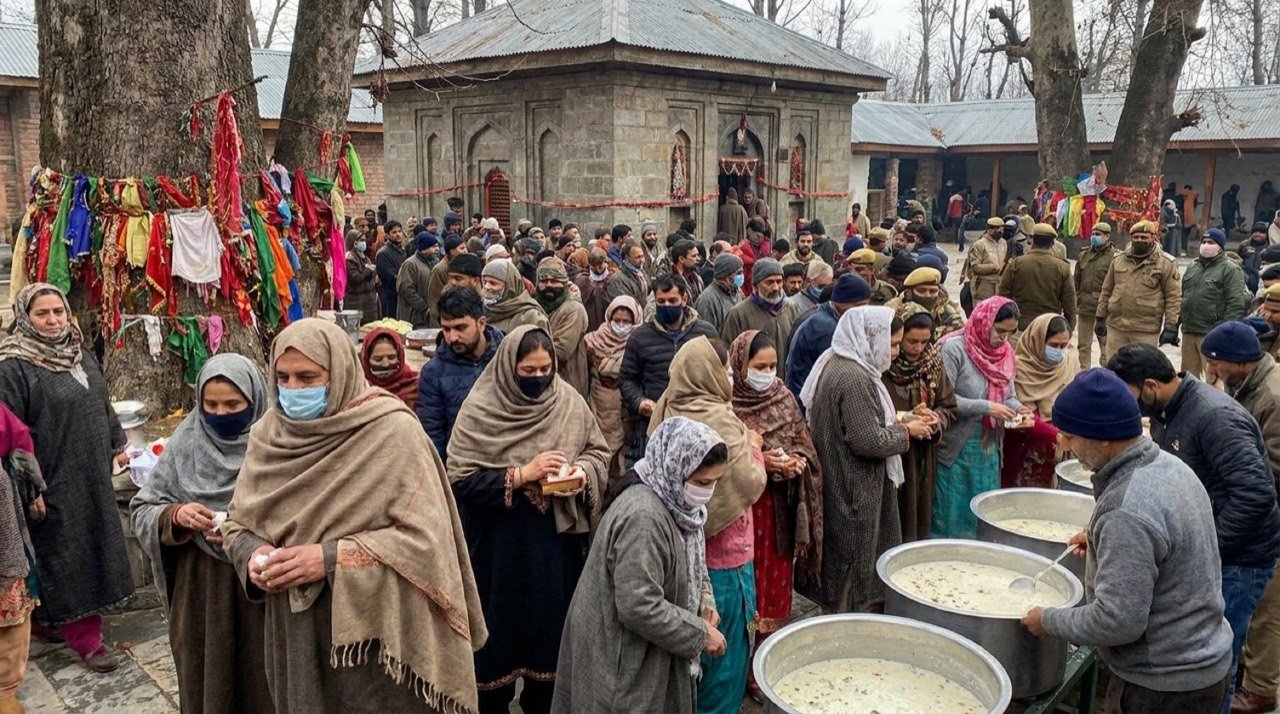
Kheer Bhawani Mela Draws Kashmiri Pandit Pilgrims to Tulmulla
Thousands of Kashmiri Pandits gathered at the Kheer Bhawani temple in Ganderbal for the annual Zyeshtha Ashtami mela, a pilgrimage of faith, memory and a wider message of coexistence in the Valley.
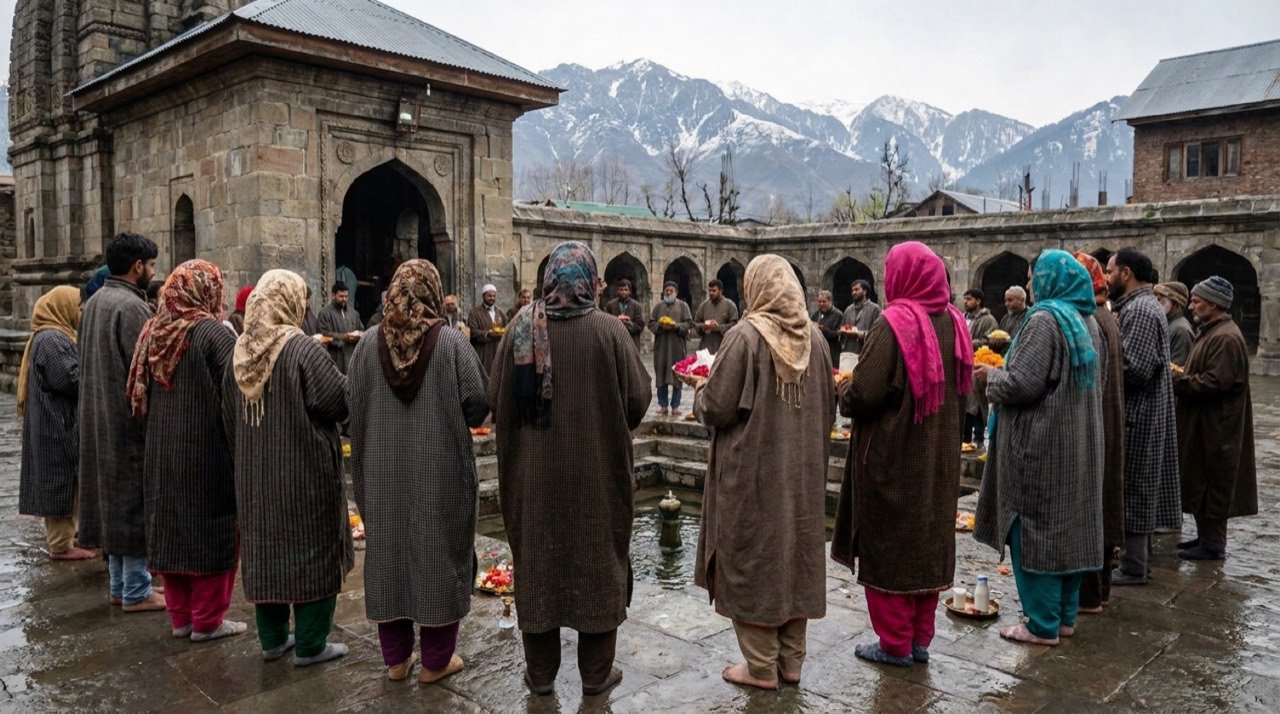
Kheer Bhawani Mela Draws Thousands of Kashmiri Pandits Back to Tulmulla
Thousands of Kashmiri Pandits gathered at the Kheer Bhawani temple in Ganderbal for Zyeshtha Ashtami, in a pilgrimage that carries a powerful message of return, memory and communal harmony.
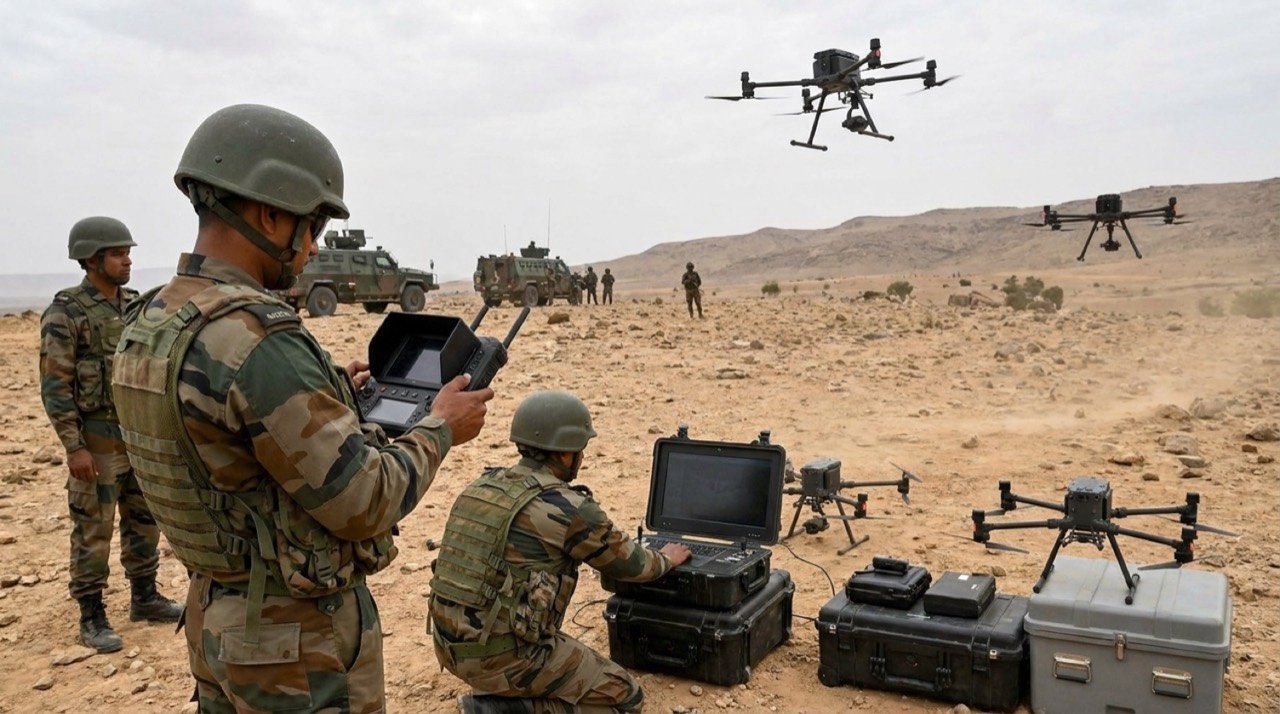
General Dwivedi's Tenure Puts Drones and New Battle Formations in Focus
As Army Chief General Upendra Dwivedi nears the end of his tenure on June 30, his legacy is being weighed through accelerated doctrine, drones and reorganised battle formations.
Kamakhya gears up for Ambubachi Mela 2026 with new entry route and tighter security
The four-day festival on Guwahati's Nilachal Hills, often called the 'Mahakumbh of the East', opens late on 22 June, with authorities adding a fresh access road from the Pandu side to ease the crush of lakhs of pilgrims, sadhus and tantriks.
More from this section
More
AICTE Industry Fellowship 2026: Rs 1.5 Lakh Scheme Closes July 5
The AICTE Industry Fellowship Programme 2026, which places technical-education faculty inside leading companies on a Rs 1.5 lakh monthly stipend, reached its application deadline on July 5.
Bay of Bengal Low Pressure System Revives Monsoon Over Western India
A low-pressure system over the Bay of Bengal has pushed the monsoon back into an active phase, bringing steady heavy rain to Kerala, coastal Karnataka and Maharashtra, and putting Mumbai and Pune on preparedness watch.
Bishnoi Gang Suspects Injured in Haryana Encounter as Police Tighten Net
A joint Haryana-Delhi Police operation in Bahadurgarh left two suspected Lawrence Bishnoi gang members injured, spotlighting the multi-state coordination now central to India's fight against organised crime networks.