India Turns to US LPG as Middle East Supply Risks Sharpen
India is set to import more than one million tonnes of LPG from the United States in June as Middle East disruption pushes buyers to diversify, signalling a strategic shift in cooking-fuel sourcing and energy security.
Commentary & Analysis ·
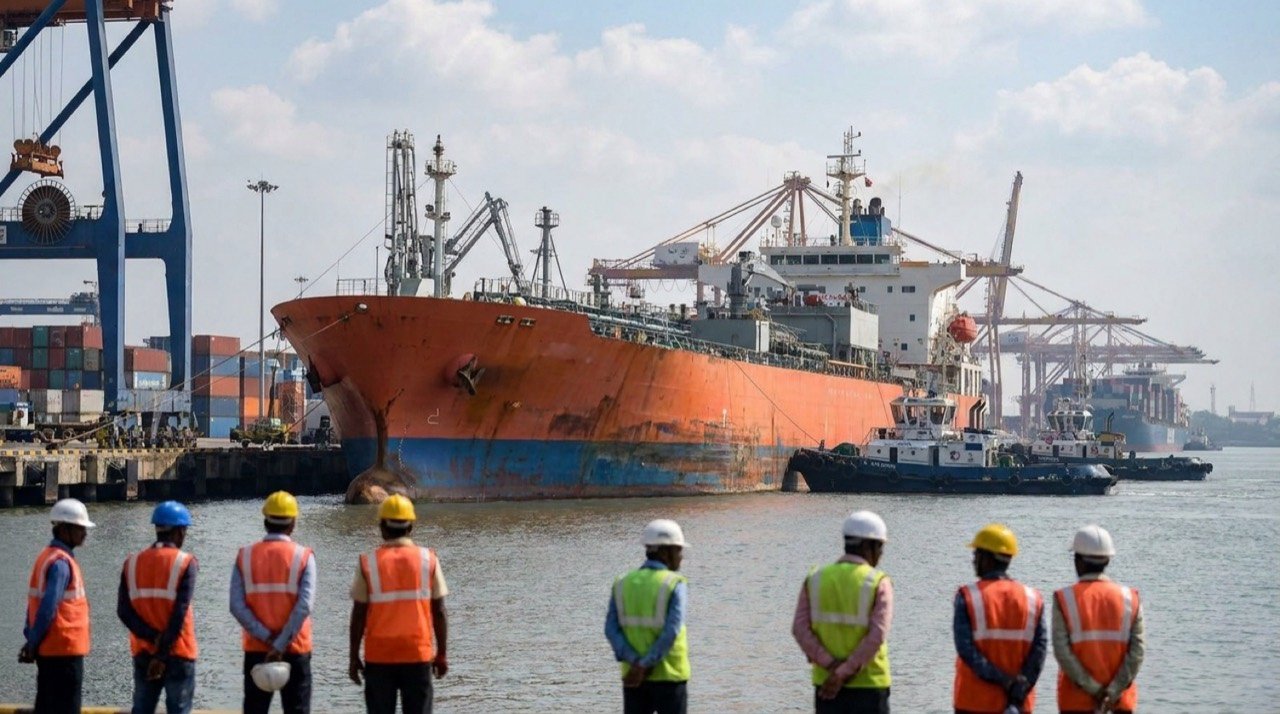
India is preparing to import more than one million tonnes of liquefied petroleum gas from the United States in June, according to The Times of India, as disruption to Middle East supply pushes the country's buyers to spread their bets. With LPG underpinning household cooking for hundreds of millions of families, the shift marks a notable adjustment for a nation that has long leaned heavily on West Asian cargoes. The scale of the number is itself instructive: a million-tonne swing towards American supply in a single month is not a marginal tweak to a procurement spreadsheet, it is a visible reallocation of where one of India's most politically sensitive fuels is coming from.
Why the sourcing is shifting
India typically draws the bulk of its LPG from the Gulf, where geography and established trade routes have kept the fuel flowing reliably for decades. Shorter sailing distances, mature port infrastructure on both sides of the trade, and long-standing commercial relationships between Indian public-sector oil marketing companies and Gulf suppliers have made West Asia the default source. That familiarity is precisely what has made the current unease so consequential. Heightened risk in the region has unsettled the assumption of dependable Gulf supply, prompting Indian buyers to turn towards American cargoes to keep supply lines secure. It is worth underlining that this is a hedging decision rather than a declaration of distrust in any single supplier. Procurement teams at state-run oil companies are, in effect, doing what any prudent buyer of an essential commodity would do when a primary route looks less certain: widening the pool of sellers so that no single geopolitical flashpoint can interrupt the flow of cooking gas into Indian homes.
The move is best read as risk management rather than a rupture. It does not mean India is abandoning its traditional suppliers; rather, it reflects a response to shipping uncertainty, energy-market volatility and steadily rising domestic demand. Gulf cargoes will almost certainly continue to make up a substantial share of India's LPG imports going forward. What has changed is the willingness to lean harder on an alternative source, at scale, the moment the calculus around reliability shifts.
Costs and logistics in focus
Sourcing more LPG from across the Atlantic and the Pacific gives public-sector oil companies welcome flexibility, but it is not without trade-offs. Longer voyages can raise freight costs, while port scheduling and storage capacity become more demanding as cargoes arrive from more distant origins. A tanker sailing from the US Gulf Coast to Indian ports covers a considerably longer route than one departing from the Gulf, and that additional distance translates directly into higher shipping bills, longer lead times for planning, and less slack in the system if a vessel is delayed. Indian ports and terminal operators will need to manage more complex scheduling as cargoes arrive on different timelines from different hemispheres, and storage facilities will need to accommodate a less predictable rhythm of arrivals than the steady cadence built up over years of Gulf-dominated trade.
Retail price stability will be the practical test of how well the diversification is managed. For the household consumer, the headline concern is not the flag on the tanker but the uninterrupted arrival of the cooking-gas cylinder. Millions of Indian families, particularly those enrolled in subsidised LPG schemes, do not track shipping routes or freight indices; they simply expect the cylinder to be available and affordably priced when they need it. Any success in this diversification effort will ultimately be judged not by how cleverly the sourcing has been rearranged, but by whether that basic expectation continues to be met without disruption or a quiet creep in prices.
What this means for stakeholders
For India's state oil marketing companies, the shift represents both an opportunity and a logistical challenge. Being able to draw on US supply gives them leverage in future negotiations with Gulf sellers, since no supplier wants to see a major buyer develop a durable alternative. At the same time, these companies must now manage a more complex import book, balancing contracts, shipping schedules and storage across a wider set of origin points than before. For the US LPG export industry, a sustained uptick in Indian demand offers a significant new market opportunity, reinforcing the role of American natural gas liquids in global energy trade. For Gulf exporters, the episode is a reminder that reliability cannot be taken for granted as a competitive advantage when regional instability introduces doubt into what was previously an assumed strength. And for Indian policymakers, the test will be whether this newfound flexibility can be built into standing procurement strategy rather than treated as an emergency measure that quietly fades once regional tensions ease.
A lesson in energy security
For policymakers, the episode reinforces a broader truth: energy security in a volatile world rests on diversified import routes, adequate storage and the ability to make procurement decisions quickly when conditions change. India is set to import over one million tonnes of US LPG in June. Middle East supply disruption is driving the diversification. LPG is a core household cooking fuel across India, used daily by families across income brackets, and any interruption to its supply carries an outsized political and social cost relative to many other commodities. Freight costs, port scheduling and storage remain key challenges that will need sustained institutional attention rather than one-off fixes. Consumers' priority is uninterrupted cylinder supply, and that simple fact should anchor every decision made in the name of diversification.
The coming months will show whether the pivot to US cargoes settles into a durable feature of India's energy mix or remains a stopgap tied to regional tensions. Either way, the willingness to act swiftly when supply lines wobble suggests a maturing approach to safeguarding the fuel that keeps Indian kitchens running. What to watch next includes whether the volumes sourced from the US persist beyond June, whether freight and landed costs are absorbed by oil marketing companies or passed through to consumers, and whether this episode prompts a more formal, standing policy of multi-source LPG procurement rather than a reactive one triggered afresh each time Gulf risk rises.
The NE Times View
Diversifying cooking-fuel sourcing away from a volatile Gulf is prudent energy statecraft, and US LPG offers genuine insurance against supply shocks. The catch is geography and freight cost, which make American cargoes pricier to land. The real test is whether New Delhi can lock in terms that protect household subsidies without quietly passing higher import bills to consumers. A diversification strategy that looks sound on a strategic map can still fail the ordinary household if it is not matched by disciplined cost management and transparent pricing. The government and public-sector oil companies would do well to treat this June surge not as a one-off response to a passing crisis, but as a pilot for a more permanent, multi-source approach to an essential fuel that touches nearly every Indian household.
Key takeaways
- India is set to import more than one million tonnes of US LPG in June, a significant shift from its traditional reliance on Gulf supply.
- The move is driven by heightened risk to Middle East shipping routes rather than any rupture with Gulf suppliers, and reflects prudent risk management amid rising domestic demand.
- Longer shipping distances from the US raise freight costs and complicate port scheduling and storage, posing practical challenges for oil marketing companies.
- The ultimate measure of success will be uninterrupted, affordably priced cylinder supply for households, not the geographic origin of the cargo.
- Whether this becomes a lasting feature of India's energy security strategy, or a temporary response to regional tension, will depend on decisions made in the months ahead.
You may also like to read
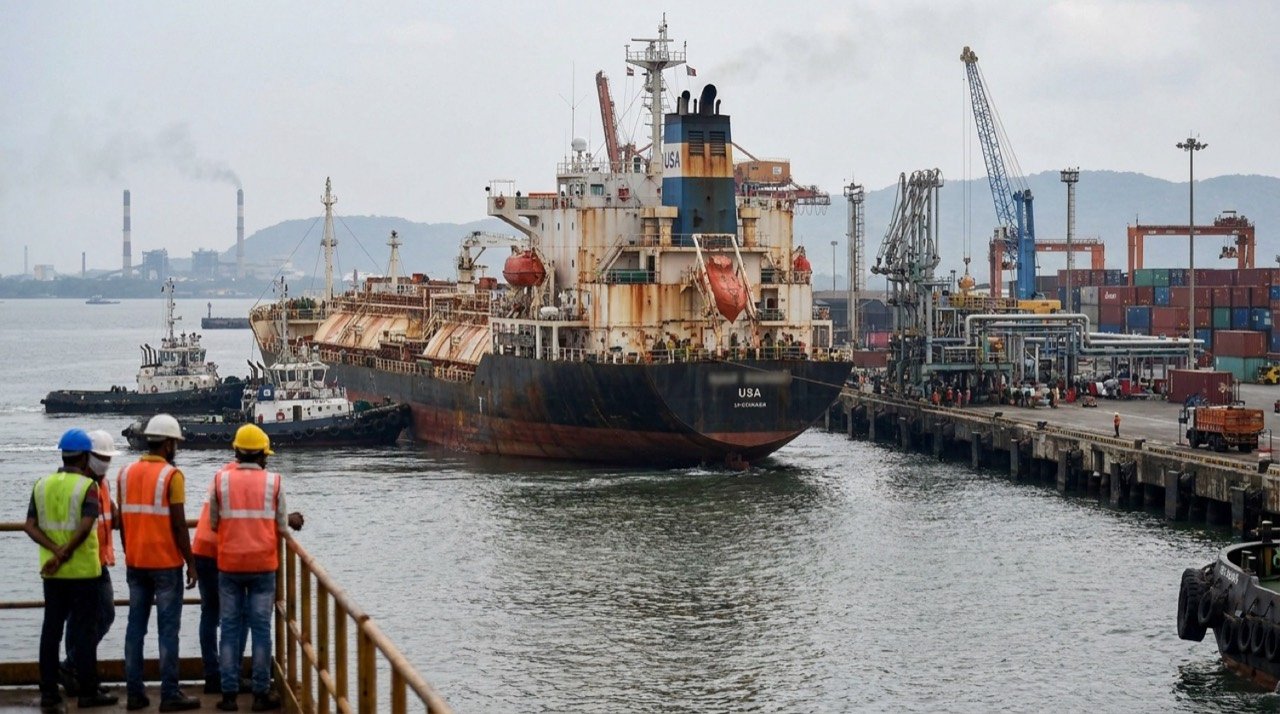
India's LPG Imports From the US Set to Cross 1 Million Tonnes in June
India is on track to import over a million tonnes of US cooking gas in June as Middle East supply disruption pushes refiners to diversify and protect household cylinder security.
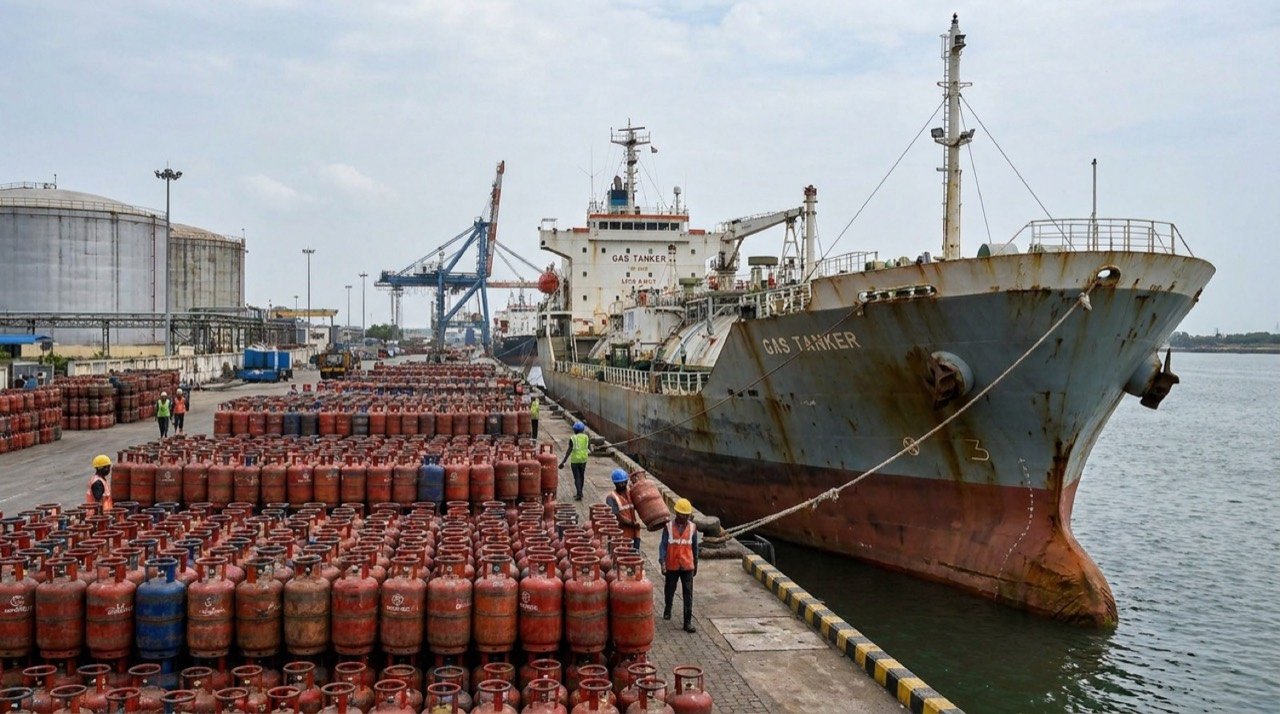
India's US LPG Imports Set to Cross Record 1 Million Tonnes in June Amid Middle East Disruption
India's cooking-gas imports from the United States are poised to top a record 1 million tonnes in June as refiners diversify away from Gulf supply disrupted by tension around the Strait of Hormuz.

India Extends Deepwater Oil and Gas Bid Deadline for the Sixth Time
India has pushed its deepwater and ultra-deepwater oil and gas block bid deadline to September 17, a sixth extension that highlights the challenge of luring capital into frontier offshore exploration.
India's Russian Crude Imports May Hit Record June Share
India's Russian crude imports could touch a record high in June, with Moscow supplying nearly half of total purchases until June 20, as discounts and shifting supply reshape the energy basket.
More from this section
More
Adani Case: US DOJ Pushes for Permanent Dismissal of Charges
The US Department of Justice has urged a judge to permanently dismiss charges against Gautam Adani, calling the case legally flawed — a reversal with consequences for markets, diplomacy and cross-border enforcement.

Akasa Air Inducts 40th Aircraft in Indian Aviation Scale-Up
Akasa Air's 40th aircraft, ferried to Bengaluru via Seattle, Reykjavik and Cairo, marks a fleet milestone for the young carrier and a fresh signal that India's aviation market remains firmly in expansion mode.
BARC Ratings Suspension Leaves Indian TV Industry Flying Blind
BARC's pause on television ratings has put India's broadcast measurement system under fresh scrutiny, leaving broadcasters, advertisers and media planners without the weekly audience data that anchors the TV economy.