IISc Quantum-Safe Chip Points To India's Defence Against Tomorrow's Hackers
Researchers at IISc have demonstrated a quantum-resilient security chip for IoT devices, presented at the world's premier semiconductor forum, as India accelerates its National Quantum Mission.
Commentary & Analysis ·

A team at the Indian Institute of Science (IISc) in Bengaluru has demonstrated a quantum-safe security chip designed to protect connected devices from the kind of attacks that powerful future quantum computers could one day unleash. The work, presented at the 2026 IEEE International Solid-State Circuits Conference, the field's premier global forum, marks a notable step in India's effort to build homegrown defences for an increasingly networked economy. It is a modest-sounding announcement on the surface, a single hardware demonstration among thousands of papers presented at ISSCC each year, yet it speaks to a much larger question that governments and industries worldwide are now grappling with: how to secure the digital infrastructure of the next few decades against a computing paradigm that does not fully exist yet, but that many expect will eventually arrive.
The threat the chip addresses
Much of today's digital security relies on mathematical problems that conventional computers cannot crack in any reasonable time. Factoring large numbers or solving discrete logarithms, the backbone of widely used encryption and digital signature schemes, remains computationally infeasible for classical machines even with enormous resources. Sufficiently advanced quantum machines, however, could break some of those schemes using known algorithms, putting everything from banking transactions to critical infrastructure control systems at risk. This is not an abstract worry confined to academic circles. Data encrypted today and intercepted now could, in principle, be stored and decrypted later once quantum machines mature, a scenario security professionals often describe as "harvest now, decrypt later." That possibility alone has pushed post-quantum cryptography from a niche research interest into a mainstream policy and engineering concern. The IISc chip implements a post-quantum signature method known as SQIsign in hardware, showing it can run efficiently enough for the small, low-power devices that make up the Internet of Things.
Why hardware matters
Running quantum-resistant cryptography in software alone can be slow and power-hungry, a problem for the billions of sensors, meters and gadgets expected to populate India's smart cities and industries. Software implementations of post-quantum algorithms often demand computational overhead that small embedded processors simply cannot spare, particularly in devices that must run for years on modest batteries or energy-harvesting sources. By accelerating the underlying mathematics in silicon, the IISc team argues it has provided a practical roadmap for embedding quantum-resilient protection directly into everyday devices rather than treating it as an afterthought bolted on after deployment. This distinction matters enormously in practice. Retrofitting security into an IoT ecosystem after the fact is notoriously difficult, given how many devices are deployed with limited means of remote update, and how long their operational lifespans can stretch. A chip-level approach, baked in at the point of manufacture, sidesteps that problem by making quantum resistance a native property of the hardware rather than a patch applied later.
The choice of SQIsign as the scheme to implement is also notable. Post-quantum cryptography today spans several distinct families of mathematical approaches, each with its own trade-offs between signature size, computation speed, and memory footprint. Demonstrating that a signature scheme from this newer generation can be made efficient enough for constrained IoT hardware is a meaningful engineering contribution, one that adds to the global pool of evidence guiding which schemes are viable for which classes of devices as standards continue to firm up.
A national push
The research dovetails with India's National Quantum Mission, under which the government announced quantum fabrication and central facilities worth around Rs 720 crore at IIT Bombay, IIT Delhi, IIT Kanpur and IISc. Institutions including IIT Madras and IISc have steadily built capability in quantum computing, sensing and materials, positioning India to be a developer rather than merely a consumer of the technology. Seen against that backdrop, the IISc demonstration is not an isolated academic exercise but one visible output of a broader, state-backed effort to seed domestic capacity across the quantum technology stack, from fundamental research through to fabrication infrastructure. A quantum technology researcher, paraphrased in commentary around the work, put the underlying logic plainly: building quantum-safe security into hardware now is about getting ahead of a threat before it becomes urgent. That framing captures the essential rationale for investing in defences against a threat whose timeline remains uncertain. Waiting until quantum computers capable of breaking current cryptography are a proven reality would leave far too little time to redesign, fabricate and deploy replacement hardware across an economy that depends on billions of connected devices.
Viewed through that lens, the National Quantum Mission's investment in fabrication facilities takes on added significance. Having the research capability to design a quantum-safe chip is one thing; having the domestic fabrication capacity to manufacture it at scale, ideally without dependence on foreign foundries for the most security-sensitive components, is another matter entirely, and one that speaks to broader questions of technological sovereignty that have gained prominence in India's policy discourse in recent years.
Commercial and strategic implications
Commercial deployment remains some way off, and standards for post-quantum cryptography are still settling globally, with international standards bodies continuing to evaluate and formalise which algorithms industry should adopt. But the IISc demonstration shows India intends to be in the room as those defences are designed, not playing catch-up once the threat arrives. For India's technology industry, long associated internationally with software services rather than hardware innovation, that positioning carries weight beyond the immediate technical achievement. A domestically designed, quantum-safe chip aimed squarely at securing the Internet of Things speaks to ambitions in deep-tech hardware, an area where India has historically lagged behind established semiconductor powers. It also has practical stakes for sectors such as banking, utilities and critical infrastructure operators, all of which will eventually need to migrate their security architectures to quantum-resistant alternatives, and all of which would benefit from having credible, homegrown options to choose from rather than relying entirely on imported solutions for such sensitive systems.
There are, of course, considerable steps between a chip demonstrated at an academic conference and one manufactured at scale for commercial and government use. Silicon designs must be validated for reliability, cost, and manufacturability at volume, and any cryptographic implementation intended for critical infrastructure would need extensive independent scrutiny before being trusted with real-world deployments. None of that diminishes the value of an early, credible demonstration, but it does mean the gap between laboratory success and deployed product remains the central challenge ahead.
The NE Times View
A quantum-resilient chip from IISc, showcased at the field's top forum, is a quiet but significant marker of India moving from software services toward deep-tech hardware. With billions of insecure IoT devices proliferating across smart cities, industrial systems and consumer electronics, post-quantum security is not theoretical, it is an infrastructural necessity that will need to be addressed well before quantum computers capable of breaking current encryption are realised. The challenge now is the familiar one facing many promising Indian deep-tech projects: turning lab demonstration into manufactured silicon under the National Quantum Mission, and doing so at a pace that keeps India ahead of, rather than behind, a threat whose exact arrival date nobody can predict with confidence.
Key takeaways
- IISc researchers demonstrated a quantum-safe security chip at the 2026 IEEE ISSCC, implementing the post-quantum SQIsign signature scheme in hardware for low-power IoT devices.
- Hardware acceleration addresses the speed and power limitations of running post-quantum cryptography in software alone, making it practical for the billions of sensors and devices expected across India's smart cities and industries.
- The work aligns with India's National Quantum Mission, which has committed around Rs 720 crore to quantum fabrication and central facilities at IIT Bombay, IIT Delhi, IIT Kanpur and IISc.
- Commercial deployment and global post-quantum standards are still maturing, but the demonstration signals India's intent to participate in shaping quantum-safe defences rather than adopting them belatedly.
- The principal challenge ahead is translating this laboratory demonstration into manufactured, at-scale silicon suitable for real-world critical infrastructure and IoT deployment.
You may also like to read
India's Chip Ambitions Take Shape As Tata Fab And Micron Plant Advance
With a notified SEZ for the Tata fab in Dholera, Micron's assembly plant operational and 13 projects cleared under the national mission, India's semiconductor build-out is moving from paper to silicon.
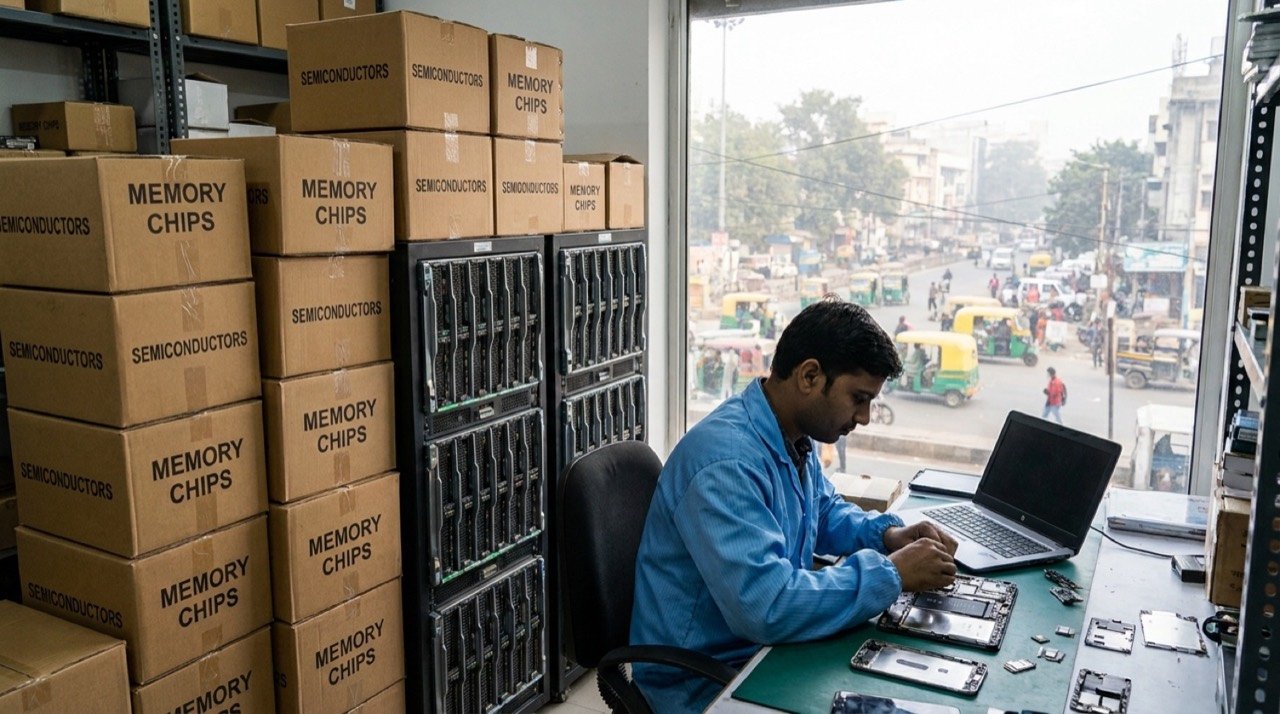
AI Chip Demand May Push Up Smartphone and Laptop Prices in India
Surging demand for memory and storage chips from AI data centres is squeezing global supply, threatening to make smartphones, laptops and gaming devices costlier for Indian consumers.
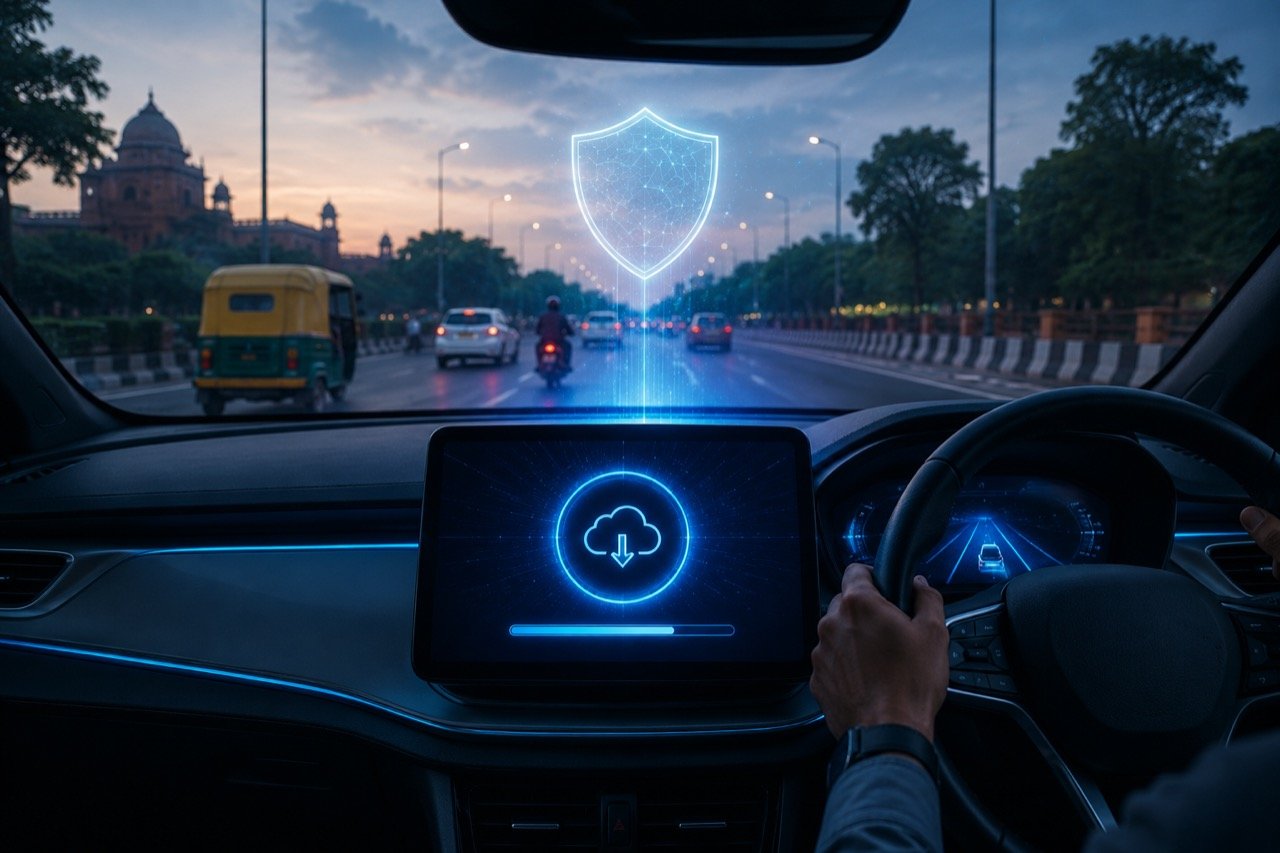
Connected Car Rules: India Plans Vehicle Software Update Norms
With cars increasingly run by software, the government is reportedly preparing update and security norms aimed at preventing vehicle hijacking and governing how connected cars in India are patched and protected.
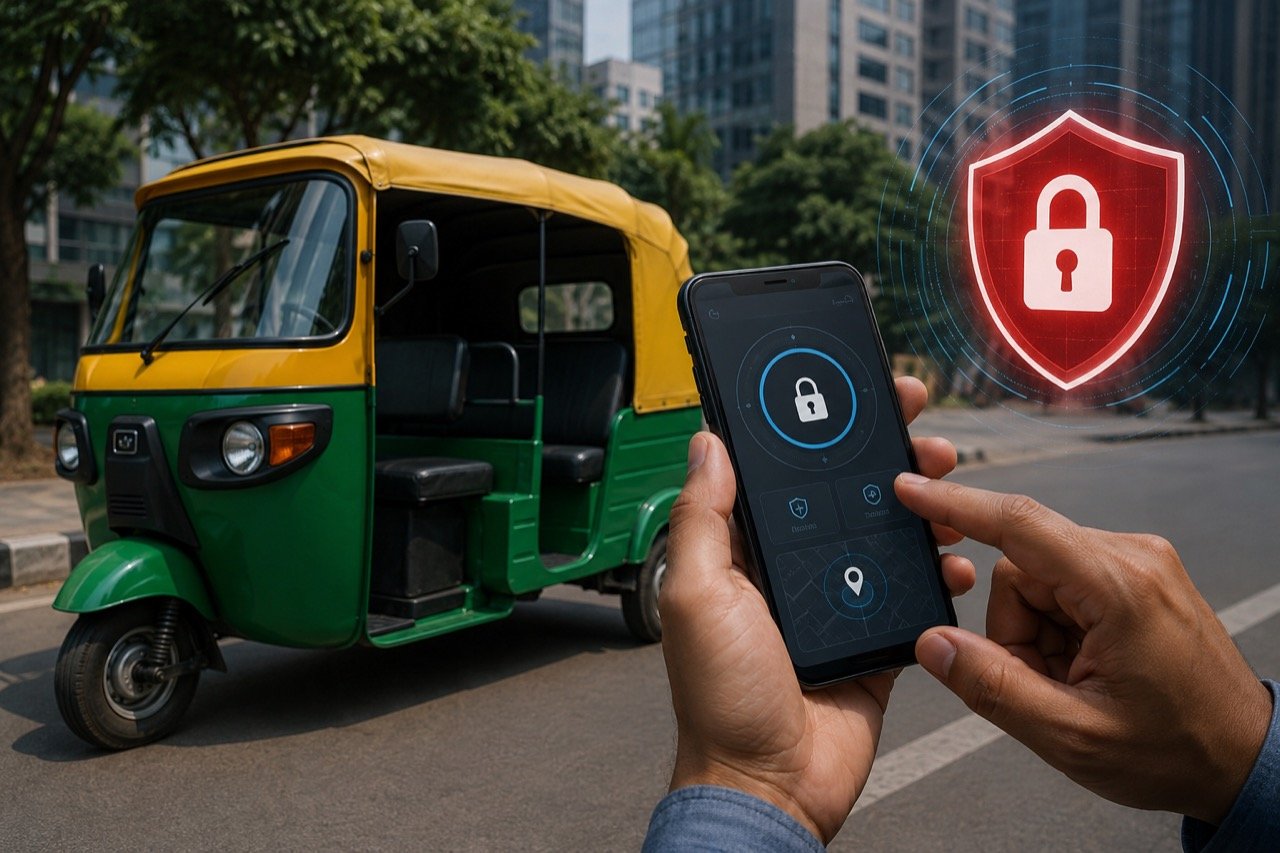
Chinese E-Rickshaw Apps Banned in India Over Remote Disable Risk
The Centre has ordered the removal of three Chinese apps — BAT-BMS, Lossigy and Epoch-i-ion — over fears they could remotely disable battery-run e-rickshaws, turning mobility software into a public safety concern.
More from this section
More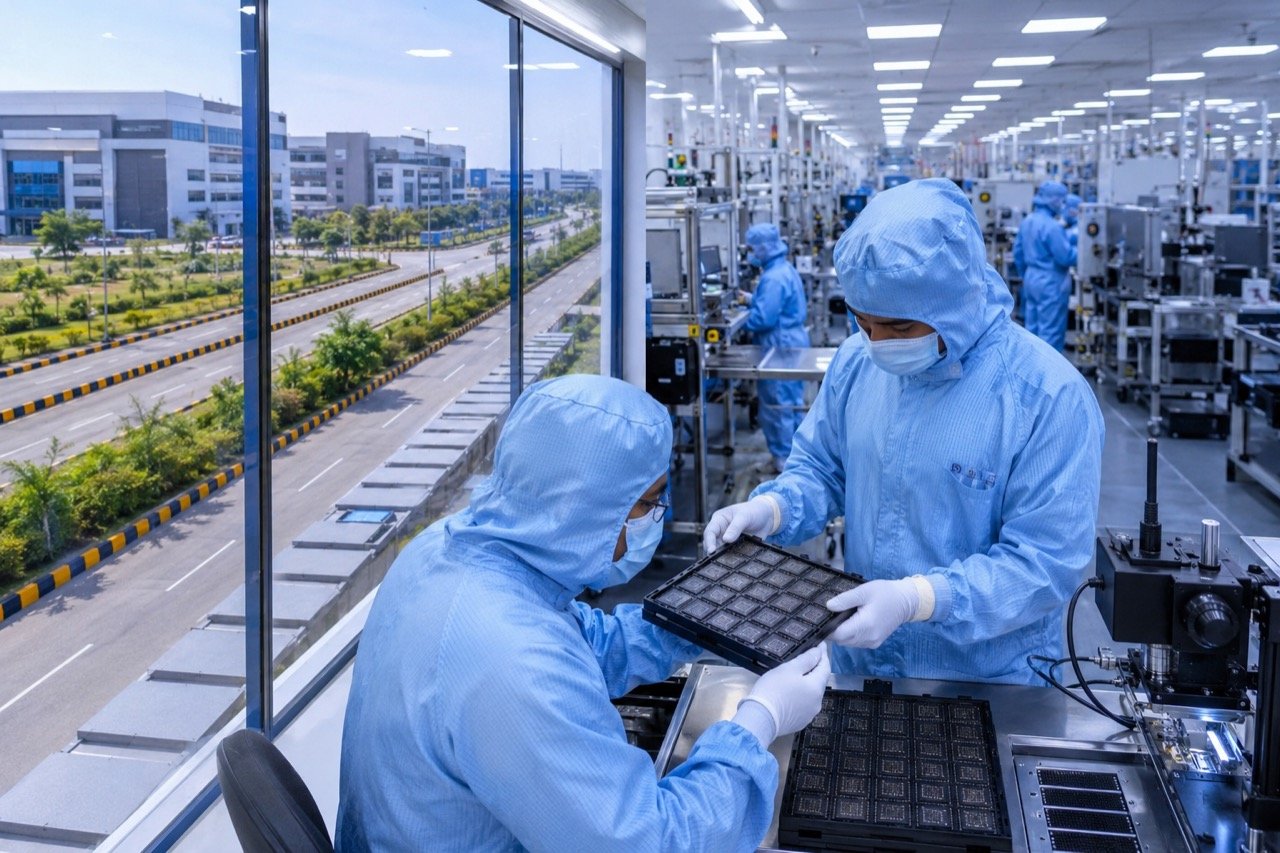
CG Semi Sanand Plant Opens, Boosting India's Semiconductor Drive
Prime Minister Narendra Modi inaugurated CG Semi's chip assembly and test facility in Sanand, Gujarat, giving India's semiconductor mission a working manufacturing milestone rather than another policy promise.
Chinese E-Rickshaw Apps Banned in India Over Remote Disable Risk
The Centre has ordered the removal of three Chinese apps — BAT-BMS, Lossigy and Epoch-i-ion — over fears they could remotely disable battery-run e-rickshaws, turning mobility software into a public safety concern.
Connected Car Rules: India Plans Vehicle Software Update Norms
With cars increasingly run by software, the government is reportedly preparing update and security norms aimed at preventing vehicle hijacking and governing how connected cars in India are patched and protected.