Haldia Port in Bengal Designated India's 41st Immigration Checkpost
The Union Home Ministry has designated West Bengal's Haldia seaport as an immigration checkpost, India's 41st such seaport, adding a formal border-management layer to a key eastern trade hub.
Commentary & Analysis ·
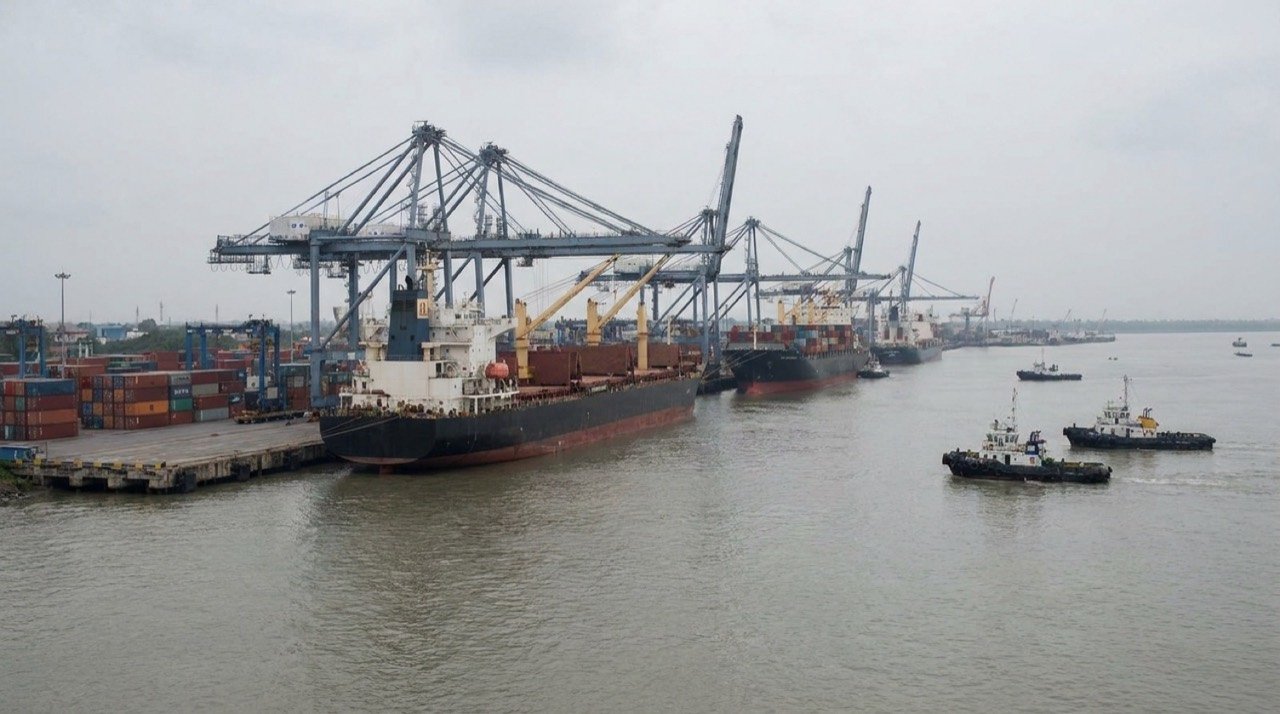
The Union Home Ministry has designated Haldia seaport in West Bengal as an immigration checkpost, making it India's 41st such seaport, according to a gazette notification reported by Business Standard. The order was issued under the Immigration and Foreigners Act, 2025, and formalises a new role for a port that has long been central to eastern India's cargo and industrial logistics network. On the surface this reads as a routine administrative notification. Read against the backdrop of the government's steady expansion of maritime border infrastructure, however, it is a meaningful step in bringing one of eastern India's busiest harbours into a more formal and standardised system of border management.
What the designation actually changes
Becoming an immigration checkpost adds a formal layer of border management to Haldia's operations. The status enables official processing of crew and passenger movement through the port, bringing it into the structured framework that governs how people enter and leave the country by sea. It is worth being precise about what this does and does not involve. Haldia is not being physically transformed, nor is its core identity as a cargo and industrial hub changing. What changes is administrative and regulatory: the port now sits within the national architecture of monitored maritime entry points, with defined procedures for handling crew and passenger movement in a manner consistent with other designated seaports across the country. For a working port that already manages cargo, riverine trade and industrial logistics, this is a governance upgrade layered on top of an existing commercial function, rather than a disruption to it.
That distinction matters because it shapes how the change will be felt on the ground. Shipping lines, crewing agents and port operators will now need to route relevant passenger and crew documentation through the immigration checkpost framework, rather than through ad hoc or informal arrangements that may have prevailed previously. In principle, this should bring greater predictability and accountability to how people move through the port, which is itself a form of institutional maturation for a facility with Haldia's scale and strategic location.
Part of a wider national push
The Haldia notification does not stand alone. It follows a broader push by the ministry to widen India's network of maritime immigration points. Last September, the government designated 34 sea and river ports as immigration ports, signalling a deliberate effort to formalise border management across the country's long coastline and busy river systems. Haldia's addition continues that trajectory, extending the same logic of consistency and oversight to another significant node in the network.
Issued under the Immigration and Foreigners Act, 2025, the notification also reflects an updated legal framework intended to bring more of India's maritime gateways under consistent oversight. Replacing or supplementing older statutory arrangements with a more current legal instrument suggests an intent not merely to add ports piecemeal, but to do so within a coherent, modernised legal structure. This matters because immigration checkposts function best when the rules governing them are uniform and predictable across locations; a patchwork of legacy designations under older laws would undercut the very consistency the government appears to be pursuing. Seen this way, Haldia is less an isolated bureaucratic event than one data point in a sustained, multi-year programme of formalising India's maritime borders, port by port, river system by river system.
Why it matters for Bengal specifically
For West Bengal, the designation enhances the strategic profile of a port that anchors much of the state's maritime economy. Haldia's place in the eastern logistics chain means tighter, formalised processing can support both security objectives and the orderly functioning of trade. A port that handles substantial cargo and riverine traffic, and that sits within reach of the Bay of Bengal, benefits from having its border-facing functions placed on the same footing as other major national ports, rather than left in a comparatively informal or under-resourced state.
This is particularly relevant given the geography involved. Eastern India's ports, including Haldia, are positioned to serve as gateways for trade with Southeast Asia and the wider Bay of Bengal region. A formal immigration framework is a basic precondition for that role to expand credibly, since international shipping lines, crew management companies and passenger operators generally prefer to route traffic through ports with clear, predictable regulatory processes. In that sense, the designation is not simply about border security in the narrow sense; it is also an enabling piece of infrastructure for Bengal's ambitions to grow its share of eastern seaboard trade.
Security, trade and the balance between them
Formalising immigration processing at a working commercial port inevitably raises the question of balance: how to strengthen oversight of who is entering and leaving the country by sea without slowing down the legitimate cargo and passenger movement that ports like Haldia exist to facilitate. The stated rationale behind such designations, across the 34 ports named last September and now Haldia, appears to be that consistency itself reduces friction. When every major port operates under the same statutory framework and administrative expectations, shipping lines and crew agents can plan around known procedures rather than navigating a patchwork of differing local practices.
That said, the practical value of any such designation depends heavily on implementation. A notification in the gazette establishes the legal status of the checkpost, but the day-to-day reality of border management, staffing levels, training, digitisation of records and processing capacity, will determine whether the change delivers the intended benefits or becomes a nominal designation with little operational substance. This is the crux of the matter for observers assessing whether Haldia's new status will translate into tangible improvements in maritime governance.
The NE Times View
This is a sensible, if overdue, piece of institutional plumbing for eastern trade. Formalising immigration at a major port tightens border management and, done well, smooths legitimate maritime traffic rather than obstructing it. The real value, however, lies in whether the checkpost is properly staffed and digitised rather than merely notified on paper. A gazette entry is the easy part; building the operational capacity to process crew and passengers efficiently and securely is the harder, longer-term task that will determine whether Haldia's new status delivers on its promise.
Bengal's ports are strategically placed for Bay of Bengal and Southeast Asian commerce, and reliable border infrastructure is a precondition for that potential to pay off. As the government continues to widen its network of maritime immigration points, following on from the 34 ports designated last September, the cumulative effect should be a more coherent, nationally consistent system of maritime border management. Whether that promise is realised at Haldia, and at the other newly designated ports, will depend less on the legal instrument itself than on the follow-through in staffing, technology and administrative capacity in the months ahead.
Key takeaways
- Haldia in West Bengal has been designated India's 41st seaport immigration checkpost by the Union Home Ministry, under the Immigration and Foreigners Act, 2025.
- The designation formalises crew and passenger processing at the port without altering its core function as a cargo, riverine and industrial logistics hub.
- It extends a broader national effort that saw 34 sea and river ports designated as immigration ports last September, reflecting a sustained push to standardise maritime border management.
- For West Bengal, the change strengthens Haldia's strategic position within the eastern logistics network and supports its potential role in Bay of Bengal and Southeast Asian trade.
- The ultimate value of the designation will depend on implementation, particularly staffing and digitisation, rather than the notification alone.
You may also like to read
Supreme Court Points West Bengal Ration-Linked SIR Plea Toward Calcutta High Court
The Supreme Court declined urgent listing of a plea alleging ration denial to people dropped from West Bengal voter lists after the SIR exercise, indicating the petitioner should approach the High Court.
India Monsoon Outlook 2026: Heavy Rain Risk Persists in the Northeast, West Bengal and Bihar
The latest IMD outlook shows a sharply divided monsoon pattern, with intense rainfall risks in eastern and northeastern India while activity is expected to ease across several other regions.
Bay of Bengal Low Pressure System Revives Monsoon Over Western India
A low-pressure system over the Bay of Bengal has pushed the monsoon back into an active phase, bringing steady heavy rain to Kerala, coastal Karnataka and Maharashtra, and putting Mumbai and Pune on preparedness watch.
Centre Names 23 More Designated Terrorists, Taking List to 80
The Union government has designated 23 more individuals as terrorists, expanding India's official list to 80 names, with several reportedly linked to attacks and cases connected to Jammu and Kashmir.
More from this section
More
AICTE Industry Fellowship 2026: Rs 1.5 Lakh Scheme Closes July 5
The AICTE Industry Fellowship Programme 2026, which places technical-education faculty inside leading companies on a Rs 1.5 lakh monthly stipend, reached its application deadline on July 5.
Bay of Bengal Low Pressure System Revives Monsoon Over Western India
A low-pressure system over the Bay of Bengal has pushed the monsoon back into an active phase, bringing steady heavy rain to Kerala, coastal Karnataka and Maharashtra, and putting Mumbai and Pune on preparedness watch.
Bishnoi Gang Suspects Injured in Haryana Encounter as Police Tighten Net
A joint Haryana-Delhi Police operation in Bahadurgarh left two suspected Lawrence Bishnoi gang members injured, spotlighting the multi-state coordination now central to India's fight against organised crime networks.